
Who Is Liable for the Aeon Kumamoto Explosion?
An analysis of the civil and criminal liability frameworks under Japanese law for the July 28, 2026 explosion at Aeon Mall Kumamoto, covering strict product liability, negligence-based tort, and professional negligence resulting in death, and assessing the force majeure defense in the earthquake context.
- Jurisdiction
- Japan
- Court
- Kumamoto Prefectural Police
- AI tool named
- None
- Ruling date
- Jul 28, 2026
- Source document
- View primary court order ↗
- Last verified
- Jul 30, 2026
Lex Machina Review is an independent risk-tracking and reference resource. Nothing on this site is legal advice, and using it does not create an attorney-client relationship. Every record is reviewed against primary sources but may not reflect the most current status of a matter — always verify directly against the cited court order, rule text, or a licensed attorney before relying on it.
Companion explanation — secondary to the source document above
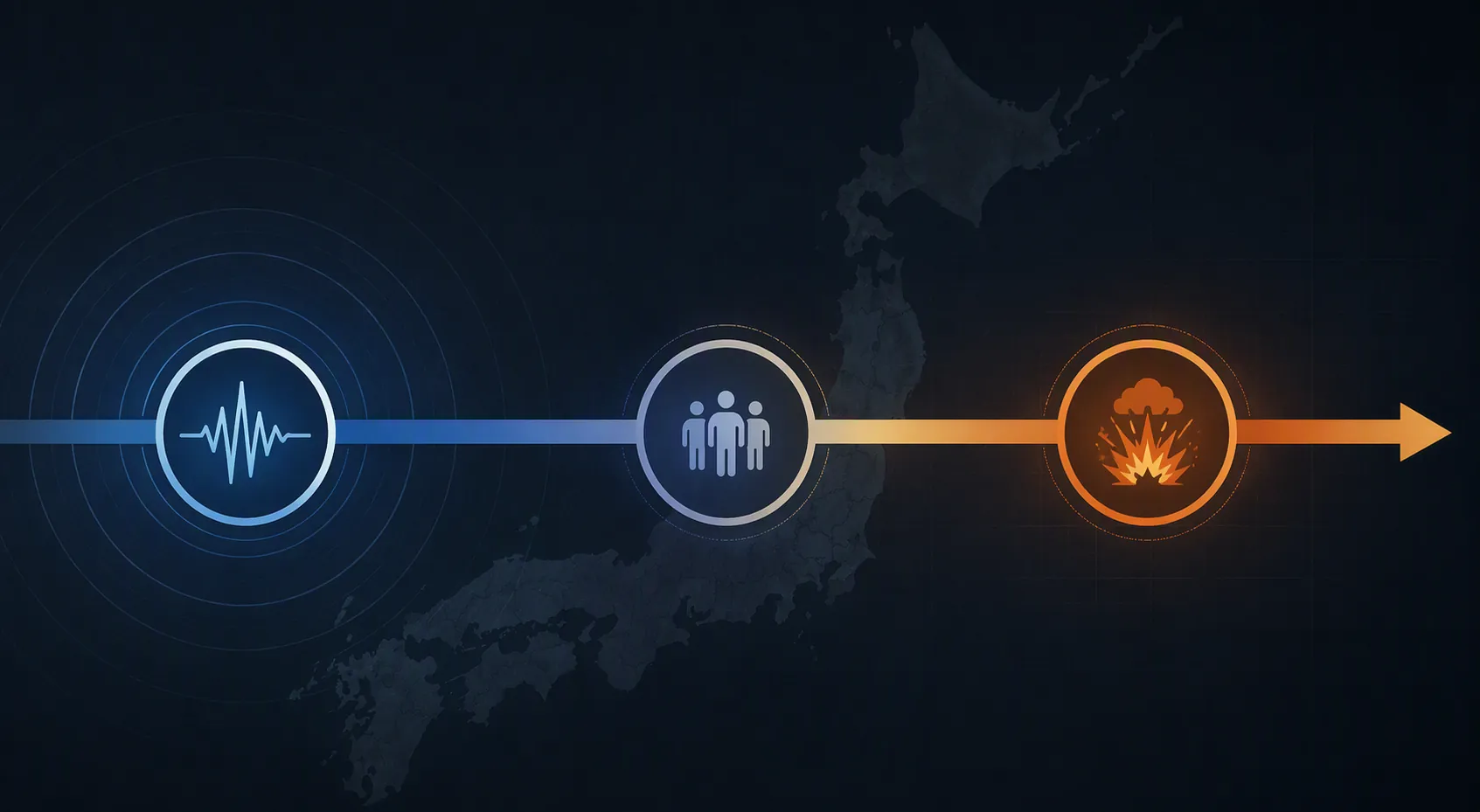
The liability inquiry into the Aeon Kumamoto explosion begins with a gap in time. A magnitude 7.1 earthquake struck at 16:27 JST on July 28. The mall evacuation was reportedly completed by around 17:00. The explosion came around 17:50. As of the early reporting, three people were confirmed dead and three were missing; all were employees, not customers. That sequence matters more than the initial instinct to label the blast an earthquake disaster, because the legal question is not only what the quake damaged. It is what the mall, its gas systems, and the people responsible for them did or failed to do during the interval before the secondary catastrophe.[1]
Aeon’s own early statements made that interval harder to dismiss. President Ohno acknowledged that the company had “not fully anticipated that an explosion of this kind could occur,” that the evacuation manual’s “do not return” rule “may not have been thoroughly followed in some areas,” and that Aeon was still investigating whether the emergency gas shut-off system had activated.[2] Those are not admissions of legal liability. They are, however, the kind of operational admissions that shape a liability file: a foreseeable class of hazard, a written rule, possible noncompliance with that rule, and an unresolved status of safety equipment intended to interrupt the chain from gas release to ignition.
At this stage, no public finding establishes the leak point, ignition source, valve condition, or decision history inside the mall. Police, fire investigators, engineers, insurers, and company safety teams will have to reconstruct those facts from records that are not yet public. But the known timeline already blocks the easiest version of a force majeure defense. A major earthquake may explain why a system came under stress. It does not automatically explain why employees were still exposed roughly fifty minutes after evacuation was said to have been completed, or why a gas-safety system may not have isolated the hazard before the blast.
The delayed explosion turns the inquiry from disaster to duty
Earthquakes are not legally irrelevant. A 7.1-magnitude event can rupture lines, damage structures, disrupt power, and generate confused conditions in which perfect execution is not a reasonable standard. A defendant facing civil or criminal scrutiny will almost certainly argue that the quake was an external event outside ordinary control. That argument may be important if the evidence shows a sudden, unavoidable rupture followed immediately by ignition, despite compliant design and maintenance.
The reported sequence is different. The blast was not reported as simultaneous with the quake. Evacuation was reportedly completed by about 17:00, and the explosion occurred around 17:50.[1] That does not prove negligence. It does create the central evidentiary question: during those minutes, who had responsibility for confirming gas isolation, enforcing non-return instructions, accounting for employees, and preventing re-entry into zones where gas might accumulate?
In litigation terms, the gap supplies room for causation analysis. If employees returned to hazardous areas contrary to the manual, why did that happen? If the emergency shut-off system activated, did gas continue to escape downstream, from storage, or from a connected system? If the system did not activate, was that because of equipment failure, inspection failure, human error, power disruption, design limits, or a feature of the LP gas installation itself? The answers point to different defendants and different legal theories.
Aeon is first in the liability chain, even if it is not necessarily last
Aeon’s exposure is immediate because the public facts already identify it as the mall operator and the entity speaking about evacuation rules, emergency systems, and inspections. That makes Aeon the first practical focus for plaintiffs’ lawyers and investigators: not because a mall operator is automatically liable for every post-earthquake injury, but because premises control and emergency management sit closest to the known failures under review.
A negligence claim under Civil Code Article 709 would ask whether Aeon owed a duty of care, breached that duty, and caused compensable harm. The duty side is not abstract here. The relevant conduct would include evacuation planning, employee accounting, re-entry control, hazard-zone isolation, post-quake facility checks, gas-system emergency procedures, and coordination with the LP gas supplier or facility contractors. The breach question would turn on whether Aeon’s procedures were adequate on paper and whether they were followed in practice.
The “do not return” rule may become especially important. A written instruction not to re-enter after evacuation suggests that Aeon recognized some category of post-evacuation danger. If employees were inside or near the blast area despite that rule, the inquiry will move to training, supervision, roll-call practice, radio instructions, security control, managerial direction, and whether any employee was sent back for inspection, rescue, shut-off, or business-continuity tasks. A manual rule that cannot be implemented during the very emergency it addresses is not very useful as a defense.
The inspection record complicates rather than comforts Aeon. The mall reportedly passed a voluntary inspection on March 12, 2026 and a statutory inspection under the High Pressure Gas Safety Act on June 10, 2026, both showing “no abnormalities.” After the explosion, Aeon announced emergency nationwide inspections at all malls.[2] A clean inspection history can support an argument that the company maintained ordinary compliance. It can also become a map of what the inspection did not test, what assumptions were built into the system, and whether the emergency shut-off function was merely present, actually tested, or confirmed under earthquake-relevant conditions.
LP gas makes the safety chain more distributed
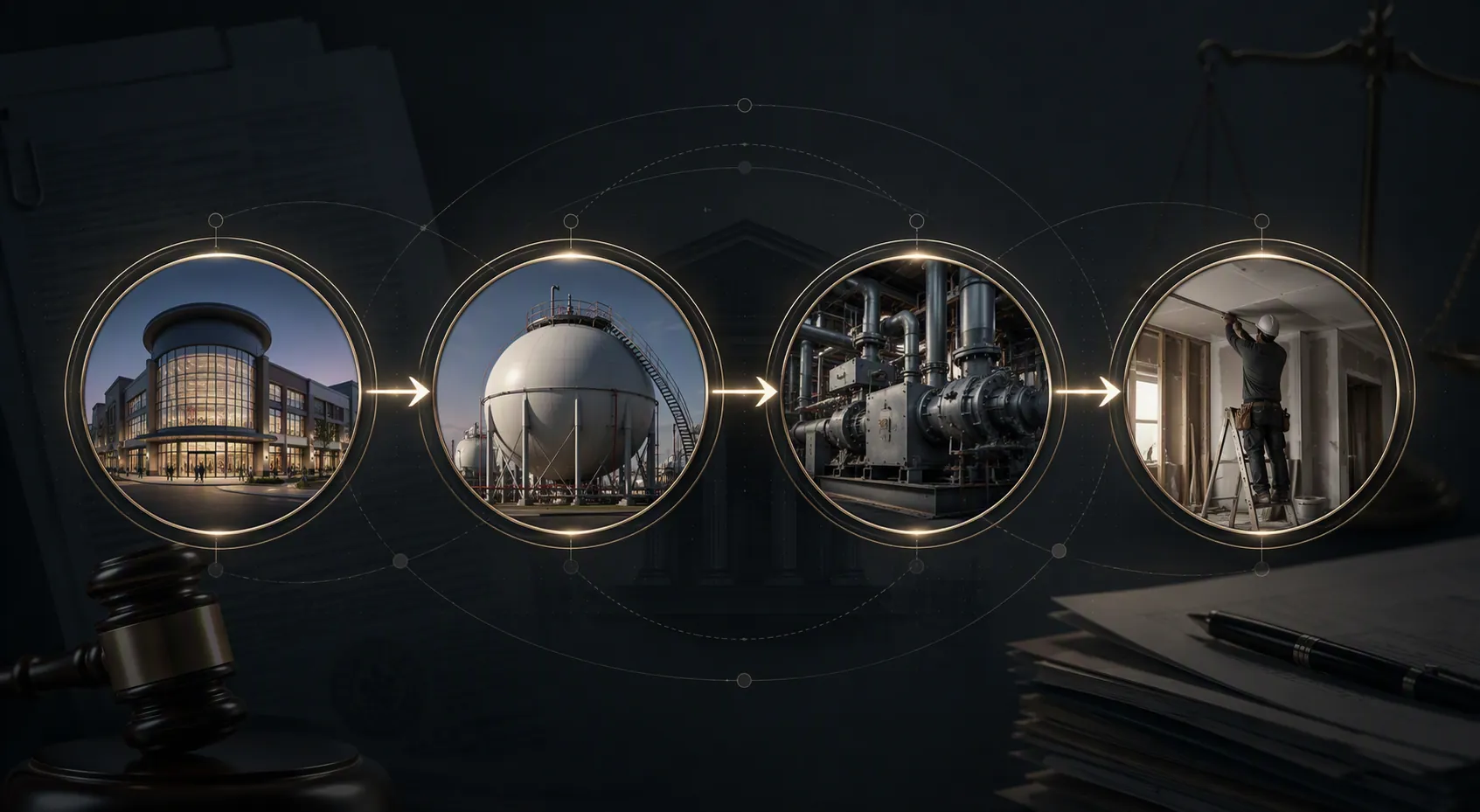
The reported gas system was not simply a buried city-gas line feeding a building from a centralized network. Aeon Mall Kumamoto used LP gas stored in an outdoor tank, with reliance on tank-level emergency shut-off. Reporting also identified a gas cogeneration system, or CGS, supplying electricity and heat and capable of switching to independent operation during grid outages.[3] That distinction matters because responsibility is more easily fragmented: storage, valves, sensors, maintenance contracts, emergency procedures, and on-site generation equipment may each have different owners, installers, inspectors, and maintenance vendors.
A piped city-gas system may offer centralized remote shut-off capability at the network level. An LP gas tank system places more attention on local shut-off, tank integrity, regulator performance, on-site piping, and the facility’s ability to recognize and isolate a leak quickly. That does not make LP gas inherently negligent. It does mean investigators will care about whether the tank-level emergency shut-off system activated, whether it was designed to respond to the earthquake conditions that occurred, and whether downstream equipment remained capable of feeding gas into a hazardous space.
The CGS adds another failure node. A cogeneration system that can operate during a grid outage may be valuable for resilience, but resilience equipment can become liability-sensitive when it interfaces with fuel, power control, emergency shutdown logic, and post-disaster operation. The question is not whether the CGS caused the explosion; that has not been established. The question is whether its valves, controls, design assumptions, or operating mode during or after the earthquake created a pathway that ordinary inspection did not catch.
How the legal theories attach to each possible failure point
The liability map is not a single line from earthquake to explosion. It is a set of conditional paths. Each party becomes legally important only if the factual record locates a duty and a failure that contributed to the deaths.
| Potential party | What investigators would need to find | Likely legal significance |
|---|---|---|
| Aeon as mall operator and emergency-plan controller | Failure to enforce evacuation, account for employees, prevent re-entry, isolate dangerous areas, maintain procedures, or verify gas shut-off | Civil Code Article 709 negligence; workplace-safety exposure; possible evidence relevant to professional negligence |
| LP gas supplier or maintenance contractor | Faulty maintenance, inadequate inspection, failure to respond, defective storage or shut-off service, or breach of gas-safety obligations | Negligence-based civil liability; High Pressure Gas Safety Act compliance evidence; possible criminal scrutiny if legally required practices failed |
| Equipment manufacturer | Manufacturing defect, design defect, or inadequate warnings in valves, sensors, regulators, CGS components, or emergency shut-off equipment | Product Liability Act Article 3 strict liability; possible defenses under Article 4 |
| Seismic retrofit contractor or design professional | Retrofit choices or construction work that weakened gas-system resilience, failed to protect piping, or ignored known seismic interface risks | Negligence under Civil Code Article 709; contractual indemnity and professional-standard disputes |
Aeon’s civil exposure would likely be framed around operational control. A mall operator can hire qualified contractors and still remain responsible for emergency governance inside the premises. The harder question is not whether Aeon had a general duty to keep people safe; it is whether the specific injury was within the scope of risks that reasonable post-quake procedures were supposed to reduce. Aeon’s statement that it had not fully anticipated this kind of explosion will be read against the existence of gas storage, emergency shut-off equipment, evacuation rules, and recent inspections.[2]
The LP gas supplier’s role cannot be assessed fully because its identity and contractual relationship with Aeon had not been publicly specified in the early reporting. If the supplier serviced the tank, inspected shut-off functions, maintained regulators, or advised on emergency procedures, plaintiffs and police will want maintenance records, test logs, technician notes, alarm histories, and call-response records. If the supplier had a narrow delivery role, exposure may be more limited. The contract will matter, but statutory safety obligations and actual practice may matter more.
Manufacturers enter the case through Japan’s Product Liability Act. Article 3 imposes strict liability for defects in manufactured products, including manufacturing defects, design defects, and failure-to-warn defects; the reported equipment categories that could become relevant include LP gas equipment, emergency shut-off valves, and related components. The Act also recognizes defenses including a state-of-the-art defense under Article 4(1) and a component manufacturer defense under Article 4(2).[4] That makes product liability highly fact-bound: it is not enough to say a valve failed after an earthquake. A claimant would need to show a legally cognizable defect and causal connection, while the manufacturer may argue that the product met then-current technical knowledge or that a component defect was caused by the design of the larger system.
The seismic retrofit contractor is the least developed potential defendant in the public record, so any assessment must stay conditional. A contractor becomes relevant if retrofit work affected gas-line routing, tank protection, anchoring, seismic joints, equipment rooms, emergency power, or the relationship between structural movement and gas-system integrity. A contractor does not become liable merely because a building it worked on later suffered an explosion. The evidence would have to show defective work, deficient design coordination, or a failure to meet applicable professional standards that contributed to the gas release or delayed isolation.
Force majeure will rise or fall on the mechanics, not the magnitude
A force majeure argument is strongest when the external event overwhelms systems despite reasonable preparation. It is weakest when the external event exposes a known vulnerability that reasonable inspection, design, or emergency practice should have addressed. In this case, the earthquake’s magnitude will matter, but it will not answer the legal question by itself.
The decisive mechanics are likely to be mundane: valve position, sensor status, tank pressure, alarm logs, power state, manual override records, employee-location records, inspection forms, training attendance, and radio or internal-message history. If the emergency gas shut-off system activated promptly and isolated the relevant supply, the case may shift toward downstream leakage, equipment damage, ignition control, or unexpected structural pathways. If it did not activate, the inspection paradox becomes severe: why did a system that recently showed no abnormalities fail at the first publicly known moment when it mattered?[2]
That is why the March and June inspections are not a side detail. Inspections are often treated publicly as reassurance; in litigation, they become discovery targets. What was within the scope of the voluntary inspection? What did the statutory inspection under the High Pressure Gas Safety Act require? Was emergency shut-off tested functionally or visually checked? Were earthquake-triggered conditions simulated, assumed, or excluded? Did any recommendation go unresolved? The phrase “no abnormalities” is a conclusion, not a record.
Aeon’s announcement of emergency nationwide inspections after the blast may be prudent risk control, and it should not be mechanically converted into an admission that prior inspections were defective. But it does show that the company understood the event as system-relevant beyond one damaged building.[2] For other mall operators, the lesson is not to wait for a final causation report before preserving records. The documents most likely to matter are also the ones easiest to overwrite: digital alarm histories, access logs, CCTV retention, maintenance tickets, and internal incident communications.
Civil claims, workplace duties, and the employee-status problem
Because the confirmed fatalities were employees, the case is also a workplace-safety event. Industrial Safety and Health Act duties, including employer obligations to prevent hazards, enter the analysis alongside premises liability and tort. Workers’ compensation can cover medical expenses and lost income, but the availability of compensation does not necessarily eliminate separate tort claims where gross negligence is shown.[5]
That employee-status point narrows some theories and strengthens others. Customer-injury cases often focus heavily on public-premises warnings, crowd control, and invitee protection. Here, the likely record will focus more intensely on employee instructions after evacuation, chain of command, role-specific emergency assignments, and whether workers were placed or allowed to remain in a hazard zone after the public had been cleared. Families will want to know whether the workers were victims of unavoidable conditions or of a preventable breakdown in the employer’s emergency system.
Civil Code Article 709 remains relevant even in a workplace setting. It can reach defendants outside the direct employment relationship, including suppliers, maintenance firms, contractors, and manufacturers where negligence rather than product defect is the chosen theory. It also gives families a way to frame conduct that workers’ compensation schedules may not fully address, particularly where the evidence supports a serious departure from required safety practice.
Criminal exposure depends on whether safety failure becomes legally attributable
The criminal question is narrower and more demanding than the civil one. Reuters reported that, if investigators trace the explosion to failure of legally required safety equipment, Kumamoto Prefectural Police may pursue charges under Penal Code Article 211 for professional negligence resulting in death, which carries penalties of up to five years’ imprisonment or a fine.[3] That kind of exposure would require more than a tragic outcome and more than ordinary hindsight criticism.
The likely criminal focus would be on persons with defined professional duties: managers responsible for emergency operations, facility personnel responsible for gas safety, contractors responsible for maintenance, or others whose legal and practical roles required them to prevent the specific danger. Investigators would need to connect a required act or omission to the deaths. A failed device may generate civil product claims; it does not automatically identify a human professional negligence defendant. A violated safety rule may matter greatly; it still must be tied to causation.
High Pressure Gas Safety Act compliance will likely operate on two levels. First, it may create direct regulatory exposure if the gas installation, inspection, maintenance, or reporting obligations were breached. Second, even without a separate regulatory charge, the inspection regime supplies evidence for civil and criminal cases: what the law required, who was responsible, what records were created, and whether the system’s apparent compliance was real or merely formal.
What counsel should expect to fight over next
The first fight will be document preservation. Every party in the chain has a reason to secure and segregate records before ordinary retention cycles, repairs, or public-relations reviews disturb them. For Aeon, that means evacuation manuals, training records, employee rosters, re-entry instructions, inspection documents, alarm logs, CCTV, radio traffic, and post-quake command records. For gas suppliers and maintenance vendors, it means delivery records, maintenance logs, test results, technician communications, service contracts, and emergency-response timelines. For manufacturers and contractors, it means specifications, warnings, installation records, design-change files, retrofit drawings, and component traceability.
The second fight will be characterization. Aeon and other defendants may describe the quake as an unforeseeable triggering event. Claimants will likely describe the explosion as a secondary disaster that safety systems and evacuation rules existed to prevent. Both characterizations can contain part of the truth. The legal outcome will depend on which facts connect the earthquake to the gas release and which facts connect human or product failure to the employees’ continued exposure.
The third fight will be allocation. Even if negligence or defect is eventually shown, responsibility may be split among operator, supplier, manufacturer, contractor, and individual professionals. Contractual indemnity and insurance disputes will run behind the public investigation. A mall operator may blame equipment. A manufacturer may blame installation or maintenance. A gas supplier may blame building-side systems or emergency management. A contractor may argue its work did not affect the relevant gas pathway. Those disputes are not distractions; they are how a multi-party industrial accident is usually converted into payable liability.
No public record yet proves who caused the Aeon Kumamoto explosion. The available facts do prove that “the earthquake did it” is too simple. A delayed blast after reported evacuation, possible failure to follow a non-return rule, uncertainty over emergency gas shut-off activation, and clean recent inspections all point toward a preventability analysis. The decisive evidence will come from shut-off activation records, inspection scope, employee movement, product condition, gas-system design, and the exact path from earthquake damage to ignition.
This is an early risk-digest analysis, not legal advice and not a prediction of charges. The prudent reading is provisional: preserve the primary records, resist corporate language that converts uncertainty into inevitability, and wait for police, fire, engineering, and corporate investigation materials before treating any party as either absolved or condemned.
References
- Quake kills 12 in Kumamoto; rescue continues at mall, factory — The Asahi Shimbun
- [Press Conference Summary] AEON MALL Kumamoto Explosion Accident: Analysis from Facilities and Infrastructure Perspective — note.com/Sakak
- After the quake came the blast: Inside Japan's shopping mall disaster — Reuters
- Product Liability Laws and Regulations 2026 — Japan — ICLG
- Features of the Japanese Industrial Safety and Health Act — PMC/National Library of Medicine
Related records
Tool profile
Browse tool evaluations →Governing regulation
Browse the obligations tracker →Preventive workflow
Browse verification workflows →
Report a correction or tip
Spotted an outdated figure, a misstated fact, or a ruling this case record should reflect? Public comments are disabled for this content given the professional cost of a misreported case outcome, penalty amount, or rule text — use the structured correction channel instead.
Report a correction or tip for this record →