
Who Bears Liability When TSA Screening Goes Private?
Who can be sued when airport screening goes private? 49 U.S.C. § 44920(g) shields airport operators for the opt-in decision and screener misconduct, but operator-conduct claims, contractor liability, and Gold+ technology failures remain exposed — and claims route through the FTCA for federal screeners, directly to the contractor under SPP.
- Jurisdiction
- US - Fourth Circuit
- Court
- U.S. Court of Appeals for the Fourth Circuit
- AI tool named
- Gold+
- Ruling date
- Apr 18, 2023
- Source document
- View primary court order ↗
- Last verified
- Aug 4, 2026
Lex Machina Review is an independent risk-tracking and reference resource. Nothing on this site is legal advice, and using it does not create an attorney-client relationship. Every record is reviewed against primary sources but may not reflect the most current status of a matter — always verify directly against the cited court order, rule text, or a licensed attorney before relying on it.
Companion explanation — secondary to the source document above
An airport that moves from federal TSA screeners to private checkpoint screening should not start its liability analysis with the policy question. It should start with the caption. If a passenger, employee, contractor, or insurer later alleges injury at the checkpoint, the first cut is: airport operator, private screening company, United States, technology vendor, or some combination of them. For airport operators, the controlling text is 49 U.S.C. § 44920(g), which protects the operator from damages claims tied to the opt-in or opt-out decision and to specified screener misconduct, while preserving claims based on the operator’s own acts or omissions and preserving SAFETY Act treatment. [1]
The resulting map is narrower than the usual shorthand. The airport operator has a statutory shield for the privatization decision and for “negligence, gross negligence, or intentional wrongdoing” by the private screening company or federal screening employees. [1] Federal-screener tort claims still route through the Federal Tort Claims Act framework; Osmon matters here because the Fourth Circuit, as reported in 2023, treated TSA screeners as law-enforcement officers for the FTCA intentional-tort proviso, allowing assault and battery claims against the United States to proceed. [2] At Screening Partnership Program airports, TSA’s SF-95 cover package identifies claims routing to the private screening company rather than TSA, a filing instruction that should be checked against the current PDF before use. [3]
Risk Digest note: this article is risk information for counsel and insurance review, not legal advice. Source routing and statutory language were last checked against the cited sources on August 4, 2026 UTC; current agency forms, contracts, and local pleadings should be verified before reliance.
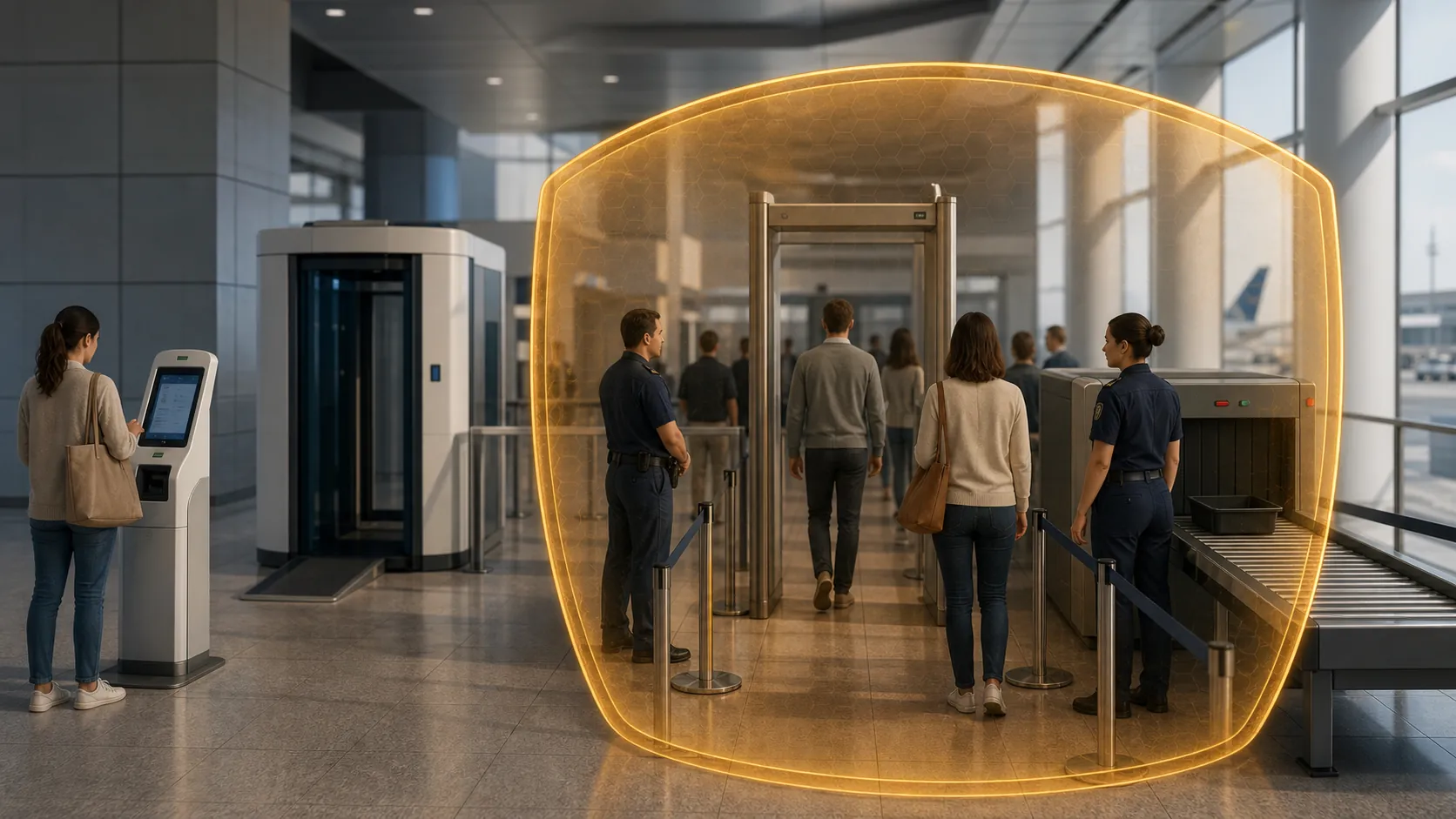
The statutory shield protects two categories, not the whole checkpoint
Section 44920(g) is doing the main work. It is not a generalized airport-immunity provision. It addresses damages claims against “an operator of an airport” and protects that operator from liability for two types of claims: claims relating to the operator’s decision to submit or not submit an application for private screening, and claims relating to misconduct by a qualified private screening company or federal screening employees providing passenger and property screening services at the airport. [1]
That first category is the cleanest. If the theory is that the airport should not have opted into private screening, should have opted in sooner, should have stayed with federal screeners, or should have declined the program entirely, § 44920(g) gives the operator a direct statutory answer. The shield reaches the decision to apply and the decision not to apply. [1]
The second category is also substantial, but it should be read by actor and act. The protected misconduct is misconduct by the qualified private screening company or by federal screening employees providing screening services. The statute expressly names negligence, gross negligence, and intentional wrongdoing. [1] That language matters to airport defendants because plaintiffs often plead around labels. A complaint may call the checkpoint episode negligent supervision, intentional battery, false detention, negligent training, or unsafe checkpoint operation. The airport operator’s stronger shield argument exists where the alleged wrong is still, in substance, the screener’s conduct rather than the airport’s separate conduct.
| Allegation | First liability question | Likely statutory consequence |
|---|---|---|
| The airport should not have joined private screening or should have remained with federal TSA screening. | Is the claim about the operator’s opt-in or opt-out decision? | Airport-operator shield under § 44920(g). [1] |
| A private screener used excessive force, mishandled property, or wrongfully detained a passenger. | Is the alleged act by the qualified private screening company or its employees? | Airport operator has a § 44920(g) shield; contractor exposure must be analyzed separately. [1] |
| A federal TSA screener committed an intentional tort during screening. | Is the claim against the United States under the FTCA framework? | Osmon supports FTCA routing for certain intentional-tort claims against the United States in the Fourth Circuit posture reported. [2] |
| The airport’s own queue design, premises condition, local technology choice, or operating instruction caused the injury. | Is the theory based on the airport operator’s own acts or omissions? | § 44920(g) expressly does not relieve the operator from liability for its own acts or omissions. [1] |
| A screening technology failure caused a loss after a Gold+ transition. | Who selected, controlled, maintained, integrated, or overrode the technology? | No blanket answer from § 44920(g); actor-specific and contract-specific analysis remains necessary. [1] |
The carve-outs are where airport exposure comes back into view
The most important sentence for plaintiff-side pleading and defense-side tender analysis is the one that prevents the shield from swallowing the airport’s own conduct. Section 44920(g) does not relieve an airport operator from liability for the operator’s own acts or omissions. [1] That is not decorative language. It is the difference between a claim that the screener committed the tort and a claim that the airport created or failed to correct the condition that made the injury likely.
A premises claim is the simplest example. If a traveler falls because of a condition in the checkpoint area and pleads that the airport controlled the floor surface, lighting, crowd-control barriers, or emergency egress route, the airport will not make that claim disappear merely by pointing to private screening. The same is true for an allegation that the airport issued a local instruction, provided defective infrastructure, ignored a known hazard, or retained operational control over a piece of equipment outside the screening company’s responsibility. Those are not facts supplied by a particular reported case here; they are the pleading routes the carve-out invites counsel to test.
The SAFETY Act language should be kept in a separate box. Section 44920(g) preserves SAFETY Act treatment rather than resolving whether any particular screening system, contractor process, technology deployment, or security service has protection. [1] That means the operator’s § 44920(g) defense and a contractor’s or vendor’s SAFETY Act position are not the same issue. They may sit in the same tender letter, but they do not come from the same legal source.
This is also where older airport concerns remain relevant without turning the article into program history. CRS reported in 2004 that liability exposure was a threshold issue for airports considering screener privatization and that, as of that report, no formal statutory indemnity or liability amendment had been enacted to resolve those concerns. [4] Section 44920(g) later gives operators a real protection, but its carve-out confirms why liability anxiety did not become obsolete. The airport still has to know which conduct is being pleaded as its own.
Claims routing splits at the identity of the screener
After an incident, the routing question should be asked before anyone argues the merits. Federal screeners and private SPP screeners do not send a claimant down the same path. The airport operator may have the same § 44920(g) shield in both settings, but the defendant and filing route for the underlying screening conduct can change.
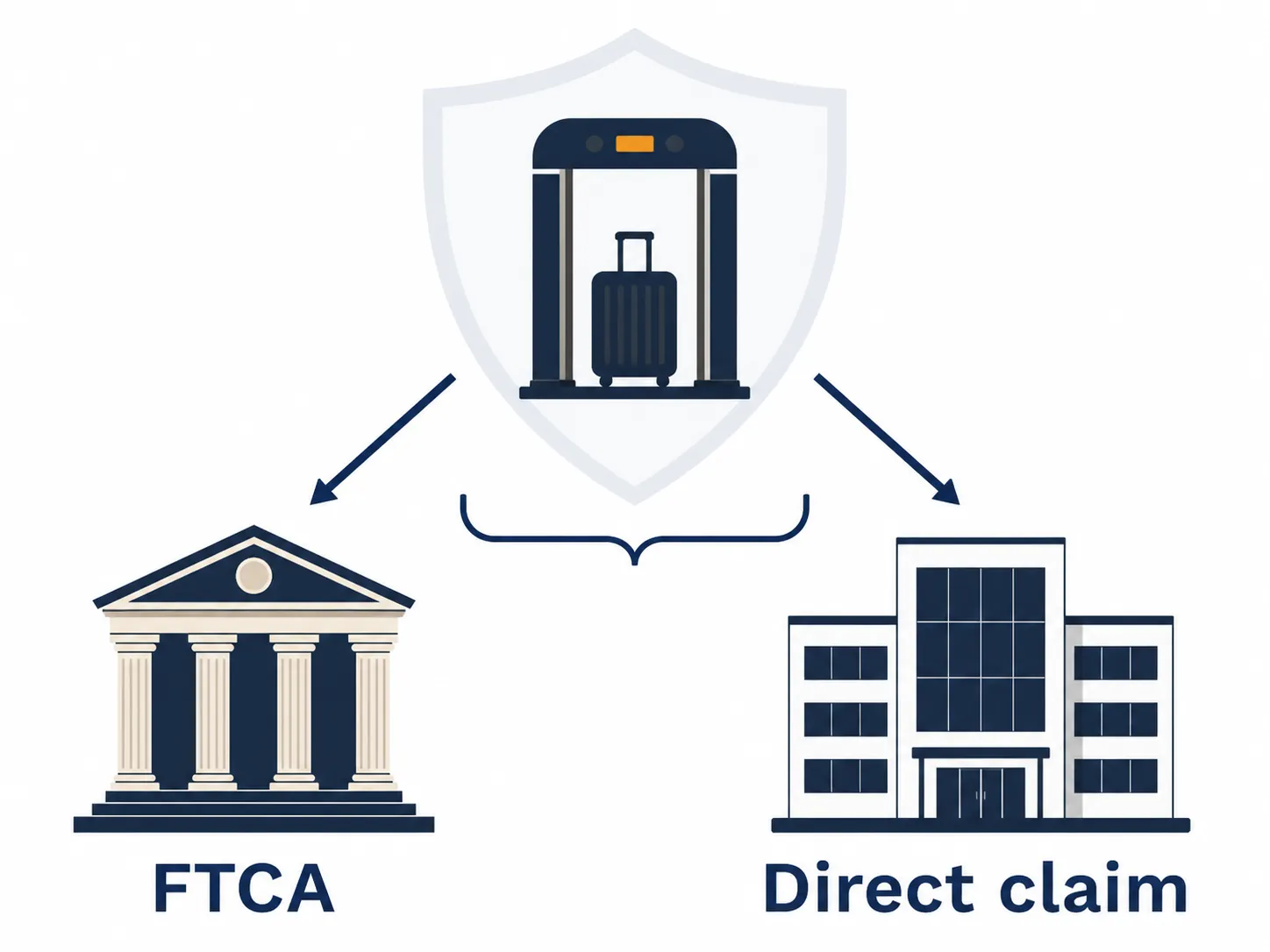
Federal TSA screeners: FTCA route, with Osmon used narrowly
For federal TSA screeners, the claim-routing frame is the FTCA. Osmon is useful here because it anchors one side of the split: according to the Courthouse News report, the Fourth Circuit held that TSA screeners qualify as law-enforcement officers under the FTCA’s intentional-tort proviso, joining the Third and Eighth Circuits and allowing assault and battery suits against the government to proceed. [2]
That is enough for this airport-operator map. The passenger-remedy fight over TSA screeners, FTCA exceptions, Bivens theories, and circuit fragmentation belongs mostly elsewhere. For that record, see the site’s companion analysis of TSA privatization and passenger tort liability. The point here is narrower: when the alleged wrong is committed by a federal screener, counsel should think FTCA routing; when the airport operator is named, § 44920(g) must still be tested against the pleaded theory.
Private SPP screeners: direct contractor route, not a TSA substitute
For private screening under the Screening Partnership Program, the routing looks different. TSA’s SF-95 cover package states that claims arising at SPP airports are to be filed directly with the private screening company rather than TSA. [3] That instruction does not decide liability. It decides where the claimant is pointed first. Contractor defenses, contract terms, insurance, indemnity, employee status, and any federal preemption or SAFETY Act issues remain separate questions.
This distinction is easy to blur in coverage because the checkpoint may look the same to a traveler. It is not the same for a notice letter. If the personnel are federal screeners, counsel checks the FTCA track and the current case law. If the personnel are private SPP screeners, counsel checks the contractor, the TSA form language, the airport’s SPP documentation, and the contract allocation. If the airport is named in either situation, counsel separates screener misconduct from the operator’s own acts or omissions before deciding whether § 44920(g) is the right defense.
Contractor exposure is not erased by the airport’s shield
Section 44920(g) protects the airport operator; it does not say that a qualified private screening company cannot be sued for its own conduct. [1] In the SPP setting, that is the practical point of the SF-95 routing instruction. The claimant may be directed away from TSA, and the airport may have a statutory shield, but the private screening company still has to answer for the conduct alleged against it. [3]
The contract layer matters because § 44920(f) gives the TSA contract-termination authority in this program. [1] Termination is not a tort remedy for an injured claimant. It is a performance backstop. For contractor counsel and insurers, however, the existence of that backstop affects how failures are documented, how corrective action is framed, and how an incident may turn into both a claim file and a contract file.
The cleaner defense memo therefore has two tracks. One track asks whether the plaintiff can keep the airport operator in the case despite § 44920(g). The other asks whether the private screening company, its employees, subcontractors, technology vendors, or insurers bear the exposure that the statute does not place on the airport. A good tender letter will not merge those questions just because the incident occurred in one checkpoint lane.
Gold+ makes the unshielded zones harder to ignore
Gold+ matters because it makes the privatization question current again in Q3 2026 and because modern checkpoint operations are increasingly tied to equipment, data flow, and automated processes rather than only a screener-passenger encounter. TSA maintains a Gold+ program page, and Federal News Network reported on July 20, 2026 that Des Moines and Tampa had opted into TSA’s new privatization model, with Tampa targeting May 2027. [5][6]
The liability question is not whether Gold+ is good labor policy or good procurement policy. The sharper question is what happens when an alleged injury or loss is attributed to a contractor-managed technology process: a scanning failure, an automated lane malfunction, a software instruction, a misrouted bag, a checkpoint alarm protocol, a maintenance omission, or a human override of a machine decision. The cited sources do not identify a court decision assigning those Gold+ technology failures among the airport operator, screening contractor, TSA, and vendors. That absence should be treated as an uncertainty, not a defense.
The same statutory map still applies. If the claim is just that the airport made the privatization decision, § 44920(g) is strong. If the claim is that a private screener committed negligence, gross negligence, or intentional wrongdoing, the airport has the statutory shield and the contractor becomes the more direct target. If the claim is that the airport selected, integrated, powered, maintained, housed, or controlled the technology in a negligent way, the operator-own-conduct carve-out becomes the battleground. [1]
The labor-transition record can matter indirectly because staffing, training, and operational control often appear in incident investigations. It should not take over the liability analysis. For the Gold+ and labor-litigation context, see the site’s separate record on AFGE v. Noem and TSA union litigation. In a claim file, the more immediate questions are who controlled the act, who owned the equipment, who trained the personnel, who held the maintenance obligation, and which contract provision assigns the loss.
The unresolved airport-managed-screening question should stay unresolved
One category should not be overstated: airports that manage screening directly or occupy a role beyond ordinary airport-operator status. CRS flagged unresolved airport-liability questions in the privatization discussion, and the cited sources do not close that gap. [4] If an airport authority is not merely the owner or operator hosting TSA-approved private screening, but is alleged to have directly managed screening functions, counsel should not assume § 44920(g) answers every claim. The statutory shield still has to be matched to the defendant’s actual role and the plaintiff’s actual theory.
That is especially important for public-entity defendants. A state-law immunity defense, notice-of-claim requirement, indemnity clause, insurance exclusion, federal contractor argument, or SAFETY Act position may matter as much as § 44920(g), depending on the pleading. The airport operator’s federal shield is a major defense; it is not the entire defense file.
What should be checked in the first claim review
The first review after a checkpoint incident should be mechanical before it becomes argumentative. Counsel should identify the defendant, actor, forum, and statutory route before drafting the immunity section.
- Confirm whether the alleged actor was a federal TSA screener, an employee of a qualified private screening company, a subcontractor, an airport employee, a vendor, or a mixed team.
- Separate the theory of liability from the location of the incident. A checkpoint location does not automatically make every claim a screening-conduct claim.
- Read § 44920(g) against the complaint: opt-in decision, opt-out decision, screener negligence, screener gross negligence, screener intentional wrongdoing, or operator-own conduct. [1]
- For federal-screener claims, check the current FTCA posture and verify Osmon against the underlying Fourth Circuit opinion before relying on the reported circuit alignment. [2]
- For SPP claims, pull the current TSA SF-95 package and the airport’s current screening contract before assuming the private-company routing language remains unchanged. [3]
- For Gold+ or technology-linked claims, identify who selected, owned, maintained, configured, monitored, and overrode the relevant system.
- Do not treat SAFETY Act treatment as resolved by § 44920(g). The statute preserves the issue; it does not decide it for a particular technology or service. [1]
- Check contract termination, indemnity, additional-insured status, defense obligations, and incident-reporting provisions separately from tort liability. [1]
The narrowed answer is defensible. The airport-operator shield in § 44920(g) is real, citeable, and likely valuable in the exact places Congress named: the privatization decision and misconduct by private or federal screeners. It does not erase airport exposure. It redirects the hard work to the operator’s own acts or omissions, the contractor’s direct responsibility, preserved SAFETY Act questions, contract-termination and indemnity consequences, and the untested technology-failure theories now made more practical by Gold+.
References
- 49 U.S. Code § 44920 - Security screening opt-out program — Cornell Legal Information Institute
- TSA screeners on hook for federal tort claims — Courthouse News Service, Apr. 18, 2023
- OMB-Approved SF-95 Cover Package — Transportation Security Administration
- Airport Security: Screener Privatization — EveryCRSReport
- Gold+ — Transportation Security Administration
- Two airports opt into TSA’s new privatization model — Federal News Network, July 20, 2026
Related records
Tool profile
Browse tool evaluations →Governing regulation
Browse the obligations tracker →Preventive workflow
Browse verification workflows →
Report a correction or tip
Spotted an outdated figure, a misstated fact, or a ruling this case record should reflect? Public comments are disabled for this content given the professional cost of a misreported case outcome, penalty amount, or rule text — use the structured correction channel instead.
Report a correction or tip for this record →