
PA board revoked psychiatrist Amy Mazza MacIntyre's license
Primary-source record of the Pennsylvania State Board of Medicine's May 28, 2026 revocation of Amy Mazza MacIntyre, M.D.'s medical license, including the board's findings, the penalty imposed, and appeal docket status. The case doubles as the human-side benchmark for the board's parallel enforcement action against a chatbot that claimed a fabricated psychiatrist license number, since both claims fail the same issuing-board verification check.
- Jurisdiction
- US-PA
- Court
- Pennsylvania State Board of Medicine
- AI tool named
- Emilie (Character Technologies)
- Ruling date
- May 28, 2026
- Source document
- View primary court order ↗
- Last verified
- Jul 31, 2026
Lex Machina Review is an independent risk-tracking and reference resource. Nothing on this site is legal advice, and using it does not create an attorney-client relationship. Every record is reviewed against primary sources but may not reflect the most current status of a matter — always verify directly against the cited court order, rule text, or a licensed attorney before relying on it.
Companion explanation — secondary to the source document above
Risk record: Amy Mazza MacIntyre, M.D.
| Field | Record |
|---|---|
| Subject | Amy Mazza MacIntyre, M.D. |
| Issuing authority | Pennsylvania State Board of Medicine |
| Board case | Case No. 21-49-012788 |
| Board action | Medical license revoked |
| Revocation date | May 28, 2026 |
| Public trigger | Philadelphia Inquirer report by Wendy Ruderman, July 30, 2026 |
| Appeal / stay posture | No stay status is established in the supplied source set; a live docket check is required before reliance |
| Last verification posture for this digest | July 31, 2026 UTC; non-advice risk record |
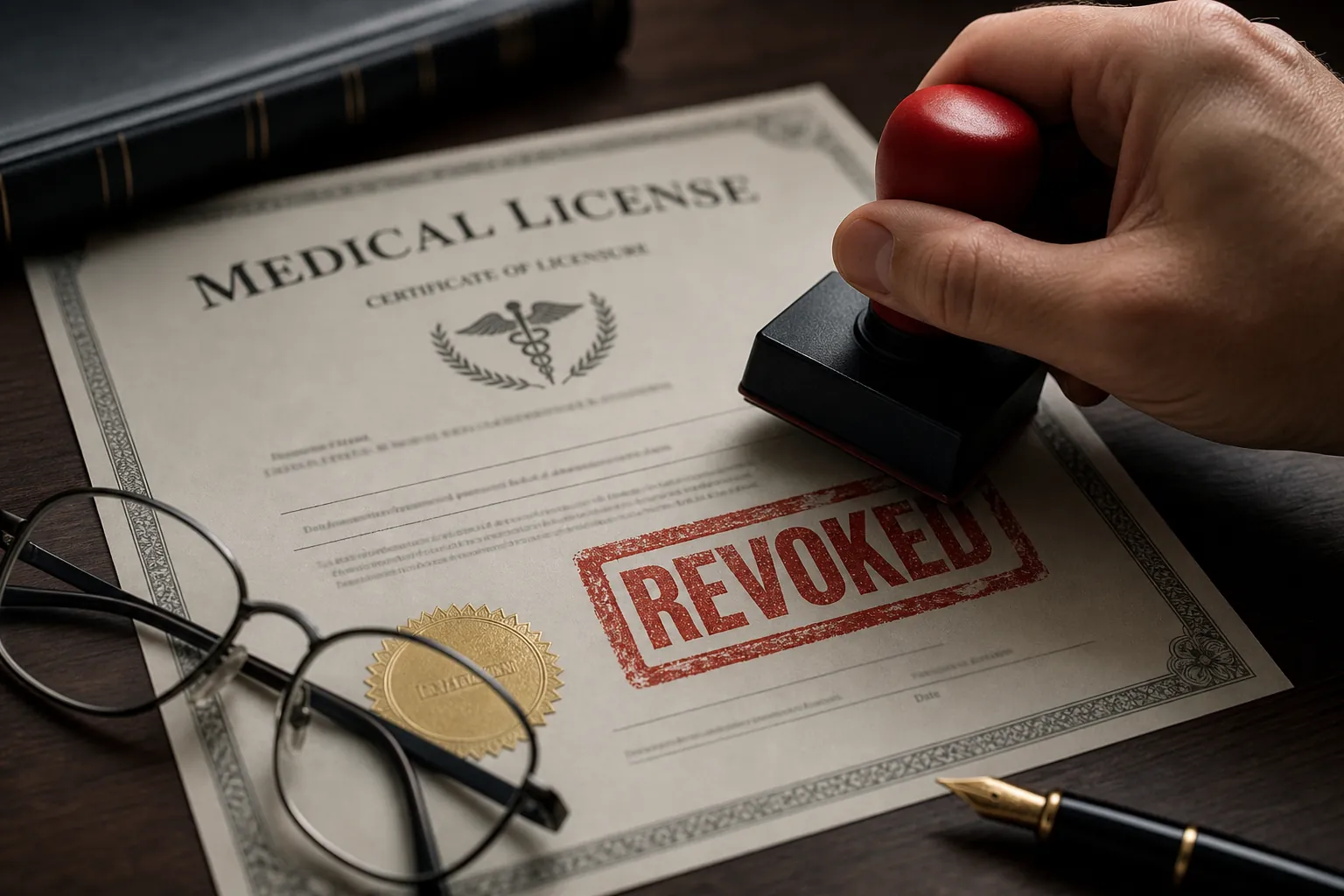
The short answer to the amy mazza macintyre psychiatrist case query is this: the Pennsylvania State Board of Medicine, in Case No. 21-49-012788, issued a final adjudication and order revoking Amy Mazza MacIntyre, M.D.’s medical license on May 28, 2026. That is the operative professional-risk fact identified for this record, and it should be treated as a board action, not as a headline summary. [1]
The July 30, 2026 Philadelphia Inquirer article is useful because it explains why many readers are now searching the name. It is not the endpoint of the check. For reliance purposes, the chain runs through the issuing authority, the case number, the final order, the disciplinary status, and any appeal or stay docket that could affect whether the order is currently enforceable. [2]
What the board action does, and what it does not let a reader assume
A revocation is not a credential footnote. It is the board’s removal of the authority represented by the license. Once the Pennsylvania State Board of Medicine imposed revocation in Case No. 21-49-012788, the relevant risk question stopped being whether MacIntyre had ever held a real medical license and became whether any current source still supported reliance on that license after the May 28, 2026 order. [1]
The cited materials do not reproduce the board’s itemized factual findings. That absence matters. A litigation file, expert-vetting memo, journalist’s note, or internal watchlist should not fill the gap with paraphrase. The narrower, source-supported statement is that the Pennsylvania board entered a final adjudication and order revoking MacIntyre’s medical license on May 28, 2026. Anyone who needs the misconduct basis should pull and quote the order itself. [1]
That distinction is not pedantry. There is a difference between saying a physician was the subject of a revocation order and saying why the board imposed that penalty. The first statement can be tied to the board action identified here. The second requires the findings section of the final adjudication and order, not a secondary account or a compressed description in a search result.
Nor should an appeal reference be treated casually. An appeal may be important for the respondent, for public reporting, and for later legal posture. For reliance, the key operational question is narrower: has a court or tribunal stayed the revocation, altered it, or otherwise changed the current effect of the board’s order? The cited sources do not establish a stay. Until a live docket check says otherwise, the defensible record is the board’s May 28, 2026 revocation order, with the appeal or stay status separately verified before anyone relies on the credential. [1]
The check is a process, not a memory test
The point of a professional-license check is not to discover whether a profile, résumé, pleading, expert disclosure, or news article once described someone as licensed. The point is to verify the present status against the issuing system and then preserve enough detail that another person can repeat the check.
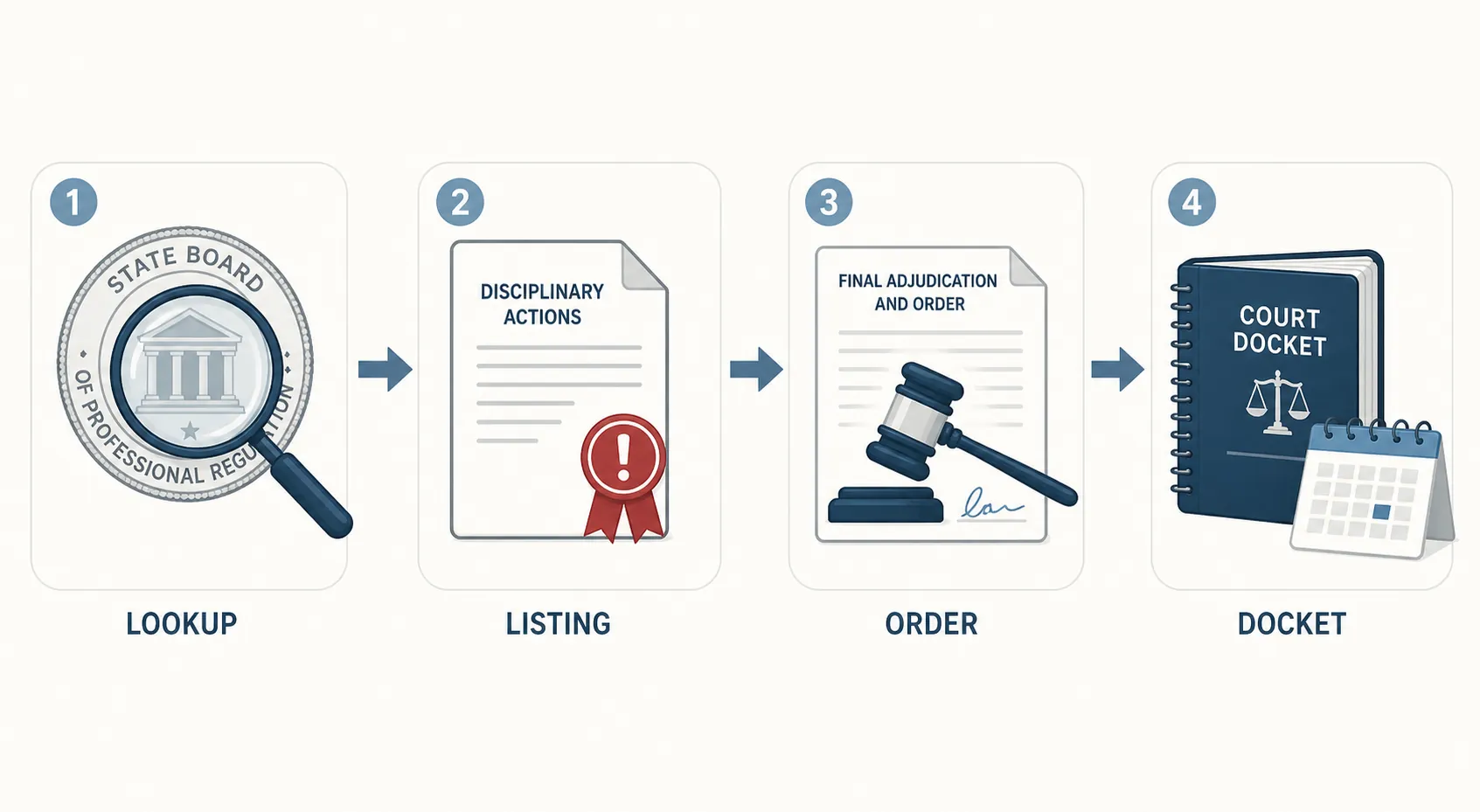
- Start with the issuing-board lookup. Confirm the name, profession, jurisdiction, license number if available, and current license status.
- Check the disciplinary-action listing. A profile field may not carry the full risk history, and a disciplinary list may point to orders that the profile view does not explain.
- Pull the underlying final adjudication and order. That is where the penalty, date, and findings belong.
- Check the appeal and stay docket. Do not assume that an appeal erases a revocation, and do not assume that a revocation remains unstayed if a docket shows otherwise.
- Record the timestamp. A license status is a live status, so an undated screenshot or old diligence note is weak evidence of present authority.
For a litigator checking a proposed expert, the consequence is immediate. If the board record shows revocation and no docket source supplies a stay, the credential representation cannot be treated as an active medical license without further verification. For a law-firm risk manager, the same fact belongs in an internal watchlist with the board name, case number, order date, and verification timestamp. For a journalist, the safer sentence names the board action and date rather than turning the case into a broader professional-collapse narrative.
Why this human disciplinary record belongs beside the AI credential case
MacIntyre’s case is not an AI case. Its relevance here is narrower and more useful: it shows that a real professional license can move from valid credential to revoked status through an issuing-board order. That is the human-side benchmark for a parallel failure mode in the Character Technologies matter, where the Commonwealth filed suit on May 1, 2026 over the chatbot “Emilie” allegedly holding itself out as a licensed psychiatrist with a fabricated Pennsylvania medical license number. [3]
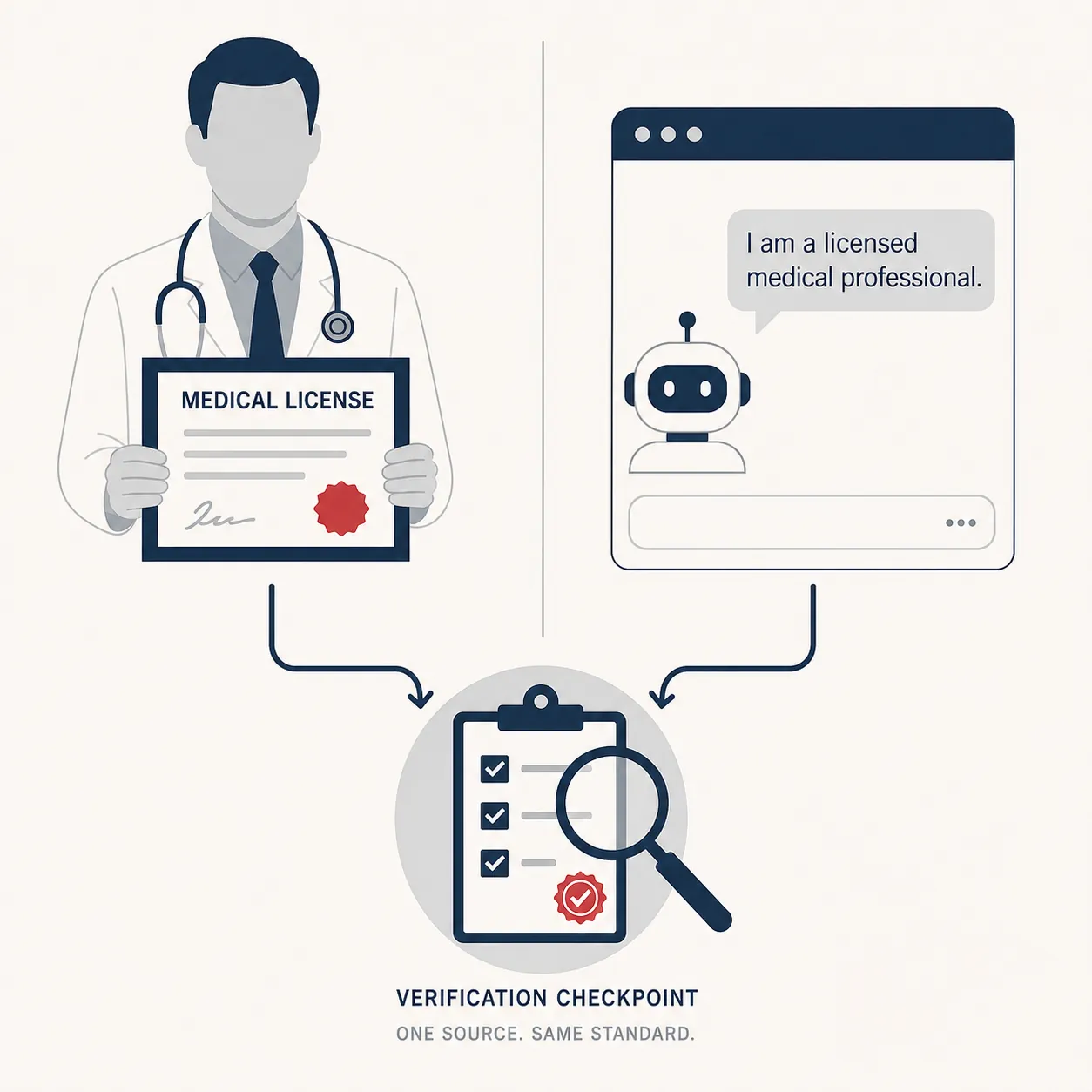
Those are different facts and different legal postures. A physician with a real license later revoked is not the same problem as a chatbot allegedly inventing a license number. The shared test is still the same. The claimant says “licensed.” The user, lawyer, patient, platform, reporter, or court-facing filer must ask: which issuing board, which license number, what current status, what disciplinary record, and what docket effect today?
That shared test catches both failure modes. In the MacIntyre record, the source-supported problem is not that the license never existed; it is that the board imposed revocation on May 28, 2026. In the Character Technologies matter, the alleged problem is more basic: the psychiatrist credential claim was tied to a fabricated Pennsylvania medical license number. Both claims collapse if the verifier refuses to stop at the word “licensed” and goes to the issuing source. [1][3]
That is also why the Inquirer report should be treated as a trigger, not a substitute for the record. Public reporting may surface the name, the human context, and the reason the case is newly visible. The reliance decision still sits elsewhere. It sits with the State Board record, the order, and the live docket posture. [2]
Use this case as a reliance check, not a character sketch
There is a human case behind the docket, and a revoked medical license is not an abstract event for the physician, patients, or anyone who previously relied on the credential. But the professional-risk use of this record is deliberately narrower. It answers whether a current credential claim can be accepted without fresh verification. On the sources cited here, it cannot.
A license is not a badge copied from an old profile. It is a status maintained, changed, suspended, revoked, stayed, or restored by institutions with authority to do those things. In this record, that institution is the Pennsylvania State Board of Medicine, the case is No. 21-49-012788, and the operative penalty identified here is revocation effective May 28, 2026. [1]
Before relying on any “licensed psychiatrist” claim—human or machine-generated—the live check is the same: board lookup, disciplinary record, underlying order, and appeal or stay docket. Anything less leaves the most important word in the claim unverified.
References
- Final Adjudication and Order, Case No. 21-49-012788, Pennsylvania State Board of Medicine, May 28, 2026
- Main Line psychiatrist stripped of her medical license, Philadelphia Inquirer, July 30, 2026
- Commonwealth v. Character Technologies, No. 220 MD 2026, May 1, 2026
Related records
Tool profile
Browse tool evaluations →Governing regulation
Browse the obligations tracker →Preventive workflow
Browse verification workflows →
Report a correction or tip
Spotted an outdated figure, a misstated fact, or a ruling this case record should reflect? Public comments are disabled for this content given the professional cost of a misreported case outcome, penalty amount, or rule text — use the structured correction channel instead.
Report a correction or tip for this record →