
Arion Carter's $427 Flight Shows the NCAA's Football Agent Trap
The NCAA suspended Tennessee football player Arion Carter for two games after he accepted a $427 flight from an NFL agent while exploring the draft. The same benefit would have been permissible for a basketball player under the NCAA's agent certification program, exposing a sport-specific compliance trap that legal counsel must address when advising pre-draft athletes.
- Jurisdiction
- United States
- Court
- NCAA
- AI tool named
- none
- Ruling date
- Jul 29, 2026
- Source document
- View primary court order ↗
- Last verified
- Jul 30, 2026
Lex Machina Review is an independent risk-tracking and reference resource. Nothing on this site is legal advice, and using it does not create an attorney-client relationship. Every record is reviewed against primary sources but may not reflect the most current status of a matter — always verify directly against the cited court order, rule text, or a licensed attorney before relying on it.
Companion explanation — secondary to the source document above
Arion Carter’s NCAA suspension over an agent-paid flight is not hard to understand because the benefit was lavish. It is hard to understand because it was ordinary. Carter signed an NFL agent agreement on Dec. 12, 2025. The agent paid $427.48 for Carter to travel. Carter then suffered a turf-toe injury sometime between Jan. 5 and Jan. 16, 2026, needed surgery, withdrew from the NFL draft before the Jan. 26 deadline, terminated the agent agreement, and fully repaid the flight on Jan. 19. The NCAA still treated the flight as a Level III violation and imposed a three-game suspension, later reduced to two games on appeal. [1]
That sequence is the compliance problem in miniature. The athlete did not stay in the draft. The money was not large. The benefit was repaid. The agreement was terminated before the withdrawal deadline. None of that changed the basic rule result for a football player testing the NFL waters.
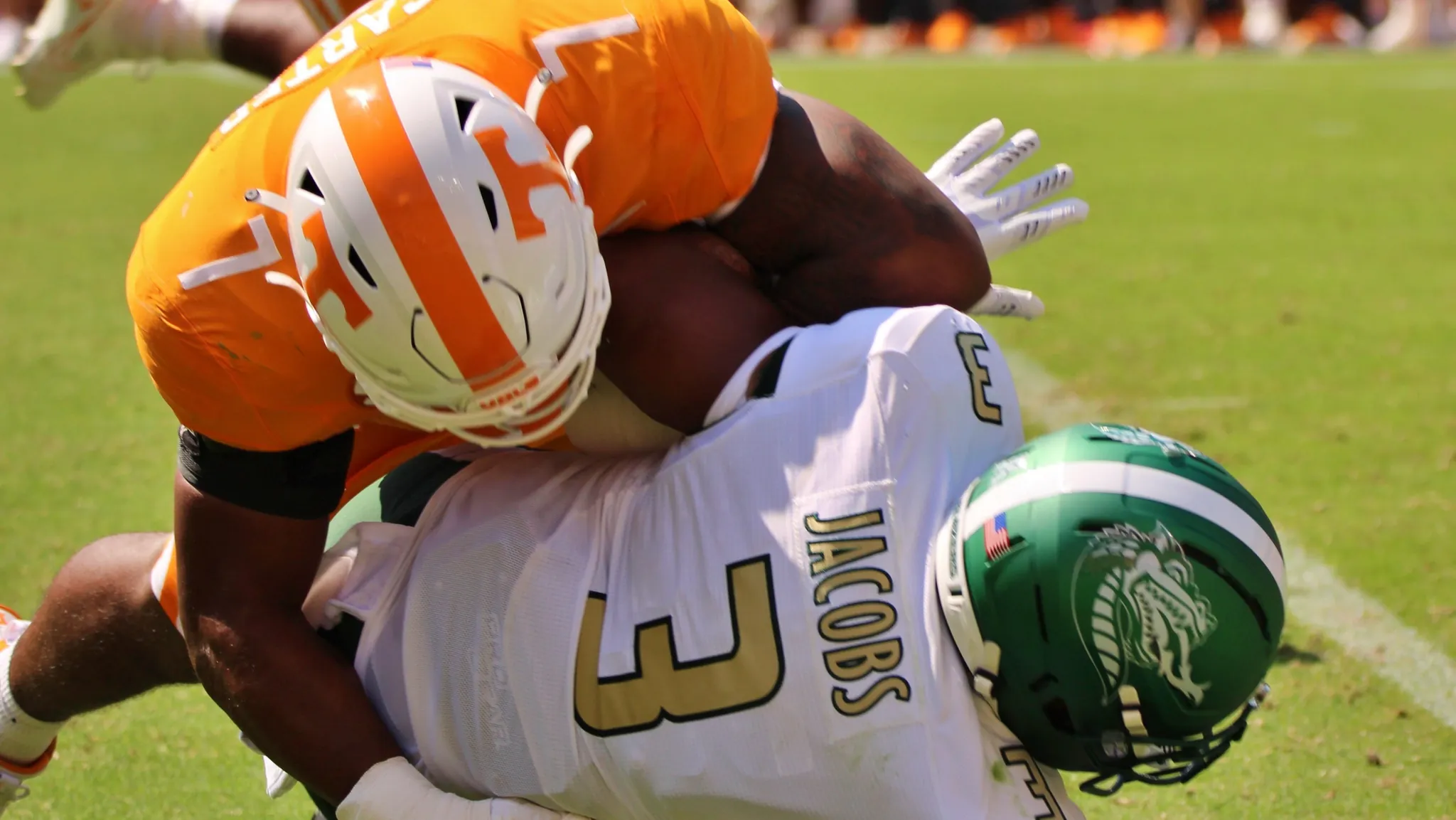
A $427.48 flight is exactly the kind of expense that can get mishandled in real time. A player may see it as part of a professional evaluation trip. A parent may assume repayment fixes it. An agent may be thinking in draft-logistics terms. A campus staffer may not learn about it until the paperwork arrives. By then, the issue is no longer whether the flight was sensible. It is whether the sport’s eligibility rules permitted the athlete to accept it at all.
The football rule did not leave much room
The football side of this story turns on a blunt prohibition. Knox News reported that a Dec. 1, 2025 NCAA education memo warned football players: “You, your family or your friends are not permitted to receive any benefits from an agent.” The same quoted language listed examples of material benefits, including “money, transportation, dinner, clothes.” [1]
That memo language is important enough to treat carefully. It comes here through Knox News, which reported obtaining the document by public-records request, rather than from a PDF reviewed directly for this article. If a university is writing a formal opinion, someone should pull the original NCAA memo and the operative Division I Manual language. For working risk purposes, though, the message reported to football players was not subtle: transportation from an agent was named as a prohibited benefit. [1]
The Level III classification also matters because it keeps the case from being overread. A Level III violation is described as inadvertent and isolated or limited in nature, providing no more than a minimal impermissible benefit. Carter’s case was not reported as a major recruiting scandal or a payment scheme. It was the small-benefit category doing real eligibility work. [1]
That is why repayment did not carry the weight a non-specialist might expect. Repayment can be relevant to mitigation and reinstatement. It does not necessarily mean the athlete never received the benefit. In Carter’s chronology, repayment and termination happened on Jan. 19; the violation analysis still looked back to the acceptance of agent-provided transportation. [1]
Basketball has a safe harbor football does not
The uncomfortable comparison is men’s basketball. The NCAA’s agent certification program allows men’s basketball players to work with NCAA-certified agents during the test-the-waters process while preserving eligibility. The NCAA Agent Certification FAQ describes that program as applying to men’s basketball, and it permits certified-agent involvement tied to NBA draft exploration. [2]
The basketball framework also allows tryout-related transportation from certified agents while the athlete remains within the program’s conditions. That is the key distinction. The category of benefit that triggered a football suspension — transportation connected to professional evaluation — can be compliance-safe in the men’s basketball draft pipeline when handled through the ECAG structure. [2]

| Issue | Football draft exploration | Men’s basketball test-the-waters process |
|---|---|---|
| Agent-paid transportation | Reported NCAA football memo warned that players, family, and friends may not receive agent benefits, including transportation. [1] | Permitted when tied to the certified-agent framework and applicable test-the-waters conditions. [2] |
| Agent certification safe harbor | No equivalent NCAA football agent-certification program appears in the cited materials. | ECAG applies to men’s basketball and allows certified-agent involvement during draft exploration. [2] |
| Eligibility consequence | Carter received a Level III violation and a two-game suspension after appeal. [1] | A basketball player acting within the ECAG rules may preserve eligibility while receiving permitted tryout-related transportation. [2] |
The point is not that the NCAA was legally required to build the same system for football. ECAG is an internal NCAA framework, not a general right to agent-funded travel. The point is narrower and more practical: the presence of a safe harbor in one sport makes the absence of one in another sport easier to miss, especially when both athletes are doing something that sounds similar in plain English — testing professional options while trying to preserve college eligibility.
The NIL argument explains the confusion, not the rule
Tennessee’s appeal argument, as reported by Knox News, went directly at the changing representation environment. The university argued that current legislation permits student-athletes nationwide to have professional marketing representation and that, through that representation, athletes have received benefits not unlike the nominal benefit Carter received. [1]
That is a sensible mitigation argument. It is also where counsel can get into trouble if mitigation starts masquerading as permission. NIL marketing representation and NFL draft representation are not interchangeable labels. A marketing representative helping an athlete with endorsement activity is not necessarily the same actor, under the same rule, as an NFL agent paying for draft-related travel. The fact that college sports now tolerates more professional assistance around athletes does not mean every agent benefit has been softened into a reimbursable business expense.
This is the part that makes the Carter matter more useful than a broad debate about amateurism. The compliance line did not disappear because the marketplace changed. It moved unevenly. A player can have NIL help, hear about basketball players using certified agents, watch teammates discuss draft feedback, and still be subject to a football-specific prohibition on agent benefits. That is not an intuitive map for a 20-year-old or for every adviser around him.
Where the pre-draft checklist has to get less generic
The practical lesson is not “never talk to agents.” Athletes need competent advice before they make draft decisions. The lesson is that football draft counseling cannot borrow basketball assumptions, NIL assumptions, or ordinary reimbursement instincts. The first checklist question should be sport-specific: what rule, memo, waiver, or certified-agent program actually permits this exact benefit for this exact athlete?
- Identify the capacity of every adviser: NIL marketing representative, contract adviser, certified basketball agent, NFL draft representative, or something else.
- Treat transportation, lodging, meals, clothing, training expenses, and family travel as benefits requiring advance clearance, not as items to reconcile later.
- Document the date of any agent agreement, the date of any benefit, the date of any repayment, and the date of any withdrawal from the draft process.
- Do not assume a basketball ECAG permission applies to football unless an actual football authority says so.
- Escalate small-dollar benefits quickly; Carter’s reported flight amount was $427.48, and the final penalty still cost two games. [1]
That checklist may sound too basic until the timeline is placed next to it. Carter’s agreement came on Dec. 12. The injury window arrived in early-to-mid January. The withdrawal deadline was Jan. 26. The termination and repayment were Jan. 19. In other words, the compliance repair occurred inside a compressed medical and draft-decision calendar, exactly when athletes and families are least likely to be thinking in bylaw categories. [1]
There is also a drafting lesson for universities. A memo that tells football players not to accept agent benefits is necessary, but it is not always sufficient when the broader athletic department is simultaneously educating athletes about NIL representatives, professional-service providers, and basketball’s test-the-waters regime. The better football guidance says the quiet part plainly: certified-agent travel rules you may have heard about in basketball do not apply to NFL draft exploration.
The risk is small enough to happen
Large compliance scandals usually announce themselves. A modest flight does not. It looks administrative, especially when the athlete later withdraws from the draft and pays the money back. Carter’s case shows why that instinct is unsafe in football: the violation can attach before the clean-up steps, and reinstatement discretion does not erase the original eligibility risk.
For football players testing NFL interest, agent-paid transportation should be treated as prohibited unless a football-specific NCAA rule, waiver, or written interpretation says otherwise. Basketball’s ECAG framework may explain why someone thought the trip was permissible. It does not supply the football safe harbor. The trap already exists, the dollar amount can be nominal, and the eligibility cost can still be real.
References
- Arion Carter suspended by NCAA for Tennessee football violation tied to NFL draft, Knox News, July 29, 2026
- NCAA Agent Certification FAQ, NCAA
Related records
Tool profile
Browse tool evaluations →Governing regulation
Browse the obligations tracker →Preventive workflow
Browse verification workflows →
Report a correction or tip
Spotted an outdated figure, a misstated fact, or a ruling this case record should reflect? Public comments are disabled for this content given the professional cost of a misreported case outcome, penalty amount, or rule text — use the structured correction channel instead.
Report a correction or tip for this record →