
Why Biden's Classified Documents Case Turned on Willfulness
Why the Justice Department declined to prosecute a former president who indisputably possessed documents marked classified — and why the July 2026 ghostwriter tapes do not change that result. The Hur report's willfulness analysis under 18 U.S.C. § 793(e) is the clearest modern case study in how prosecutors apply the Espionage Act's mens rea, with practical risk lessons for counsel handling classified documents.
- Jurisdiction
- US Federal
- Court
- U.S. Department of Justice
- AI tool named
- No AI tool named
- Ruling date
- Feb 1, 2024
- Source document
- View primary court order ↗
- Last verified
- Aug 2, 2026
Lex Machina Review is an independent risk-tracking and reference resource. Nothing on this site is legal advice, and using it does not create an attorney-client relationship. Every record is reviewed against primary sources but may not reflect the most current status of a matter — always verify directly against the cited court order, rule text, or a licensed attorney before relying on it.
Companion explanation — secondary to the source document above
The July 28, 2026 release of audio from Joe Biden’s ghostwriter interviews sounds, at first pass, like the fact people expected the Biden classified documents case to have been missing. There is the former vice president, in 2017, saying: “I just found all the classified stuff downstairs.” That sentence sits beside another undisputed fact: investigators found documents marked classified in places associated with Biden after he left the vice presidency.
That is enough to make the case look bad. It is not enough to finish the criminal analysis. A legal analysis of the Biden classified documents matter has to move one step further, because 18 U.S.C. § 793(e) does not punish the mere existence of awkward document-handling facts. The government would have had to prove, beyond a reasonable doubt, that Biden knew he possessed national defense information and willfully retained or disclosed it. Special Counsel Robert Hur’s February 2024 report declined prosecution because the evidence did not get prosecutors there, even assuming no sitting-president charging policy stood in the way. [1]
The hard element was not possession
Hur did not write the report as if Biden had handled records perfectly. The report found evidence that Biden retained and disclosed classified materials after his vice presidency, including marked classified documents about Afghanistan and handwritten notebooks containing classified information. It also described documents found in locations including Biden’s Delaware home and private office. [1]
But a prosecutor does not get to stop at “marked classified” when the charge being considered requires willfulness. Markings matter. Storage locations matter. A recorded statement matters. Each can support an inference. None automatically proves the defendant’s state of mind at the moment the statute cares about.
Section 793(e), as Hur analyzed it, required proof that Biden had unauthorized possession of, access to, or control over national defense information; that he had reason to believe the information could be used to the injury of the United States or to the advantage of a foreign nation; and that he willfully retained it and failed to deliver it to an officer or employee entitled to receive it. For any disclosure theory, prosecutors likewise had to prove a knowing and willful disclosure of national defense information to a person not entitled to receive it. [1]
The phrase “national defense information” also does work. A classification marking is powerful evidence, but it is not the same thing as the full statutory conclusion. And even when a document is plainly marked, the criminal question still asks what the defendant knew, what he intended, and whether the government can prove that mental state with admissible evidence.
| Fact category | What it can prove | What it does not automatically prove |
|---|---|---|
| Documents marked classified | The materials appeared sensitive and were labeled as classified | That Biden knowingly and willfully retained specific national defense information after leaving office |
| Documents found in private locations | The materials were outside ordinary government custody | That Biden personally placed them there or knew they remained there |
| The 2017 ghostwriter statement | Biden referred to finding “classified stuff” downstairs | That he knew the specific materials at issue were classified national defense information and intended to keep or disclose them unlawfully |
Why Hur treated the evidence as insufficient
The Hur report’s most important move was not charitable biography. It was an evidentiary sorting exercise. The report repeatedly distinguished between evidence that Biden possessed or encountered classified-marked materials and evidence that he willfully retained or disclosed national defense information in violation of § 793(e). [1]
On the Afghanistan documents, Hur identified facts that would have helped the prosecution. Biden had strong personal involvement in Afghanistan policy. The materials were significant. The ghostwriter interviews showed that Biden knew, at least at some point, he had found “classified stuff” downstairs. Those facts would not be brushed aside by any careful defense lawyer; they would be confronted.
The problem was connection. Hur concluded that the evidence would leave room for reasonable doubt about whether Biden knew he had retained classified national defense information after his vice presidency and whether any retention was willful. The report noted possible innocent explanations, including mistake, inadvertence, or lack of awareness that particular documents remained in his possession. [1]
That may be unsatisfying if the standard being applied is institutional responsibility. It is not strange if the standard is proof beyond a reasonable doubt. Criminal law often turns on the unglamorous difference between a persuasive suspicion and a provable mental state.
The notebooks presented a related but distinct problem. Hur found evidence that Biden read aloud classified information from handwritten notebooks to his ghostwriter after leaving the vice presidency. The report still declined charges, in part because prosecutors would have faced proof issues about whether Biden knew the information remained classified, whether it qualified as national defense information, and whether his conduct met the statutory disclosure standard. [1]
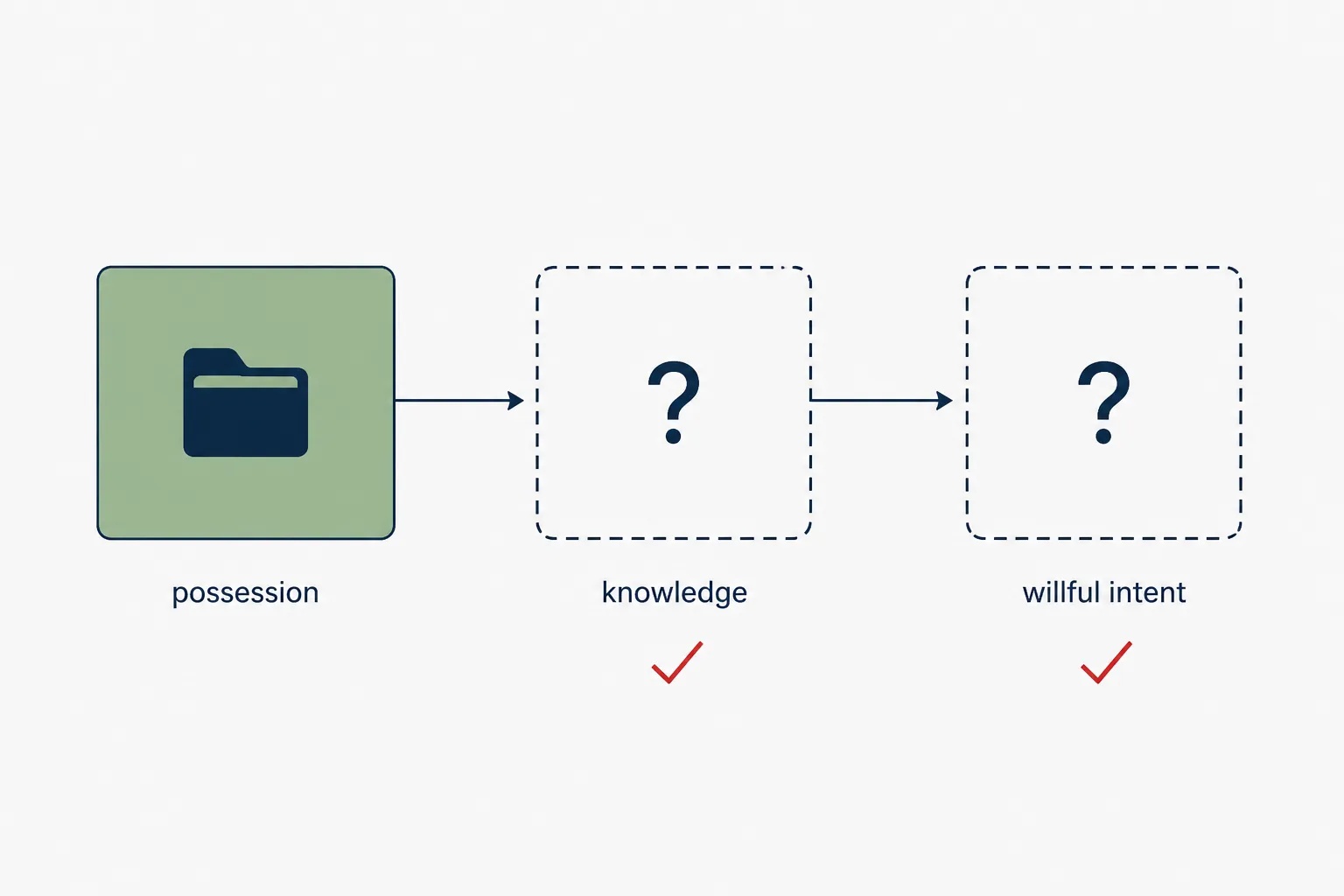
This is where the public shorthand can become legally misleading. “He had classified documents” compresses too many elements into one accusation. A prosecutor filing an Espionage Act count has to separate possession from knowledge, knowledge from willfulness, and classification status from national defense information. The jury instructions would not ask whether the file box looked damning on television.
The ghostwriter statement was already in the case
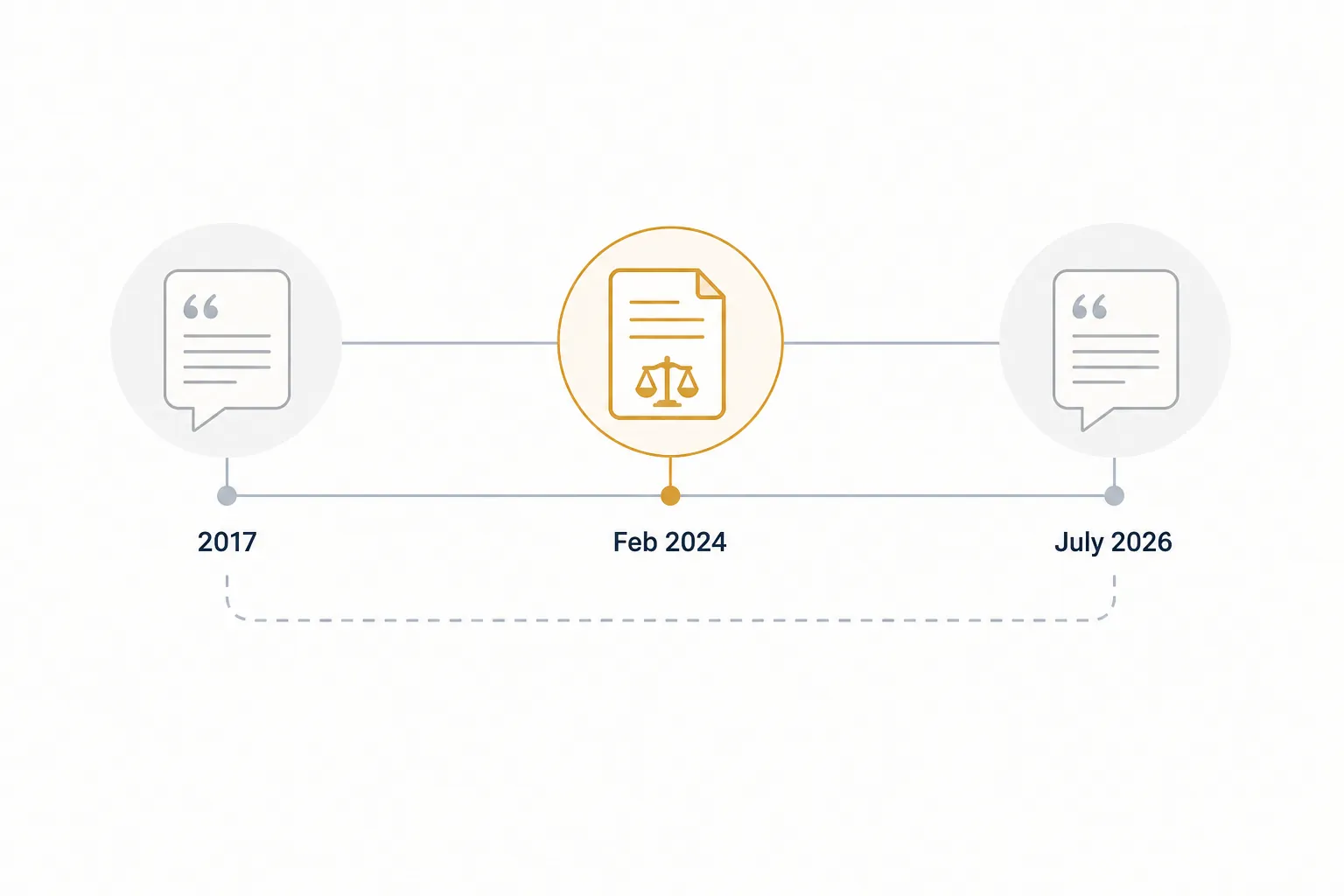
The 2026 audio release deserves attention because it makes a previously reported statement easier to hear and harder to abstract away. But its legal force depends on what it adds. On the materials described, the answer is narrow: it corroborates the existence of the same 2017 statement Hur already considered.
Hur’s report expressly discussed Biden’s remark to his ghostwriter that he had “just found all the classified stuff downstairs.” The report treated the statement as evidence that could support an inference of knowledge, but concluded it still did not prove beyond a reasonable doubt that Biden willfully retained classified national defense information. [1]
There is a common evidentiary trap here. A recording can make a fact feel newly proved because the audience no longer has to take a report’s word for it. But if the fact already sat inside the prosecutor’s willfulness analysis, authentication or public vividness is not the same as a new element. The tape may strengthen confidence that Biden said the sentence. It does not, by itself, identify the exact documents he meant, establish their statutory status, prove he knew that status, or show that he deliberately kept them from the government.
A prosecutor could argue the statement aggressively. “Classified stuff” is not a casual phrase. It suggests awareness that at least some materials were classified. It would likely be played in any charging memo debate, and if a case were filed, the government would want a jury to hear it.
The defense answer is equally obvious: the statement is nonspecific. It does not say which documents were found, whether they were the charged documents, whether Biden reviewed their contents, whether he understood them to contain national defense information, whether he intended to keep them, or whether he believed staff would handle them. In a criminal case, those omissions are not etiquette points. They are reasonable-doubt space.
The sitting-president policy was not the merits explanation
The declination is sometimes described as if it depended on Biden being president when Hur issued the report. That misses what Hur said. The report explained that the special counsel would decline prosecution even if Department of Justice policy did not bar charging a sitting president. The stated reason was the anticipated inability to prove guilt beyond a reasonable doubt. [1]
That distinction matters. A policy-based non-charge would leave the merits question largely unresolved. Hur did something different: he evaluated the evidence as if prosecutors were free to charge and still concluded the proof was insufficient. One can dispute that judgment, but it should be disputed at the level where it was made: elements, admissible evidence, and burden of proof.
The report also included observations about how Biden might present to a jury, including memory-related concerns. Those passages received obvious public attention. They are not the center of the legal analysis here. The more durable point is that even before any jury-presentation problem, prosecutors identified gaps in proving willful retention and disclosure under § 793(e). [1]
What the case teaches counsel who handle sensitive records
For lawyers advising current or former officials, executives, contractors, or employees with access to classified or sensitive government information, the Biden matter is not a permission slip. It is a warning about the record that will exist after the fact.
Possession and markings create serious exposure. They justify urgent containment, preservation, notification, and privilege-aware internal review. But if the question later becomes criminal liability under an Espionage Act theory, counsel will also be looking for proof of knowledge and willfulness: emails, instructions, conversations, refusals to return material, concealment, selective disclosures, prior warnings, and evidence tying a person to specific documents at specific times.
- Identify who actually handled the material, not just whose office, garage, safe, or storage room contained it.
- Separate classification markings from the later statutory question of national defense information.
- Document remedial steps without creating unnecessary speculative admissions about knowledge or intent.
- Preserve communications that show instructions to return, secure, review, or segregate sensitive material.
- Treat vague statements about “classified” material as significant, but test whether they connect to the particular documents and conduct at issue.
The practical lesson is narrow, and that is its value. The Biden classified documents declination turned on proof of willfulness, not on the absence of troubling facts. The July 2026 tapes make one of those facts more vivid, but they do not supply the missing link Hur identified: proof beyond a reasonable doubt that Biden knew the specific materials were classified national defense information and willfully retained or disclosed them.
References
- Report of the Special Counsel Robert K. Hur, U.S. Department of Justice, February 2024, link
Related records
Tool profile
How Meta's AI Spending Reshapes Law Firm ProfitabilityGoverning regulation
Browse the obligations tracker →Preventive workflow
Browse verification workflows →
Report a correction or tip
Spotted an outdated figure, a misstated fact, or a ruling this case record should reflect? Public comments are disabled for this content given the professional cost of a misreported case outcome, penalty amount, or rule text — use the structured correction channel instead.
Report a correction or tip for this record →