
The legal shadow over Brockman's Big Bear land donation
Greg Brockman's $5.5M land trust donation to preserve eagle habitat near Big Bear comes just 67 days after a jury dismissed charitable-trust claims against him on statute-of-limitations grounds without reaching the merits. This article examines the governance and perception risks the donation creates for OpenAI and what practicing counsel should track.
- Jurisdiction
- US Federal
- Court
- U.S. District Court (inferred from context)
- AI tool named
- OpenAI
- Ruling date
- May 18, 2026
- Source document
- View primary court order ↗
- Last verified
- Jul 27, 2026
Lex Machina Review is an independent risk-tracking and reference resource. Nothing on this site is legal advice, and using it does not create an attorney-client relationship. Every record is reviewed against primary sources but may not reflect the most current status of a matter — always verify directly against the cited court order, rule text, or a licensed attorney before relying on it.
Companion explanation — secondary to the source document above
The legal question around Greg Brockman’s Big Bear land donation is narrower than the public noise around it. On July 24, 2026, a $5.5 million conservation gift tied to Brockman was publicly announced for the purchase of land near Big Bear Lake, 67 days after a jury rejected Elon Musk’s charitable-trust claims against OpenAI, Sam Altman, and Brockman on statute-of-limitations grounds without deciding whether the charitable-trust theory was right or wrong on the merits.[1][2][3][4]
That distinction matters more than the scenery. The available record supports a fairly ordinary charitable-gift description: money moved through Friends of Big Bear Valley, a public-charity intermediary, for a fee-simple land purchase by the San Bernardino Mountains Land Trust to protect habitat near the well-known Big Bear eagle area.[3][4] It does not support an allegation that the conservation gift was unlawful, tax-abusive, or a disguised corporate act by OpenAI.
But “legally ordinary gift” and “finished as a governance-risk matter” are different categories. The donation now sits beside a verdict that closed Musk’s claim on timing, not substance; a large recent political-donation profile; and OpenAI’s own public distancing language about activities linked to Brockman-backed political spending. For counsel tracking the legal implications of the Big Bear land donation, the issue is not whether a bald-eagle habitat purchase is suspect. It is whether the unresolved charitable-purpose allegations around OpenAI leave a disclosure and monitoring problem that did not disappear with the verdict.

What the May verdict did, and did not, decide
The May 18, 2026 verdict is easy to overread. NPR reported that the jury deliberated for about two hours before siding with OpenAI and its executives on whether Musk had waited too long to sue.[1] Courthouse News likewise described the result as turning on limitations: California’s window for the relevant claims was three to four years, while Musk left OpenAI’s board in February 2018, continued donating through 2020, and filed suit in 2024.[2]
That is a real legal win. It is also a particular kind of legal win. The jury did not decide whether OpenAI’s shift toward a more commercial structure breached a charitable trust, whether Brockman personally participated in any such breach, or whether the defendants’ account of OpenAI’s charitable purpose was correct. The case ended because of when Musk sued.
Musk’s public response, reported by multiple outlets, predictably pushed on that distinction: “The judge & jury never actually ruled on the merits of the case, just on a calendar technicality… Altman & Brockman did in fact enrich themselves by stealing a charity.”[1][2] The accusation is doing more rhetorical work than the verdict can bear. A limitations defense is not a confession. It is not a merits ruling either.
That leaves counsel with an awkward record. The charitable-trust claim against Brockman was dismissed, but the underlying narrative remains available to critics because no factfinder resolved it. A later charitable gift by the same executive does not revive the dismissed claim. It can, however, become part of the reputational file that reporters, employees, adversaries, and regulators use when they ask whether OpenAI’s governance controls match the company’s public-interest claims.
The 67-day gap is the governance fact
The land-donation timeline is short enough to matter and too thin to prove motive. The verdict came on May 18, 2026.[1][2] The Los Angeles Times reported that Anna Brockman reached out to Friends of Big Bear Valley just before July 4 about helping preserve the Moon Camp property.[3] The donation and acquisition were publicly announced on July 24, 2026.[3][4]
| Date or period | Event | Risk significance |
|---|---|---|
| February 2018 | Musk left OpenAI’s board. | Relevant to when charitable-trust claims could have been brought. |
| Through 2020 | Musk continued donating to OpenAI. | Part of the limitations analysis described in the verdict coverage. |
| 2024 | Musk sued. | The filing date became central because California’s window was reported as three to four years. |
| May 18, 2026 | Jury sided with OpenAI and executives after about two hours of deliberation. | The result closed the claim on timing, not merits. |
| Before July 4, 2026 | Anna Brockman contacted Friends of Big Bear Valley about the land effort. | Creates a close chronological link, without proving intent. |
| July 24, 2026 | The $5.5 million conservation gift and land purchase were publicly announced. | The public act lands 67 days after the merits-free verdict. |
No one should turn that sequence into a claim that the donation was designed to answer Musk, influence litigation, or launder reputation. The materials do not establish that. The timeline does something more modest and more durable: it gives a board, communications team, or risk committee a date pattern they cannot responsibly pretend is invisible.
That is why the 67 days matter. In a closed legal department memo, the interval would not be treated as evidence of liability. It would be treated as an optics and response-preparation item: what was known internally, who approved public messaging, whether any company resources were involved, whether OpenAI had any role at all, and how to answer questions without overstating the verdict.
The land transaction looks conventional on the available facts
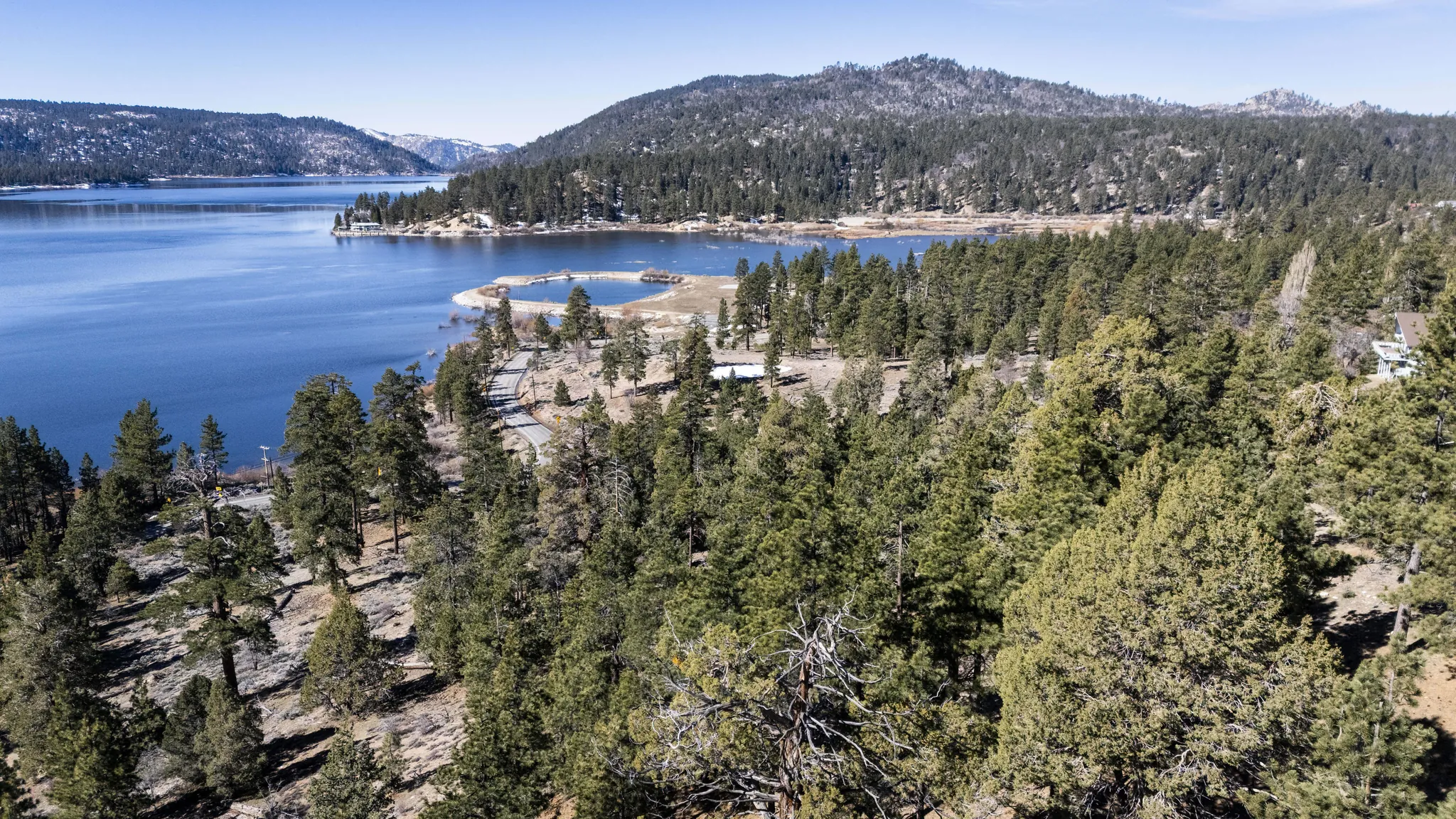
The conservation mechanics are not the suspicious part of the record. The Los Angeles Times described the $5.5 million gift as enabling the purchase of the Moon Camp parcel near the Big Bear eagle nest area, with Friends of Big Bear Valley serving as the recipient channel and the San Bernardino Mountains Land Trust involved in the conservation purchase.[3] The Victor Valley Daily Press also reported the July 24 announcement and described the property as being bought for permanent conservation.[4]
A donor using a local public charity as an intermediary for a conservation acquisition is not, by itself, strange. Local conservation groups often have the community relationships, transaction urgency, and land-specific knowledge that make them useful channels for a gift. A fee-simple purchase for preservation is also an ordinary conservation structure, not an inherently exotic one.
The present record does not show that Friends of Big Bear Valley or the San Bernardino Mountains Land Trust did anything improper. It does not show that the groups were part of OpenAI’s litigation strategy, political strategy, or governance messaging. Dragging them into a tech-governance dispute beyond what the documents support would be unfair and analytically sloppy.
The intermediary structure still belongs on a counsel’s tracking list, for a different reason. If a high-profile executive makes a public charitable gift shortly after a charitable-trust claim is dismissed without a merits ruling, the recipient path becomes part of the diligence file: who received the money, what restrictions attached, who controlled announcement timing, and whether any corporate affiliation was invoked. Those are governance questions, not accusations.
The giving profile amplifies the perception problem
Wired’s reporting gives the land gift a second context: Brockman’s recent political giving. The reported profile includes $5,400 to Hillary Clinton’s 2016 campaign, $25 million to MAGA Inc. in September 2025, $25 million to Leading the Future in 2025, and a further $25 million pledged for 2026.[5] Set beside the $5.5 million Big Bear conservation gift, the recent public-facing pattern is roughly $50 million in political giving against $5.5 million in conservation giving over the past 18 months, before counting the 2026 pledge as future pledged activity rather than completed giving.[3][5]
That ratio is not a moral verdict. Donors are allowed to support politics and conservation. A large political contribution does not make a land gift bad, and a land gift does not cleanse a political profile. The ratio matters because it tells counsel what other readers will see first. The conservation announcement does not land in isolation; it lands after months in which Brockman-linked giving had already become a public story about political influence, AI regulation, and OpenAI’s relationship to its leaders’ personal activity.
For an AI company that has spent years defending the legitimacy of its public-benefit posture, that matters. Personal giving by a co-founder is not automatically corporate conduct. But when the same executive is named in charitable-purpose litigation, gives at a scale that draws national political coverage, and then becomes associated with a highly visible conservation gift, the company’s response posture has to be more disciplined than “private philanthropy, nothing to see.”
OpenAI’s own distancing language creates a follow-up question
OpenAI has already tried to draw a corporate boundary around Brockman-linked political activity. Business Insider reported in June 2026 that OpenAI said it had not donated to PACs, did not direct the activities of Leading the Future, and did not “have visibility into their operations.”[6] That statement may be accurate and appropriate. It also creates a template against which later executive-linked giving will be measured.
If the company lacks visibility into certain political operations linked to its president and co-founder, what visibility does it have into high-profile charitable activity that may be publicly associated with the same leader? The answer may be simple: none, because it is personal and outside OpenAI. But counsel should want that answer documented, especially where the company has just prevailed in charitable-trust litigation on limitations rather than substance.
The governance task is not to police every private donation by an executive. It is to identify the subset that may reasonably be connected in the public record to company mission, litigation posture, political influence, or charitable-purpose claims. The Big Bear gift falls into that subset because of timing and subject matter, not because conservation land is suspect.
What counsel should track now
A practical risk file for this episode would be short and documentary. It would not need a theory of wrongdoing. It would need enough contemporaneous material to prevent later confusion between a personal charitable act, a company-controlled communication, and a litigation-response narrative.
- Verdict characterization: internal and external statements should say the Musk charitable-trust claims were dismissed on limitations grounds, not that the charitable-trust theory was adjudicated and rejected on the merits.
- Company involvement: OpenAI should be able to say whether employees, communications staff, legal staff, or corporate resources had any role in the Big Bear donation, announcement, or recipient coordination.
- Recipient path: counsel should preserve the basic record showing Friends of Big Bear Valley as the intermediary and the conservation purpose of the land purchase.
- Gift restrictions: any donor restrictions, naming expectations, publicity terms, or conservation covenants should be kept distinct from OpenAI governance materials.
- Political-giving boundary: OpenAI’s June distancing statement should be checked against any later public language so the company does not imply visibility or control in one context and disclaim it in another without explanation.
The board-level version is even simpler. Did anyone brief relevant directors or governance personnel that a co-founder’s public conservation gift would be announced less than ten weeks after a charitable-trust verdict that left the merits unresolved? If yes, what was said? If no, why was the issue viewed as outside the company’s risk perimeter?
Those questions do not convert Brockman’s donation into OpenAI conduct. They recognize that the company’s legal posture and its executives’ public activity are no longer cleanly separable in the eyes of every stakeholder. That is especially true where the company has already had to explain what it does and does not see in Brockman-linked political activity.
The legal shadow is indirect, but real
On the available facts, the Big Bear transaction appears to be a legally ordinary conservation gift through a public-charity channel for a land-preservation purpose. The materials do not support claims of tax-structuring impropriety, recipient misconduct, or direct OpenAI control over the gift.
The legal implications are therefore indirect. A merits-free charitable-trust verdict, a 67-day interval before a public land-donation announcement, a recent political-to-environmental giving contrast, an intermediary charitable structure, and OpenAI’s prior distancing language together create a live governance record. Counsel do not need to allege bad faith to monitor it. They only need to remember that a limitations verdict can end a lawsuit without ending the questions that made the lawsuit useful to critics in the first place.
References
- OpenAI not liable for breach of charitable trust in Musk-Altman feud, NPR, May 18, 2026.
- OpenAI not liable for breach of charitable trust in Musk-Altman feud, Courthouse News, May 18, 2026.
- Open AI co-founder donates $5.5 million to buy land near famed Big Bear eagle nest, Los Angeles Times, July 24, 2026.
- OpenAI founder Greg Brockman donates $5.5M for Moon Camp Big Bear eagles Jackie, Shadow, Victor Valley Daily Press, July 24, 2026.
- OpenAI President Greg Brockman’s Political Donations for Trump and Humanity, Wired.
- OpenAI says it doesn’t direct Greg Brockman-backed super PAC Leading the Future, Business Insider, June 2026.
Related records
Tool profile
Neither Codex nor Claude Code Is Safe for Legal AI AgentsGoverning regulation
Browse the obligations tracker →Preventive workflow
Browse verification workflows →
Report a correction or tip
Spotted an outdated figure, a misstated fact, or a ruling this case record should reflect? Public comments are disabled for this content given the professional cost of a misreported case outcome, penalty amount, or rule text — use the structured correction channel instead.
Report a correction or tip for this record →