
What's next in the Capital One debanking fallout?
A front-by-front status check on the debanking wave anchored by the Capital One–Trump account-closure suit: the Florida case's live deadlines, Trump v. JPMorgan, the EO 14331 policy track, and Capital One's $390M FinCEN penalty, each marked confirmed versus alleged and sourced to primary records.
- Jurisdiction
- United States (federal)
- Court
- U.S. District Court for the Southern District of Florida
- AI tool named
- None
- Ruling date
- Aug 4, 2026
- Source document
- View primary court order ↗
- Last verified
- Aug 4, 2026
Lex Machina Review is an independent risk-tracking and reference resource. Nothing on this site is legal advice, and using it does not create an attorney-client relationship. Every record is reviewed against primary sources but may not reflect the most current status of a matter — always verify directly against the cited court order, rule text, or a licensed attorney before relying on it.
Companion explanation — secondary to the source document above
Last checked Aug. 4, 2026, UTC, the Capital One–Trump Organization account-closure case was not waiting on a trial. The Aug. 10 trial date had been vacated, Capital One’s motion to dismiss the second amended complaint was live, plaintiffs’ response was due Aug. 14, and a joint scheduling report was due Aug. 5 in S.D. Fla. No. 1:25-cv-21596. That is the useful starting point for the legal fallout around Capital One, the Trump Organization, AML language, and account closures: not whether the political story is loud, but which verified record creates the next decision. [1][2]
The shortest safe framing is this: Capital One says its AML team reviewed the relationship, cited FFIEC Appendix F red flags, sent a March 8, 2021 notice, and closed many, but not all, accounts on June 7, 2021. That is not the same sentence as “Capital One accused the Trump Organization of money laundering.” The latter is a leap the public record does not support. [2]
The four live records, separated before they blur
| Front | Confirmed record | Alleged or not yet fully checkable | Next practical check |
|---|---|---|---|
| Capital One–Trump Organization dispute | Removed to federal court on Apr. 7, 2025; second amended complaint filed Jul. 17, 2026; Capital One MTD filed Jul. 31, 2026 at ECF No. 91; sealing motion at ECF No. 92; response due Aug. 14; scheduling report due Aug. 5. [1][2] | Large portions of the SAC remain publicly unavailable or redacted, including material the parties identify as sealed or BSA-protected. Political motive allegations should not be treated as proven. | MTD response, sealing ruling, amended schedule. |
| Trump v. JPMorgan Chase | Reported as a Jan. 22, 2026 Miami-Dade suit seeking at least $5 billion over 2021 closures, with JPMorgan denying wrongdoing and fighting venue toward federal court in New York. [3][4] | Blacklist and Jamie Dimon-related allegations remain allegations, not findings. | Removal, transfer, or venue ruling; any motion to dismiss. |
| Executive Order 14331 and agency implementation | EO 14331 was signed Aug. 7, 2025 and directs federal banking regulators to remove reputation-risk concepts, review debanking conduct, and consider reinstatement or remedial measures. [5] | The order’s statements about post-Jan. 6 flagging of terms such as “Trump” and “MAGA” are the order’s assertions. They are not court findings in the Capital One docket. | Regulator implementation, examination guidance, and any FDIC/OCC rulemaking record. |
| Capital One BSA enforcement history | FinCEN announced a $390,000,000 civil money penalty against Capital One, N.A. on Jan. 15, 2021 for Bank Secrecy Act failures tied to its Check Cashing Group from 2008 through 2014. [6] | That penalty does not establish wrongdoing by the Trump Organization and should not be imported into the account-closure suit as if it did. | Use the penalty only as Capital One regulatory-history context. |
The table matters because the records do different jobs. The Florida docket supplies the immediate litigation posture. The JPMorgan case supplies a parallel private-law claim, not a ruling. EO 14331 supplies executive-policy pressure on regulators. The FinCEN penalty supplies Capital One’s Bank Secrecy Act history, and it also supplies a useful accuracy test: if a brief says the FinCEN number was $390,000, check the primary record. It was $390,000,000. [6]
Capital One: what the motion actually says
The Capital One case began in state court in March 2025 and was removed to the Southern District of Florida on Apr. 7, 2025. The operative public pleading posture changed again in July 2026: plaintiffs filed a second amended complaint on Jul. 17, Capital One filed its motion to dismiss on Jul. 31, and the court record reflects the vacated Aug. 10 trial setting. [1][2]
Capital One’s motion places the account closures inside an AML-review chronology. According to the motion, the bank’s AML team reviewed the customer relationship, identified red flags by reference to FFIEC BSA/AML Examination Manual Appendix F, sent closure notices on Mar. 8, 2021, and closed many, but not all, accounts on Jun. 7, 2021. Those verbs are doing work. “Cited red flags” is sourced to Capital One’s litigation position. “Found laundering” is not. [2]
Account counts should also be handled with less confidence than some summaries give them. Public reporting has used varying counts, while the motion’s own formulation is “many, but not all” accounts. For a legal or compliance brief, the docket language is the cleaner version unless the exact account population is needed and can be tied to a specific filed exhibit. [2]
The sealing fight is not a side issue. Capital One’s ECF No. 92 sealing motion concerns material including BSA-protected exhibit content, employee names, account numbers, and compensation information. That means some of the most interesting factual allegations and defenses may remain unavailable to the public even while the motion to dismiss is being argued. The sealed posture is a boundary on what can be responsibly repeated, not an invitation to fill gaps with motive. [1]
For readers who need the single-case defense analysis, the deeper companion is Can Capital One’s AML review defeat Trump’s debanking claim?. This article uses the Capital One docket differently: as the anchor point for a wider legal-fallout map.
JPMorgan is parallel litigation, not confirmation of the Capital One theory
The JPMorgan suit belongs on the same tracker because it concerns 2021 closures and debanking allegations by Trump-related plaintiffs. It does not, by itself, prove the Capital One allegations. CNN Business and NPR reported on Jan. 22, 2026 that the Trump Organization sued JPMorgan Chase in Miami-Dade, sought at least $5 billion, alleged politically motivated account closures and blacklist treatment, and faced JPMorgan’s denial of the claims and a venue fight toward federal court in New York. [3][4]
That creates a useful comparison point for banks, but only if the comparison is kept narrow. The JPMorgan case may test pleading theories, forum strategy, and the evidentiary burden for alleged political debanking. It does not convert every 2021 Trump-related closure into the same legal fact pattern. The next operational event is procedural: where the case proceeds and what pleading motion follows.
EO 14331 changes the bank-wide calculation
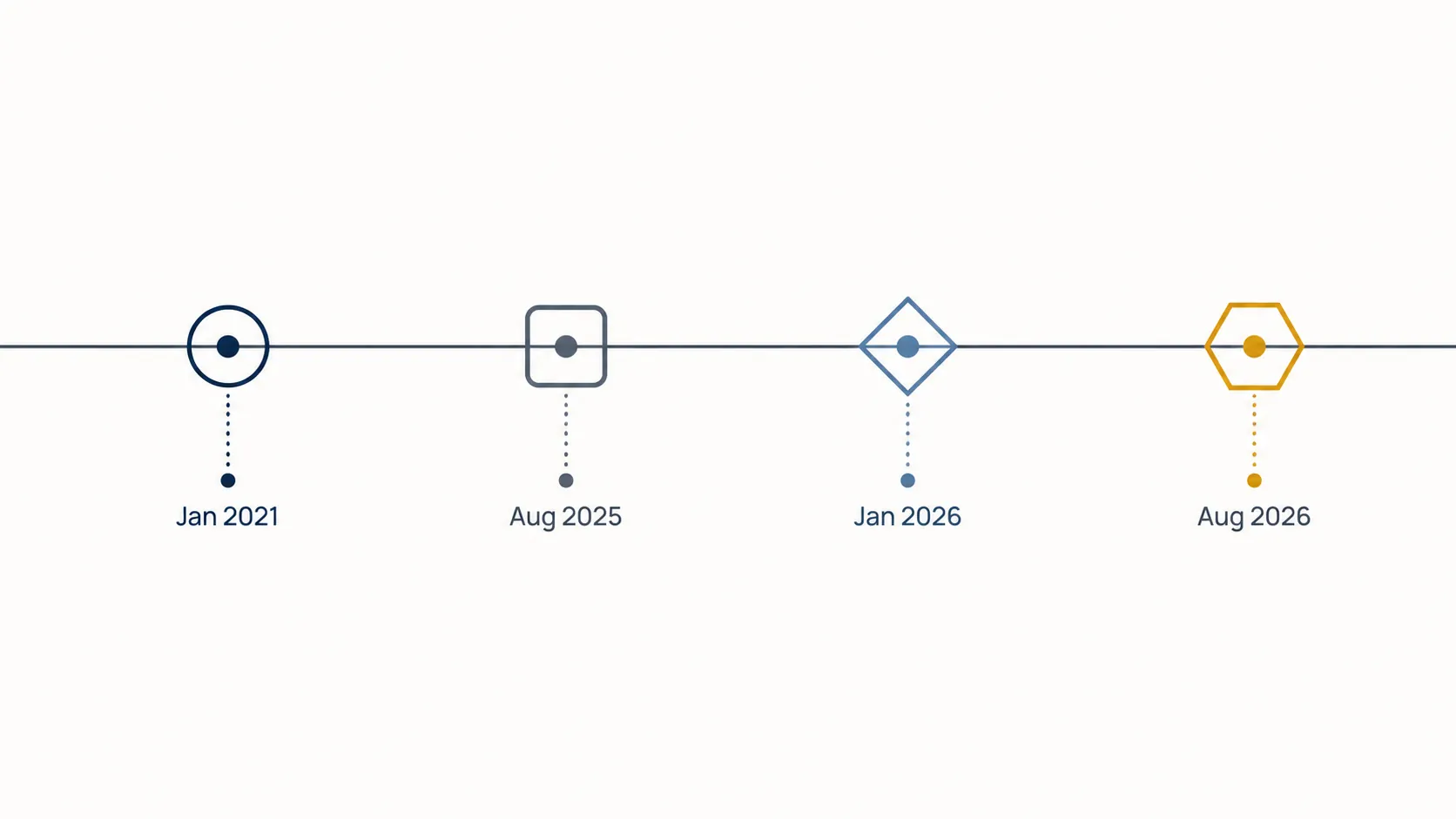
Executive Order 14331, “Guaranteeing Fair Banking for All Americans,” is the front most likely to move the issue from litigation monitoring to policy implementation. Signed Aug. 7, 2025, the order directs federal banking regulators to remove reputation-risk concepts from guidance, examination manuals, and supervisory materials; to identify financial institutions that engaged in unlawful debanking; and to consider remedial measures, including reinstatement of customers where appropriate. [5]
For a bank risk committee, that matters even if the Capital One motion is granted. A dismissal in one private lawsuit would not erase an executive-branch instruction to regulators. Conversely, an EO does not decide whether Capital One breached a contract, violated a state-law duty, or acted for an impermissible reason in 2021. The two fronts overlap in business consequence, not in legal posture.
The order also needs careful attribution. EO 14331 states that regulators and financial institutions targeted certain viewpoints and references terms such as “Trump” and “MAGA” in describing alleged post-Jan. 6 flagging practices. Those are assertions in an executive order. They should not be written as established findings in the Southern District of Florida case unless a court record independently supports them. [5]
The reported FDIC and OCC rulemaking aftermath is therefore not background noise. It is the implementation lane. If agencies convert the order’s commands into examination standards or enforceable rules, banks will have to re-check closure governance, escalation memos, prohibited-basis controls, and how they document risk-based exits without letting “reputation risk” become a proxy label.
The FinCEN penalty is history, not a hidden accusation
FinCEN’s Jan. 15, 2021 enforcement action against Capital One is relevant because it explains why BSA language around the bank should be read with precision. FinCEN announced a $390,000,000 civil money penalty against Capital One, N.A. for willful and negligent violations of the Bank Secrecy Act, tied to the bank’s Check Cashing Group and a 2008-to-2014 period. [6]
That record does not say the Trump Organization laundered money. It does not say the 2021 Trump-related account closures were mandated by FinCEN. It does not prove Capital One’s litigation defense. It does, however, make BSA posture a real part of Capital One’s institutional history and makes a casual decimal error unusually damaging. A $390,000 figure is not a rounding issue; it is three zeros short of the primary record. [6]
This is also where headlines can do the most harm. A bank that says an AML team reviewed red flags is invoking a compliance process. A regulator that imposed a BSA penalty on the bank in an earlier matter is documenting the bank’s past control failures. Neither fact authorizes the reader to collapse AML, BSA enforcement history, and an accusation of customer money laundering into one sentence.
What to watch next
As of Aug. 4, 2026, the nearest checkable dates sit in the Capital One case: the Aug. 5 joint scheduling report deadline and the Aug. 14 response deadline on Capital One’s motion to dismiss. The sealing motion will determine how much of the second amended complaint and related material can be checked against public filings. [1][2]
The JPMorgan front should be watched for venue movement before anyone treats it as a merits signal. EO 14331 should be watched through regulator implementation, not just White House text. Any FDIC or OCC rulemaking should be read for the exact operational burden it places on account-exit decisions, especially whether it changes documentation, notice, escalation, or reinstatement expectations.
The Capital One suit is the anchor because it has the richest live docket and the most concrete AML-review record. It is not the whole map. The legal fallout is distributed across litigation, executive policy, agency implementation, and enforcement history, and each front has to be checked on its own record before it is allowed into a bank’s debanking-risk controls.
References
- Trump Organization LLC v. Capital One Financial Corporation docket, CourtListener, https://www.courtlistener.com/docket/69853458/trump-organization-llc-v-capital-one-financial-corporation/
- Defendant’s Motion to Dismiss the Second Amended Complaint, CourtListener RECAP, Jul. 31, 2026, https://storage.courtlistener.com/recap/gov.uscourts.flsd.687220/gov.uscourts.flsd.687220.91.0.pdf
- Trump Organization sues JPMorgan Chase for $5 billion, alleging bank dropped accounts for political reasons, CNN Business, Jan. 22, 2026, https://www.cnn.com/2026/01/22/business/trump-organization-jpmorgan-lawsuit
- Trump Organization sues JPMorgan Chase over alleged debanking, NPR, Jan. 22, 2026, https://www.npr.org/2026/01/22/trump-organization-jpmorgan-lawsuit-debanking
- Guaranteeing Fair Banking For All Americans, The White House, Aug. 7, 2025, https://www.whitehouse.gov/presidential-actions/2025/08/guaranteeing-fair-banking-for-all-americans/
- FinCEN Announces $390,000,000 Enforcement Action Against Capital One, National Association, FinCEN, Jan. 15, 2021, https://www.fincen.gov/news/news-releases/fincen-announces-390000000-enforcement-action-against-capital-one-national
Related records
Tool profile
Browse tool evaluations →Governing regulation
Browse the obligations tracker →Preventive workflow
Browse verification workflows →
Report a correction or tip
Spotted an outdated figure, a misstated fact, or a ruling this case record should reflect? Public comments are disabled for this content given the professional cost of a misreported case outcome, penalty amount, or rule text — use the structured correction channel instead.
Report a correction or tip for this record →