
Carrickmacross Bomb Plot Tests Ireland's New Anti-Terror Act
The 2026 Criminal Justice (Terrorist Offences) Amendment Act was deployed 15 days after enactment in the Carrickmacross bomb interdiction, but the defendant's initial charges under the existing 2005 Act leave the new offences' scope—especially for cross-border travel within the island of Ireland—untested.
- Jurisdiction
- Ireland
- Court
- Monaghan District Court
- AI tool named
- None
- Ruling date
- Jul 24, 2026
- Source document
- View primary court order ↗
- Last verified
- Jul 25, 2026
Lex Machina Review is an independent risk-tracking and reference resource. Nothing on this site is legal advice, and using it does not create an attorney-client relationship. Every record is reviewed against primary sources but may not reflect the most current status of a matter — always verify directly against the cited court order, rule text, or a licensed attorney before relying on it.
Companion explanation — secondary to the source document above
Category: risk-digest. Last verified: July 25, 2026. This analysis is not legal advice. The immediate legal point in the Carrickmacross car-bomb interdiction is narrower than the public-security headline: Ireland’s new counter-terrorism amendment was available, and the operation unfolded only 15 days after enactment, but the first reported charge still sits under the older 2005 possession framework.
The compressed record is unusually clean. President Connolly signed the Criminal Justice (Terrorist Offences) (Amendment) Act 2026 on July 7, 2026.[1] Gardaí intercepted the suspect vehicle near Carrickmacross at 15:05 on July 22.[2] The defendant was charged at 17:40 on July 24.[3] That sequence makes the case an early operational encounter with the 2026 Act, but not yet a judicial test of the new offences.
| Risk Record Point | Current Posture |
|---|---|
| New Act status | In force since July 7, 2026; no published Irish judgment interpreting the new offences. |
| Carrickmacross charge posture | Initial reported charge is possession of explosives under the Criminal Justice (Terrorist Offences) Act 2005. |
| Operational fact pattern | Device reportedly contained Semtex, a timing power unit, and a detonator. |
| Unresolved exposure | Training, travel, and organizing-travel offences may matter most for facilitators who never possess a device. |
| Cross-border question | Whether Republic-to-Northern Ireland movement can be charged as terrorism travel remains untested. |
The Seriousness of the Device Does Not Answer the Charging Question
The reported physical evidence is the part of the case least likely to be treated as marginal. The explosive device was said in court reports to contain Semtex, a timing power unit, and a detonator, and was described as having the “potential to cause catastrophic damage to property and loss of life.”[2][3] For prosecutors, that is not a symbolic-security fact pattern. It is a possession-of-explosives fact pattern with immediate public-danger weight.
That is precisely why the charge selection matters. The public might reasonably hear “new anti-terror law” and assume the new law has already been used in court. The available record does not support that. The defendant was initially charged with possession of explosives under the Criminal Justice (Terrorist Offences) Act 2005, not with receiving training for terrorism, travelling for terrorism, or organizing travel for terrorism under the 2026 amendment.[3]
There are several legally conservative explanations, and none should be overstated. Prosecutors may have considered the 2005 possession charge the clearest available route on the known evidence. They may regard the new offences as unnecessary for a defendant allegedly found moving an explosive device. They may be waiting for further investigation before adding or changing charges. What cannot yet be said is that an Irish court has accepted the scope of the 2026 offences in this case.
What the 2026 Act Adds Around the Edges of Possession
The 2026 amendment matters because it moves liability outward from direct handling of weapons or explosives. The three headline offences are receiving training for terrorism, travelling for terrorism, and organizing travel for terrorism; each carries a maximum sentence of 10 years’ imprisonment on conviction on indictment.[4][5] That is a different charging menu from a case built mainly around possession of a bomb component or completed device.
- Receiving training for terrorism reaches a preparatory stage before a device, target, or operational journey is necessarily completed.
- Travelling for terrorism targets movement linked to terrorist purpose rather than possession of the means of attack.
- Organizing travel for terrorism puts coordinators, fixers, and logistics participants closer to the center of the statutory risk.
That outward movement is where lawyers advising transport, accommodation, courier, freight, vehicle-hire, border-region logistics, or event-support businesses should pay attention. The practical risk is not that ordinary cross-border commerce becomes terrorism by association. The risk is that, once investigators allege terrorist purpose, the new offences may allow a case to be framed around enabling movement or preparation rather than proving that a facilitator physically possessed explosives.
For now, the absence of case law is the dominant fact. The 2026 Act has entered the enforcement environment, but published Irish judgments have not yet supplied limiting principles for knowledge, purpose, proximity, coercion, or the relationship between ordinary services and terrorist facilitation. Statutory exposure can therefore be described, but its litigated boundary cannot.

The Cross-Border Travel Ambiguity Is Not Academic
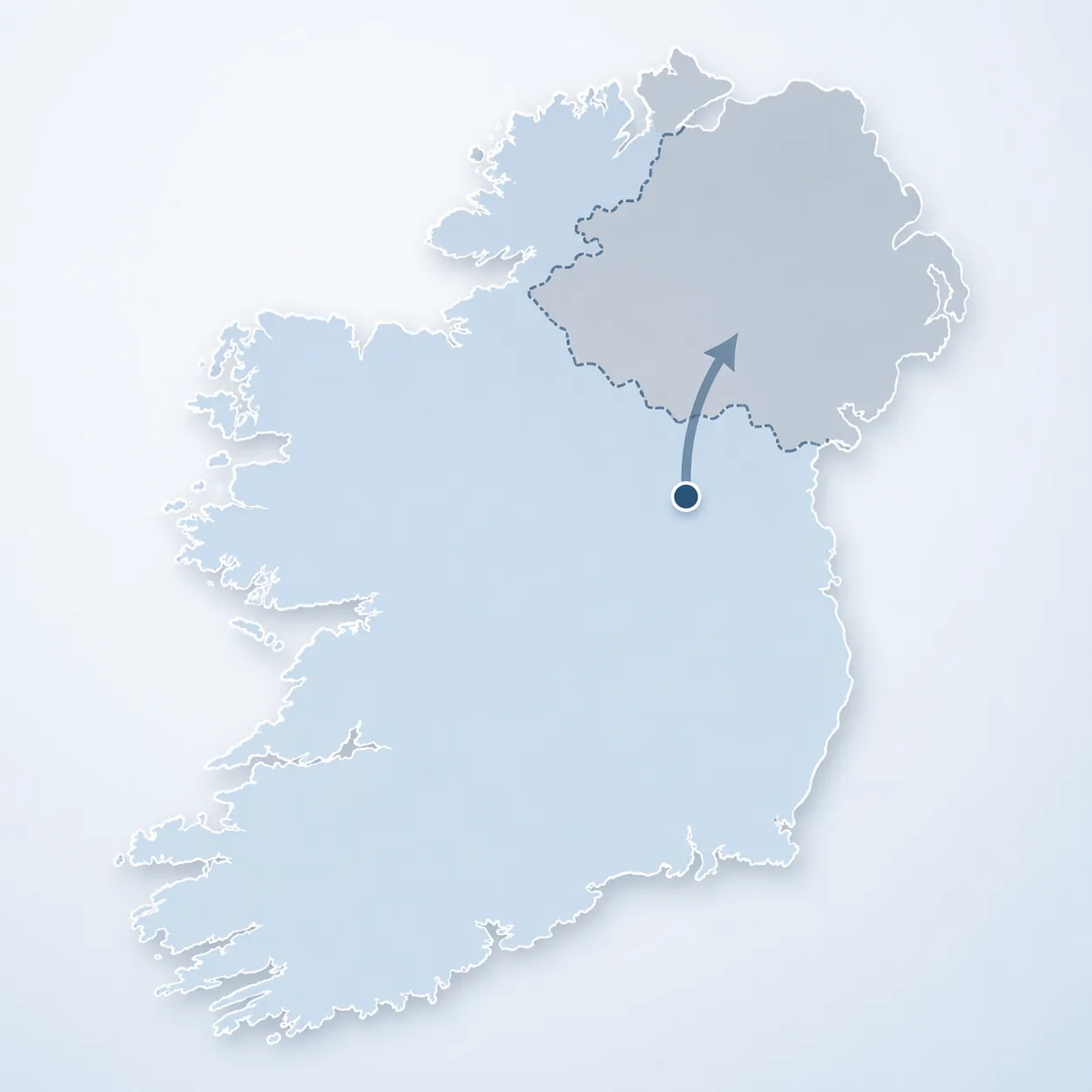
The most difficult interpretive question is whether the new travelling-for-terrorism offence reaches movement from the Republic of Ireland into Northern Ireland. The amendment implements EU Directive 2017/541, and ministerial materials framed the reform around the “foreign terrorist fighter phenomenon.”[4][5][6] Northern Ireland, however, is not an EU jurisdiction under the Windsor Framework, while movement across the island of Ireland does not feel “foreign” in the ordinary social or geographic sense for many people who live and work around the border.
That combination creates a real advising problem. If the offence is read primarily through the EU foreign-fighter paradigm, the cleanest applications may involve travel to or from a genuinely foreign theatre of terrorist activity. If the statutory text is read more broadly, prosecutors may argue that crossing from the State into Northern Ireland for terrorist purposes is enough, even where the movement is short, familiar, and embedded in ordinary island-wide patterns.
The Carrickmacross facts cannot resolve that issue on the current charge posture. The reported target and movement are cross-border in security significance, but the defendant has not been reported as charged under the new travelling offence. A practitioner asked today whether Republic-to-Northern Ireland movement can be terrorism travel under the 2026 Act has to answer with a caveat: the statutory question exists, the enforcement context makes it urgent, and the courts have not yet answered it.
Facilitators, Couriers, and the Defense That Matters
The defendant’s reported account should be treated as a legal variable, not a character study. She reportedly said she did not know what was in the bag and transported it in “fear of her life.”[2] That account has not been tested in a contested trial, and it is not a finding. But it points to two pressure points that will recur in facilitation cases: mens rea and duress.
Under a possession charge, knowledge of what is possessed and the statutory mental element matter. Under travel or organizing-travel charges, knowledge, purpose, and voluntariness may become even more important because the defendant may be further removed from the final weapon or target. A coerced courier, a paid driver, a booking intermediary, and a knowing organizer should not be collapsed into one category before the evidence is tested.
That distinction is especially important for regulated businesses. A transport company does not need to become a counter-terrorism investigator every time a person crosses the border. But once warning signs appear, records of who booked, who paid, who changed the route, who gave instructions, and who had access to cargo can become the difference between a witness file and a facilitation allegation. The new Act increases the value of those operational records because it gives prosecutors more ways to describe assistance that stops short of possession.
Operational Cooperation Is Established; Attribution Is Not
The public record does support close operational cooperation. Reporting attributed the interdiction to intelligence involving the Joint Agency Task Force and the Garda National Crime and Security Intelligence Service.[7] PSNI Assistant Chief Constable Davy Beck said police forces work “very closely on a daily basis,” and Northern Ireland Secretary Sir Chris Bryant said the interception “undoubtedly saved lives.”[7]
Those statements matter for jurisdictional and investigative posture. They show that the case sits in an already integrated security environment rather than a purely domestic policing lane. They do not, by themselves, prove organizational authorship. Reported references to New IRA operational activity are police-risk assertions at this stage, not adjudicated findings against the defendant or any organization in this proceeding.
That distinction is not procedural fastidiousness. In terrorism-law coverage, the difference between intelligence attribution, a bail-hearing assertion, and a proven fact is part of the legal risk record. Practitioners advising on exposure need to know which facts can be treated as pleaded, which are only reported, and which may never become part of the final charge sheet.
Bail Conditions as a Judicial Risk Signal
Bail was granted despite Garda objections that reportedly cited continuing New IRA operational-activity risk.[2][3] The conditions included a €15,000 independent surety, surrender of passport, daily Garda sign-in, and a 9 p.m. to 7 a.m. curfew.[2][3] Those terms do not decide guilt, statutory interpretation, or the credibility of the duress account. They do show how the court managed perceived flight, reoffending, and public-safety risk at the first appearance stage.
For legal-risk purposes, bail conditions are often more useful than political reactions. They identify the risks the court considered administrable without detention. They also preserve the possibility that later evidence will shift the posture: a new charge, a refused variation, a different court venue, or a contested application could all change the practical risk assessment without changing the underlying statutory question.
The Minor-Aggravation Provision Is Present, but Peripheral Here
The 2026 Act also allows courts to treat recruitment or training of a minor as an aggravating factor.[4][5] Nothing in the public Carrickmacross record indicates that this feature is central to the present factual pattern. Its significance is therefore prospective: it may become important in a training or recruitment prosecution, but it should not be imported into this case without evidence.
What to Track Before Calling This a Test Case
The next useful developments are procedural, not rhetorical. The defendant was reportedly scheduled to appear before Monaghan District Court on July 27, 2026.[3] If the prosecution amends or supplements the charge sheet, the case could move closer to the 2026 Act’s new offences. If it remains a 2005 Act possession case, the new Act will remain part of the operational background rather than the litigated issue.
- Whether any 2026 Act offence is added to the charge sheet.
- Whether prosecutors frame cross-border movement as evidence of terrorist purpose or as a separate travel offence.
- Whether the alleged duress account is pursued, narrowed, or contradicted by later evidence.
- Whether any court ruling addresses knowledge, purpose, coercion, or facilitation under the new offences.
- Whether the case remains in the ordinary terrorism-possession channel or becomes the first meaningful interpretation of the 2026 amendment.
Carrickmacross shows that the 2026 Act is already part of Ireland’s counter-terrorism environment. It does not yet show how Irish courts will interpret the new offences. The important gap is still open: a serious alleged bomb movement has produced an urgent enforcement record, while the new statutory tools for training, travel, and organizing travel remain available but untested.
References
- President signs Criminal Justice (Terrorist Offences) (Amendment) Act 2026, President of Ireland, July 7, 2026, link
- Woman accused of transporting explosives in Monaghan granted bail, Irish Examiner, July 2026, link
- Woman charged after suspected bomb found in Monaghan, TheJournal.ie, July 2026, link
- Minister O’Callaghan announces new anti-terrorism offences, gov.ie, 2026, link
- Criminal Justice (Terrorist Offences) (Amendment) Act 2026, Oireachtas, 2026, link
- Three new offences in anti-terrorism bill, Law Society Gazette, 2026, link
- Police say suspected Irish border bomb plot ‘undoubtedly saved lives’, BBC News, July 2026, link
Related records
Tool profile
Browse tool evaluations →Governing regulation
Browse the obligations tracker →Preventive workflow
Browse verification workflows →
Report a correction or tip
Spotted an outdated figure, a misstated fact, or a ruling this case record should reflect? Public comments are disabled for this content given the professional cost of a misreported case outcome, penalty amount, or rule text — use the structured correction channel instead.
Report a correction or tip for this record →