
Columbia bookkeeper sentenced in $250K wire fraud case
A verified case record of the Columbia, SC bookkeeper sentenced to 37 months in federal prison and ordered to pay $253,855.48 in restitution for a wire fraud scheme that drained a Lexington County business's accounts over roughly 13 months. It separates confirmed court facts from reported details and documents that the public record shows no AI component.
- Jurisdiction
- U.S. Federal (South Carolina)
- Court
- U.S. District Court for the District of South Carolina
- Judge
- Mary Geiger Lewis
- AI tool named
- None documented
- Ruling date
- Aug 26, 2026
- Source document
- View primary court order ↗
- Last verified
- Aug 28, 2026
Lex Machina Review is an independent risk-tracking and reference resource. Nothing on this site is legal advice, and using it does not create an attorney-client relationship. Every record is reviewed against primary sources but may not reflect the most current status of a matter — always verify directly against the cited court order, rule text, or a licensed attorney before relying on it.
Companion explanation — secondary to the source document above
| Record field | Verified detail |
|---|---|
| Defendant | Isha Yumakia Warr, 53, of Columbia, South Carolina [1] |
| Court | U.S. District Court for the District of South Carolina |
| Judge | U.S. District Judge Mary Geiger Lewis [1] |
| Federal outcome | Sentenced for wire fraud in late August 2026; the reviewed sources do not establish the precise sentencing date [1] |
| Custodial sentence | 37 months in federal prison [1] |
| Supervised release | Three years following imprisonment [1] |
| Financial orders | $253,855.48 in restitution and a $100 special assessment [1] |
| Record status | Confirmed federal fraud disposition; non-AI disambiguation entry |
| Legal-background review | Mara Ellison, licensed attorney |
| Last verified | 2026-08-28 (UTC) |
Primary source: U.S. Attorney’s Office for the District of South Carolina case release. This record is provided for factual verification and general information, not as legal advice.
Which Columbia bookkeeper case this record covers
This is the federal case involving Isha Yumakia Warr of Columbia, South Carolina, and a small business in Lexington County. It should not be combined with unrelated embezzlement reports involving other people, restaurants, or places named Columbia.
“Columbia bookkeeper embezzlement” is useful search shorthand, but the confirmed federal disposition is for wire fraud. The reviewed public sources identify accounting software and an electronic payment process; none identifies an artificial-intelligence tool or documents AI use. That is a finding about the available record, not proof that no unreported technology could have existed.
How the money was diverted and how the business found it
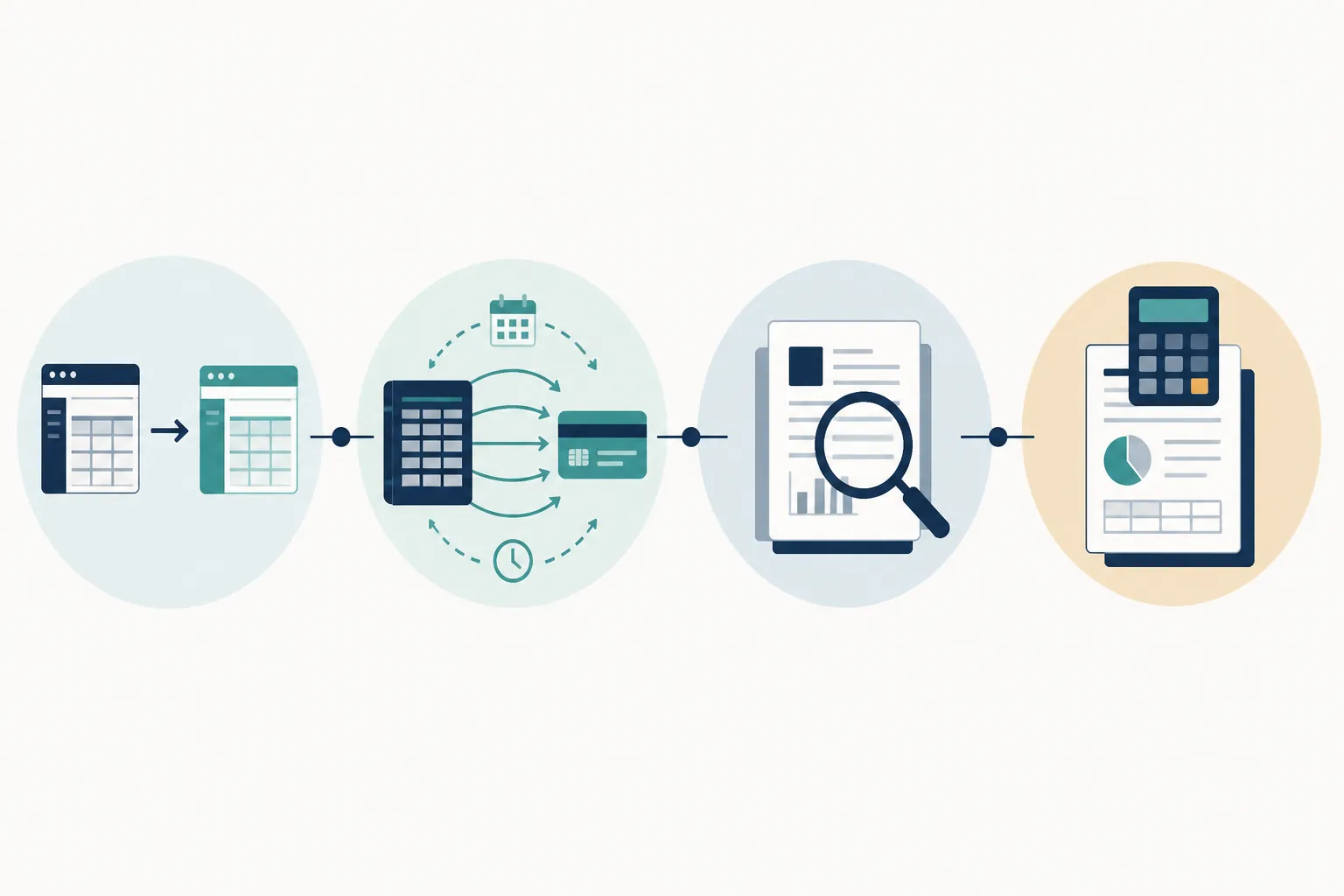
| Stage | What the record establishes |
|---|---|
| Access | Warr was hired as the bookkeeper for a small Lexington County business. |
| Process change | Shortly after starting, she persuaded the employer to switch accounting software. |
| Diversion | She used the resulting payment process to send company money to herself instead of paying company invoices. |
| Duration | The conduct continued from approximately June 2023 through July 2024, a period of roughly 13 months. |
| Detection | A routine financial review revealed unauthorized payments and invoices that had not been paid. |
| Loss analysis | A forensic accountant traced $253,855.48 in transfers from the business account to Warr’s personal account. |
The sequence matters. Warr’s position gave her influence over both the accounting environment and the execution of payments. After convincing the business to change accounting software, she was able to route payments that should have satisfied company invoices into her own personal account. The scheme ran from about June 2023 to July 2024 before the business detected it.[1]
That description does not establish that the new software caused the fraud, contained an exploitable defect, or was supplied by a negligent vendor. The public record does not name the accounting product. What it establishes is narrower: the migration changed the payment process, and Warr used the access available to her as bookkeeper to redirect company funds.
Detection began with an ordinary financial review rather than a specialized law-enforcement operation. The review exposed two sides of the same discrepancy: payments the business had not authorized and legitimate invoices that remained unpaid. A forensic accountant then examined the transactions and quantified $253,855.48 transferred from the company’s account to Warr’s personal account.[1]
Local coverage corroborated the basic disposition and the account of funds being taken from the Lexington County business, but those reports substantially track the federal release rather than providing separate transaction records or testimony.[2]
Why $253,855.48 is more precise than “$250K”
The rounded figure in headlines describes the scale of the case. It should not replace the amount in the judgment-related reporting. The court ordered Warr to pay $253,855.48 in restitution, together with a separate $100 special assessment. She also received 37 months of imprisonment and three years of supervised release.[1]
The same $253,855.48 figure appears in two distinct parts of the record. First, it is the amount the forensic accountant identified as having moved from the business account to Warr’s personal account. Second, it is the amount imposed as restitution. The figures match, but the descriptions are not interchangeable: one reports the result of transaction analysis, while the other states a financial obligation ordered as part of the federal sentence.
The $100 assessment is likewise separate from restitution. Combining it with the restitution figure, describing it as an additional loss to the business, or silently rounding all financial components to “$250,000” would blur legally different items.
What is confirmed, corroborated, and only reported
| Evidence level | Material covered | How it is treated here |
|---|---|---|
| Federal source | Identity, forum, judge, offense, sentence, supervised release, restitution, assessment, scheme period, payment mechanism, detection, investigators, and prosecutor | Treated as confirmed |
| Local reporting | Core sentencing result and description of the theft | Used as corroboration, not as multiple independent confirmations where reports repeat the federal release |
| Single named report | Prior state conviction, bankruptcy, and defense-counsel details | Clearly attributed and not treated as independently verified |
| Record-review classification | No AI tool or AI use identified in the reviewed sources | Treated as an absence in the available public record, not a categorical negative |
The federal release identifies the U.S. Secret Service and Lexington County Sheriff’s Department as the investigating agencies and Assistant U.S. Attorney Scott Matthews as the prosecutor.[1] Those details help establish the institutional path of the case, but they do not alter the central transaction record.
The State separately reported that Warr had a prior South Carolina breach-of-trust conviction and filed for bankruptcy in 2024. It also identified Jack Swerling as defense counsel and Joenathan Chaplin as earlier counsel.[3] Those details are attributed to that report because they were not independently verified here against the underlying state-court and bankruptcy records. They are not necessary to establish the federal sentence or the amount diverted from the Lexington County business.
Date precision requires similar restraint. The federal release and contemporaneous coverage appeared on August 26, 2026, but the reviewed material does not state that the sentencing hearing necessarily occurred that day. “Late August 2026” is therefore the supported description for the sentencing unless a primary docket entry or transcript supplies the hearing date.
Software was the operational channel, not a documented AI component

The accounting-software migration is relevant because it formed part of the documented workflow. Warr advocated for the change and then used the payment process to divert money. That makes the software operationally implicated, but it does not support claims that an algorithm selected payments, generated fraudulent instructions, impersonated an authorized person, or defeated a control through AI.
- Federal case status: confirmed.
- Confirmed offense description: wire fraud.
- Software role: part of the accounting and payment channel used to execute the diversion.
- Named accounting vendor: not identified in the reviewed sources.
- AI status: no AI tool or AI use documented in the reviewed public record.
- Site treatment: non-AI disambiguation record, excluded from the AI-incident count.
References
Related records
Tool profile
Browse tool evaluations →Governing regulation
Browse the obligations tracker →Preventive workflow
Browse verification workflows →
Report a correction or tip
Spotted an outdated figure, a misstated fact, or a ruling this case record should reflect? Public comments are disabled for this content given the professional cost of a misreported case outcome, penalty amount, or rule text — use the structured correction channel instead.
Report a correction or tip for this record →