
What Factors Affect Car Accident Settlement Value in Connecticut?
Understand the six key factors that determine Connecticut car accident settlement value, from injury severity and comparative fault to insurance limits and the pain-and-suffering multiplier, with data-backed settlement ranges by severity tier to help you benchmark an insurance offer.
- Jurisdiction
- Connecticut
- Court
- Connecticut Superior Court
- AI tool named
- Not applicable
- Ruling date
- Jul 30, 2026
- Source document
- View primary court order ↗
- Last verified
- Jul 30, 2026
Lex Machina Review is an independent risk-tracking and reference resource. Nothing on this site is legal advice, and using it does not create an attorney-client relationship. Every record is reviewed against primary sources but may not reflect the most current status of a matter — always verify directly against the cited court order, rule text, or a licensed attorney before relying on it.
Companion explanation — secondary to the source document above
If you are staring at an insurance offer after a Connecticut crash, the useful question is not whether the number feels respectful. It is what would make that number move. The factors affecting car accident settlement value in Connecticut that claimants can actually measure are injury proof, economic loss, fault allocation, available insurance, pain-and-suffering valuation, and liability evidence. A weak offer usually fails one of those tests. A frustratingly low but realistic offer often runs into one of Connecticut’s harder limits.
Start with benchmarks, but do not mistake them for a state-approved price list. Connecticut does not publish an official settlement schedule for car accident injuries. The figures below come from secondary settlement datasets and law-firm market guides, so they are comparison points for negotiation, not guarantees.
| Injury tier | Common claim profile | Connecticut benchmark |
|---|---|---|
| Minor | Soft-tissue injury, limited treatment, no surgery, short recovery | Average about $6,978; commonly described range $5,000–$25,000 [1][2] |
| Moderate | Fracture, longer treatment, injections, meaningful wage loss, extended recovery | Average about $40,047; commonly described range $25,000–$100,000 [1][2] |
| Severe or catastrophic | Surgery, permanent impairment, spinal cord injury, traumatic brain injury, major disability | Average about $991,383; spinal cord injury or TBI cases frequently exceed $1,000,000 [1][2] |
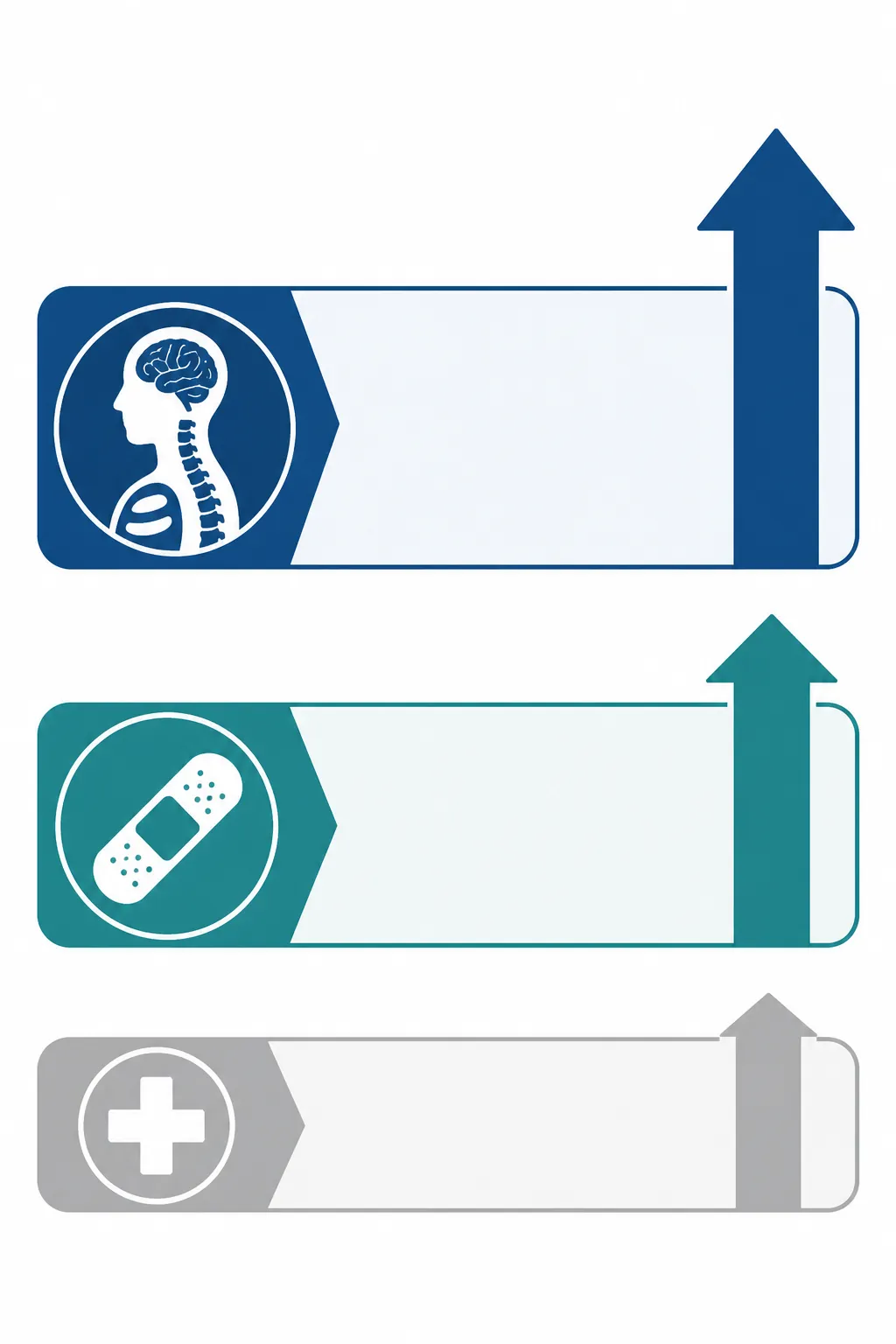
Those tiers are most useful when they discipline expectations in both directions. A $12,000 offer on a brief neck-and-back treatment file may not be shocking just because the claimant is still angry about the crash. A $25,000 offer on a surgical case may be low on injury value, unless $25,000 is all the at-fault driver’s bodily injury coverage provides.
The six factors that build, reduce, or cap the number

A settlement figure is usually assembled in layers. Medical proof and economic losses create the base. Pain and suffering is argued from that base. Liability evidence determines how confidently the claimant can demand payment. Connecticut comparative negligence can reduce or erase recovery. Insurance limits can make a strong case practically uncollectible above the available coverage.
1. Injury severity is strongest when it is objective
The same complaint of pain can land in very different settlement territory depending on what the records show. Adjusters and defense counsel usually give more settlement weight to imaging, surgical recommendations, fracture findings, documented neurological symptoms, permanent impairment notes, and treatment that continues for a medically explained reason.
A minor file often has emergency evaluation, a short course of conservative care, and discharge without documented permanency. A moderate file may include a fracture, prolonged physical therapy, injections, specialist referrals, or months of work restrictions. A severe file is different in kind: surgery, traumatic brain injury, spinal cord injury, major disfigurement, or permanent functional loss. That is why the benchmark jump from minor to severe is not a smooth arithmetic progression; the proof changes the case’s center of gravity.
Gaps in care matter because they give the insurer a causation argument. A delay before treatment, missed appointments, or an abrupt stop in care may be explainable. The explanation needs to appear somewhere reliable, preferably in the records or demand package, rather than for the first time after a low offer arrives.
2. Economic losses make the harm countable
Medical bills, lost wages, reduced earning capacity, out-of-pocket costs, and future care needs are not the whole claim, but they are the part that can be audited. A demand supported by itemized bills, wage verification, tax records, employer letters, disability slips, and a treating provider’s future-care opinion is in a better position than a demand that simply announces a total.
The distinction is especially important in moderate cases. A claimant with similar MRI findings but no missed work, limited treatment, and no future medical opinion may not price the same as someone who lost months of income and still has documented restrictions. The injury label may be similar; the economic file is not.
Future losses require more than worry. If a doctor states that another procedure is likely, or that work restrictions are permanent, that can change settlement value. If the claimant merely fears future pain, the insurer may discount it heavily because there is no medical anchor.
3. Comparative fault can reduce the claim, and at 51% it ends it
Connecticut uses modified comparative negligence. A claimant’s recovery is reduced by the claimant’s percentage of fault, and a claimant who is 51% or more at fault is barred from recovery under C.G.S. § 52-572h.[3]
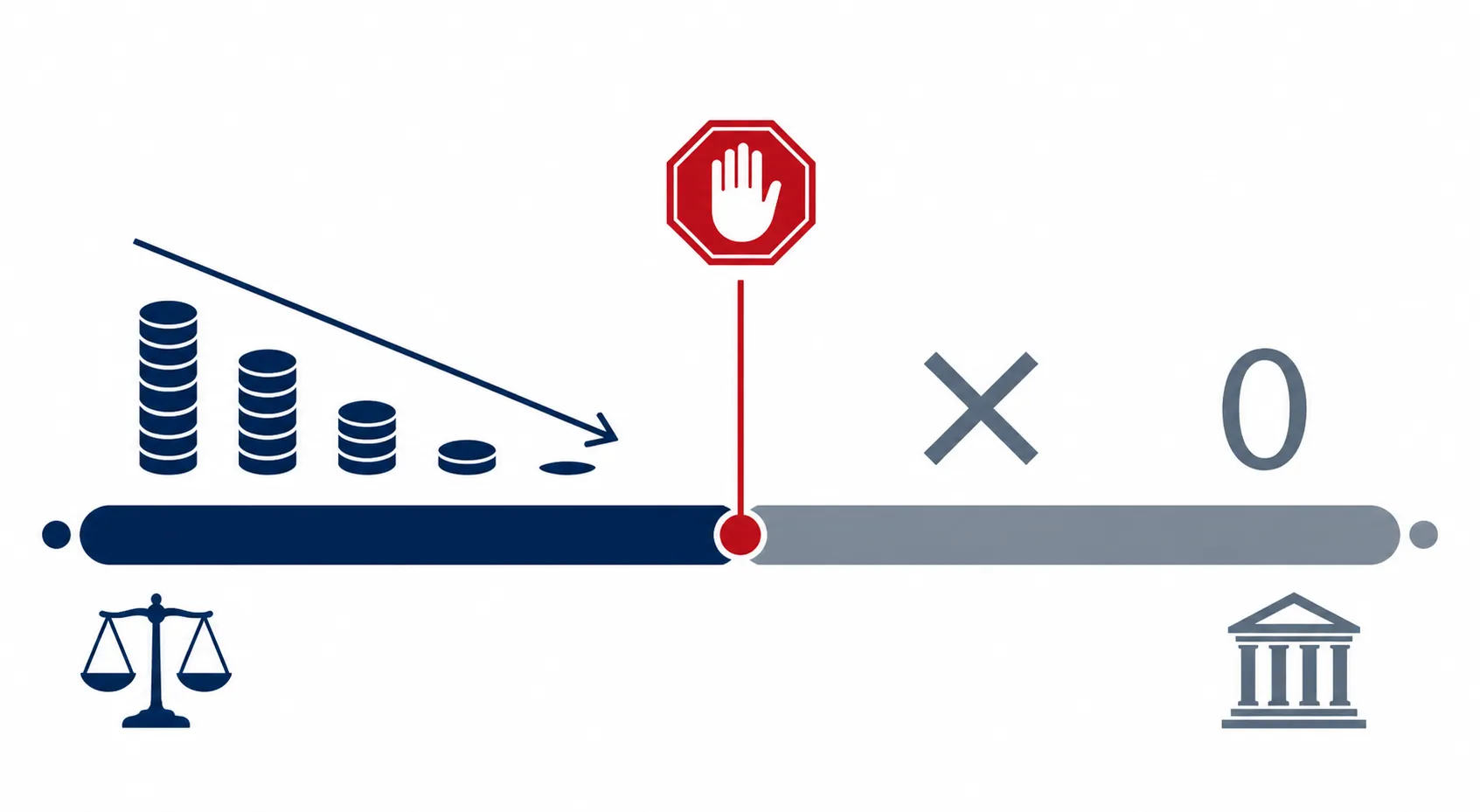
That rule changes how an offer should be read. A case with $80,000 in negotiated value becomes a $60,000 case if the claimant is assigned 25% fault. At 50% fault, it becomes $40,000. At 51%, the legal value is not merely reduced; it is barred. This is why a liability dispute can matter as much as the medical file.
Fault arguments often turn on ordinary but decisive evidence: the police report, intersection layout, traffic signal sequence, vehicle damage, dashcam footage, photos from the scene, witness statements, and whether either driver made an admission. Two claimants can have the same shoulder surgery and receive different offers because one was rear-ended while stopped and the other was changing lanes in a disputed sideswipe.
4. Insurance limits can cap the collectible value
This is the gap many settlement discussions avoid: a case can be worth more than it can collect. Connecticut’s minimum auto liability requirements are commonly described as 25/50/25: $25,000 bodily injury coverage per person, $50,000 per accident, and $25,000 property damage coverage.[4]
If the at-fault driver has only minimum coverage, a serious injury claim may hit a practical ceiling quickly. A fractured-leg case with surgery may benchmark well above a minor-injury tier, but the insurer cannot offer policy money it does not have. In that situation, a low-looking number may be a coverage-limited number.
The next question is whether another layer applies. Uninsured and underinsured motorist coverage can matter when the at-fault driver has no insurance or too little insurance, and Connecticut materials discussing the minimum-insurance gap emphasize how minimum limits can leave injured people undercompensated without additional coverage.[5]
Coverage analysis should happen before anyone declares an offer insulting. A demand package that supports $150,000 in injury value is one thing. A defendant with $25,000 in available bodily injury limits and no reachable assets is another. The first is case valuation; the second is collection reality.
5. The pain-and-suffering multiplier is a convention, not Connecticut law
Pain and suffering usually enters the discussion after medical bills and wage loss are documented. A common negotiation method applies a multiplier to economic damages, often described in the 1.5x to 5x range depending on severity, recovery length, permanency, disruption to daily life, and the credibility of the medical proof.[6]
That range is not a Connecticut statute. An insurer does not have to accept it, and a court does not calculate damages by plugging numbers into a mandatory multiplier. It is a negotiation shortcut. It can be useful when it is tied to the record; it becomes folklore when it is treated as entitlement.
A low multiplier may fit a short-treatment soft-tissue claim with no permanency and little wage loss. A higher multiplier is easier to argue when the file shows surgery, months of recovery, permanent restrictions, sleep disruption, inability to perform normal household tasks, or a credible change in the claimant’s work and family life. The point is not to pick the biggest number in the range. It is to explain why the record supports that number.
6. Liability evidence decides how much risk the insurer sees
Liability proof is not just about winning a trial. It affects settlement leverage because insurers price risk. Clear rear-end impact evidence, neutral witnesses, consistent scene photos, and a police report supporting the claimant can move a case differently from a file with competing stories and no independent proof.
Property damage can matter here, but it has to be used carefully. Severe vehicle damage can support the mechanics of a serious crash. Minor visible damage does not automatically defeat injury, especially with vulnerable occupants or particular medical findings, but it does give an adjuster a familiar argument. The better response is not outrage; it is medical and factual evidence that explains the injury mechanism.
The same is true of statements. A claimant who told the officer “I’m fine” at the scene may have a perfectly human explanation: shock, adrenaline, symptoms developing later. But the statement will still appear in the file. A demand that anticipates the issue is usually stronger than one that pretends the issue is not there.
Reading an offer against the benchmarks
A settlement offer looks low when it falls below the relevant injury tier without a clear reason. If the claimant has objective moderate-injury proof, documented lost wages, little or no comparative fault, and available coverage above the offer, the insurer should be able to explain why it is pricing the case like a minor soft-tissue file.
An offer looks more defensible when it lines up with the tier and the proof. A short course of treatment, no imaging abnormality, no permanent impairment, no wage documentation, and disputed causation may keep a claim in the lower range even when the crash was upsetting and inconvenient.
An offer may look unfair on injury value but still be constrained by coverage. That is the hardest category emotionally because the medical loss is real and the available insurance is thin. In those cases, the useful work is not arguing the same demand number louder. It is identifying all available policies, including household, employer, commercial, umbrella, uninsured, or underinsured motorist coverage where applicable.
| Offer signal | What to check |
|---|---|
| The offer is below the minor-injury benchmark | Was treatment brief, undocumented, delayed, or unrelated? Is liability disputed? |
| The offer ignores wage loss | Are there employer records, tax records, disability notes, and work restrictions? |
| The offer applies a large fault discount | What evidence supports the assigned percentage, and does it approach the 51% bar? |
| The offer stops at $25,000 | Is that the bodily injury policy limit, and is any UM/UIM or other coverage available? |
| The pain-and-suffering number is thin | Does the file document permanency, daily-life limits, recovery duration, and objective findings? |
The demand package should answer those questions before the adjuster does. A clean package ties the injury tier to records, bills, wages, liability proof, and coverage. It does not rely on a multiplier alone. It does not cite a severe-injury average when the file is medically minor. It does not ignore a comparative-fault problem and hope the insurer will forget Connecticut’s 51% bar.
What the framework can and cannot tell you
The six-factor framework can tell you whether an offer is in the right neighborhood. It can show whether a case belongs closer to the minor, moderate, or severe tier. It can identify when fault allocation, missing documentation, or policy limits explain a lower number. It can also expose an offer that discounts strong proof without saying why.
It cannot turn settlement benchmarks into a legal entitlement. Connecticut law supplies rules that affect recovery, including comparative negligence and insurance requirements. The multiplier and settlement ranges are negotiation tools. They help test a number; they do not command one.
A disciplined review compares the offer against six things: the injury tier, documented economic losses, the claimant’s fault percentage, available coverage, the reasonableness of any pain-and-suffering multiplier, and the strength of liability proof. If the offer survives that comparison, it may be fair or at least coverage-constrained. If it does not, the next move is to make the missing value legible in the file.
References
- How Much Are Car Accident Settlements in Connecticut? 2026 Guide — Aspell Law, 2026
- Connecticut Car Accident Settlements — InjuryClaimCoach
- Connecticut Comparative Negligence Laws — Henderson & Garrigan
- Auto Insurance — Connecticut Insurance Department
- Why Connecticut Minimum Insurance Leave Victims Undercompensated — DeFronzo & Petroskey
- How Is Pain and Suffering Calculated in Connecticut? — LTKE Law, 2026
Related records
Tool profile
Browse tool evaluations →Governing regulation
Browse the obligations tracker →Preventive workflow
Browse verification workflows →
Report a correction or tip
Spotted an outdated figure, a misstated fact, or a ruling this case record should reflect? Public comments are disabled for this content given the professional cost of a misreported case outcome, penalty amount, or rule text — use the structured correction channel instead.
Report a correction or tip for this record →