
The CPSC Emergency Room Privacy Backlash and New Litigation Risks
The CPSC's expanded NEISS-R emergency room surveillance program, revealed to include private health data accessed without patient consent, creates three novel litigation risks for product manufacturers: plaintiffs gain real-time injury-pattern data, manufacturers face the burden of correcting unverified EHR records, and the agency's history of mishandling confidential business information raises acute CBI exposure concerns.
- Jurisdiction
- US-Federal
- Court
- CPSC
- AI tool named
- NEISS-R
- Ruling date
- Jul 22, 2026
- Source document
- View primary court order ↗
- Last verified
- Jul 28, 2026
Lex Machina Review is an independent risk-tracking and reference resource. Nothing on this site is legal advice, and using it does not create an attorney-client relationship. Every record is reviewed against primary sources but may not reflect the most current status of a matter — always verify directly against the cited court order, rule text, or a licensed attorney before relying on it.
Companion explanation — secondary to the source document above
The CPSC’s emergency-room data issue is no longer just a privacy story. In late July 2026, the agency announced a modernized National Electronic Injury Surveillance System, NEISS-R, that moves the program from roughly 400,000 annual records drawn from 36 states to roughly 2 million annual records across all 50 states, with automated electronic health record scanning replacing the older manual-abstraction model.[1][2][3] For product manufacturers, that is a litigation-risk shift: more injury records become easier to search, easier to export, easier to quote, and easier to treat as pattern evidence before anyone has tested whether a product identification in the underlying medical record is right.

There is a real public-safety case for faster surveillance. Emergency-room injury data can help regulators spot product hazards earlier than complaint files, recalls, or litigation dockets would. The legal problem begins when that public-health signal also becomes a litigation asset: an unverified EHR note can move from hospital intake to agency dataset to plaintiff theory with little visibility for the company whose product is named.
That is why the privacy backlash over emergency-room records has consequences beyond patient consent. The same questions that matter to patients—who accessed the record, under what authority, with what limits, and with what safeguards—also matter to manufacturers that may later face discovery requests, Section 15(b) scrutiny, insurer review, or demand letters built around the resulting data stream.
What changed in the NEISS-R pipeline
The legacy NEISS system was already important, but it was constrained by scale and process. NEISS-R changes both. The agency’s July 22 announcement describes a modernization of a decades-old injury-surveillance system intended to protect more Americans faster, and outside product-safety counsel described the operational change as a move from manual abstraction toward automated scanning of electronic health records.[1][3]
Acting Chairman Peter Feldman had previewed the same direction earlier in 2026, telling Toy Fair attendees that the CPSC was “investing in AI-enabled workflows that improve the quality and quantity of injury surveillance data” and building “digital infrastructure to handle a massive new volume of electronic health records.”[2] That language matters because it points to a different legal object than the old sampled database: not just more forms, but an AI-enabled intake and processing environment for a much larger volume of clinical records.
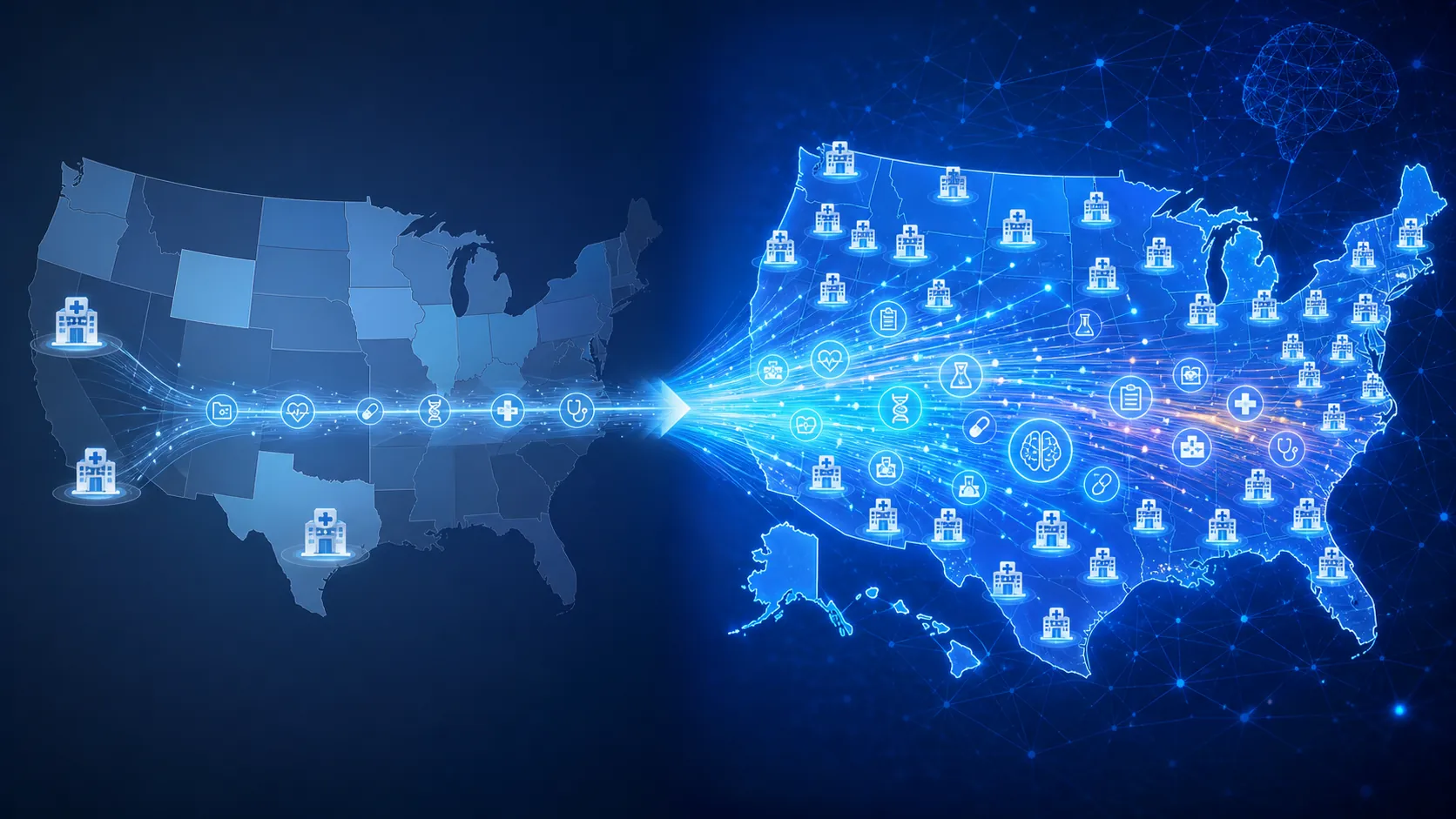
| Legacy NEISS baseline | NEISS-R expansion | Litigation significance |
|---|---|---|
| Roughly 400,000 records annually | Roughly 2 million records annually | More potential injury-pattern data for regulators, plaintiffs, insurers, and defense teams |
| 36-state coverage | All 50 states | Broader geographic comparisons and fewer obvious gaps in national trend arguments |
| Manual abstraction model | Automated EHR scanning and AI-enabled workflows | Faster movement from clinical record to searchable product-safety signal |
| Lower-volume agency dataset | Digital infrastructure for a much larger EHR volume | Greater pressure on access controls, correction procedures, and CBI safeguards |
Those changes do not prove the system will be misused. They do mean that old assumptions about timing and friction are unsafe. A slower, manually abstracted surveillance file gives lawyers time to reconstruct facts from complaints, medical records, service histories, and expert review. A larger, machine-searchable EHR-derived system can create a record trail earlier, at greater scale, and with less manufacturer participation at the point of collection.
The first litigation consequence: earlier pattern evidence
The most immediate consequence is informational asymmetry. Foley & Lardner warned that enhanced surveillance “may make it easier for litigants, insurers, and other stakeholders to identify emerging product-risk trends and areas where additional scrutiny is warranted.”[3] That is a careful formulation, and it should stay careful: easier visibility is not proof that the underlying trend is real, causal, or admissible. But visibility changes litigation behavior long before admissibility is tested.
A plaintiff firm does not need a final agency conclusion to start screening claims around a suspected product category. An insurer does not need a recall to revisit reserves. A regulator does not need a completed defect investigation to ask sharper questions. Once an injury pattern is visible in a dataset that carries the imprimatur of a federal safety agency, it can shape subpoenas, expert retention, public-record requests, and settlement posture.
That does not make NEISS-R a plaintiff database by design. It makes it a surveillance system with litigation externalities. The same faster signal that may help the agency detect hazards earlier can also give private litigants a head start in building a product theory. Defense counsel should expect plaintiffs to ask not only what the company knew from complaints and warranty files, but also what the company could have known from CPSC injury surveillance once NEISS-R data became available or discoverable.
The second consequence: the correction burden moves to the company after the record already exists
The sharper issue is accuracy. Foley put it plainly: “One challenge with these new efforts is that the information in the underlying records is often unverified and may be inaccurate. The updated system may place the burden on companies to identify and correct those errors when their products are involved.”[3]
That sentence captures the practical unfairness at the center of the dispute. The manufacturer did not write the triage note. It did not interview the patient. It may not know whether the product named in the EHR is its product, a competitor’s product, an older model, a counterfeit, an accessory, or a generic shorthand used by hospital staff. Yet if the record enters the CPSC stream with a product association, the company may be the party that later has to disprove it.
In product-liability practice, that burden is not theoretical. A claims analyst may have to match an EHR-derived incident to complaint files that use different names. In-house counsel may have to decide whether a cluster of records triggers escalation under Section 15(b). Outside counsel may have to explain in discovery why the company disputes an agency-coded injury record without appearing to ignore safety data. Each step takes place after the record has already acquired procedural momentum.
The correction problem is also different from the ordinary medical-record problem. A patient may have a route to seek correction of a clinical chart. A manufacturer confronting an EHR-derived product identification in a CPSC surveillance file may not have a clear administrative path to correct the agency’s record, force a notation, or require downstream users to see the dispute. The available materials do not establish that such a process exists, and no court has yet defined one for NEISS-R.
That gap should affect internal protocols now. If a company waits until the first demand letter cites a CPSC injury signal, the factual record will already be stale. The better posture is to decide in advance who monitors relevant CPSC data, who compares it with complaints and warranty information, who contacts the agency when a record appears wrong, and who preserves the company’s basis for disputing product identification.
The third consequence: confidentiality risk is supported by the agency’s own history
Confidential-business-information concerns are easy to overstate when they are framed as a general distrust of government databases. The CPSC’s recent history makes the concern more concrete. A CPSC Inspector General review of the agency’s 2017–2019 data breach found that the breach was “much more significant than reported,” involving nonpublic Section 6(b) manufacturer information sent to 556 recipients through 1,725 misdirected emails, with failures tied to lack of supervision, document policies and procedures, and training.[4]
Those numbers are not an argument that NEISS-R will suffer the same failure. They are an argument against treating confidentiality assurances as self-executing. When an agency with that history expands the volume, velocity, and sensitivity of its product-injury data, manufacturers are entitled to ask what has changed in supervision, access permissions, audit trails, staff training, contractor controls, and disclosure review.
Section 6(b) information is not the only sensitive material at stake. EHR-derived injury records may contain patient information, product identifiers, narrative facts, retailer references, dates, locations, and clinical descriptions that become valuable when combined. The legal exposure comes from aggregation. A single mistaken product reference may be manageable; a searchable cluster of such references may look like a trend. A single disclosure error may be embarrassing; a disclosure error involving manufacturer submissions, agency coding, and health-record-derived data can become litigation material.
What counsel should not assume yet
The current record has hard limits. NEISS-R was announced on July 22, 2026, and the public controversy over emergency-room data access followed within days. As of July 28, 2026, the available materials do not identify a public pre-enforcement challenge, declaratory-judgment action, FOIA suit, or Administrative Procedure Act ruling testing the program.
The hospital footprint is also unsettled. The program’s target is broader national coverage, but the actual dataset will depend on participation, implementation, and any limits imposed by hospitals, contractors, regulators, or courts. A nominal all-state surveillance design should not be confused with a complete or unbiased national injury file until the operational record is clearer.
The contractor layer remains another important unknown. The materials reviewed for this analysis do not include a released Konza Health contract, so the precise terms governing collection scope, retention, access controls, audit rights, breach response, and data sharing cannot be verified from the public record described here. Any litigation theory that depends on those contract terms should be treated as premature until the document is available.
The accuracy burden is similarly prospective. Practitioners have identified the problem, but no court has yet held that a manufacturer has a private right to correct NEISS-R data, that an inaccurate NEISS-R record can support a specific APA challenge, or that the CPSC must provide a particular correction procedure before relying on EHR-derived product information. The absence of a ruling does not eliminate the risk. It means counsel should build the record before the first test case defines the remedy.
The manufacturer-side posture now
Manufacturers should treat CPSC injury records under NEISS-R as three things at once: potentially useful safety information, potentially inaccurate evidence, and potentially sensitive data. Treating the records only as a privacy controversy misses the litigation channel. Treating them only as plaintiff fuel misses the regulatory and product-safety purpose. The operating question is how to preserve the company’s ability to verify, dispute, and protect information before a record is quoted back to it.
- Revisit Section 15(b) escalation criteria so that EHR-derived CPSC signals are evaluated alongside complaints, warranty data, field reports, recalls, and litigation claims rather than ignored or over-weighted.
- Assign responsibility for monitoring relevant CPSC injury data and documenting why a record is accepted, disputed, or still under investigation.
- Create a record-correction workflow that preserves the basis for disputing product identification, model attribution, incident chronology, or causation.
- Update incident-investigation protocols so claims, legal, engineering, and regulatory teams use consistent terminology when comparing CPSC records with internal files.
- Review CBI submission practices with the assumption that agency-held information may later become the subject of access disputes, disclosure errors, or discovery fights.
- Prepare protective-order and confidentiality arguments before a plaintiff seeks broad discovery into CPSC communications, agency-coded injury records, or manufacturer submissions.
The practical goal is not to discredit injury surveillance. It is to keep the evidentiary chain visible. Counsel should be able to show what the agency record says, what the underlying facts do and do not establish, what the company did to investigate, what information it treated as confidential, and what correction or qualification it sought when the record appeared wrong.
References
- CPSC Modernizes Decades-Old Injury Surveillance System to Protect More Americans Faster, CPSC, July 22, 2026.
- Acting Chairman Peter A. Feldman of the U.S. Consumer Product Safety Commission Delivers Keynote Remarks at Toy Fair, CPSC, February 16, 2026.
- CPSC Announces Updated National Electronic Injury Surveillance System, Foley & Lardner, July 24, 2026.
- CPSC Inspector General Concludes 2019 Data Breach Was “Much More Significant Than Reported”, Mintz, October 7, 2020.
Related records
Tool profile
Browse tool evaluations →Governing regulation
Browse the obligations tracker →Preventive workflow
Browse verification workflows →
Report a correction or tip
Spotted an outdated figure, a misstated fact, or a ruling this case record should reflect? Public comments are disabled for this content given the professional cost of a misreported case outcome, penalty amount, or rule text — use the structured correction channel instead.
Report a correction or tip for this record →