
Why a Clear Battery at Wrigley Field Led to No Charges
A viral video showed a Cubs fan slapping another fan at Wrigley Field, but no criminal charges or civil lawsuit followed. This article examines why the Illinois battery enforcement pipeline collapsed at the first node and what it means for incidents where victims decline to cooperate.
- Jurisdiction
- US - Illinois
- Court
- Cook County Circuit Court
- AI tool named
- None
- Ruling date
- Jul 19, 2026
- Source document
- View primary court order ↗
- Last verified
- Jul 31, 2026
Lex Machina Review is an independent risk-tracking and reference resource. Nothing on this site is legal advice, and using it does not create an attorney-client relationship. Every record is reviewed against primary sources but may not reflect the most current status of a matter — always verify directly against the cited court order, rule text, or a licensed attorney before relying on it.
Companion explanation — secondary to the source document above
For anyone looking for a Cubs national anthem slap assault case, the shortest answer is also the most important one: there appears to be no legal case. Chicago police said they were aware of the viral video from Wrigley Field but had “no calls of service or case reports” as of July 21, 2026; the Cubs said the younger fan who was hit told security the matter was resolved, did not want anyone ejected, and wanted no further action. [1][2]
That is not the same as saying the contact was legally meaningless. On the reported facts, the slap sits comfortably inside the ordinary description of Illinois battery: knowing physical contact of an insulting or provoking nature. The hard part was not fitting the act into a statute. The hard part was getting any institution with procedural authority to carry it forward after the person struck declined to do so.
The Contact Was the Easy Part
The reported incident occurred on July 19, 2026, before a Cubs-Giants game at Wrigley Field. Robert “Bob” Chavez, described in coverage as 71 years old, struck the back of a younger spectator’s head after the younger man remained seated during the national anthem. [1]
A battery analysis does not require much embroidery here. Illinois battery under 720 ILCS 5/12-3(a)(2), as summarized by the cited legal explainer, covers knowing physical contact of an insulting or provoking nature; injury is not required. The same explainer describes the offense as a Class A misdemeanor carrying up to 364 days in jail and a $2,500 fine. [3]
That matters because much of the online discussion drifted toward the wrong obstacle. The missing piece was not a bruise, medical treatment, or proof that the younger fan was physically hurt. A slap to the back of the head, if knowing and unwanted, can be insulting or provoking contact. If a complainant had wanted a report made, the absence of visible injury would not have been the clean exit ramp.
There are still limits on how far that conclusion should be pushed. No court tested these facts. The younger fan has not been publicly identified. The public record described in the available reporting is a viral video, statements from Chavez, statements attributed to or issued by the Cubs, and police confirmation that no report existed. That is enough to assess legal sufficiency in a practical sense. It is not a charging file.
Why the Video Did Not Become a Case
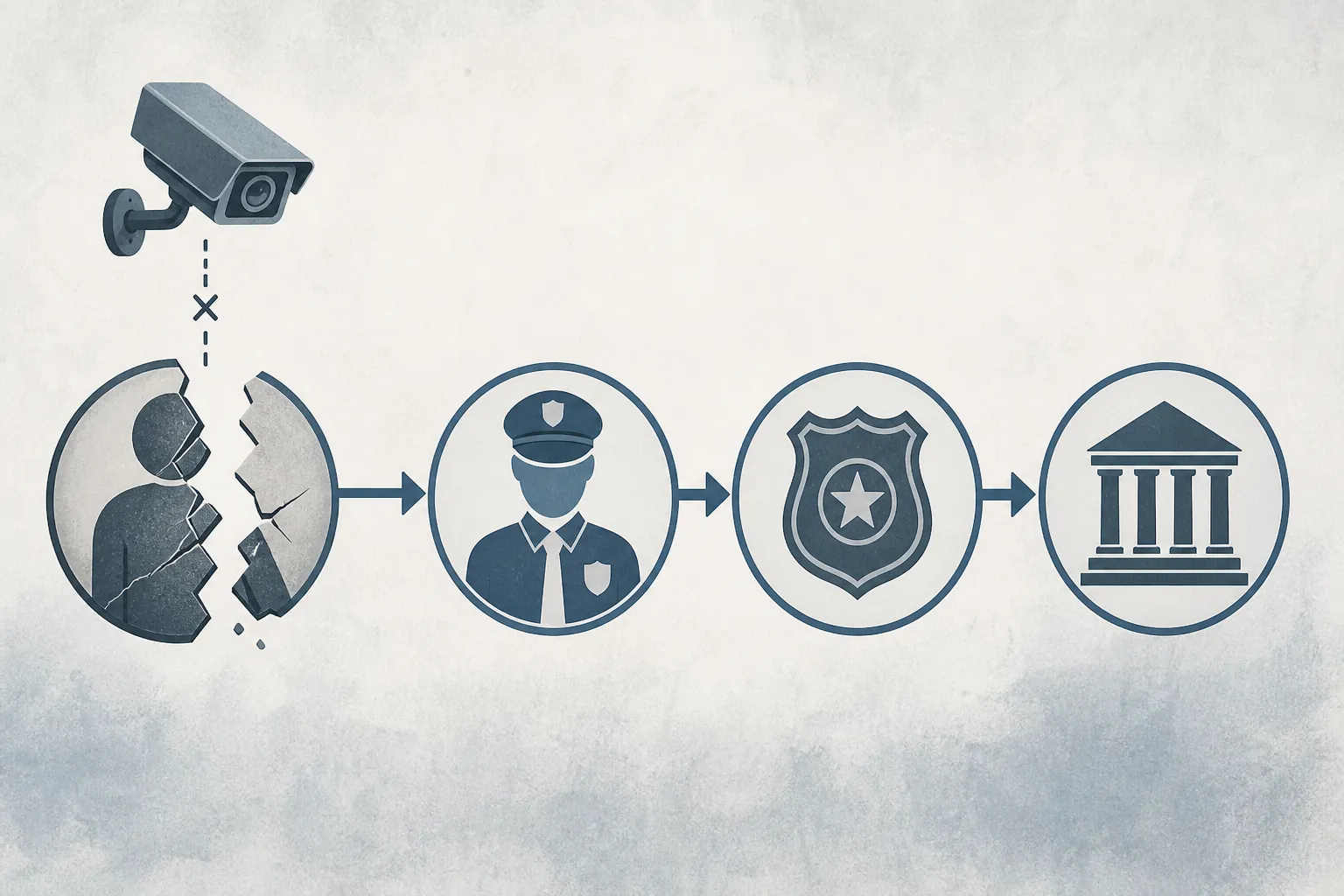
A video can corroborate a complaint. It can identify participants, preserve timing, and reduce factual uncertainty. What it did not do here was create the first procedural actor. Police were not described as personally observing the slap. The available reporting does not describe a citizen complaint. CPD instead said there were no calls of service or case reports. [1]
| Node in the enforcement chain | What appears to have happened | Practical consequence |
|---|---|---|
| Younger fan | Told Cubs security the matter was resolved and wanted no further action | No complaining witness pushed the incident into a formal process |
| Cubs security | Spoke with the younger fan and said the club respected his wishes | No ejection and no apparent escalation to create a case record |
| Chicago police | Confirmed awareness of the video but reported no calls of service or case reports | No police report existed to move forward |
| Prosecutors | No referred case is reported in the available materials | No charging decision was reached on a filed misdemeanor battery case |
This is the part that viral certainty tends to flatten. “It’s on video” answers an evidence question. It does not answer the intake question. A misdemeanor battery file still has to begin somewhere: a victim reports it, police observe it, security summons law enforcement, or some other procedurally recognized route puts facts into an official record. Here, the most important reported fact is not the angle of the clip. It is the phrase “no calls of service or case reports.” [1]
The Cubs’ statement filled in why that gap persisted. According to Yahoo Sports’ account, Cubs security spoke with the fan who had been hit; he said the matter was resolved, did not want anyone ejected, and wanted no further action. The club said it “respected his wishes.” [2]
That deference is not hard to understand in a stadium setting. Security had a live crowd to manage, a specific person saying he did not want escalation, and no reported ongoing threat requiring removal. It could have taken a harder institutional line under a guest-conduct theory, but the available record says it did not. There is no reported ejection, no police report, no charge, and no civil lawsuit in the materials provided. [1][2]
The Beer and Handshake Were Procedural Facts, Not a Moral Verdict
The post-slap reconciliation received the kind of coverage that can look sentimental from a distance. It was more useful than that. Chavez said the younger fan bought him a beer, and reports also described the two shaking hands after the incident. [1][4]
Those facts do not erase the contact. They do, however, explain the institutional posture. If the person struck is buying the other man a beer, shaking hands, and telling venue security that he wants no further action, the enforcement chain has already lost its most natural witness before police or prosecutors are asked to do anything.
Victim non-cooperation does not make prosecution legally impossible in every battery case. Serious violence, police observation, independent witnesses, body-camera footage, medical records, or other evidence can sometimes carry a case despite a reluctant victim. But this was a public-order misdemeanor posture in which the police did not report a service call or case report, the alleged victim did not ask for action, and the venue publicly deferred to that choice. On those facts, the case did not merely weaken. It never appears to have entered the system. [1][2]
Public Outrage Had Nowhere to File Itself
The public reaction was real, but it was procedurally beside the point. A Times of India account citing an OutKick poll reported that, among 8,233 respondents, 64% said the slap was not justified. [5]
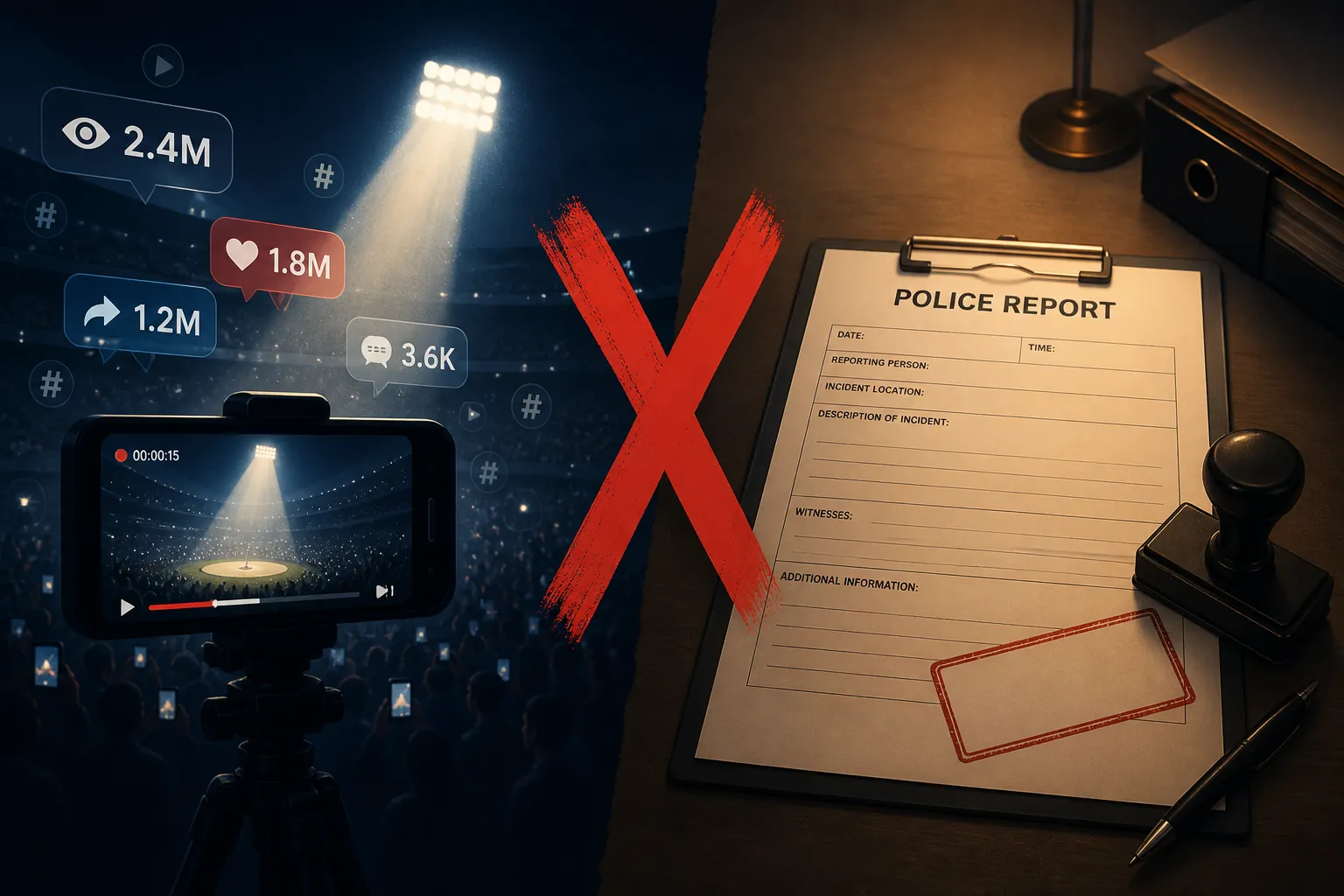
That number measures audience attitude. It does not measure the younger fan’s willingness to sign a complaint, appear in court, or help authenticate what happened after the clip ended. It also does not give a prosecutor a referred file. Poll results can explain why the video kept circulating. They cannot substitute for the complainant who told stadium security he was done with it.
This is the procedural disconnect that makes the Wrigley incident useful outside sports commentary. A large audience can decide that a misdemeanor occurred, and the law may offer a plausible battery theory, while the formal system remains still because the person with the most direct stake declines to activate it.
What the Cubs Could Have Done, and What They Apparently Chose Not To Do
Venue discipline is separate from criminal charging. The Cubs did not need a prosecutor to eject a fan if security concluded that removal was necessary under stadium rules. MLB’s Wrigley Field guest materials describe conduct expectations for attendees, including behavior affecting other guests. [6]
Still, the reported club response was narrower. Security spoke with the younger fan, learned that he considered the matter resolved, and did not eject Chavez. The Cubs then said they respected the fan’s wishes. [2]
That choice is not the same as a legal finding that no battery occurred. It is an operational decision by a private venue managing a resolved interaction, at least as reported by the person struck. In another stadium, with another victim, the same contact could lead to removal, a police call, a written statement, and a referral. Here, the venue did not manufacture a complainant after the actual one declined.
No Report Meant No Charging Decision
The Cook County State’s Attorney’s Office does not appear in the available record because there was apparently nothing for it to review. That distinction is easy to lose. “No charges” can mean prosecutors reviewed a file and declined it. Here, the reported facts point to an earlier failure point: no service call, no case report, and no complainant asking the process to begin. [1][2]
That is why the incident can be legally sufficient and institutionally inert at the same time. The statute answers whether a slap can qualify as battery. The file answers whether anyone put the matter in front of the charging authority. In this incident, the first answer looks favorable to a battery theory; the second answer is no. [1][3]
The result is not a clean vindication of Chavez, a rule about anthem conduct, or proof that video evidence is useless. It is a narrower enforcement lesson. Video can support a complaint in a misdemeanor battery case. At Wrigley Field, it did not replace the complaining witness who told security the matter was resolved and wanted no further action. [2]
References
- Cubs fan who slapped man during national anthem says they made amends, Washington Times, July 21, 2026
- Cubs decline to take action against man who smacked fan for not standing during national anthem, Yahoo Sports, July 21, 2026
- 720 ILCS 5/12-3 – Battery, Combs Waterkotte
- Older Cubs Fan Slaps Younger Spectator for Not Standing During National Anthem in Viral Video, People, July 22, 2026
- Explained: Why elder man slapped young fan..., Times of India, July 22, 2026
- Wrigley Field Security – Guest Code of Conduct, MLB.com
Related records
Tool profile
Browse tool evaluations →Governing regulation
Browse the obligations tracker →Preventive workflow
Browse verification workflows →
Report a correction or tip
Spotted an outdated figure, a misstated fact, or a ruling this case record should reflect? Public comments are disabled for this content given the professional cost of a misreported case outcome, penalty amount, or rule text — use the structured correction channel instead.
Report a correction or tip for this record →