
Can Strict Liability Claims Succeed in the Cyclosporiasis Outbreak?
Plaintiffs in the 2026 cyclosporiasis outbreak face severe causation hurdles even under strict liability, because Cyclospora cannot be cultured or genetically traced—a unique forensic problem that produces Daubert-level challenges and shapes settlement ranges from $25,000 to $1 million per case.
- Jurisdiction
- US - Ohio
- Court
- U.S. District Court for the Northern District of Ohio
- AI tool named
- Not applicable
- Ruling date
- Jul 16, 2026
- Source document
- View primary court order ↗
- Last verified
- Jul 25, 2026
Lex Machina Review is an independent risk-tracking and reference resource. Nothing on this site is legal advice, and using it does not create an attorney-client relationship. Every record is reviewed against primary sources but may not reflect the most current status of a matter — always verify directly against the cited court order, rule text, or a licensed attorney before relying on it.
Companion explanation — secondary to the source document above
Strict liability can succeed in cyclosporiasis outbreak litigation, but it does not solve the hardest part of these cases. It removes the need to prove that a restaurant, supplier, or distributor acted carelessly. It does not remove the need to prove that a specific contaminated food product caused a specific plaintiff’s illness.
That distinction matters in the 2026 outbreak now producing legal-liability and food-safety analysis, even when some searches still attach a 2025 label to the issue. As of July 20, 2026, CDC reported 4,173 domestically acquired confirmed cases across 41 states, including 308 hospitalizations.[1] USA Today separately reported that Michigan had counted 8,176 cases, but that figure reflects a different state methodology that includes probable cases and is not the same thing as CDC’s national lab-confirmed total.[2]
The litigation is no longer theoretical. On July 16, 2026, Marler Clark filed what it described as the first lawsuit tied to the multistate Cyclospora outbreak against Pacific Bells, a Taco Bell operator, in the Northern District of Ohio, Case No. 1-26-cv-01648.[3] The filing is important less because it proves liability than because it shows experienced food-safety counsel believe at least some claims can be built into pleadable, potentially settlement-worthy cases.

The Legal Fight Starts With Causation, Not Fault
In a more familiar foodborne illness case, a plaintiff may have a clinical isolate, a matching outbreak strain, a purchase record, a recall notice, and a public-health traceback all pointing toward the same product. That does not make the case automatic, but it gives lawyers, insurers, and judges a common evidentiary spine.
Cyclospora cases are different. CIDRAP has reported that Cyclospora cannot be cultured in a laboratory and lacks the whole-genome sequencing framework available for pathogens such as Salmonella or Shiga toxin-producing E. coli.[4] That is not a laboratory footnote. It changes what the plaintiff can put in front of the court when the defendant says, in effect: prove it was our lettuce, onions, cilantro, or other ingredient, not something the plaintiff ate ten days earlier somewhere else.
Strict liability is often described too loosely in outbreak coverage. It does not mean a restaurant becomes liable whenever someone got sick during an outbreak window. The plaintiff still has to establish a defective food product, an injury, and causation connecting the two. The difference is that the plaintiff does not have to prove negligent conduct in the kitchen, warehouse, field, or distribution chain.
Why Cyclospora Makes the Proof Chain Fragile
The forensic problem begins with the organism itself. If the pathogen cannot be cultured and there is no established WGS framework, the case loses one of the strongest tools available in many modern outbreak lawsuits: a genetic comparison between the plaintiff’s pathogen and the organism found in food, another patient, or an environmental sample.[4]
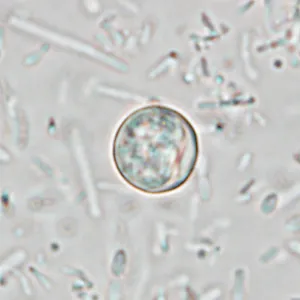
That absence matters at several litigation choke points. At intake, it makes broad advertising responses less useful than carefully screened food histories. At the pleading stage, it raises the risk of overnaming defendants before traceback is stable. At expert discovery, it gives defense counsel a cleaner path to argue that the plaintiff’s causation opinion is built on temporal association, recall bias, or an epidemiological inference that has been stretched beyond its data.
The incubation period adds another weakness. Cyclospora illness often has a one-to-two-week incubation period, which means the relevant food history may reach back into meals the plaintiff did not consider suspicious at the time.[4] A plaintiff may remember the Taco Bell receipt because it became news. The defense will ask what else was eaten during the exposure window, who prepared it, whether anyone else became ill, and whether the plaintiff’s memory changed after public-health announcements or lawyer advertising.
None of that makes a plaintiff dishonest. It makes the proof hard. A week of diarrhea, fatigue, missed work, and dehydration can look modest in a damages spreadsheet until urgent care visits, hospitalization, or relapse enter the record. But damages do not identify the food. In these cases, the causation file has to do work that a genetic match might have done in another pathogen case.
The Daubert Problem Is Practical
The likely expert fight is not whether Cyclospora can cause serious gastrointestinal illness. It can. The sharper fight is whether the expert can reliably move from outbreak association to individual product causation. Without culture and WGS, the expert may need to rely on case clustering, exposure timing, menu-item commonalities, supplier records, public-health interviews, and traceback evidence. Each piece may be admissible. The problem is whether the combined inference becomes strong enough for a specific plaintiff against a specific defendant.
That is where motion practice becomes case selection by another name. Plaintiffs with lab-confirmed cyclosporiasis, a clean exposure history, a documented purchase during the outbreak window, compatible symptom onset, and hospitalization present a different risk profile from plaintiffs with probable illness, multiple competing exposures, no receipt, and no medical confirmation. Both may have been sick. They do not carry the same litigation value.
What Plaintiffs Can Still Use
The absence of genetic tracing does not leave plaintiffs empty-handed. Foodborne illness litigation often proceeds through converging proof rather than a single dispositive test. In this outbreak, the evidence that can matter includes epidemiological clustering, restaurant or purchase records, ingredient commonalities, supply-chain traceback, public-health findings, and any recall or withdrawal conduct that narrows the suspected source.
| Evidence Type | What It Can Help Prove | Main Defense Pressure Point |
|---|---|---|
| Lab-confirmed cyclosporiasis diagnosis | The plaintiff had the relevant illness | Diagnosis does not identify the food source |
| Receipt, app order, loyalty account, or payment record | The plaintiff bought food from the defendant during a relevant window | Purchase does not prove consumption of the contaminated ingredient |
| Food history and symptom timing | The exposure window is compatible with Cyclospora incubation | Recall bias and competing meals may weaken the inference |
| Epidemiological cluster data | Multiple cases share a meaningful exposure pattern | Cluster association may not establish individual causation |
| Traceback or supplier records | A suspected ingredient moved through a relevant supply chain | Records may be incomplete, mixed, or inconsistent across locations |
| Recall, withdrawal, or public-health linkage | A defendant or agency treated a product as suspect | Cautionary conduct is not always an admission of legal causation |
The best strict-liability cases will not depend on the words “strict liability” doing the evidentiary work. They will be built from converging facts: a diagnosed plaintiff, a credible exposure timeline, a narrow menu or ingredient theory, other cases tied to the same exposure, and traceback evidence that does not collapse under supplier discovery.
The speed of the filings is relevant, but only in that limited sense. Reuters reported that food-poisoning lawsuits mounted after the outbreak announcement, and PACT characterized the quick filings as a “litigation gold rush.”[5][6] That defense-side framing will appeal to defendants arguing that lawyers arrived before the answers did. It does not answer whether particular plaintiffs can prove causation. It does, however, preview the reliability theme defense counsel will likely press.
The Taylor Farms False-Positive Gives Defendants a Concrete Reliability Argument
The FDA’s retracted Taylor Farms sample result belongs near the center of the proof analysis, not in a sidebar. Reuters reported that FDA initially found a positive Cyclospora result in a Taylor Farms lettuce sample, then retracted it as a false positive.[5] For plaintiffs, that may force a narrower or amended source theory if pleadings or demand packages leaned too hard on the original result. For defendants, it supplies a simple theme: even the agency’s testing signal changed.
A false positive does not exonerate every actor in a supply chain. It does not disprove an outbreak linkage by itself. But it does make overconfident causation language expensive. A defense expert can use it to argue that laboratory uncertainty, epidemiological inference, and public-health caution were converted too quickly into litigation allegations. A plaintiff expert will need to explain why the remaining evidence still supports the product theory after the retraction.
Strict Liability Still Reaches the Distribution Chain
Strict products liability remains a meaningful theory because food can be treated as a product placed into commerce. Marler Clark’s strict-liability explainer describes the theory as one that does not require proof of negligence if the food was defective and caused injury, and it also describes chain-of-distribution liability as potentially extending to actors involved in getting the food to the consumer.[7]
For restaurant operators, suppliers, and distributors, that means exposure analysis should not stop with the entity that handed the food to the customer. The practical questions are who sourced the suspected ingredient, who processed or packed it, who distributed it, what lots or shipments reached which locations, and whether records can tie or separate a defendant from the plaintiff’s alleged meal.
State law will matter. The outbreak spans dozens of jurisdictions, and strict-liability rules, product-liability statutes, damages rules, comparative fault doctrines, and food-seller protections can vary by state. A viable general theory may still face jurisdiction-specific limits once a case leaves the press release stage and enters dispositive motion practice.
Settlement Value Follows Proof Strength
Reuters reported prior cyclospora settlement ranges of roughly $25,000 to $1 million per case, and also reported that Marler Clark has secured more than $900 million in foodborne illness recoveries since 1993.[5] Those figures should not be read as a rate card. They describe a broad band shaped by illness severity, hospitalization, lost wages, medical documentation, causation strength, defendant identity, insurance posture, and the cost of expert discovery.
A hospitalized plaintiff with a documented diagnosis, a narrow food history, and a strong epidemiological fit may pressure a defendant toward settlement even without WGS. A milder case with uncertain diagnosis and multiple competing exposures may be worth little or may never be filed by a careful plaintiffs’ firm. Defendants will make the same triage calculation from the other side: pay early where discovery risk is high, fight where causation depends on memory and headlines.
That is why the legal label should not be mistaken for the outcome. Strict liability keeps plaintiffs from having to prove negligent food handling, but it does not spare them from proving product causation. In this outbreak, the survival and settlement value of claims will depend on whether plaintiffs can assemble a credible, admissible causation chain without the genetic tracing tools that often anchor Salmonella and E. coli litigation.
References
- HAN Archive - 00531, Centers for Disease Control and Prevention.
- Cyclosporiasis outbreak expands: case update, USA Today, July 24, 2026.
- First Lawsuit in 2026 Multistate Cyclospora Outbreak Filed Against Taco Bell Operator in Ohio Federal Court, Marler Clark.
- What we truly know about the huge US Cyclospora outbreak — and what we don’t, CIDRAP.
- Food poisoning cases mount as lawsuits follow, Reuters, July 20, 2026.
- When the Lawyers Arrive Before the Answers Do: Taco Bell’s Cyclospora Outbreak and the Litigation Gold Rush, Protecting American Consumers Together, July 21, 2026.
- Strict Liability and Negligence and When They Apply and Chain of Distribution Liability, Marler Clark.
Related records
Tool profile
Browse tool evaluations →Governing regulation
Browse the obligations tracker →Preventive workflow
Browse verification workflows →
Report a correction or tip
Spotted an outdated figure, a misstated fact, or a ruling this case record should reflect? Public comments are disabled for this content given the professional cost of a misreported case outcome, penalty amount, or rule text — use the structured correction channel instead.
Report a correction or tip for this record →