
Does Diddy's Solitary Confinement Violate the Eighth Amendment?
An analysis of Sean "Diddy" Combs' solitary confinement at FCI Fort Dix in light of the deepening federal circuit split on whether short-term solitary violates the Eighth Amendment, and where his placement falls on the constitutional spectrum given his documented psychological vulnerability.
- Jurisdiction
- US Federal
- Court
- Third Circuit Court of Appeals
- AI tool named
- None
- Ruling date
- Jul 24, 2026
- Source document
- View primary court order ↗
- Last verified
- Jul 25, 2026
Lex Machina Review is an independent risk-tracking and reference resource. Nothing on this site is legal advice, and using it does not create an attorney-client relationship. Every record is reviewed against primary sources but may not reflect the most current status of a matter — always verify directly against the cited court order, rule text, or a licensed attorney before relying on it.
Companion explanation — secondary to the source document above
Reports that Sean "Diddy" Combs was placed in solitary confinement after a fight at FCI Fort Dix on July 24, 2026, answer less than they appear to answer. The Bureau of Prisons has not publicly released an incident report, the classification basis has not been confirmed, and the duration of the placement remains unknown. Rolling Stone and NBC News both reported the placement based on unnamed sources, but neither report supplies the custody paperwork a prison-conditions lawyer would want before reaching a constitutional conclusion.[1][2]
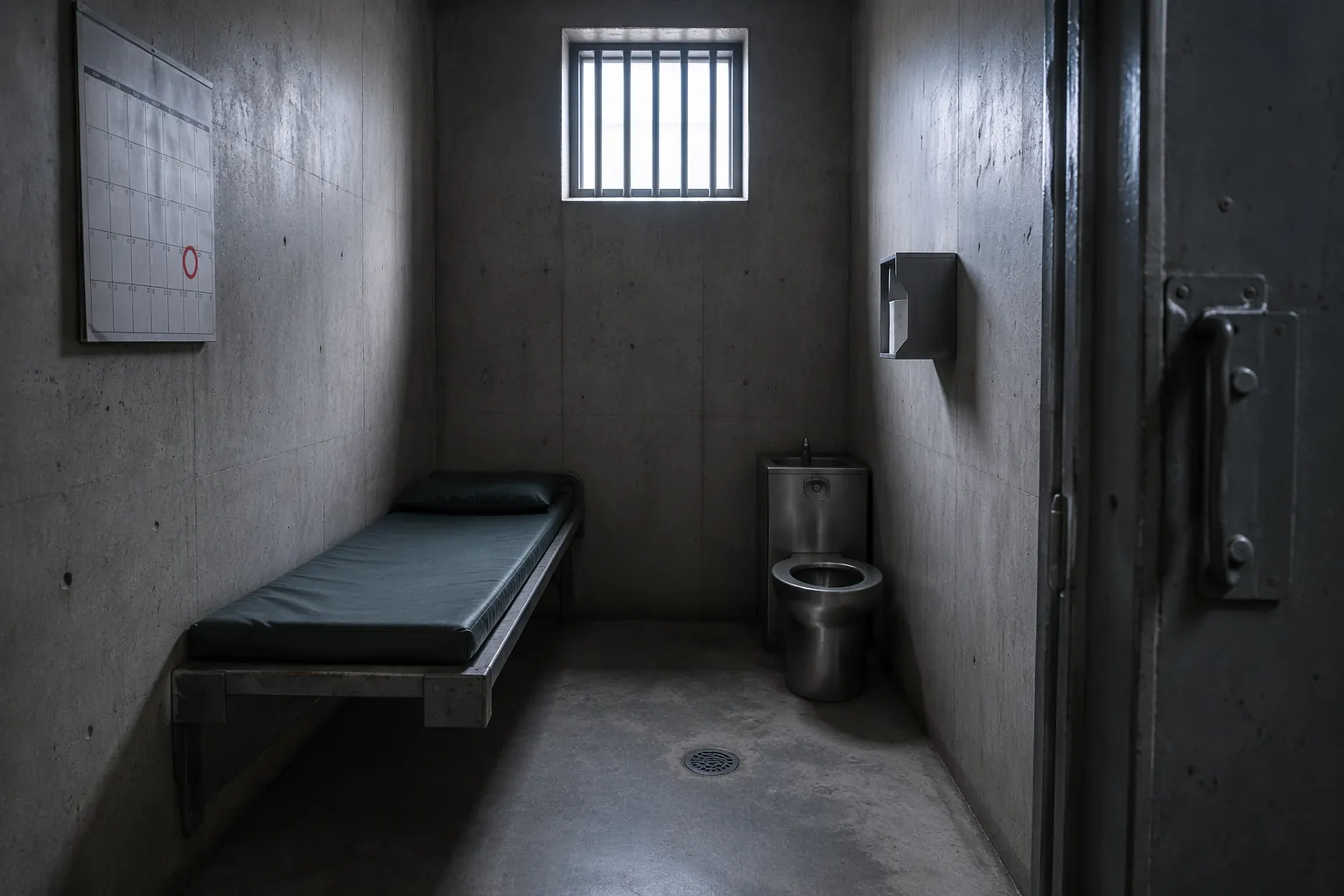
That distinction matters because "solitary" is not one legal category. A short administrative separation after a fight, with medical checks and ordinary SHU privileges, occupies a different constitutional posture from disciplinary segregation imposed for weeks in harsh physical conditions, and both differ from isolation imposed on someone whose mental-health risk is known to staff. The Eighth Amendment question is not simply whether Combs is alone in a cell. It is whether the conditions and duration, viewed with what officials know about his vulnerability, expose him to a substantial risk of serious harm.
The Facts That Are Known, and the Ones That Are Still Missing
The available public record supports only a narrow starting point: Combs was reportedly separated after an inmate fight at the federal prison in Fort Dix, New Jersey.[1][2] USA TODAY also reported the Fort Dix placement and described his projected release date as February 2028.[3] Those facts may explain why staff would move him quickly out of general population, but they do not establish whether the placement is administrative detention, disciplinary segregation, protective custody, or some hybrid operational response.
The missing facts are the ones that would change the legal analysis: the SHU order, the incident report, the review schedule, the stated security rationale, the expected duration, the cell conditions, the recreation schedule, medical access, mental-health contacts, and whether staff documented any suicide-related concern. Without those, any confident claim that the placement is either unconstitutional or plainly harmless is premature.
There is one personal-risk fact in the public record that should not be ignored. Reuters reported that Combs' legal team said in a September 2025 filing that he had been placed on suicide watch at MDC Brooklyn.[4] That does not prove he is currently suicidal, decompensating, or clinically unable to tolerate segregation. It does mean that if Fort Dix officials know of a suicide-watch history, the record of monitoring becomes more important than it would be for a prisoner with no documented psychological vulnerability.
Why the 30-Day Marker Matters Without Becoming a Rule
The strongest temporal landmark remains Hutto v. Finney. In 1978, the Supreme Court upheld relief limiting punitive isolation in Arkansas prisons, where the record included confinement in harsh conditions such as overcrowded punitive isolation, lack of exercise, inadequate medical care, and filthy cells; the Court treated isolation beyond 30 days in that setting as part of an Eighth Amendment violation.[5]
Hutto is useful because it gives lawyers a concrete marker. It is dangerous because it tempts people to turn a fact-bound remedy into a stopwatch. The case does not hold that day 31 automatically violates the Eighth Amendment in every prison, or that day 29 is automatically safe. The 30-day point is better understood as a litigation warning: once confinement moves from immediate post-incident control into prolonged isolation, courts are more likely to ask what the conditions are, what review occurred, and why continued segregation remains necessary.
For Combs, that means a placement measured in days after a fight is unlikely, by duration alone, to reach the usual Eighth Amendment threshold. A placement that stretches through several weeks starts to look different, especially if the explanation remains generic, the prisoner is not receiving meaningful review, or the conditions include restrictions that echo the features that made Hutto serious: no exercise, poor sanitation, inadequate medical care, or conditions that aggravate mental-health risk.
Sandin Answers a Different Question
Sandin v. Conner is often invoked too quickly in segregation disputes. In Sandin, the Supreme Court held that 30 days of disciplinary segregation did not impose the kind of "atypical and significant hardship" that created a protected liberty interest for procedural due process purposes.[5] That holding matters, but it does not collapse the Eighth Amendment inquiry.
Due process asks whether the prisoner was entitled to certain procedures before or during the deprivation. The Eighth Amendment asks whether the conditions, duration, and official knowledge amount to cruel and unusual punishment. A prisoner can have a weak Sandin claim because the placement resembles ordinary incidents of prison life, while still raising a serious Eighth Amendment concern if officials knowingly keep him in conditions that present a substantial risk of psychological or physical harm.
That distinction is especially important in a live SHU placement. A lawyer deciding what to do tomorrow may need to pursue different tracks at once: request informal intervention with the facility, preserve administrative remedies, seek medical documentation, and evaluate whether the facts support a constitutional conditions claim. Treating Sandin as the whole answer risks missing the case where the problem is not the lack of process alone, but the danger created by continued isolation.
Farmer Is Where Mental-Health Vulnerability Becomes Legally Operative
Farmer v. Brennan supplies the deliberate-indifference framework for conditions-of-confinement claims: the plaintiff must show an objectively serious risk and that officials knew of and disregarded that risk.[5] In solitary-confinement litigation, this is where a general objection to isolation becomes a record-specific claim.
The Reuters-reported suicide-watch history gives Combs' lawyers a fact to investigate, not a complete claim.[4] The constitutional significance depends on what Fort Dix staff knew in July 2026 and what they did with that knowledge. Did intake or classification records flag prior suicide watch? Did psychology staff evaluate him after the fight? Were checks increased? Did he report insomnia, panic, self-harm thoughts, hallucinations, or other deterioration? Did staff ignore requests for care or keep him isolated after signs of decompensation?
Those details matter more than public outrage about the label. A prisoner with a documented suicide-watch history who is placed in a bare cell for a few days with frequent mental-health rounds may have a hard Eighth Amendment case. The same prisoner kept for weeks without meaningful psychological review, while staff know he is deteriorating, presents a much stronger deliberate-indifference theory.
Short-Term SHU Usually Survives; Conditions Can Change the Result
The reported fight gives the institution a legitimate safety problem. Federal prisons cannot ignore an altercation in general population, particularly when staff do not yet know whether retaliation, separation needs, protective concerns, or discipline will follow. Moving a prisoner temporarily to SHU after a fight is not, standing alone, unusual custody management.
| Fact Pattern | Likely Constitutional Posture |
|---|---|
| Days in SHU after a fight, regular review, medical access, mental-health monitoring, recreation consistent with policy | Usually difficult to frame as an Eighth Amendment violation |
| Several weeks in SHU with unclear rationale, limited out-of-cell time, poor documentation, or emerging psychological symptoms | Fact-sensitive risk zone; record development becomes essential |
| Approaching or exceeding 30 days, harsh physical conditions, no meaningful exercise or medical care, known mental-health vulnerability | Materially stronger Eighth Amendment theory under Hutto and Farmer |
| Continued isolation after staff know of suicidal ideation or serious decompensation | Potential deliberate-indifference claim, depending on proof of knowledge and disregard |
The legal line is not drawn by celebrity status. It is drawn by duration, conditions, review, medical care, mental-health risk, and official knowledge. A court is unlikely to find cruel and unusual punishment merely because Combs is in segregation for a short period after a fight. The analysis changes if SHU becomes prolonged or if confinement conditions themselves create a serious risk.
Several conditions would deserve immediate attention in any record request or emergency communication: whether he receives out-of-cell exercise, whether the cell is sanitary, whether he has access to medication and clinical care, whether psychology staff have evaluated him, whether he can communicate with counsel, and whether the prison has documented a continuing security reason for segregation. These facts do not merely make the narrative fuller. They determine which constitutional test has something to work with.
The Circuit Split Is a Practical Map, Not a Debate Club Problem
The lower courts do not speak with one clean voice on solitary confinement. One published analysis describes a split in which at least five federal circuits have recognized that solitary confinement can, in some circumstances, violate the Eighth Amendment, while three circuits have taken a more resistant view.[6] That count should be used carefully because courts classify these cases differently: some focus on duration, others on physical conditions, mental illness, procedural posture, or whether the plaintiff challenges isolation itself rather than a package of conditions.
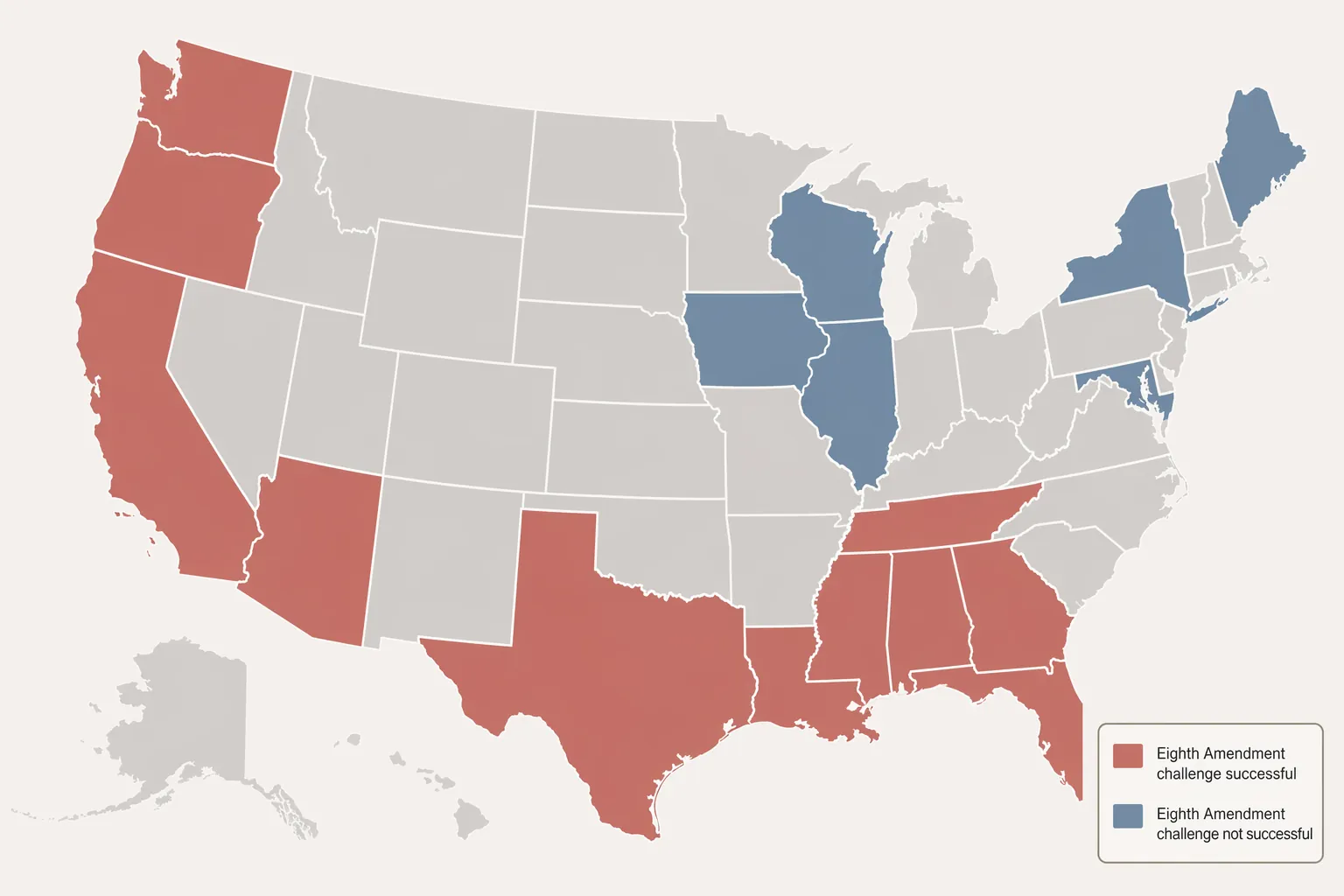
The split still matters. In a circuit that has already acknowledged that solitary confinement can become cruel and unusual, a plaintiff has more room to argue that duration, mental-health vulnerability, and conditions combine into an Eighth Amendment violation. In a circuit that resists such claims, counsel may need to emphasize more traditional conditions-of-confinement facts: denial of exercise, medical neglect, sanitation, self-harm risk, and officials' actual knowledge.
New Jersey sits in the Third Circuit, so Combs' placement would not be litigated in the same posture as a case arising in the Fifth, Sixth, or Tenth Circuits. But even in a more receptive jurisdiction, the facts still have to do the work. The Eighth Amendment does not treat every temporary SHU placement as unconstitutional; it becomes more responsive as isolation becomes prolonged, severe, medically dangerous, or knowingly imposed on someone vulnerable.
Population Context Helps, but It Does Not Decide This Case
National solitary-confinement data can explain why courts and correctional systems treat isolation as a serious intervention rather than a routine inconvenience. Solitary Watch's FAQ cites estimates that more than 122,000 people are held in solitary confinement in U.S. prisons and jails, and it reports that about 50% of prison suicides occur in solitary confinement.[7] The Bureau of Prisons also publishes a SHU statistics page that tracks federal SHU population data.[8]
Those numbers do not prove that Combs' current placement is unconstitutional. They do support why lawyers should take the mental-health component seriously, especially where a prior suicide-watch record exists. Aggregate risk becomes legally significant only when it connects to the individual record: known vulnerability, observed deterioration, inadequate monitoring, or disregard of clinical warnings.
What Would Move Combs' Placement Toward an Eighth Amendment Claim
On the present public facts, Combs' solitary confinement likely remains constitutional if it is brief, tied to the reported fight, regularly reviewed, and accompanied by adequate medical and mental-health monitoring. That conclusion is conditional because the public facts are thin. The placement becomes materially different if one of several facts develops.
- Duration: the placement extends from days into weeks, approaches the Hutto 30-day marker, or continues without a documented security rationale.
- Conditions: he is denied meaningful exercise, medical care, medication, sanitary housing, or other basic conditions that make isolation harsher than ordinary temporary separation.
- Mental health: records show deterioration, self-harm risk, suicidal ideation, or other symptoms after segregation begins.
- Knowledge: staff knew of the prior suicide-watch history or current symptoms and failed to respond with appropriate monitoring or review.
- Process and documentation: the prison cannot explain whether the placement is administrative, disciplinary, protective, or pending investigation.
A BOP policy violation and a constitutional violation also should not be treated as the same thing. Federal prison policy may require reviews, documentation, or procedures that go beyond the constitutional floor. A missed review may matter first through the Administrative Remedy Program; it becomes part of an Eighth Amendment theory only when it helps show serious risk and deliberate indifference.
The narrow answer is therefore cautious: a short Fort Dix SHU placement after a fight is unlikely to violate the Eighth Amendment by itself. The answer changes if the confinement lasts beyond the immediate safety need, approaches or exceeds the Hutto marker, includes harsh conditions, or shows that officials disregarded a known suicide-related vulnerability. At that point, the case stops being a celebrity custody story and becomes the ordinary hard question in prison-conditions law: what did officials know, when did they know it, and what did they do next?
References
- Sean Combs Placed in Solitary Confinement After Fight With Inmate — Rolling Stone
- Sean 'Diddy' Combs in solitary confinement after fight — NBC News
- Diddy in solitary confinement after prison fight — USA TODAY
- After sentencing, Sean 'Diddy' Combs returns to Brooklyn jail — Reuters
- Supreme Court Cases — Solitary Watch
- An (Other) Eighth Amendment Challenge to Solitary Confinement — PMC/NIH
- Facts/FAQ — Solitary Watch
- SHU Statistics — Federal Bureau of Prisons
Related records
Tool profile
Browse tool evaluations →Governing regulation
Browse the obligations tracker →Preventive workflow
Browse verification workflows →
Report a correction or tip
Spotted an outdated figure, a misstated fact, or a ruling this case record should reflect? Public comments are disabled for this content given the professional cost of a misreported case outcome, penalty amount, or rule text — use the structured correction channel instead.
Report a correction or tip for this record →