
DOJ Loses New Jersey Voter Roll Case, Extends 0-18 Streak
The DOJ's lawsuit seeking New Jersey's unredacted voter rolls was dismissed with prejudice on July 29, 2026, extending the department's nationwide district-court losing streak to 0-18. This record provides counsel with a benchmark for assessing the viability of similar data-demand litigation under Title III.
- Jurisdiction
- District of New Jersey
- Court
- United States District Court for the District of New Jersey
- Judge
- Zahid Quraishi
- AI tool named
- MVC software
- Ruling date
- Jul 29, 2026
- Source document
- View primary court order ↗
- Last verified
- Jul 31, 2026
Lex Machina Review is an independent risk-tracking and reference resource. Nothing on this site is legal advice, and using it does not create an attorney-client relationship. Every record is reviewed against primary sources but may not reflect the most current status of a matter — always verify directly against the cited court order, rule text, or a licensed attorney before relying on it.
Companion explanation — secondary to the source document above
Judge Zahid Quraishi of the District of New Jersey dismissed the DOJ’s New Jersey voter-roll lawsuit with prejudice on July 29, 2026, holding that Title III of the Civil Rights Act of 1960 did not authorize the department’s demand for the state’s unredacted computerized voter registration database.[1] The immediate litigation-risk takeaway is narrower than the political dispute around noncitizen registration: under the district court’s reading, a state-maintained live voter file is not the kind of retained election record Title III lets DOJ compel.
The dismissal also extended the department’s reported nationwide district-court record in similar voter-roll litigation to 0-18, across more than 30 state lawsuits.[2] That count is not an appellate holding, and it is not a guarantee about the next panel. It is, however, a hard benchmark for counsel deciding whether the same statutory theory is worth filing, resisting, settling, or briefing on an emergency schedule.
What the court actually held
The useful part of the order is not that New Jersey won a politically charged election case. The useful part is the statutory line the court drew. Title III requires preservation and production of certain election records that “come into” the possession of election officers. Judge Quraishi treated that wording as a real limit: records received by election officials are covered; a “live, dynamic database” created and continuously updated by the state is not.[1][2]
That distinction did most of the work. DOJ’s theory depended on treating New Jersey’s statewide computerized voter registration list as a retained record available through Title III. The court instead characterized the list as a state-created database that changes as officials add, remove, correct, and update registration information. Once the database is understood that way, the federal demand no longer fits comfortably inside a records-retention statute written around materials that come into officials’ possession.
The court also identified a statutory-structure problem. Under DOJ’s reading, states would have to treat computerized voter lists as retained Title III records while also complying with federal election laws that require those lists to be maintained and updated. The Jersey Vindicator reported the court’s concern that this would “require states to continually modify computerized voter lists,” an “untenable” result in light of the Help America Vote Act and the National Voter Registration Act.[3]
For a lawyer assessing the next case, that is the loss pattern to underline. The defect was not a missing declaration, an inadequate factual showing, or a court unwilling to credit election-integrity concerns. The defect was that the requested object did not fall within the statute as the court read it.
Why the 6,600-person MVC error did not save the claim
The uncomfortable fact in the record is the Motor Vehicle Commission registration error. New Jersey disclosed on July 21, 2026, that approximately 6,600 noncitizens had been erroneously registered to vote through an MVC software problem.[1][4] That fact explains why the dispute had immediate political force. It does not explain why Title III would reach the unredacted statewide database.
Judge Quraishi found the disclosure had “no bearing” on the statutory question before the court.[1] That is the sentence that should bother anyone tempted to brief the scandal as if it answers the cause of action. A serious registration failure can justify investigation, remediation, public reporting, or a different legal demand. It still does not rewrite the object and scope of Title III.
The voting number also remains narrower than the headline version of the dispute. The available reporting describes the number of noncitizens who voted as fewer than 400, without an exact count or a released breakdown.[4] That imprecision matters because the court was not deciding a criminal case against identified voters or a merits finding about every erroneous registration. It was deciding whether DOJ could use Title III to obtain New Jersey’s unredacted voter rolls.
There is a separate federal-enforcement thread as well. Reported May 1, 2026 charges against four individuals involved alleged false citizenship claims, not registrations caused by the MVC software error.[5] Keeping those tracks separate is not pedantry. It prevents a factual record about one alleged mechanism from being imported into a different statutory vehicle.
The national record now matters more than the New Jersey caption
New Jersey is now one entry in a broader district-court campaign. Democracy Docket reported that DOJ is 0-for-18 in district court in its nationwide voter-roll effort, with more than 30 state lawsuits and 11 losses before Republican-appointed judges.[2] The last point should not be inflated into an appellate forecast. It does, however, weaken the easy explanation that the theory is losing only because of hostile forum assignment.
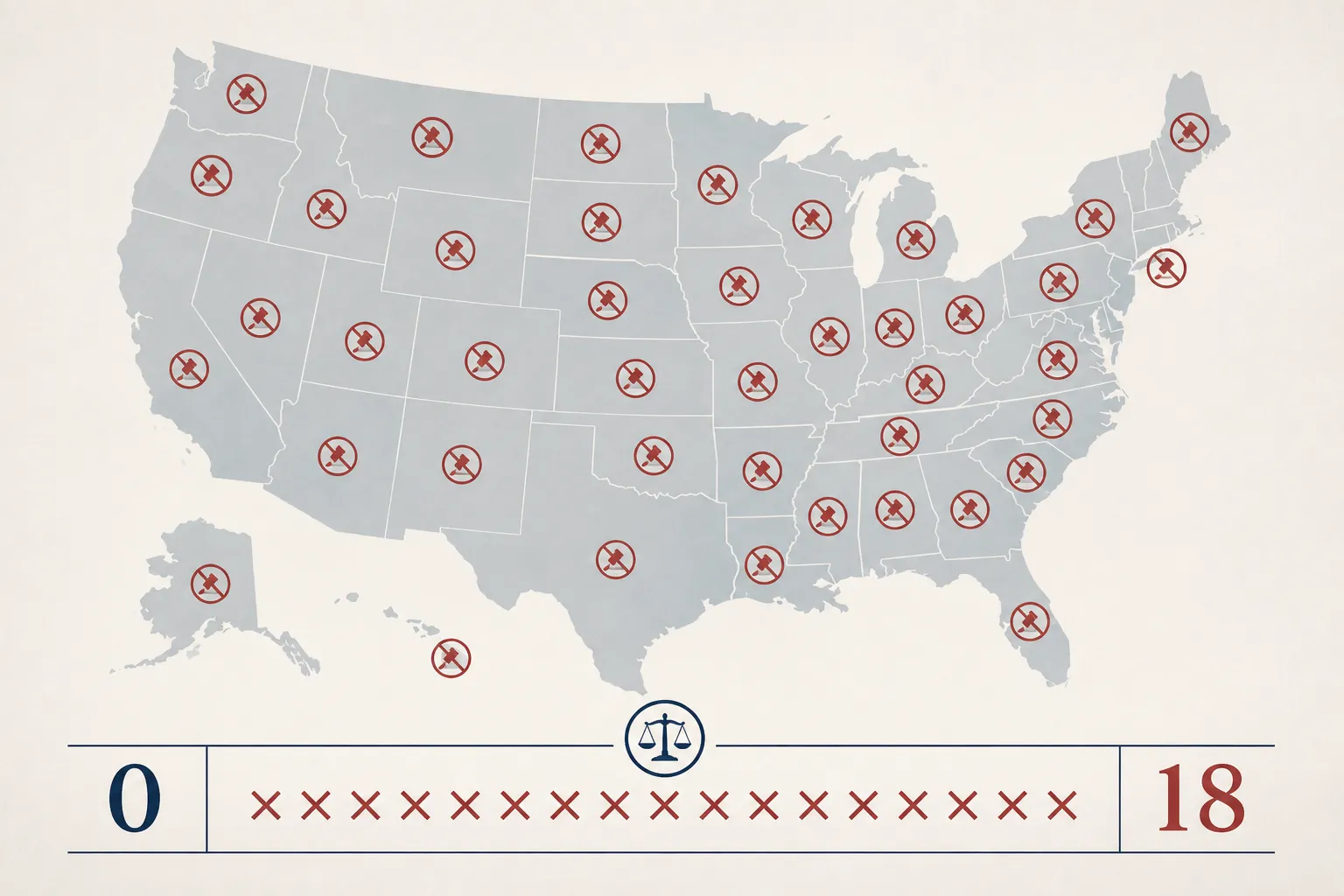
New Jersey Attorney General Matthew Platkin framed the pattern more broadly after the ruling, stating that 17 district courts and one circuit had unanimously rejected the same claim.[6] That is advocacy, but it is advocacy tied to a procedurally important fact pattern: repeated judicial rejection of the same Title III theory across jurisdictions.
| Risk signal | What it means for similar cases |
|---|---|
| Dismissal with prejudice | The court treated the statutory defect as one that could not be cured by repleading in this action. |
| Plain-text Title III holding | Future demands for live statewide voter databases face the same threshold objection. |
| HAVA/NVRA conflict concern | The court saw DOJ’s reading as difficult to reconcile with federal laws requiring active list maintenance. |
| MVC glitch deemed irrelevant | Bad registration facts did not make the requested database a covered Title III record. |
| Reported 0-18 district-court record | Counsel should treat the theory as carrying high district-court failure risk under current precedent. |
| Appeal announced, not resolved | The district-court pattern is strong but not the final appellate word as of July 31, 2026. |
This is the point at which a risk memo should stop sounding like a campaign press release. The court did not hold that erroneous registrations are harmless. It did not decide that states never have to provide election records to federal authorities. It held that this particular federal demand, directed at this kind of state-created dynamic database, did not fit Title III.
What remains unresolved as of July 31, 2026
DOJ has said it will appeal the New Jersey ruling.[6] As of July 31, 2026, no appellate outcome is available. That matters for anyone tempted to treat the district-court record as settled circuit law everywhere. The safer formulation is narrower: the current district-court record is uniformly bad for DOJ’s Title III voter-roll database theory, and at least one circuit has rejected the same claim as described by New Jersey’s attorney general.[6]
The reported 0-18 count may also change as additional rulings are issued.[2] A later ruling could alter the litigation landscape, particularly if an appellate court accepts a broader reading of Title III. Until then, the practical advice is not difficult: a filing that depends on converting a state’s live computerized voter-registration database into a Title III retained record now carries a documented, repeatable dismissal risk.
The New Jersey outcome is direct: DOJ lost the case tied to the state’s noncitizen voter-registration controversy because the court rejected its statutory vehicle, not because the court found the MVC error unimportant as a matter of election administration. Under current precedent, similar Title III voter-roll data demands are unlikely to succeed even where the underlying registration facts are politically serious.
References
- Federal judge rejects DOJ attempt to obtain unredacted NJ voter rolls, Politico, July 29, 2026.
- Trump DOJ loses bid for New Jersey voter rolls, now 0 for 18, Democracy Docket, July 29, 2026.
- Federal judge dismisses DOJ lawsuit seeking New Jersey voter registration database, Jersey Vindicator, July 29, 2026.
- The Vindicator explains: How 6,600 noncitizens were registered to vote in New Jersey, Jersey Vindicator, July 26, 2026.
- New Jersey governor's disclosure of noncitizens on voter rolls sharpens confrontation with Trump administration, VoteBeat, July 23, 2026.
- Federal judge blocks DOJ access to New Jersey unredacted voter rolls, Fox News, July 29, 2026.
Related records
Tool profile
Browse tool evaluations →Governing regulation
Browse the obligations tracker →Preventive workflow
Browse verification workflows →
Report a correction or tip
Spotted an outdated figure, a misstated fact, or a ruling this case record should reflect? Public comments are disabled for this content given the professional cost of a misreported case outcome, penalty amount, or rule text — use the structured correction channel instead.
Report a correction or tip for this record →