
DOJ subpoenas to NYT reporters signal a pattern, not an anomaly
The DOJ issued and then withdrew grand-jury subpoenas against reporters at three major news organizations in seven months, creating a measurable enforcement pattern that legal counsel must treat as a standing litigation risk for any client handling sensitive government information.
- Jurisdiction
- US-Federal
- Court
- United States District Court
- AI tool named
- None
- Ruling date
- Jul 23, 2026
- Source document
- View primary court order ↗
- Last verified
- Jul 27, 2026
Lex Machina Review is an independent risk-tracking and reference resource. Nothing on this site is legal advice, and using it does not create an attorney-client relationship. Every record is reviewed against primary sources but may not reflect the most current status of a matter — always verify directly against the cited court order, rule text, or a licensed attorney before relying on it.
Companion explanation — secondary to the source document above
As of July 27, 2026, the litigation-risk ledger is no longer a single New York Times dispute. The Justice Department has issued, and then withdrawn, grand-jury subpoenas or related demands touching reporters at three separate national news organizations in under seven months: the Washington Post in January 2026, the Wall Street Journal with subpoenas issued in March and withdrawn in June, and the New York Times with subpoenas issued July 11 and withdrawn July 23, 2026.[1][2]
That posture matters for anyone evaluating whether the Trump New York Times leak investigation amounted to reporter punishment, because punishment is not the only operational question. The narrower and more useful question is whether the DOJ has shown a repeatable willingness to use grand-jury process against news-gathering activity and related records. On the currently reported record, the answer is yes. The subpoenas were withdrawn only after resistance, no court has definitively held the demands unlawful, and the underlying leak investigations have not been closed.[1][2]
This is a risk assessment, not legal advice. The current file should be read as a verification posture: what has been reported, what has been withdrawn, what remains unresolved, and what counsel should not treat as settled.
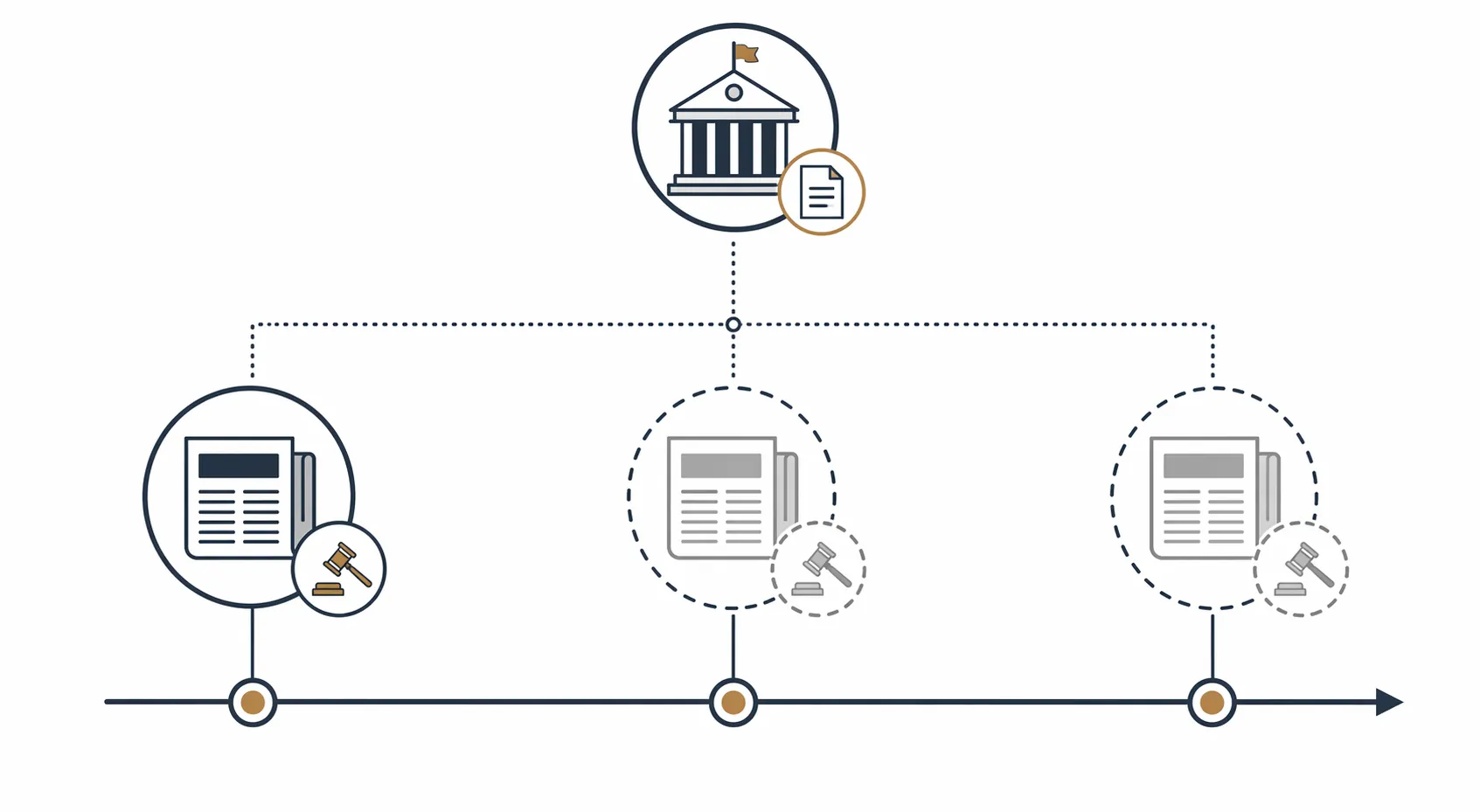
| News organization | Reported timing | Reported demand | Current posture as of July 27, 2026 |
|---|---|---|---|
| Washington Post | January 2026 | FBI search and grand-jury subpoena involving reporter Ellen Nakashima | Withdrawn after resistance; leak investigation reported as continuing[1] |
| Wall Street Journal | Subpoenas issued March 2026; withdrawn June 2026 | Grand-jury subpoenas to reporters in a leak investigation | Withdrawn after legal challenge; leak investigation reported as continuing[1] |
| New York Times | Subpoenas issued July 11, 2026; withdrawn July 23, 2026 | Grand-jury subpoenas to five reporters over Air Force One reporting | Withdrawn after challenge; investigation remains pending[2] |
The pattern is procedural, not rhetorical
The most important common fact is not the subject matter of the underlying stories. It is the sequence. A leak investigation proceeds. A subpoena or related demand reaches reporters or records connected to reporters. The news organization challenges or resists. The DOJ withdraws the demand. The investigation remains alive.
A withdrawal at that point is useful, but it is not a merits ruling. It does not create a binding limit on the next subpoena. It does not tell a newsroom general counsel that similar process will be quashed next time. It does not resolve whether the same investigative team, or a later one, may return with a narrower demand.
That distinction is where some public commentary overreads the New York Times episode. The July 23 withdrawal reduced immediate exposure for the five reporters named in that round of subpoenas, but it did not erase the fact that the subpoenas were issued. Nor did it close the leak investigation.[2]
For counsel, recurrence changes the filing system. One subpoena dispute can be treated as an emergency. Three similar episodes across three organizations require a standing response plan: preservation decisions, source-protection review, notice protocols, family-record exposure assessment, and a ready theory for emergency motion practice.
The New York Times matter widened the perimeter
The NYT subpoenas drew attention because they followed reporting about plans for a new Air Force One. That subject can orient the file, but it should not dominate the legal analysis. The more consequential risk feature is that the DOJ also sought phone records of reporters’ spouses and one reporter’s mother, with records reaching back to January 1, 2026, months before the relevant articles were published.[3]
That is the sort of fact that changes advice inside a newsroom. It turns a reporter-records problem into a household-records problem. A spouse who never worked on a story can become part of the investigative perimeter. A parent’s phone account can be swept into a government demand. Even if a subpoena is later withdrawn, the organization has already learned that the government may test records outside the reporter’s own devices and accounts.
The Times also argued that DOJ violated its own policies by delaying notice for a week. The reported judicial posture is important but limited: the judge noted the issue, yet had no separate remedy available on that basis in the reported proceeding.[3] That is the gap legal teams need to hold in view. A policy violation may be useful in advocacy, negotiations, and public accountability. It is not automatically a subpoena-killer.
The April 2025 memo is the hinge
The subpoena pattern did not arise in a vacuum. On April 25, 2025, Attorney General Pam Bondi rescinded the Garland-era policy that had barred the Justice Department from seizing journalists’ records in leak investigations except where the journalist was a criminal suspect. The Bondi memo permitted “subpoenas, court orders and search warrants to compel production of information and testimony by and relating to members of the news media.”[4]
NPR separately reported the same policy reversal, including the revocation of Biden-era protections for reporters in leak investigations.[5] The policy still included procedural protections, such as advance notice, attorney general approval, and narrow tailoring.[4][5] Those protections matter inside DOJ. They may affect timing, review, and how a demand is drafted.
They do not give outside counsel the same comfort as enforceable law. Internal DOJ policy is not a federal shield statute. It can be cited in a motion and used to pressure the government, but counsel should not treat it as equivalent to an independent legal bar. The NYT notice-delay argument is a useful example: even an alleged failure to follow internal procedures may leave the court without a clean remedy if no separate legal defect is established.[3]
Why Branzburg still matters in the motion file
There is no general federal shield law that gives reporters an automatic privilege to refuse grand-jury process. The Supreme Court’s 1972 decision in Branzburg v. Hayes held that the First Amendment did not relieve reporters of the obligation to respond to grand-jury subpoenas in the circumstances before the Court, while leaving only a narrow lane for objections where process is issued in bad faith or for harassment.[6]
That does not mean every reporter subpoena survives. It does mean the challenge is more fragile than many non-lawyers assume. Counsel can argue burden, overbreadth, relevance, policy noncompliance, source sensitivity, improper purpose, or procedural defects. But absent a federal shield statute or a binding ruling on the particular subpoena, the defense is assembled from narrower tools.
The recent withdrawals therefore should be filed as favorable outcomes, not controlling precedent. They show that resistance can work. They do not show that a court will quash the next demand.
What a prepared file should contain now
The practical response is not to predict the next subpoena. It is to reduce the time lost when one arrives. Newsroom counsel and outside media counsel should be able to identify, quickly and without improvisation, who receives notice, who controls relevant accounts, which third-party providers may hold records, and whether family-member accounts could be implicated by contact patterns.
- Maintain a current subpoena-response chain for leak-investigation matters, including after-hours contacts for newsroom leadership, in-house counsel, outside media counsel, and affected reporters.
- Separate the legal posture of issued demands from withdrawn demands. A withdrawn subpoena should remain in the risk file with the date issued, date withdrawn, stated scope, and whether the underlying investigation remains open.
- Review whether reporter-source contact protocols assume only the reporter’s own phone and email records are at issue. The NYT subpoenas show why that assumption is too narrow.
- Preserve arguments based on DOJ policy, but do not build the response around policy alone. The motion file should also address relevance, overbreadth, burden, timing, improper purpose where supportable, and any applicable state-law or contractual notice issues.
- Track whether the government has withdrawn process without closing the investigation. That distinction affects whether counsel can stand down or should expect a narrowed demand later.
For law-firm risk managers advising clients who handle sensitive government information, the same pattern has a second consequence. Source-contact risk is not confined to publishers. Government employees, contractors, consultants, and intermediaries may face exposure when investigators reconstruct communications around a leak. The reporter subpoena is only one surface of the investigation.
The unresolved posture is the point
It would be cleaner if the July withdrawal had produced a ruling, a policy revision, or an enforceable limit on recurrence. It did not. The legal posture remains uncomfortable in both directions: no court has definitively held these subpoenas unlawful, and the DOJ has now shown a repeatable willingness to issue them after the April 2025 policy reversal.
That is enough to change risk advice. As of July 27, 2026, counsel advising news-gathering clients, reporters, or handlers of sensitive government information should treat leak-investigation subpoenas to reporters and related records as a standing litigation risk. The observable pattern is broader than one newsroom, and it remains unresolved despite withdrawals.
References
- Justice Dept. subpoenas Post and Wall Street Journal reporters in leak investigations, Washington Post, June 23, 2026
- Justice dept withdraws subpoenas against New York Times journalists over Air Force One reports, BBC, July 23, 2026
- New York Times moves to quash subpoenas for phone records of reporters and family members, CBS News
- In reversal, US Justice Department says media records can be seized in leak probes, Reuters, April 25, 2025
- Justice Department revokes Biden-era protections for reporters in leak investigations, NPR, April 25, 2025
- Branzburg v. Hayes, 408 U.S. 665 (1972), Legal Information Institute
Related records
Tool profile
Browse tool evaluations →Governing regulation
Browse the obligations tracker →Preventive workflow
Browse verification workflows →
Report a correction or tip
Spotted an outdated figure, a misstated fact, or a ruling this case record should reflect? Public comments are disabled for this content given the professional cost of a misreported case outcome, penalty amount, or rule text — use the structured correction channel instead.
Report a correction or tip for this record →