
How the DOJ Violated Its Own Rules in the NYT Subpoena Case
An examination of the procedural failures that drove the DOJ's withdrawal of subpoenas for three New York Times reporters — including issuing subpoenas as a first resort, targeting family members through erroneous database matching, and misleading a second judge — and the risk signal this sends for future leak investigations.
- Jurisdiction
- US Federal
- Court
- U.S. District Court for the Southern District of New York
- Judge
- Arun Subramanian
- AI tool named
- None
- Ruling date
- Jul 23, 2026
- Source document
- View primary court order ↗
- Last verified
- Jul 24, 2026
Lex Machina Review is an independent risk-tracking and reference resource. Nothing on this site is legal advice, and using it does not create an attorney-client relationship. Every record is reviewed against primary sources but may not reflect the most current status of a matter — always verify directly against the cited court order, rule text, or a licensed attorney before relying on it.
Companion explanation — secondary to the source document above
By the time the Justice Department withdrew subpoenas for three New York Times reporters on July 23, 2026, the damage was no longer limited to a fight over reporter privilege. The subpoenas had been served on July 10, two days after the Times published reporting about Qatar, President Trump, and Air Force One; within 13 days, a federal judge had pressed the government so hard over its process that DOJ backed away while leaving the investigation open.[1][2]
That compressed arc is the useful entry point for the Trump administration’s subpoena fight with the Times. The First Amendment question matters, but the immediate record is narrower and less cinematic: prosecutors used an extraordinary investigative tool before exhausting ordinary steps, swept in family members through erroneous database matching, and sought a non-disclosure order from another judge after allegedly giving an account that did not match how public the investigation already was.[2][3]
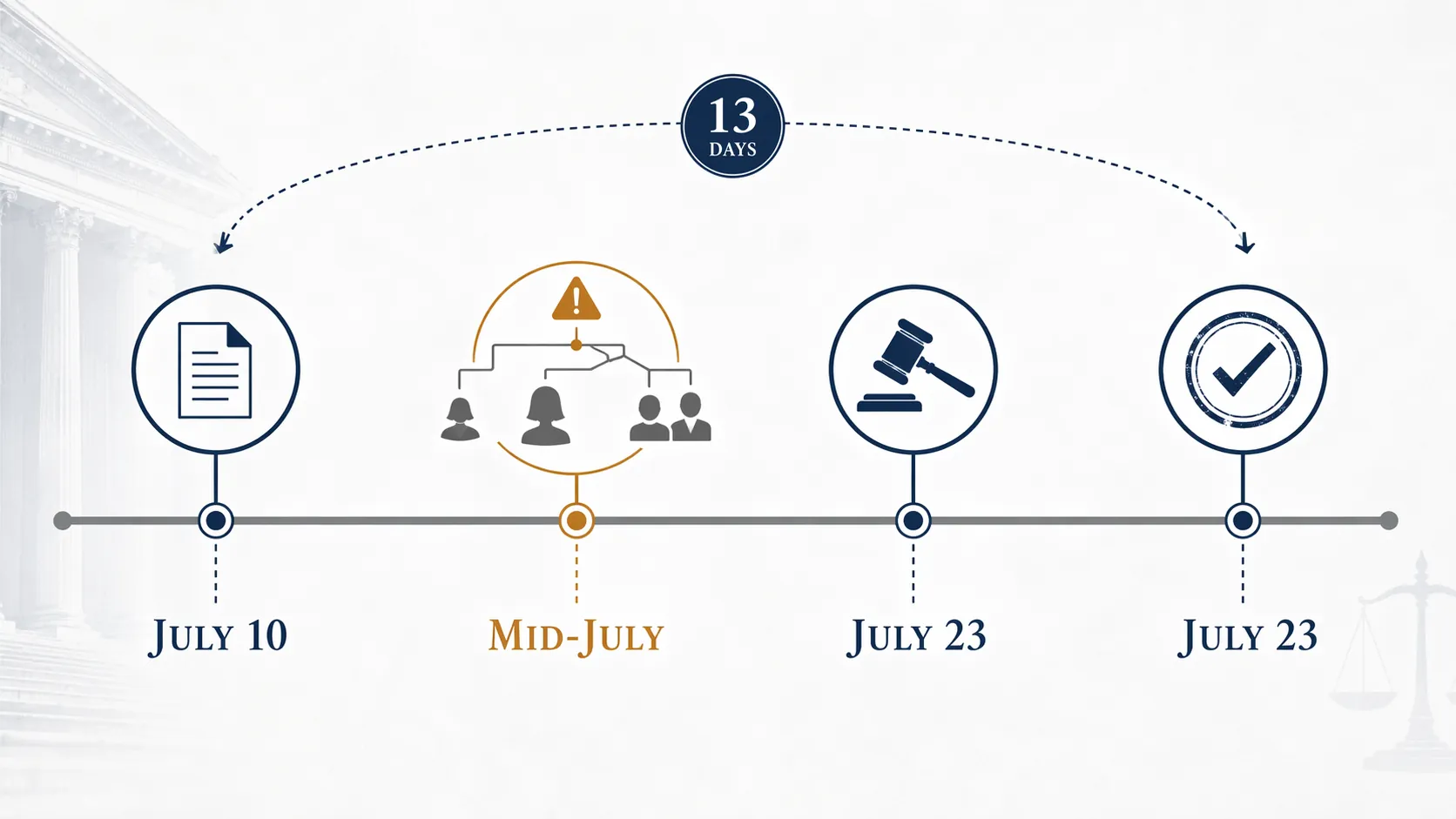
Judge Arun Subramanian’s reaction, as reported from the July 23 hearing, was not framed as a routine cleanup. He identified multiple failures in the government’s approach and said, “If this were a civil proceeding, what I would normally do is ask the parties to show cause why sanctions should not be issued.”[2][3] For lawyers who live with procedural rules, that is the sentence that turns a subpoena dispute into a risk record.
The Rule DOJ Had To Clear Before Touching Reporters’ Records
The governing DOJ policy is not obscure. 28 C.F.R. § 50.10 says the Department must treat compulsory process for information from, or records of, members of the news media as an extraordinary measure. It requires that such tools be used only after reasonable alternative investigative steps have been taken, unless those alternatives would pose a clear and substantial threat to the investigation, risk grave harm to national security, or create another specified exception.[4]
That is a sequencing rule before it is a speech rule. It does not ask whether prosecutors care deeply about a leak, or whether national-security officials are embarrassed, or whether the story involved sensitive government information. It asks whether the government can show that it tried to get what it needed somewhere else first, or that one of the recognized reasons justified skipping that work.
The July 10 subpoenas were vulnerable on that point from the start. According to the accounts of the hearing, Judge Subramanian faulted DOJ for issuing subpoenas two days after publication and before completing alternative investigative measures.[1][2] A two-day gap does not automatically prove a violation in every case; emergencies exist. But where the Department itself has kept a last-resort rule on the books, speed creates a documentation problem. The file has to show why ordinary steps could not come first.
| Procedural event | Why it mattered |
|---|---|
| July 8, 2026: Times reporting is published | The leak investigation became tied to a fresh publication, making any immediate subpoena especially sensitive. |
| July 10, 2026: subpoenas are served | The timing raised the central § 50.10 question: whether compulsory process was being used as a first resort rather than a last resort. |
| Mid-July: family members are pulled in through database matching | The dispute moved beyond newsroom records to collateral targets who were not the reporters. |
| July 23, 2026: hearing and withdrawal | The judge identified procedural failures, and DOJ withdrew the subpoenas while reserving the possibility of trying again. |
The Family-Member Subpoenas Were Not A Technical Footnote
The most concrete failure was not an abstract burden on the press. It was the dragnet that reached people around the reporters. The government subpoenaed one reporter’s mother, described as a mental health professional, and two reporters’ spouses after erroneous database matching associated them with the targets of the investigation.[2][3]
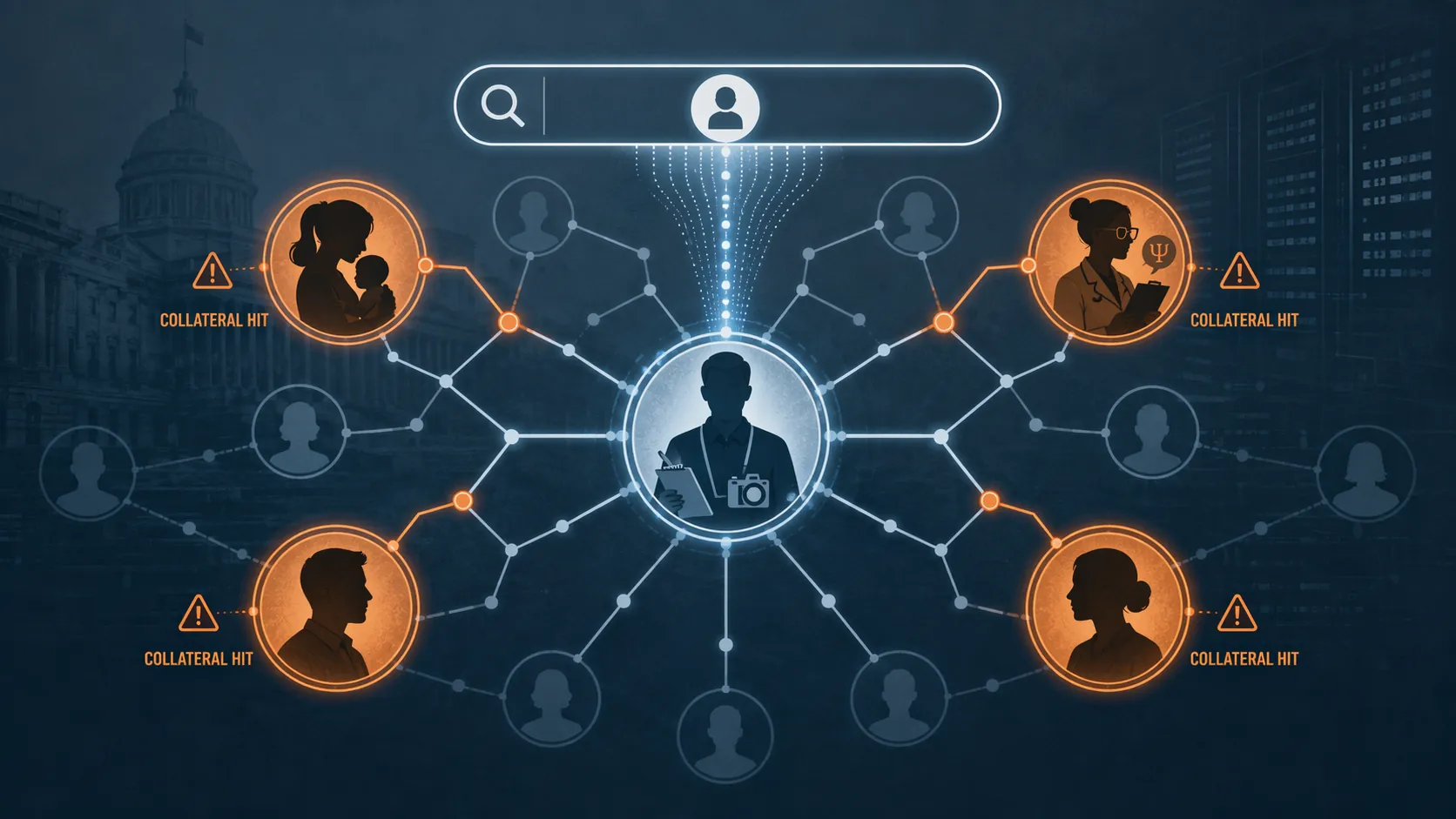
That kind of error changes the posture of the case. A subpoena to a reporter’s records already triggers special rules because it can expose source relationships and newsgathering activity. A subpoena to a mother, a spouse, or a professional whose work may involve sensitive client relationships adds another layer: people who did not publish anything are suddenly forced into the legal blast radius because a matching process treated proximity as identity.
The government’s later characterization of these problems as inadvertent errors was therefore not a complete answer. Inadvertence may bear on intent. It does not erase the operational consequence, and it does not explain why a verification step failed before compulsory process went out the door. If a database match can pull in a reporter’s family member, the safeguard cannot be a promise to fix it after the subpoena is challenged.
The Non-Disclosure Request Made Candor Part Of The Problem
The second serious feature was the government’s request for a non-disclosure order. According to the hearing accounts, an assistant U.S. attorney gave another judge a misleading account of how public the investigation already was when seeking that order.[2][3] That allegation matters because subpoena fights are often litigated under time pressure and partial information. When the government asks for secrecy, the court depends heavily on the accuracy of what prosecutors say.
There is a practical difference between a mistaken factual representation and an advocacy position that fails later. A judge considering a non-disclosure order is not deciding an ordinary merits motion with a fully developed adversarial record. If the government’s description understates how much is already public, the court may grant secrecy without the premise that would have justified it.
This is why the candor issue compounds the last-resort problem. A premature subpoena can sometimes be cured by pausing, completing the missing investigative steps, and returning with a better record. A misstatement to a second judge is harder to cabin as scheduling or haste. It implicates the reliability of the government’s presentation at the exact point where the court has the least independent visibility.
Why “Inadvertent Errors” Did Not Cure The Sequence
DOJ’s explanation, as reported, leaned on inadvertent errors.[2] That is a familiar remedial posture: no bad faith, no sanctionable purpose, no need to treat the mistake as more than a correctable defect. The difficulty is that Judge Subramanian was not looking at one isolated clerical problem. He was looking at a sequence.
- The subpoenas were served two days after publication, before alternative investigative steps were completed.
- The database process identified non-reporters, including close family members, as subpoena targets.
- The government sought a non-disclosure order after allegedly giving another judge an inaccurate account of the investigation’s public status.
- The subpoenas were withdrawn only after judicial scrutiny, not because the government had voluntarily completed the missing procedural work.
In that setting, inadvertence is not irrelevant, but it answers the wrong question. The more immediate question is whether DOJ had controls capable of enforcing its own rule before outsiders had to object. A last-resort policy that depends on the target detecting premature service is not much of a safeguard.
The sanctions-threat language is useful because it shows how the judge appears to have categorized the failures. He did not merely say the subpoenas were overbroad or that the government should refile with narrower language. He compared the record to conduct that, in a civil case, would ordinarily prompt an order to show cause why sanctions should not issue.[2][3] That is not a merits holding on the leak investigation. It is a warning about process integrity.
Bondi Changed The Protection Environment, But Not This Remaining Rule
The subpoenas also landed in a changed federal policy environment. In April 2025, Attorney General Pam Bondi rescinded Biden-era protections that had generally restricted the use of compulsory process against journalists in leak investigations.[5] That change matters. It made reporter subpoenas more available to federal investigators than they had been under the prior policy.
But the Bondi memo does not make § 50.10 vanish from the analysis. The relevant question is not whether the Trump administration took a more permissive view of subpoenas to reporters; it did. The narrower question is whether, even under that more permissive posture, DOJ complied with the remaining process that still governed when and how compulsory tools could be used.
That distinction matters for future leak investigations. A policy shift can lower one barrier without eliminating every checkpoint. Prosecutors still need a record showing alternative measures, accurate target identification, and candor when asking courts to limit notice or disclosure. If those pieces are missing, the fight is no longer only about whether journalists have a privilege. It is about whether the government followed its own operating instructions.
The First Amendment Issue Is Real, But It Is Not The Whole Case
Reporter-subpoena disputes inevitably draw First Amendment attention, and they should. Forced disclosure can expose confidential sources, chill future reporting, and place newsroom counsel in the position of litigating under urgent deadlines while trying to protect records the government has already demanded.
Still, the constitutional framework is uneven. Federal courts do not apply a single nationwide reporter’s privilege rule in the same way across every circuit, and the Second Circuit’s approach is not automatically the law everywhere. That caveat should keep the case from being overread as a clean national ruling on journalist privilege. The subpoenas were withdrawn; the investigation was not adjudicated to a final First Amendment holding.
For counsel, that makes the procedural record more portable than the constitutional posture. Whether a future case arises in New York, Washington, or somewhere else, the government’s own sequencing requirements will be part of the first round of scrutiny if DOJ relies on its media-subpoena policy. Defense counsel will ask what alternatives were tried, when they were tried, who approved the subpoena, how targets were verified, and what representations were made to any judge who restricted notice.
Withdrawal Did Not End The Investigation
The withdrawal should not be mistaken for surrender on the underlying leak probe. DOJ indicated it could reissue subpoenas after completing alternative investigative steps.[1][2] That matters because the July 23 event resolved the immediate compulsory process problem, not the government’s broader interest in identifying a source.
If prosecutors return, the record will look different only if the missing work is actually done. A reissued subpoena would need more than a cleaner caption. It would need a documented explanation of why alternative sources did not suffice, a reliable method for identifying the proper accounts or records, and a careful account to the court of what is already public and what secrecy would still protect.
The same is true for newsroom and defense counsel. The useful objection is not only that reporters are involved. It is that the government’s own rule required a sequence, and the sequence can be tested. Service date, publication date, investigative steps, database methodology, approval chain, notice restrictions, and corrective action all become evidentiary points rather than atmospherics.
The Risk Signal For The Next Leak Case
The cleanest lesson from the NYT subpoena withdrawal is not that national-security leak investigations cannot reach journalists. The current policy environment is more permissive than it was under the Biden-era protections, and the government has expressly left room to try again after additional investigative work.[1][5]
The risk signal is more disciplined than that. Courts may tolerate aggressive investigative tools, but prosecutors need to be able to document last-resort sequencing, accurate target identification, and candor to the court. When those basics collapse, even a national-security case can become a record of government process failure.
References
- NYT subpoenas Trump Air Force One plane Qatar security, NPR, July 23, 2026.
- Trump administration admits legal errors and withdraws subpoenas of 3 NYT reporters, PBS.
- Ripped by judge, DOJ drops subpoenas of New York Times reporters, Courthouse News.
- 28 CFR § 50.10 - Policy regarding obtaining information from, or records of, members of the news media; and regarding questioning, arresting, or charging members of the news media, Cornell Legal Information Institute.
- Pam Bondi reporters subpoena leaks, NPR, April 25, 2025.
Related records
Tool profile
Browse tool evaluations →Governing regulation
Browse the obligations tracker →Preventive workflow
Browse verification workflows →
Report a correction or tip
Spotted an outdated figure, a misstated fact, or a ruling this case record should reflect? Public comments are disabled for this content given the professional cost of a misreported case outcome, penalty amount, or rule text — use the structured correction channel instead.
Report a correction or tip for this record →