
DOJ Withdraws NYT Subpoenas After Judge Cites Legal Errors
A July 23, 2026 SDNY hearing produced a judicial finding that the DOJ violated its own news media guidelines by issuing subpoenas to NYT journalists as a first resort rather than a last resort. This entry documents the specific legal errors—including subpoenas for family members' records and a prosecutor's admission of misleading a judge—for legal professionals tracking federal investigative procedure risks.
- Jurisdiction
- SDNY
- Ruling date
- Jul 23, 2026
- Source document
- View primary court order ↗
Lex Machina Review is an independent risk-tracking and reference resource. Nothing on this site is legal advice, and using it does not create an attorney-client relationship. Every record is reviewed against primary sources but may not reflect the most current status of a matter — always verify directly against the cited court order, rule text, or a licensed attorney before relying on it.
Companion explanation — secondary to the source document above
At the July 23, 2026 hearing in the Southern District of New York, Judge Arun Subramanian did not simply register discomfort with subpoenas aimed at New York Times journalists. He found that the Justice Department had violated its own news-media rules, treated the subpoenas as vulnerable to immediate quashal, and gave the government a choice: withdraw them or have them quashed from the bench. The DOJ withdrew. For anyone tracking the episode as a procedural-risk event rather than a press-politics headline, the important part is the sequence of mistakes the court was no longer willing to treat as harmless.[1]
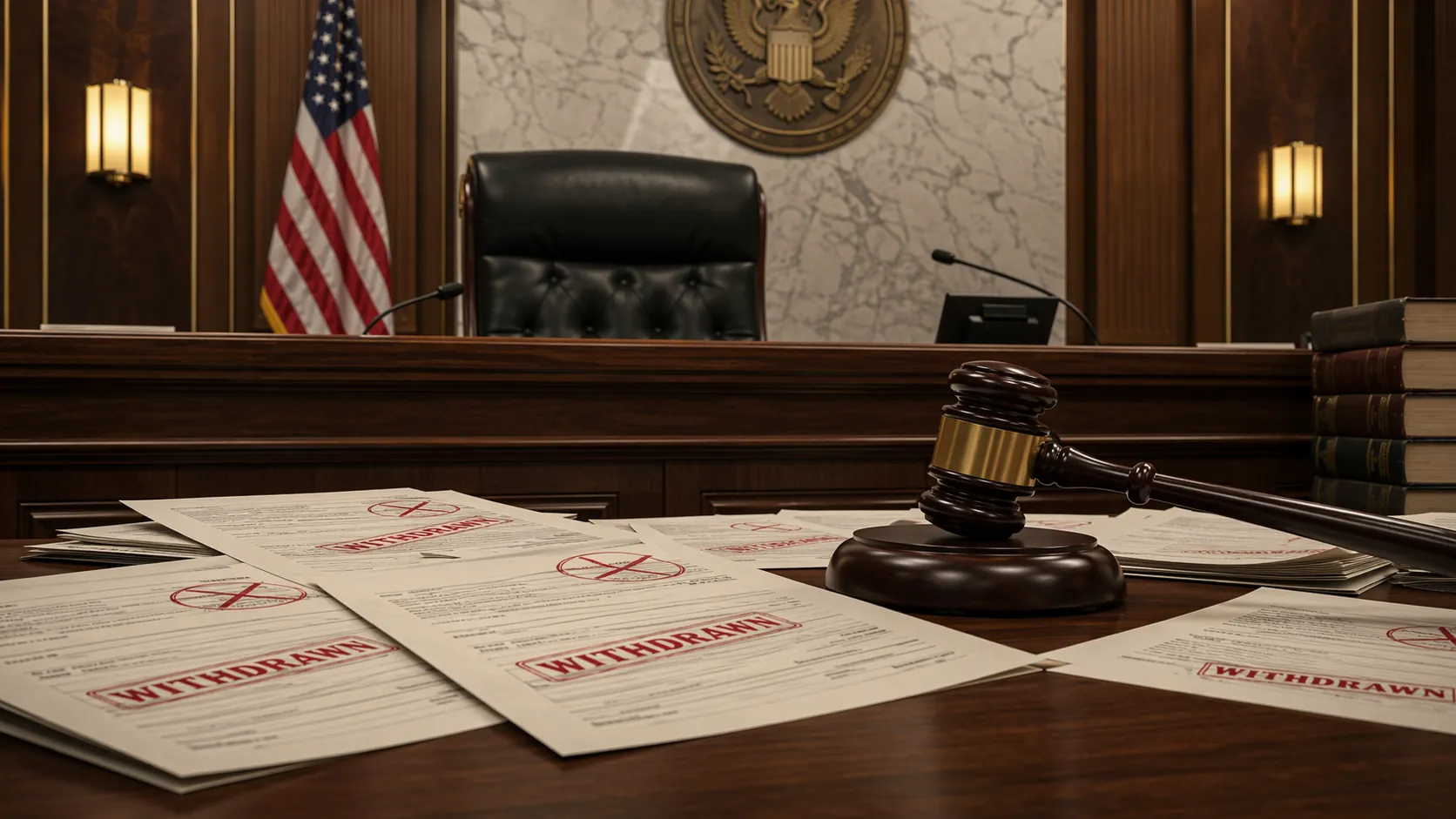
The hearing record, as reported on July 23, placed the ruling in SDNY, before Judge Subramanian, under 28 C.F.R. § 50.10, the DOJ regulation governing compulsory process directed at members of the news media. The docket number and the subpoena filings themselves still need a PACER check; the available account is built from contemporaneous court reporting and news reports, not from a complete public docket file. The record should also be treated as last reviewed on July 24, 2026, because the leak investigation remains active and the government has not been barred from attempting a corrected subpoena path.
What the hearing established
The court’s central finding was that the government had used subpoenas as an opening move. Under DOJ’s news-media guidelines, compulsory process against journalists is supposed to come after the government has pursued reasonable alternatives, not before. Judge Subramanian said the subpoenas were issued as a “first step,” not a “last resort,” and found that approach inconsistent with the regulation.[1][2]
Timing mattered. The first New York Times article at issue was published July 8, 2026, and the subpoenas followed on July 10, two days later.[1] That gap is short enough to make exhaustion of alternatives difficult to square with the government’s own rule. A leak investigation may move quickly, but speed does not erase the sequencing requirement when the target of compulsory process is a reporter.
The subpoenas were connected to reporting about security concerns surrounding President Trump’s Air Force One arrangements during a Qatar visit.[3] That background explains why prosecutors framed the matter as a national-security leak probe. It does not answer the procedural question the hearing turned on: whether prosecutors had first done the work the media guidelines require before trying to compel journalists’ records or testimony.
| Issue | Hearing significance |
|---|---|
| Subpoenas issued July 10 after July 8 publication | Supported the court’s concern that compulsory process was used too early |
| 28 C.F.R. § 50.10 | Supplied the DOJ’s own rule for last-resort use of subpoenas against news media |
| Family-member records swept in | Turned database mismatch errors into concrete third-party harm |
| AUSA admission about misleading another judge | Raised a candor problem separate from the subpoena-guidelines violation |
| Withdrawal after court warning | Avoided bench quashal but did not end the investigation |
The subpoena path failed at more than one point
The first defect was the last-resort problem. The government needed to show that it had exhausted alternative sources or that alternatives were inadequate before turning to compulsory process against journalists. Judge Subramanian found that the DOJ had not satisfied that requirement.[1][2] In practical terms, the court was not just faulting a missing formality; it was faulting the investigative order of operations.
The second defect was the demand for phone records after the investigation was already public. Assistant U.S. Attorney Kevin Sullivan admitted that he misled another judge when seeking a nondisclosure order tied to phone-record subpoenas by representing the publicity status incorrectly.[2][3] That admission matters because nondisclosure orders depend on what the court is told about investigative secrecy, risk, and necessity. Once a prosecutor’s representation on that point fails, the problem is no longer confined to the journalists’ motion to quash.
The third defect was scope. Reports describe subpoena demands reaching back to January 1, 2026, months before the relevant Times articles, a range the Times argued showed an effort to “forage for information about the Journalists’ source relationships more broadly.”[3][4] That date range should still be checked against the actual subpoena filings. If confirmed, it supports the Times’s position that the subpoenas were not tightly fitted to the specific publications that triggered the leak inquiry.
The fourth defect was the family-member problem. The government sought phone records associated with one reporter’s mother, described as a mental health professional with confidential clients, and with two reporters’ spouses. DOJ attributed those subpoenas to public-database mismatches.[5] That is the kind of “inadvertent” error that stops being clerical when it imposes risk on people who are not the investigative target and who have their own confidentiality obligations.
DOJ attorney Sean Buckley acknowledged the family-member subpoenas in court as “an error, judge, which we own.”[2] Ownership helped, but it did not cure the pattern. Judge Subramanian’s response was that “These things are starting to pile up,” a useful sentence for later subpoena disputes because it shows the court evaluated the mistakes cumulatively rather than as disconnected accidents.[2]
Candor became its own risk category
A motion to quash can be won on overbreadth, burden, privilege, statutory noncompliance, or failure to follow required procedures. This hearing acquired a more serious cast because the court also confronted government candor. Sullivan’s admission that he had misled another judge while seeking a nondisclosure order placed the issue inside the court’s supervisory concern over how prosecutors obtain judicial authorization.[2][3]
Judge Subramanian made the sanctions point unusually plainly. He said that in a civil proceeding he would have ordered the parties to show cause why sanctions should not be issued.[1][2] That was not a sanctions order, and it should not be cited as one. But it was a warning from the bench that the mistakes had reached a level where a sanctions-style inquiry would have been on the table in another procedural posture.
The distinction is important. The court did not merely say the subpoenas were premature. It indicated that the government’s submissions and investigative mechanics had become unreliable enough to justify an escalated response. For agencies and counsel that depend on courts accepting government representations in ex parte or partially sealed settings, that is the durable risk signal.
Withdrawal avoided quashal, not the consequences of the record
The government’s withdrawal was tactical as much as remedial. Judge Subramanian gave DOJ the choice of withdrawing the subpoenas or having them quashed in open court, and DOJ chose withdrawal.[1] That outcome spared the government an immediate adverse order on the subpoenas themselves, but it left behind a public hearing record containing admissions, judicial findings, and a sanctions warning.
The post-hearing government statement did not read like institutional concession. Through a spokesperson, DOJ attacked the judge’s handling of the matter and framed the ruling as a blockade of a national-security investigation.[4] That response matters only to the extent it confirms the dispute is not over. The department’s leak investigation continues, and the available reports leave open the possibility that prosecutors could return with revised subpoenas after attempting to satisfy the required process.[1][4]
That unresolved status should prevent overclaiming. The July 23 hearing did not immunize the Times, its reporters, or their records from all future process. It did establish that this round of subpoenas failed the DOJ’s own rulebook badly enough that the court was prepared to quash them immediately and viewed multiple “inadvertent” errors as a pattern.
Why this belongs in a procedural-risk file
For legal professionals, the reusable point is not that subpoenaing reporters is controversial. It is that a federal court treated the DOJ’s internal media guidelines as an operative constraint, examined the sequence of investigative steps, and forced withdrawal when the government could not justify its path. The family-member subpoenas sharpened the point because they showed how a database shortcut can expose non-targets to process before anyone has checked whether the records actually belong in the investigation.
Withdrawal does not necessarily mean the underlying investigation has ended. A subpoena can disappear while the agency preserves its theory, retools its process, and returns later. The risk question after July 23 is therefore not whether DOJ lost forever. It is whether any future subpoena can survive the record created by this hearing: first-resort process, insufficient exhaustion, overbroad date range allegations, third-party record mistakes, and a prosecutor’s admission that another judge was misled.
The practical lesson is narrow but significant. When compulsory process depends on a regulated sequence and court candor, a cluster of avoidable errors can turn a subpoena dispute into a sanctions-risk event even without a sanctions order. That is what Judge Subramanian’s July 23 hearing established, and that is the record to watch if the government tries again.
References
- Trump administration admits legal errors and withdraws subpoenas of 3 NYT reporters, PBS NewsHour
- Ripped by judge, DOJ drops subpoenas of New York Times reporters, Courthouse News
- DOJ drops subpoenas of New York Times reporters under judge's pressure, NPR, July 23, 2026
- Trump's DOJ says it will withdraw subpoenas targeting NY Times reporters, CNN, July 23, 2026
- DOJ sought phone records of NYT journalists in effort to unmask sources, PBS NewsHour
Related records
Tool profile
Browse tool evaluations →Governing regulation
Browse the obligations tracker →Preventive workflow
Browse verification workflows →
Report a correction or tip
Spotted an outdated figure, a misstated fact, or a ruling this case record should reflect? Public comments are disabled for this content given the professional cost of a misreported case outcome, penalty amount, or rule text — use the structured correction channel instead.
Report a correction or tip for this record →