
Donna Dillon's stale warrant arrest: a five-factor checklist
A five-factor checklist drawn from the Donna Dillon case to help defense attorneys and civil-rights lawyers identify entertainment-motivated warrant services and build Fourth Amendment suppression motions or Section 1983 complaints.
- Jurisdiction
- US Federal
- Court
- U.S. District Court, Eastern District of Tennessee
- AI tool named
- None
- Ruling date
- Jun 27, 2026
- Source document
- View primary court order ↗
- Last verified
- Jul 28, 2026
Lex Machina Review is an independent risk-tracking and reference resource. Nothing on this site is legal advice, and using it does not create an attorney-client relationship. Every record is reviewed against primary sources but may not reflect the most current status of a matter — always verify directly against the cited court order, rule text, or a licensed attorney before relying on it.
Companion explanation — secondary to the source document above
When a client says, "they arrested me for the show," the first task is not to decide whether the story sounds ugly. It is to decide whether the file contains facts that can be preserved, requested, authenticated, and pleaded. The Donna Dillon lawsuit over a stale-warrant arrest is useful for that limited reason: it alleges a 2.5-year-old warrant on a dismissed misdemeanor package dispute, served after the complaining neighbors had left the state and did not prosecute. [1]
Dillon’s account adds the facts that change the intake memo: five squad cars, seven to nine deputies, an On Patrol: Live camera crew, and a deputy’s post-arrest comment to the camera that they would "see what else we can get." [1][2] She also alleges that, after shoulder replacement surgery, she was handcuffed behind her back for more than four hours, repeatedly asked for medical help, reinjured the shoulder, and had to restart physical therapy; Knoxville News Sentinel reported that a deputy later received a three-day suspension for keeping her confined in a van. [3]
This Risk Digest entry is not legal advice, and Dillon has not won anything on the merits. The lawsuit was filed in June 2026 and remains unresolved. The payment figure discussed below comes from KCSO’s own reporting to Knox News, not from a court-tested damages record or a judicial finding. The checklist is an evidentiary triage tool, not a prediction that Dillon will prevail.
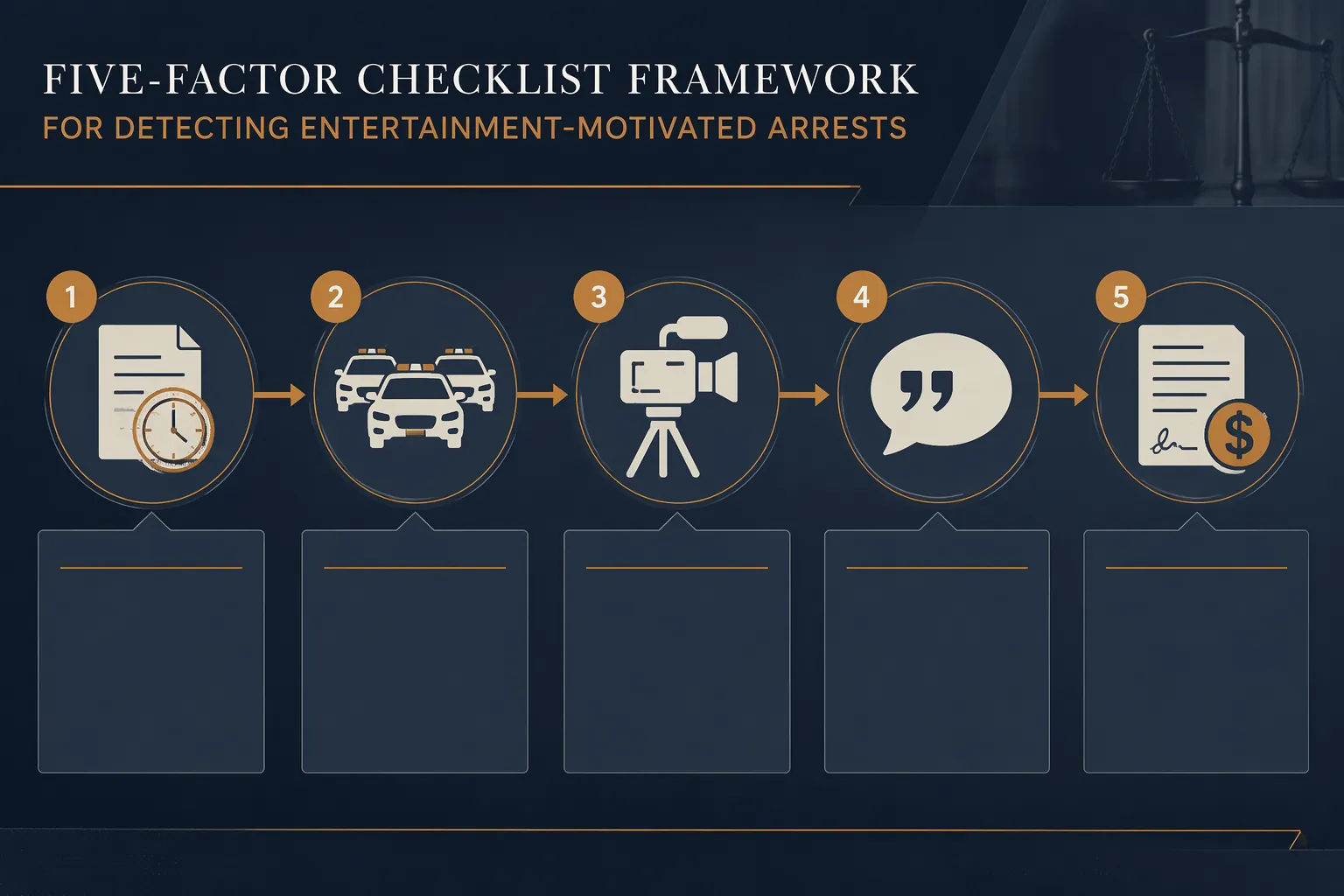
The five-factor screen
A stale warrant is not a magic phrase. It becomes useful when it sits beside other facts that make ordinary warrant service look like content production. The Dillon pattern gives counsel five places to look before drafting a suppression motion, a Section 1983 complaint, or a preservation letter.
| Factor | What makes it legally useful | First records to request |
|---|---|---|
| Warrant age and charge severity | A warrant more than 12 months old on a non-violent misdemeanor is not enough by itself, but it helps show why the operation needs explanation. Dillon alleges a 2.5-year-old misdemeanor warrant tied to a dismissed package dispute. [1] | Warrant packet, docket entries, charging documents, dismissal or nonprosecution records, prosecutor communications, prior service attempts. |
| Overstaffed or force-disproportionate response | A multi-car, multi-deputy response can show escalation inconsistent with the charge. Dillon alleges five squad cars and seven to nine deputies. [1][2] | CAD logs, dispatch audio, staffing sheets, incident reports, supervisor approvals, radio traffic, use-of-force reports, transport logs. |
| Camera crew or media presence | The issue is not public observation. The issue is whether police action was planned, timed, or escalated to provide footage. | Ride-along agreements, producer emails, call-selection communications, location releases, bodycam video showing crew placement, show footage and unaired footage. |
| Entertainment-oriented statements | Statements about getting more content can turn motive from speculation into evidence. Dillon’s case includes the reported "see what else we can get" comment. [1][2] | Bodycam audio, show audio, deputy interviews, internal-affairs transcripts, raw production audio, post-arrest text messages. |
| Payment, access, and internal response | Money or access arrangements do not prove a constitutional violation, but they make motive and municipal practice worth pleading carefully. KCSO reported receiving $66,750 from On Patrol: Live for January through December 2025, including $49,294.41 in overtime reimbursement. [4] | Contracts, invoices, reimbursement records, overtime records, public-information responses, OPS or internal-affairs files, disciplinary records. |
How the Dillon facts become record requests
The first request should separate the age of the warrant from the life of the prosecution. In Dillon’s case, the reported warrant age matters because the underlying misdemeanor package dispute had allegedly gone nowhere: CNN reported that the neighbors involved had left Tennessee and did not prosecute. [1] Counsel should not stop at the warrant face sheet. The file needs the original complaint, any dismissal or nonprosecution notation, the date the warrant entered the system, any attempted service history, and the reason the warrant resurfaced when it did.
That last item is often the hinge. If the warrant appeared on a routine patrol check, the case looks different from a warrant selected in advance because a television crew was riding along. If no one can identify a public-safety reason for prioritizing an old misdemeanor, the next request goes to call selection: who searched for the warrant, who approved the service attempt, who knew a crew was present, and whether producers or show personnel received notice before the deputies arrived.
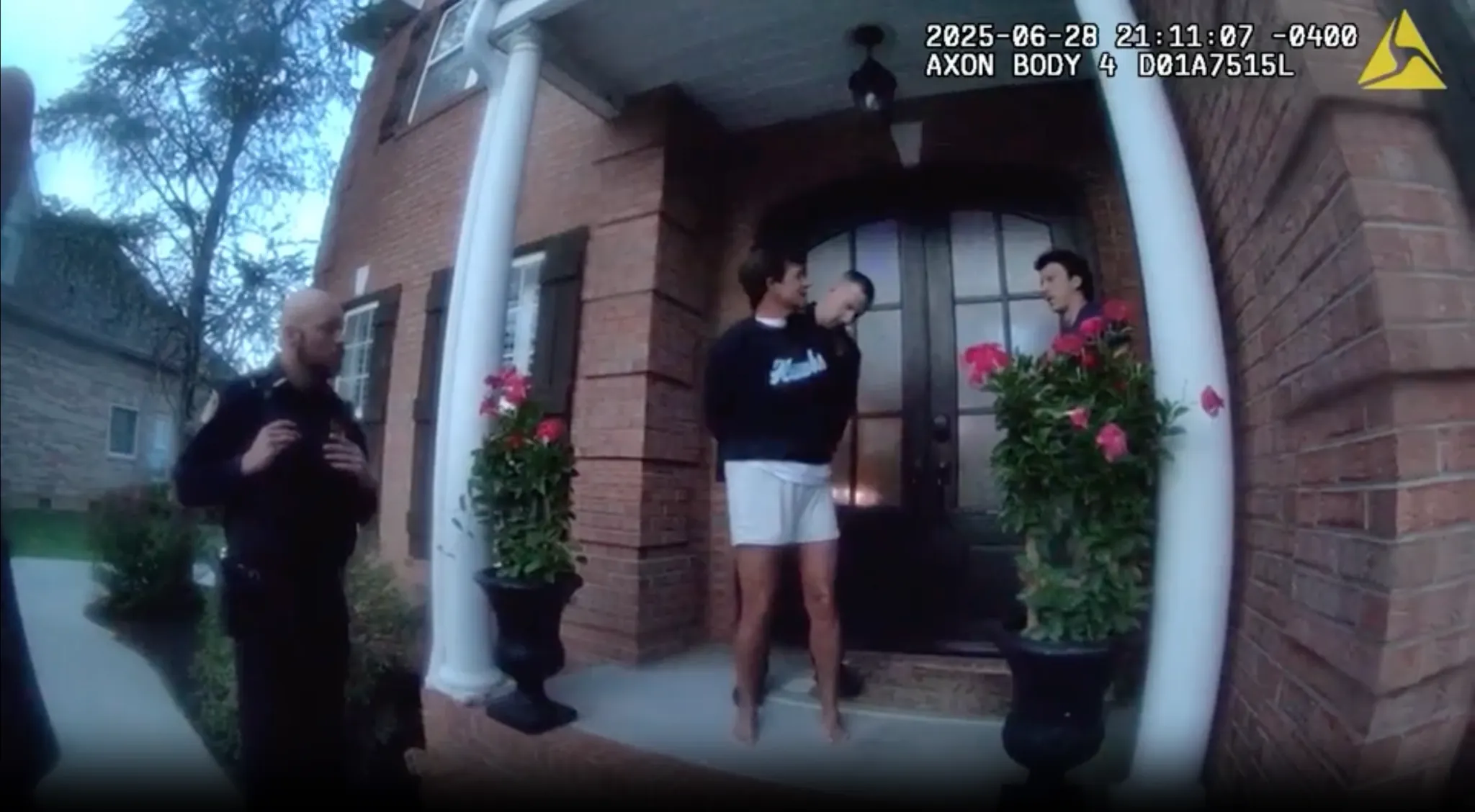
The second request cluster is staffing. Dillon alleges five squad cars and seven to nine deputies for a misdemeanor warrant. [1][2] That number needs to be tested against the agency’s ordinary practice. Counsel should request CAD data for similar misdemeanor warrant services, shift rosters, supervisor notes, radio traffic, and any policy governing how many deputies respond to non-violent misdemeanor warrants. The goal is not to prove that five cars are always unlawful. The goal is to show whether this service was abnormal and, if so, why.
The third cluster is video. Bodycam and dashcam footage may show where the crew stood, whether deputies paused for camera positioning, whether the client was visible to neighbors, whether officers adjusted their language once the camera was close, and whether medical complaints were captured. Show footage is not a substitute for raw footage. A preservation letter should name unaired video, audio channels, production logs, crew notes, time stamps, and any communications between deputies and producers before, during, and after the arrest.
Dillon’s medical facts require a separate lane. Knoxville News Sentinel reported that she had undergone shoulder replacement surgery, was handcuffed behind her back for more than four hours despite repeated pleas, was denied medical care at the detention facility, and had to restart physical therapy after reinjury. [3] A civil-rights file built on those allegations should not rely on adjectives. It should contain surgical records, therapy records before and after the arrest, intake screening forms, jail medical request forms, detention logs, transport logs, grievance forms, and photographs if any exist.
The fourth cluster is officer language. The reported comment that deputies would "see what else we can get" is important because it sounds less like warrant execution and more like footage hunting. [1][2] One line should not carry an entire constitutional theory if the rest of the file is thin. But it does justify requests for the full recording, the minutes before and after the statement, any off-camera audio, the deputy’s written report, and any later internal interview. The question for the pleading is whether the arrest was completed and then the client remained part of an entertainment objective.
The fifth cluster is the agency relationship with the show. Knox News reported that KCSO received $66,750 from On Patrol: Live for January through December 2025, including $49,294.41 as overtime reimbursement, and that the contract was terminated on June 18, 2026. [4] That figure should be treated carefully. It is not a jury finding, and reimbursement is not automatically a bounty. Still, contracts, invoices, producer access terms, overtime approvals, and internal emails may show whether the department had an operational incentive to generate ride-along content.
The internal file matters even if it says “nothing wrong”
A clean internal-affairs conclusion should not end intake review. In Dillon’s case, Knoxville News Sentinel reported that the OPS investigation found "nothing wrong" with keeping a post-surgery arrestee handcuffed behind her back for four hours, while also reporting a three-day suspension for the deputy who kept her confined in the van. [3] Those two facts belong next to each other in the request list.
For a Section 1983 complaint, the OPS file may help in two different ways. The underlying reports may contain admissions, contradictions, time stamps, and witness names. The conclusion itself may also matter if counsel is developing a municipal-liability theory: an agency review that treats the alleged restraint and medical complaints as acceptable can be relevant to policy, custom, training, supervision, or ratification. That is a pleading path, not a shortcut. The OPS report described in the press has not been published or independently reviewed in the materials available here.
- Request the complete OPS or internal-affairs file, not just the disposition letter.
- Ask for all interviews, exhibits, bodycam clips reviewed, medical records considered, and policy provisions cited.
- Compare the internal timeline against dispatch, transport, jail intake, and medical records.
- Identify what the reviewer did not consider: unaired footage, producer communications, prior complaints, or similar warrant services filmed for the show.
- Preserve the distinction between an internal policy finding and a constitutional reasonableness analysis.
Suppression and Section 1983 require different proof habits
If the client still has a criminal case, suppression work starts with the remedy available in that case. The stale-warrant fact helps frame the reasonableness of the execution, especially if the charge was minor and non-violent, but counsel should not plead as if age alone voids the warrant. The stronger question is whether the manner, timing, staffing, restraint, filming, and post-arrest handling made the seizure unreasonable.
In a civil case, the same facts can support different claims: unreasonable seizure, excessive force, denial or delay of medical care, failure to train or supervise, municipal custom, and possibly state-law claims depending on the jurisdiction and immunities. The pleading should attach or quote concrete records where possible. A complaint that says "they wanted television content" will be easier to attack than one that identifies the warrant age, charge history, staffing decision, camera placement, payment arrangement, medical timeline, and officer statements.
The unresolved-law problem has to be addressed directly. No federal circuit has squarely held, on the materials available here, that serving a stale misdemeanor warrant for television entertainment purposes alone violates the Fourth Amendment. That does not make the theory frivolous. It means counsel should avoid making motive do all the work. The complaint or motion should plead objective unreasonableness in the execution and use entertainment motive as evidence explaining why the operation departed from ordinary law-enforcement needs.
Producer liability is even less settled. A joint-action theory against a production company needs facts showing more than filming from the sidewalk or riding along under agency permission. Counsel would want communications about target selection, requests to delay or stage the arrest, direction to officers, control over timing, payment terms tied to access, and any ability to influence whether deputies continued the encounter after the warrant service was complete.
Why the comparators help, and where they stop
The closest comparator in the available materials is Watsky. Newsweek and Variety reported a $2.5 million 2024 settlement involving an arrest allegedly staged for Live PD cameras, with the warrant deliberately removed from the court system so the arrest could occur on camera. [5][6] That fact pattern is stronger than a mere ride-along because it alleges manipulation of the court system to preserve a televised arrest opportunity.
Watsky is useful in a Dillon-style file for vocabulary and discovery targeting. It points counsel toward warrant-system activity, court-system irregularities, communications between law enforcement and production personnel, and the difference between passive filming and deliberate staging. It should not be overstated as binding Fourth Amendment authority; it was reported as a settlement, not a circuit rule.
The Javier Ambler materials are different. FOX 7 Austin reported a $5 million settlement connected to Ambler’s 2019 death during a Live PD ride-along and the later Texas law, HB 54, known as Javier Ambler’s Law, under which Texas law enforcement can no longer contract with reality television shows. [7] That history is powerful risk context. It shows that legislatures and municipalities have treated police reality-TV contracts as more than a public-relations nuisance. It does not, by itself, decide whether Dillon’s alleged seizure violated the Fourth Amendment.
Myrick is worth watching because it tests claims against On Patrol: Live and Half-Moon Pictures in a current posture. PennLive reported in June 2025 that a man sued On Patrol: Live, Half-Moon Pictures, and a police department after being arrested on the show. [8] For now, the useful lesson is procedural caution: claims against producers may survive or fail on facts about participation, control, agreement, and state action, not on the label "reality TV" alone.
A filing checklist that does not outrun the record
Before filing, the intake memo should be able to answer a narrow set of questions. If it cannot, the next move is usually preservation or public-records work, not a louder complaint.
- What was the warrant for, when was it issued, and what happened to the underlying charge?
- Who selected that warrant for service on that date, and who knew a camera crew would be present?
- How many officers and vehicles responded, and how does that compare with ordinary service of similar warrants?
- Where was the camera crew before, during, and after the seizure?
- Did officers say anything about the show, footage, entertainment value, or getting more content?
- Was the client restrained longer or more harshly than the warrant service required?
- Were medical complaints documented, ignored, delayed, or contradicted by video?
- What contract, reimbursement, or access arrangement existed between the agency and the show?
- What did the internal investigation review, and what did it leave out?
Dillon does not establish a rule. It does give counsel a reproducible way to spot a warrant service that may have been escalated for entertainment content: an old minor warrant, an outsized response, a camera crew, officer language about getting more footage, and a money or access arrangement sitting behind the operation. If those facts are present, the case is no longer just a client’s impression. It is a record-building problem.
References
- Grandmother says staged arrest for reality TV show left her injured and wary of law enforcement — CNN — July 25, 2026
- Knox County woman says KCSO arrested her on a stale warrant, needlessly injuring her for On Patrol: Live content — WVLT — June 29, 2026
- Woman arrested in front of On Patrol: Live crew sues Knox County sheriff — Knoxville News Sentinel — June 27, 2026
- Knox County Sheriff's Office is no longer on TV show On Patrol: Live — Knoxville News Sentinel — June 18, 2026
- Arrest Allegedly Staged For Reality TV Leads To $2.5 Million Settlement — Newsweek
- Live PD Arrest Leads to $2.5 Million Civil Rights Payout — Variety
- Texas law enforcement can no longer contract with reality TV shows — FOX 7 Austin
- Man sues On Patrol: Live, police department after being arrested on the show — PennLive — June 2025
Related records
Tool profile
Browse tool evaluations →Governing regulation
Browse the obligations tracker →Preventive workflow
Browse verification workflows →
Report a correction or tip
Spotted an outdated figure, a misstated fact, or a ruling this case record should reflect? Public comments are disabled for this content given the professional cost of a misreported case outcome, penalty amount, or rule text — use the structured correction channel instead.
Report a correction or tip for this record →