
When a Drone Attack on a Civilian Vessel Is a War Crime
An elements-based framework for determining when a drone or unmanned-vessel strike on a civilian vessel becomes a war crime under the Rome Statute. It lets readers test a specific maritime incident against the same elements — including the contested 'war-sustaining' theory as live disputed doctrine, not settled law.
- Jurisdiction
- International
- Court
- International Criminal Court
- AI tool named
- Drone
- Ruling date
- Mar 5, 2024
- Source document
- View primary court order ↗
- Last verified
- Aug 4, 2026
Lex Machina Review is an independent risk-tracking and reference resource. Nothing on this site is legal advice, and using it does not create an attorney-client relationship. Every record is reviewed against primary sources but may not reflect the most current status of a matter — always verify directly against the cited court order, rule text, or a licensed attorney before relying on it.
Companion explanation — secondary to the source document above
Start with the incident, not the weapon. A drone or unmanned surface vessel strike on a civilian vessel can be a war crime, but the word “drone” does not do the legal work. The controlling questions are whether the vessel and crew were protected, whether that protection had been lost under the targeting rules, whether the attacker intentionally directed an attack at a civilian object or launched an attack with excessive expected civilian harm, and whether the evidence supports attribution and the required mental element.
This is a legal-risk framework for classification and verification, not legal advice for any party, commander, insurer, charterer, state, investigator, journalist, or crew member. It is written for records that are still moving. Incident findings, attribution statements, and San Remo Manual rule numbers cited through secondary sources should be rechecked against primary materials before publication, filing, or reliance. Last verified for this article: 2026-08-04.
The basic rule is familiar but often skipped in commentary: merchant vessels begin as civilian objects, and civilian crews remain civilians unless the facts bring the vessel within a recognized loss-of-protection rule. PILPG’s 2024 analysis anchors the merchant-ship question in the ordinary targeting test, including Additional Protocol I Article 52(2)’s “effective contribution to military action” language and the Rome Statute routes for civilian-object and disproportionate-attack war crimes.[1] IPHR and Truth Hounds treat merchant-ship crews as civilians under the civilian-status rule they identify in Geneva Convention IV Article 50.[2] The ICRC casebook frames the San Remo Manual as a central restatement source for naval warfare analysis, while the rule numbers used below should still be verified against the primary manual where they are being carried through secondary sources.[3]
| Question to answer | Governing source or test | What the record must show | Incident use, confidence, and last-verified notes |
|---|---|---|---|
| Is there an armed-conflict context? | IHL and naval-warfare rules apply only within the relevant armed-conflict frame; ordinary maritime security, piracy, sanctions enforcement, or peacetime law-enforcement incidents require a different analysis.[1][3] | Identify the conflict, parties, location, and connection between the strike and the hostilities. Do not treat every explosion at sea as an IHL attack. | For Ukraine-related merchant-ship incidents, IPHR/Truth Hounds place the alleged attacks within Russia’s invasion of Ukraine in February 2022.[2] For Red Sea and Hormuz-related records, use the reporting source’s conflict framing but keep attribution separate. Last verified: 2026-08-04. |
| Was the vessel a civilian object and was the crew civilian? | Merchant vessels ordinarily begin as civilian objects; crews on merchant vessels are treated as civilians unless they directly participate or the vessel otherwise loses protection under targeting law.[1][2] | Flag, ownership, cargo, route, AIS behavior, charterer, mission, crew role, and any military use matter. A ship is not targetable merely because it is useful to an enemy economy in a general way. | HRW’s 2026 Iran report uses the formulation “civilian ships” and “apparent war crimes,” but that label still depends on vessel status, attack facts, and attribution.[4] HRW’s 2025 Yemen report likewise describes attacks on cargo ships as apparent war crimes.[5] Confidence should be incident-specific, not transferred from headline to headline. |
| Had the vessel lost civilian protection? | AP I Article 52(2) asks whether the object makes an effective contribution to military action and whether its destruction, capture, or neutralization offers a definite military advantage.[1] San Remo categories discussed in the cited materials include merchant vessels engaged in military acts, blockade-running, contraband carriage, refusal to stop after warning, and similar conduct.[1][3] | The useful facts are conduct facts: carrying weapons or troops, acting as an auxiliary, transmitting military intelligence, resisting visit and search, breaching a blockade, or otherwise making a concrete military contribution. General economic value is not enough under the settled formulation. | Secondary-source references to San Remo Rules 60 and 67 are useful triage markers, but rule numbers should be checked against the primary San Remo text before formal reliance.[1][3] Last verified: 2026-08-04. |
| Was the vessel on a humanitarian mission? | Humanitarian-mission facts matter because relief vessels and civilian aid operations can carry heightened protection concerns, while that protection still depends on the mission not being used to make an effective military contribution.[1][3] | Look for the mission mandate, manifests, notifications to parties, route approvals, convoy arrangements, and any allegation that the vessel was being used for military transport or intelligence. | If a vessel is carrying humanitarian supplies and no credible record shows military use, the legal risk of calling it a civilian object is stronger. If the same vessel also carries dual-use or military cargo, classification becomes cargo- and conduct-specific. |
| Is the alleged crime intentionally directing attacks against civilian objects? | Rome Statute Article 8(2)(b)(ii), as discussed in the cited merchant-shipping analysis, concerns intentionally directing attacks against civilian objects.[1] | The record must support protected civilian-object status and an intentional attack directed at that object. A mistaken attack, a lawful attack on a military objective, or a strike with poor public evidence may be wrongful in another sense without satisfying this war-crime route. | HRW used “apparent war crimes” language for alleged deliberate attacks on civilian ships in 2026 and for Houthi attacks on cargo ships in 2025.[4][5] That is a serious classification, but the evidentiary file still needs vessel status, target selection, attacker knowledge, and attribution. |
| Is the alleged crime a disproportionate attack? | Rome Statute Article 8(2)(b)(iv) concerns launching an attack in the knowledge that expected incidental civilian death, injury, or damage would be clearly excessive in relation to the anticipated concrete and direct military advantage.[1] | This route does not require the object itself to be civilian in the same way Article 8(2)(b)(ii) does. It asks whether expected civilian harm was excessive even if the attacker was pursuing a military objective. | For merchant-ship cases, the key civilian harm may include crew death or injury, environmental consequences, secondary explosions, rescue risks, or damage to protected civilian cargo. Do not collapse this inquiry into “the ship was civilian”; proportionality is its own route. |
| Does the drone or USV platform change the rule? | The cited IHL materials apply ordinary targeting rules; they do not create a separate war-crime category because the attacking system is unmanned.[1][3] | The platform may change what was feasible to verify: surveillance time, sensor quality, target confirmation, abort capacity, communications, and post-strike logs. It does not by itself prove illegality. | A loitering drone with persistent video may make some verification failures harder to explain. A low-cost USV with limited sensors may raise different feasibility questions. Neither answer can be assumed without the technical record. |
| Can the attacker be attributed with sufficient confidence? | War-crime classification for public reporting can use confidence language, but prosecution-grade claims require a firmer chain: actor, command link, weapon system, launch area, orders, target data, and knowledge. | Separate “the vessel was unlawfully attacked” from “this actor committed the war crime.” Attribution is not a footnote; it is an element of responsible naming. | The research record notes an important caution in the Hormuz-related material: the IMO could not confirm responsibility for 14 of 16 attacks.[4] That does not clear any actor; it limits what can responsibly be said. Last verified: 2026-08-04. |
| Is the claim relying on a “war-sustaining” theory? | The contested theory treats objects that sustain the enemy’s war effort economically, such as oil revenue vessels, as targetable. Heinegg and Raina address this dispute in the Black Sea and shadow-fleet context, but the theory remains contested rather than settled.[7][8][9] | If the only asserted military contribution is revenue, sanctions evasion, or economic support, mark the claim as legally disputed. Do not present it as a settled basis for attacking a civilian merchant vessel. | The 2025 debate over Gambian-flagged oil tankers is best used as a warning label, not a shortcut. It shows why economic-warfare arguments attract lawyers and why they remain dangerous if reported as black-letter law.[7][9] Last verified: 2026-08-04. |
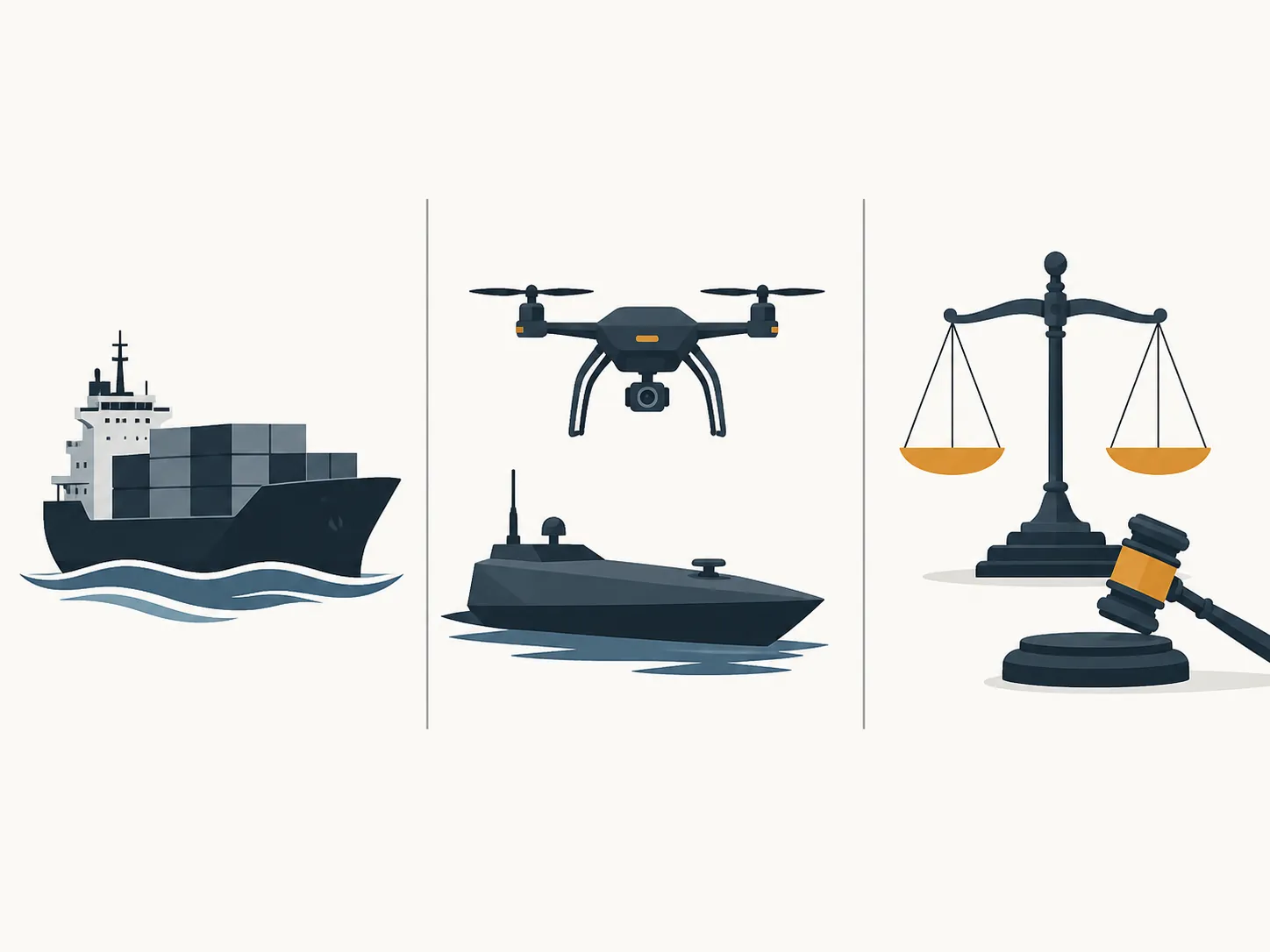
The vessel question comes before the war-crime label
A civilian vessel is not a moral adjective. It is a classification that carries consequences. In a maritime file, the first useful page is not usually the video still of the strike; it is the page that says what the ship was, where it was going, what it carried, who operated it, and what conduct was alleged before the attack.
Merchant vessels begin on the protected side of the line. That presumption can be displaced, but only by facts that bring the vessel within the military-objective test or a recognized naval-warfare category. AP I Article 52(2), as used in the cited merchant-shipping analysis, requires both an effective contribution to military action and a definite military advantage from destruction, capture, or neutralization.[1] Both halves matter. A ship can be useful, profitable, politically important, or embarrassing to an adversary without automatically making an effective contribution to military action.
This is where several common facts must be kept separate. Carrying ordinary commercial cargo is not the same as carrying weapons. Sailing under a third-state flag is not the same as immunity from attack if the vessel is being used for military transport. Refusing to stop after a lawful warning is not the same as having been targetable from the start. Breaching a blockade, carrying contraband, acting as an auxiliary, transmitting military intelligence, or otherwise participating in the enemy’s military effort can move the analysis. Each move needs proof.
The San Remo Manual categories are valuable because they keep the analysis maritime rather than abstract. Naval conflict has always involved capture, visit and search, contraband, blockade, neutral shipping, and warning rules. The ICRC casebook treats naval warfare as a distinct body of IHL practice, and the San Remo materials are regularly used as a restatement point for those problems.[3] But where a case note cites a specific San Remo rule number through HRW, JURIST, PILPG, or a blog analysis, the rule number should be treated as a citation lead until checked against the primary manual.
A humanitarian mission sharpens the same inquiry. A vessel carrying relief supplies or operating under a humanitarian mandate is not fair game because it is inconvenient to one side’s war plan. The record should identify the mission, cargo, notifications, route, and any allegation of misuse. If the attacker says the vessel was being used to move weapons, troops, or intelligence, that assertion must be tested against the evidence; the humanitarian label should not be accepted blindly, and neither should the military-use allegation.
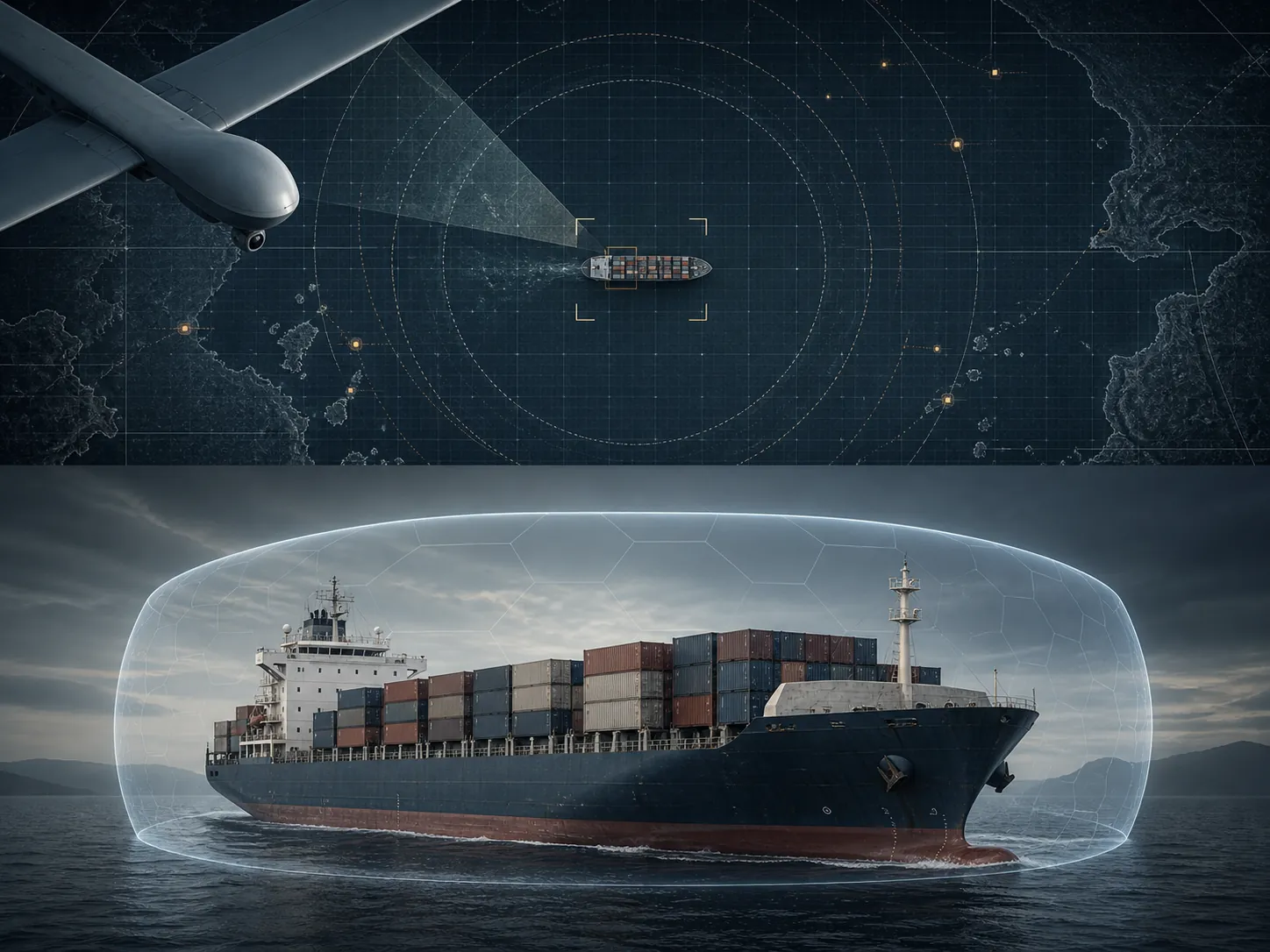
Loss of protection is narrow, fact-bound, and not proved by economic usefulness alone
The most tempting error in merchant-vessel cases is to slide from “this ship helps the enemy” to “this ship is a lawful target.” That slide is too fast. A vessel may help an enemy in the loose sense that commerce helps a state survive. It may carry fuel, grain, machinery, or dual-use goods. It may generate revenue. It may sail in a fleet designed to blunt sanctions. None of those descriptions, standing alone, answers the targeting question under the settled military-objective test.
The better file asks for conduct: Was the vessel transporting ammunition, weapons, troops, or military vehicles? Was it integrated into a military logistics chain? Was it under military command or being escorted as part of a military operation? Was it collecting or transmitting intelligence? Did it ignore a lawful order to stop in circumstances recognized by naval warfare law? Was it attempting to breach a blockade? Did capture remain feasible, or was attack the method chosen? Those questions can be answered with manifests, radio traffic, AIS gaps, port records, satellite imagery, crew statements, warning records, and military communications. They cannot be answered by the word “civilian” in a headline.
This also protects the analysis from the opposite mistake. Merchant status is not a shield for military use. A civilian hull can be used in a way that makes it a military objective. The point is not that merchant ships are untouchable; it is that the loss of protection must be shown through the legally relevant path, not assumed from nationality, ownership, cargo value, or political suspicion.
The “war-sustaining” theory is live doctrine, not settled law
Shadow-fleet and oil-revenue cases expose the hardest pressure point. If a tanker carries oil whose sale funds a war effort, is the tanker making an effective contribution to military action, or only an economic contribution to a state that is at war? The answer is not settled merely because the facts are unattractive.
Heinegg’s 2025 Lieber Institute analysis of Ukrainian attacks against Gambian-flagged oil tankers in the Black Sea treats the incidents as a serious occasion to examine whether merchant vessels tied to oil transport and wartime revenue can fall within a military-objective theory.[7] That is the argument’s strongest setting: oil, sanctions evasion, shadow shipping, and a war economy connected to an ongoing armed conflict.
Raina’s 2023 Lieber Institute article and 2025 EJIL: Talk! analysis press back in the other direction. They distinguish military contribution from economic sustenance and warn against treating merchant shipping as targetable simply because it supports an enemy’s economy or war financing.[8][9] The dispute matters because “war-sustaining” targeting has been associated with a minority U.S. position and was rejected during the San Remo drafting process as described in the cited scholarship.[8][9]
For classification work, that means a revenue-linked tanker should not be treated as a lawful military objective on a settled-law basis unless there are additional facts showing an effective contribution to military action. If the file rests only on the proposition that the ship helps finance the enemy, the confidence marker should say so: legally contested, minority theory, not a reliable foundation for declaring the vessel targetable under settled IHL.
Two Rome Statute routes, two different mistakes to avoid
Rome Statute Article 8(2)(b)(ii) and Article 8(2)(b)(iv) often appear together in public reporting, but they do different work. Article 8(2)(b)(ii) is the cleaner civilian-object route: the attacker intentionally directs an attack against a civilian object. In a merchant-vessel case, that requires evidence that the vessel was protected as a civilian object and that the attack was directed at it with the required mental element.[1]
Article 8(2)(b)(iv) is the proportionality route. It can matter even where the attacker claims a military objective: the issue is whether the expected incidental civilian death, injury, or damage would be clearly excessive in relation to the anticipated concrete and direct military advantage.[1] For a ship, the civilian harm analysis may include crew casualties, passengers, rescuers, nearby vessels, environmental damage, cargo effects, and foreseeable secondary consequences. The military advantage must also be concrete and direct, not a generalized desire to impose economic pain.
The distinction is not academic. If a drone strike hits a protected cargo vessel after the attacker identified it as civilian and chose to attack anyway, Article 8(2)(b)(ii) is the natural route. If the attacker was pursuing a military objective aboard or near the vessel but expected civilian harm was plainly excessive, Article 8(2)(b)(iv) becomes the more relevant route. If the evidence shows only negligence, confusion, or an unverified public accusation, the war-crime claim may not be ready even if the incident was tragic or unlawful under another body of law.
What the drone or USV changes
Unmanned systems do not create a separate war-crimes code at sea. A quadcopter, loitering munition, naval drone, unmanned surface vessel, missile, mine, or manned aircraft still has to be judged through distinction, proportionality, precautions, and attribution. The platform is evidence, not the offense.
It can still matter a great deal. A drone may provide persistent surveillance that helps identify a vessel, observe markings, follow course changes, and assess whether the crew is attempting rescue or abandonment. A USV may have a narrower sensor package, a preprogrammed route, a remote operator, or a communication delay. Those facts affect what was feasible to verify and whether precautions could have been taken before impact.
The practical questions are concrete: Was there real-time video? Was the vessel visually identified? Were AIS data checked or spoofing considered? Was there time to abort? Was a warning possible? Did operators see crew on deck or lifeboats deployed? Did the system’s logs preserve target selection and command inputs? These questions do not replace the legal test. They help decide whether the attacker satisfied it.
Using incident reports without overclaiming them
Human Rights Watch’s 2026 report on Iran uses the title formulation “Deliberate Attacks on Civilian Ships” and describes the incidents as “apparent war crimes.”[4] That is a strong public classification, and it is useful for the status and direction-of-attack parts of the framework. But the same research record carries an attribution warning: the IMO could not confirm responsibility for 14 of 16 Hormuz attacks.[4] A responsible file can therefore say that attacks on protected civilian ships may amount to apparent war crimes while still marking attribution as incomplete for particular strikes.
The Red Sea cargo-ship record works similarly. HRW’s 2025 report characterizes Houthi attacks on cargo ships as apparent war crimes, and JURIST reported condemnation of Houthi attacks on Red Sea shipping in war-crimes terms.[5][6] Those sources help identify public legal characterizations and alleged actor patterns. They do not remove the need to classify each vessel, identify the cargo and mission, test any claimed military objective, and separate civilian-object liability from proportionality liability.
The Ukraine merchant-ship materials supply another kind of record. IPHR and Truth Hounds’ February 2022 report on shelling of merchant ships in Ukraine’s territorial waters treats merchant crews as civilians and frames the attacks through war-crimes-at-sea analysis.[2] That source is useful for the baseline civilian status of crews and the seriousness of attacks on merchant shipping during an armed conflict. It should not be stretched to answer later drone or USV cases without fresh facts on actor, weapon, target selection, and the vessel’s conduct.
The Black Sea tanker debate is different again. It is less a settled incident template than a doctrinal stress test. Heinegg’s discussion of attacks on Gambian-flagged oil tankers and Raina’s later EJIL: Talk! response show how quickly a file can turn from vessel status into economic-warfare theory.[7][9] If the legal conclusion depends on “war-sustaining” rather than effective military contribution, the confidence marker should be lowered and the dispute made visible.
Enforcement is possible in principle, but this record does not make prosecution automatic
The Rome Statute theories are not ornamental. On March 5, 2024, ICC judges issued arrest warrants in the Ukraine situation for Sergei Ivanovich Kobylash and Viktor Nikolayevich Sokolov, with alleged crimes including intentionally directing attacks against civilian objects under Article 8(2)(b)(ii) and excessive incidental civilian harm under Article 8(2)(b)(iv).[10] That matters because it shows these provisions can be charged and litigated in modern conflict settings.
It does not show that merchant-vessel drone cases are easy prosecution candidates. Jurisdiction, custody, admissibility, attribution, command responsibility, classified evidence, and the availability of operator logs can all decide whether a case moves beyond public classification. For counsel or reporting, the safer conclusion is narrower: the Rome Statute hooks are prosecutable in principle, but a particular maritime strike needs its own evidentiary bridge.
The classification threshold
A drone attack on a civilian vessel becomes a responsible war-crime claim only when the record supports all of the necessary legal moves. The vessel and crew must be protected, or the proportionality route must be established despite a claimed military objective. Any alleged loss of protection must be tied to effective contribution to military action or a recognized naval-warfare category, not to loose economic usefulness. The attacker’s intent or knowledge must be supported, not inferred from outrage alone. Attribution must be strong enough for the level of claim being made.
The first question is therefore not whether the weapon was unmanned. It is what the vessel was doing, what the attacker knew or could feasibly verify, whether civilian protection had actually been lost, whether expected civilian harm was excessive, and which Rome Statute element the available evidence can support.
References
- Conceptualizing IHL: Legality of the Targeting of Merchant Ships, Public International Law & Policy Group, Oct. 2024
- War Crimes at Sea: Shelling of Merchant Ships in Ukraine's Territorial Waters, IPHR / Truth Hounds, Feb. 27, 2022
- Naval warfare, ICRC Online Casebook
- Iran: Deliberate Attacks on Civilian Ships Apparent War Crimes, Human Rights Watch, Mar. 23, 2026
- Yemen: Houthis' Attacks on Cargo Ships Apparent War Crimes, Human Rights Watch, Jul. 23, 2025
- Houthi attacks on Red Sea shipping condemned as war crimes, JURIST, Jul. 2025
- The Ukrainian Attacks Against Gambian-Flagged Oil Tankers in the Black Sea, Lieber Institute, Dec. 8, 2025
- Merchant Shipping as Military Objectives and Naval Economic Warfare, Lieber Institute, Aug. 7, 2023
- Targeting Third-State Merchant Vessels, EJIL: Talk!, Dec. 12, 2025
- Situation in Ukraine: ICC judges issue arrest warrants against Sergei Ivanovich Kobylash and Viktor Nikolayevich Sokolov, International Criminal Court, Mar. 5, 2024
Related records
Tool profile
Browse tool evaluations →Governing regulation
Browse the obligations tracker →Preventive workflow
Browse verification workflows →
Report a correction or tip
Spotted an outdated figure, a misstated fact, or a ruling this case record should reflect? Public comments are disabled for this content given the professional cost of a misreported case outcome, penalty amount, or rule text — use the structured correction channel instead.
Report a correction or tip for this record →