
Who is liable for Salmonella in the July 2026 egg recall?
Litigators evaluating claims from the July 2026 Midwest Poultry Services egg recall need to know who bears liability under product liability law. This record assesses strict-liability exposure for the supplier and retailers based on the public factual record.
- Jurisdiction
- United States
- Court
- State court
- AI tool named
- None
- Ruling date
- Jul 22, 2026
- Source document
- View primary court order ↗
- Last verified
- Jul 25, 2026
Lex Machina Review is an independent risk-tracking and reference resource. Nothing on this site is legal advice, and using it does not create an attorney-client relationship. Every record is reviewed against primary sources but may not reflect the most current status of a matter — always verify directly against the cited court order, rule text, or a licensed attorney before relying on it.
Companion explanation — secondary to the source document above
Risk Digest posture
Category: risk-digest. Last verified: July 25, 2026. This record is for risk intelligence and litigation triage only; it is not legal advice, and current law, pleading rules, damages standards, and retailer-liability rules must be verified in the governing jurisdiction.
For July 2026 Salmonella egg product-liability claims, the present answer is narrow but important: strict-liability claims are viable against Midwest Poultry Services and retailers in the chain of distribution for documented Salmonella illness tied to recalled shell eggs. That does not mean every person counted in the outbreak has a clean claim file. It also does not mean punitive damages follow automatically.
Three questions should stay separate from the start. First, was a defective food product placed into the stream of commerce? Second, can a particular claimant connect illness to the recalled eggs, a relevant retailer, and the relevant product identifiers? Third, does the public record show conduct harsh enough to support punitive damages, as opposed to compensatory recovery for a contaminated product? Ordinary recall coverage tends to collapse those questions. A claim file cannot.
The public record that matters to allocation
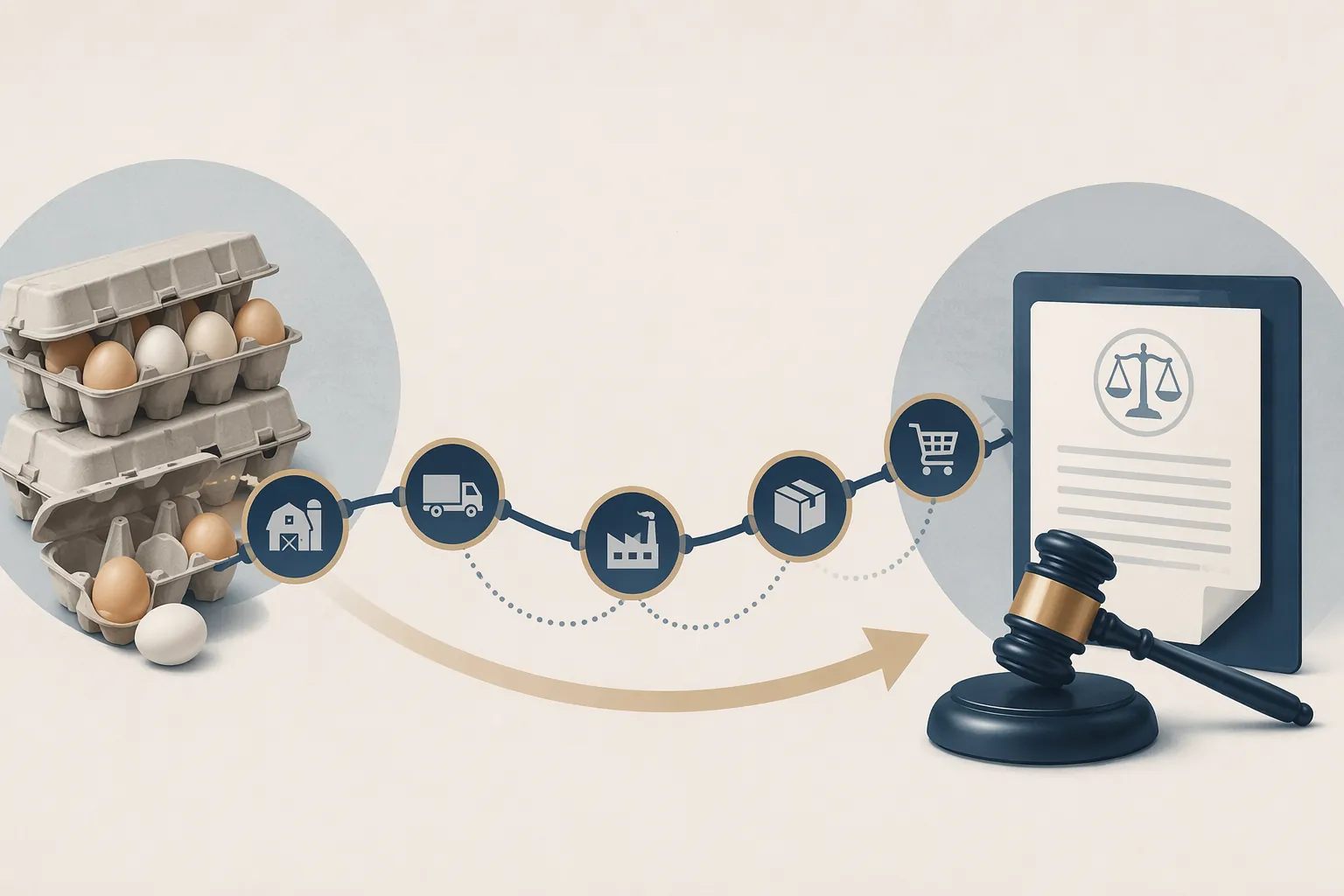
The FDA recall notice identifies Midwest Poultry Services, L.P. as the recalling firm and describes a July 22, 2026 voluntary recall of shell eggs due to possible Salmonella Enteritidis contamination. The notice supplies the operational facts that matter for distribution-chain exposure: recalled product parameters, product codes, distribution states, and retailer channels including Kroger and Brookshire Grocery-related distribution.[1]
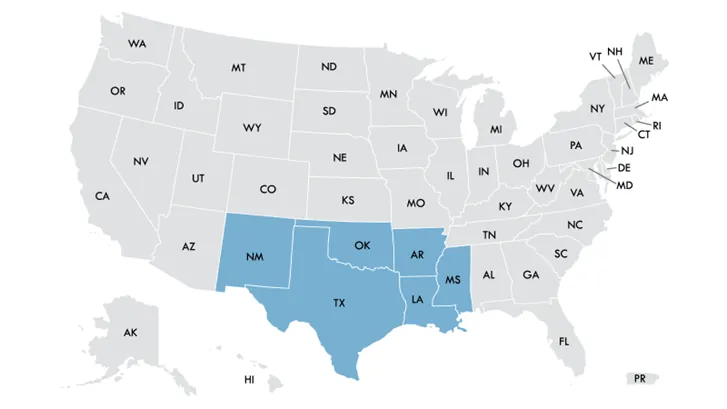
The FDA outbreak page reported 98 illnesses across 17 states, 26 hospitalizations, zero deaths as of July 24, 2026, and an ongoing investigation. It also described Midwest Poultry as a likely source while stating that Midwest Poultry did not account for all 98 illnesses.[2] The CDC outbreak page adds a timing boundary that is uncomfortable for easy causation arguments: reported illness onset dates ran from November 21, 2025 through June 30, 2026.[3]
Reuters adds litigation-relevant context, not a substitute legal record: it reported that Midwest Poultry recalled nearly 1.6 million dozen eggs after environmental monitoring, a July 21 third-party whole-genome sequencing match to the outbreak strain, and the July 22 recall.[4] That sequence matters most to punitive-damages analysis. It does not erase the strict-liability question if recalled eggs caused compensable illness.
Why retailers remain in the case
The retailer issue is the part most likely to be misstated. Under the strict-liability framework associated with Restatement (Second) of Torts § 402A, a seller in the business of selling a product may face liability when a defective product reaches the consumer without substantial change and causes injury. The theory does not require proof that the retailer created the contamination.[5]
That is why Kroger or Brookshire-related entities matter if the claimant can tie the purchase to recalled cartons sold through those channels. The retailer did not need to own the farm, run the laying operation, perform the environmental testing, or make the recall decision. The retailer’s exposure comes from its place in the chain of distribution.
This is not a finding that any retailer is ultimately liable to any particular claimant. It is a pleading-and-proof posture. A claimant still has to show that the product purchased through the retailer was within the recall scope and that the product was the source of the illness. If the file cannot do that, the chain-of-distribution theory has nowhere useful to attach.
| Actor | Current public-record exposure | What must still be proved |
|---|---|---|
| Midwest Poultry Services | Supplier exposure for recalled shell eggs allegedly contaminated with Salmonella Enteritidis | That the claimant consumed recalled product and that the illness is microbiologically and temporally tied to that product |
| Retailers in the chain, including Kroger and Brookshire-related channels where applicable | Strict-liability exposure as sellers in the distribution chain, without a need to prove they caused contamination | That the claimant purchased recalled product through that retailer or channel and can connect the illness to that product |
| Other possible sources | Still relevant because FDA stated Midwest Poultry did not account for all 98 illnesses | Whether a claimant outside the recalled-product pathway can prove a different source or a different responsible chain |
Midwest Poultry’s recall conduct helps on punitive damages, not on the basic defect theory
Midwest Poultry’s strongest public-record defense is not that a voluntary recall defeats liability. It does not. The better defense is narrower: the known sequence of environmental monitoring, third-party whole-genome sequencing, a July 21 match, and a July 22 voluntary recall gives the company a serious argument that, once it had confirming information, it did not ignore it.[4]
That distinction matters because compensatory and punitive damages ask different questions. A compensatory claim can rest on injury caused by a defective food product. Punitive damages require a harder showing about the defendant’s conduct, knowledge, and disregard of risk under the governing state law. The current public record is more favorable to Midwest Poultry on punitive exposure than on strict-liability exposure.
The same facts should not be overread in the other direction. A voluntary recall is meaningful conduct, but it is not a moral acquittal and not a damages release. If a claimant can prove that recalled eggs caused Salmonella illness, the company’s prompt post-confirmation action may reduce the punitive case while leaving the compensatory case alive.
Causation is where many files will become expensive
The outbreak number is large enough to draw claims activity, but it is not individual proof. The public figures — 98 confirmed illnesses, 17 states, and 26 hospitalizations — describe the outbreak investigation, not any one consumer’s purchase, exposure, diagnosis, or damages.[2]
A stronger claim file is built from ordinary, unglamorous records: a store receipt or loyalty-card record, the retailer location, carton identifiers within the recall parameters, illness date, medical records, stool culture, and, where available, strain matching. The difference between “I was sick during the outbreak” and “I bought recalled eggs from this distribution chain and my isolate matches the outbreak strain” is the difference between intake interest and litigation proof.
The onset window also needs discipline. CDC-reported illness onset dates run from November 21, 2025 through June 30, 2026.[3] A November 2025 illness and a June 2026 illness may sit inside the same outbreak investigation, but they may not present the same supply-chain proof, product-code proof, or damages posture. The recall announcement came much later than the first reported onset dates, and that gap should prevent any shortcut assumption that all illnesses followed the same transactional path.
FDA’s statement that Midwest Poultry is a likely source but does not account for all 98 illnesses is equally important.[2] For claimants tied to recalled Midwest Poultry eggs, that statement does not defeat the case. For claimants who cannot connect to recalled product, it gives defendants an obvious causation opening: the outbreak investigation itself leaves room for other sources.
Plaintiff-firm activity is a signal, not a docket
Foodborne-illness firms have already framed the outbreak for potential claimants. Marler Clark published an outbreak page describing the egg Salmonella outbreak and separately maintains a strict-liability and chain-of-distribution explainer.[5][6] Schmidt Firm and Pritzker Hageman pages likewise reflect claimant-facing activity around egg Salmonella or food recall litigation.[7][8]
Those pages matter as market signals. They show that plaintiffs’ lawyers are screening claims and framing retailer/supplier theories. They do not establish that a particular case has been filed, that any named defendant is liable, or that any claimant can satisfy causation. No publicly docketed complaint had been identified for this record as of July 25, 2026.
Damages posture
Hospitalizations make the compensatory side material. FDA reported 26 hospitalizations and zero deaths as of July 24, 2026.[2] A hospitalized claimant with purchase documentation, product-code alignment, and microbiological support will look very different from a claimant with only gastrointestinal symptoms during the broad outbreak period and no product connection.
Retailer fault is not the main damages gateway under the strict-liability theory. Retailer causation is. If the recalled product moved through the retailer and caused illness, the retailer’s lack of contamination control may not remove it from the case. Its better fight may be product identification, causation, damages scope, and allocation against upstream parties.
For Midwest Poultry, the damages split is sharper. The company remains exposed to compensatory claims if recalled eggs caused illness. On the current public record, punitive damages are a harder claim because the known detection-and-recall sequence gives the company a non-frivolous argument that it acted after the sequencing match rather than sitting on confirmed outbreak information.[4]
Practical claim sorting
The strongest potential claims are not simply the sickest claims. They are the claims with the most complete bridge between illness and product. A severe illness without a recalled-product connection may be sympathetic and still difficult to prove. A less dramatic illness with carton codes, retailer records, a compatible illness date, and microbiological support may be easier to place in the legal chain.
- Stronger file: documented Salmonella illness; purchase evidence; retailer or channel connection; product identifiers within the recall parameters; illness timing that fits the exposure theory; stool culture or other microbiological support.
- Weaker file: illness during the broad outbreak window only; no receipt, loyalty-card record, or carton information; no retailer connection to recalled product; no culture or strain support; reliance on the 98-case outbreak count as a substitute for individual proof.
- Harder causation path: claimant not tied to Midwest Poultry recalled products, especially in light of FDA’s statement that Midwest Poultry does not account for all reported illnesses.
The record-supported liability assessment is therefore limited but live: strict-liability exposure exists for Midwest Poultry and for retailers in the distribution chain when a claimant can tie documented Salmonella illness to recalled eggs. Retailer fault is not required under that theory. Midwest Poultry’s voluntary recall sequence is most important to punitive damages, not to whether compensatory strict-liability claims can be pleaded and proved.
References
- Midwest Poultry Services, L.P. Recalls Shell Eggs Due to Possible Salmonella Enteritidis Contamination — FDA, July 22, 2026
- Outbreak Investigation of Salmonella: Eggs, July 2026 — FDA, July 24, 2026
- Salmonella Outbreak Linked to Shell Eggs — CDC, July 2026
- Poultry firm recalls nearly 1.6 million dozen eggs over potential salmonella — Reuters, July 25, 2026
- Strict Liability and Negligence and when they apply… and chain of distribution liability — Marler Clark
- Egg Salmonella Outbreak Sickens 98 in 17 States — Marler Clark
- Egg Salmonella Lawsuit — Schmidt Firm
- Food Recall Lawsuit — Pritzker Hageman
Related records
Tool profile
Browse tool evaluations →Governing regulation
Browse the obligations tracker →Preventive workflow
Browse verification workflows →
Report a correction or tip
Spotted an outdated figure, a misstated fact, or a ruling this case record should reflect? Public comments are disabled for this content given the professional cost of a misreported case outcome, penalty amount, or rule text — use the structured correction channel instead.
Report a correction or tip for this record →