
How the Eric Adjepong Protective Order Case Maps Multi-Docket Risk
This analysis of the Eric Adjepong protective order litigation shows how protective orders can produce conflicting outcomes across civil, criminal, and child-protective systems on identical allegations, and identifies procedural risk signals for attorneys managing high-conflict custody cases with overlapping court dockets.
- Jurisdiction
- Maryland, United States
- Court
- Howard County Circuit Court
- Judge
- Maurice C. Frazier
- AI tool named
- None
- Ruling date
- Jul 10, 2026
- Source document
- View primary court order ↗
- Last verified
- Jul 24, 2026
Lex Machina Review is an independent risk-tracking and reference resource. Nothing on this site is legal advice, and using it does not create an attorney-client relationship. Every record is reviewed against primary sources but may not reflect the most current status of a matter — always verify directly against the cited court order, rule text, or a licensed attorney before relying on it.
Companion explanation — secondary to the source document above
The Eric Adjepong protective order case details that matter most are not the Food Network credits or the public figure angle. They are the three records now sitting beside one another: a Howard County Circuit Court final protective order entered July 10, 2026, finding physical abuse by a preponderance of the evidence; a D.C. Metropolitan Police Youth Investigations Branch determination of no probable cause on a sexual-abuse referral; and a D.C. Child and Family Services Agency disposition reported as unfounded. The first did not get erased by the second or third. The second and third did not prove that the civil court was wrong. They answered different questions in different forums, under different working standards, on a record whose public portions remain incomplete.[1][2]
That is why the case is useful for lawyers beyond its celebrity-news surface. In high-conflict custody litigation, one alleged-conduct landscape can produce several institutionally valid but inconsistent-looking outcomes. If counsel treats those outcomes as a hierarchy, instead of as separate docket events, the advice gets unsafe quickly.

Parallel Forums Did Not Produce the Same Legal Record
The July 2026 final protective order was entered by Judge Maurice C. Frazier in Howard County Circuit Court. Public reporting says the court found physical abuse by a preponderance of the evidence and barred Adjepong from being alone with his daughter. The order terms reported in the case are concrete: supervised visitation only, parenting classes, reunification therapy, firearm surrender, and no contact with the child’s residence, school, or childcare location.[1][2]
Those terms are more probative than the celebrity frame. They show what the civil court was prepared to restrict after the protective-order hearing. They do not, however, disclose the exact physical-abuse facts the court credited. The public record as reported does not support a detailed reconstruction of the alleged physical conduct, and it would be a mistake to fill that gap with the separate sexual-abuse referral that MPD reviewed.
The criminal and child-protective records are narrower than some headlines may make them sound. MPD’s Youth Investigations Branch found no probable cause on the sexual-abuse referral, while CFSA issued an unfounded disposition. Those outcomes matter. They are not synonyms for “no abuse occurred,” and they are not appellate review of the Howard County protective-order finding.[1][2]
Maryland protective-order procedure also matters here because a final protective order can be entered on a civil evidentiary showing. Maryland public legal guidance describes protective orders as civil remedies available through a defined petition, temporary-order, and final-hearing process, with the court deciding whether the required standard has been met for relief.[3][4]
A Timeline Built Across Four Dockets
The docket sequence is not background decoration. It is the risk map. The litigation as publicly reported spans at least four proceedings: the divorce filed in January 2022, a November 2024 reckless-driving criminal charge that was later dropped, a January 2025 domestic-violence protective-order cycle, and the May-to-July 2026 child-abuse protective-order proceeding.[1][5][6]
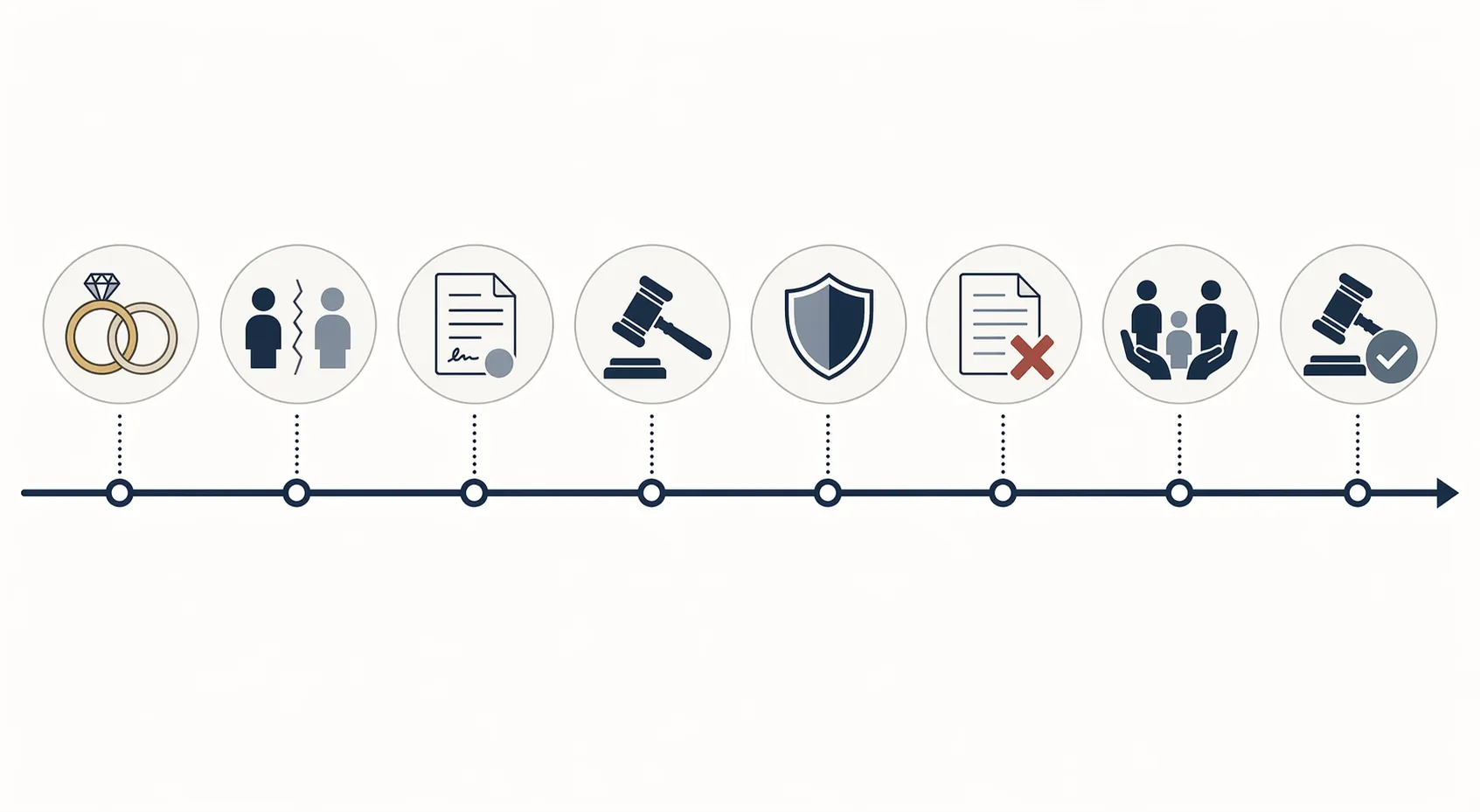
| Date or period | Reported event | Why it matters for risk analysis |
|---|---|---|
| 2017 | Adjepong and Janell Davis-Mack married. | The relationship history orients the family-law dispute but does not decide the protective-order issues. |
| October 2021 | The parties separated. | The separation precedes the divorce filing and later custody litigation. |
| January 2022 | Divorce was filed. | The protective-order history developed inside an already active family-law conflict. |
| August 2024 | A divorce decree was reported, including $804 per month in child support. | Support and custody-adjacent obligations were already reduced to a court record before the later protective-order events. |
| November 2024 | A reckless-driving criminal charge was later dropped. | A separate criminal docket entered the litigation landscape before the 2025 protective-order cycle. |
| January 2025 | A temporary domestic-violence protective order was reported, followed by an alleged FaceTime violation the next day. | The timing creates a compliance issue immediately after temporary relief was entered. |
| February 2025 | The 2025 protective-order matter was reportedly dismissed by agreement. | A dismissal by agreement does not necessarily resolve how later counsel should assess prior allegations or compliance events. |
| March 2025 | An arrest warrant tied to the alleged violation was rescinded because Adjepong had not been properly served due to an incorrect address. | The service defect changes the meaning of the warrant event and should not be treated as an ordinary merits signal. |
| May 1, 2026 | A child-abuse protective-order petition was filed. | The case moved from domestic-violence protective-order history into a child-facing protective-order proceeding. |
| June 2, 2026 | Custody was reported as concluded shortly before the final protective order. | The close sequencing makes downstream custody effects difficult to assess without separating the custody record from the protective-order record. |
| July 10, 2026 | The final protective order was entered after a finding of physical abuse by a preponderance of the evidence. | This became the operative civil restriction even though parallel criminal and child-protective dispositions differed. |
The early timeline comes principally from press accounts that said they reviewed court filings, including The Sun and Parade reports from November 2025. Those accounts are useful for sequencing, but they should be treated differently from the later reporting on the July 2026 final order and from public Maryland procedural sources. A lawyer advising from this record would want the underlying docket sheets, service returns, petition, temporary orders, dismissal paperwork, custody order, and final protective order before treating any one article as the file.[5][6]
The March 2025 Service Problem Is Not a Footnote
The reported March 2025 arrest warrant is the kind of fact that can distort later risk review if it is copied forward without the service posture. The warrant was reportedly rescinded because Adjepong had not been properly served, with the service problem tied to an incorrect address.[5]
That does not make the alleged FaceTime contact irrelevant. It does mean the alleged violation, the warrant, and the rescission have to be kept in their lanes. An alleged violation the day after a temporary order may matter for compliance risk. A rescinded warrant may matter for procedural accuracy. Improper service may matter for notice and enforceability. Collapsing those points into “he violated an order” or “the violation was disproved” loses the very information counsel needs.
This is also where protective-order mechanics become more than courthouse trivia. Temporary orders move quickly; service defects move quietly; later readers may see only the dramatic entry on a docket unless someone checks the return. For a fuller procedural walkthrough of the two protective-order cycles, see How the Eric Adjepong Case Tests Protective Order Procedure. The multi-docket lesson is narrower: a service defect can become a later evidentiary contaminant if it is not tracked separately from the allegation itself.
Why “No Probable Cause,” “Unfounded,” and “Preponderance” Can Coexist
The cleanest but least accurate reading would be that one institution must have gotten it right and the others must have gotten it wrong. The better reading is that each forum was built to answer a different question.
| Forum | Reported question answered | Reported outcome | What the outcome should not be made to say |
|---|---|---|---|
| Civil protective-order court | Whether the civil standard for protective relief was met. | Physical abuse found by a preponderance of the evidence; final protective order entered. | It should not be inflated into a public finding of every alleged fact not disclosed in the order. |
| MPD Youth Investigations Branch | Whether there was probable cause on the sexual-abuse referral. | No probable cause. | It should not be treated as a civil appellate ruling or as a finding that no physical abuse occurred. |
| CFSA | Whether the child-protective agency disposition was supported under its process. | Unfounded disposition. | It should not be treated as identical to a criminal clearance or a custody merits ruling. |
The evidence gap is not abstract. The publicly reported MPD investigation concerned sexual abuse and ended with no probable cause. The civil protective order reportedly rested on a finding of physical abuse by a preponderance of the evidence. Unless the underlying filings show otherwise, those are not the same allegation packaged in different labels. They may overlap factually, but the public reporting does not establish the overlap with enough precision to merge them.[1][2]
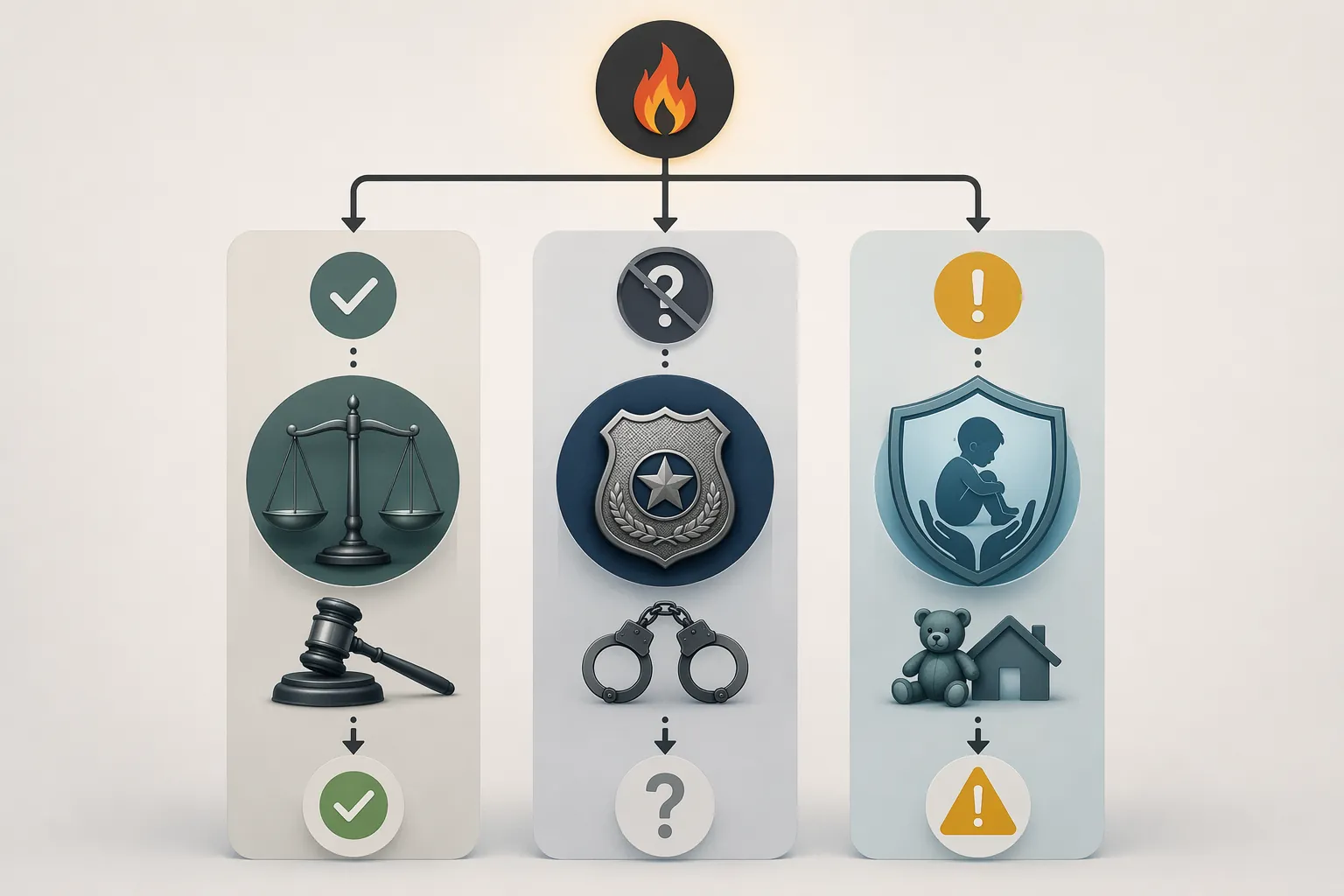
For attorneys, the practical mistake is usually one of translation. A client hears “unfounded” and wants to use it as “exonerated.” An opposing party hears “final protective order” and wants to use it as proof of everything alleged. Neither shortcut is safe. The safer memo separates the forums, quotes the operative terms, identifies the standard, and flags what remains undisclosed.
The Order Terms Are the Most Reliable Risk Signal
When the alleged facts are partly undisclosed, the restraints imposed by the order carry much of the usable information. Supervised visitation only is a child-access restriction. Parenting classes and reunification therapy point toward a court-supervised pathway for contact rather than an immediate restoration of unsupervised parenting time. Firearm surrender and no-contact restrictions around residence, school, and childcare locations extend the order beyond a simple parent-child access schedule.[1][2]
That does not mean the order proves facts beyond its terms. It means the order is now an operative civil record that lawyers must plan around. It affects exchanges, communication, school and childcare boundaries, possible third-party supervision, and the client’s exposure to later enforcement claims. Even if another agency disposition is favorable, the civil restrictions remain the restrictions unless modified, expired, stayed, or otherwise changed by the proper court.
The reported custody conclusion on June 2, 2026, shortly before the July 10 final protective order, makes that point sharper. Without the custody order and final protective order side by side, counsel cannot responsibly assume which document controls which practical question: parenting time, supervision, school contact, residence contact, therapy participation, or firearm compliance.[1]
Public Reporting Helps Visibility More Than Verification
The public figure context explains why this dispute is visible. It does not make the file more complete. The Washington Post and People reports are strongest for the July 2026 final-order posture and the reported order terms. The Sun and Parade are useful for earlier divorce and protective-order sequencing because they said they reviewed court filings, but those earlier details have not all been independently re-verified in the materials available for this article.[1][2][5][6]
Even basic biographical details around the child illustrate the problem. Most public accounts describe the daughter as 7, consistent with a 2018 birth year, while at least one public report gave a different age. That discrepancy should not become a subplot. It should remind lawyers that secondary reporting is not the docket, and the docket is not always the whole evidentiary file.
The strongest attorney-facing record would separate source categories before drawing conclusions: court orders and docket entries first; service returns and hearing outcomes next; agency and police dispositions in their own boxes; press summaries last. Public visibility may raise reputational stakes, but it does not relax the need to identify which institution did what.
The Attorney Risk Lesson
The Adjepong litigation is not a clean moral sorting exercise, and the public record does not support turning it into one. It is a useful case study because it shows how quickly a custody dispute can generate parallel records that look contradictory to a client but remain procedurally coherent to the systems that produced them.
The safest advice in a case like this starts with docket discipline. Counsel needs to know which order is temporary and which is final, whether service was valid, what conduct was actually alleged in each forum, what standard was applied, what terms are currently enforceable, and how those terms interact with any custody order. A favorable criminal or child-protective disposition may be important leverage, but it should not be described as undoing a civil protective order. A civil protective-order finding may be powerful, but it should not be inflated beyond the facts and restraints the public record supports.
That is the durable lesson from the Eric Adjepong protective order case details now in public view: in high-conflict custody litigation, a protective order may become one operative record among several inconsistent-looking but valid records. The work is not to force those records into one story. The work is to track each forum separately before anyone advises a parent, negotiates custody, or assesses enforcement risk.
References
- Judge bars chef Eric Adjepong from being alone with daughter after abuse finding, The Washington Post, July 22, 2026.
- Food Network Chef Eric Adjepong Prohibited from Contacting His Daughter Unsupervised in Child Abuse Case, People, July 23, 2026.
- Protective Orders, Maryland People’s Law Library.
- Domestic Violence, Maryland Courts.
- Food Network star Eric Adjepong's nasty divorce erupts — protective orders, cruel conduct claims and an arrest warrant, The Sun, November 2025.
- Food Network's Eric Adjepong's Private Life Takes a Shocking Turn Amid Messy Divorce, Parade, November 2025.
Related records
Tool profile
Browse tool evaluations →Governing regulation
Browse the obligations tracker →Preventive workflow
Browse verification workflows →
Report a correction or tip
Spotted an outdated figure, a misstated fact, or a ruling this case record should reflect? Public comments are disabled for this content given the professional cost of a misreported case outcome, penalty amount, or rule text — use the structured correction channel instead.
Report a correction or tip for this record →