
Understanding the FAA's 737 MAX Seat Inspection Requirements
This article explains the FAA's proposed airworthiness directive requiring inspection of passenger seat assemblies on Boeing 737-8, 737-9, and 737-8200 aircraft, covering the unsafe condition, affected fleet, compliance timeline, and cost estimates.
- Jurisdiction
- US Federal
- Court
- Federal Aviation Administration
- AI tool named
- None
- Ruling date
- Jul 27, 2026
- Source document
- View primary court order ↗
- Last verified
- Jul 29, 2026
Lex Machina Review is an independent risk-tracking and reference resource. Nothing on this site is legal advice, and using it does not create an attorney-client relationship. Every record is reviewed against primary sources but may not reflect the most current status of a matter — always verify directly against the cited court order, rule text, or a licensed attorney before relying on it.
Companion explanation — secondary to the source document above
The FAA's Boeing 737 MAX seat inspection proposal is still a proposed requirement, not a final airworthiness directive. The FAA published the Notice of Proposed Rulemaking on July 27, 2026, at 91 FR 46881 under Docket FAA-2026-7228, with comments due September 10, 2026.[1] Aircraft are not grounded by the proposal, and operators do not yet have a final AD compliance obligation from this notice.[1]
| Planning item | Current FAA proposal |
|---|---|
| Legal status | Notice of Proposed Rulemaking; not yet a final AD |
| Affected models | Boeing 737-8, 737-9, and 737-8200 airplanes |
| FAA-estimated U.S. fleet | 453 U.S.-registered airplanes |
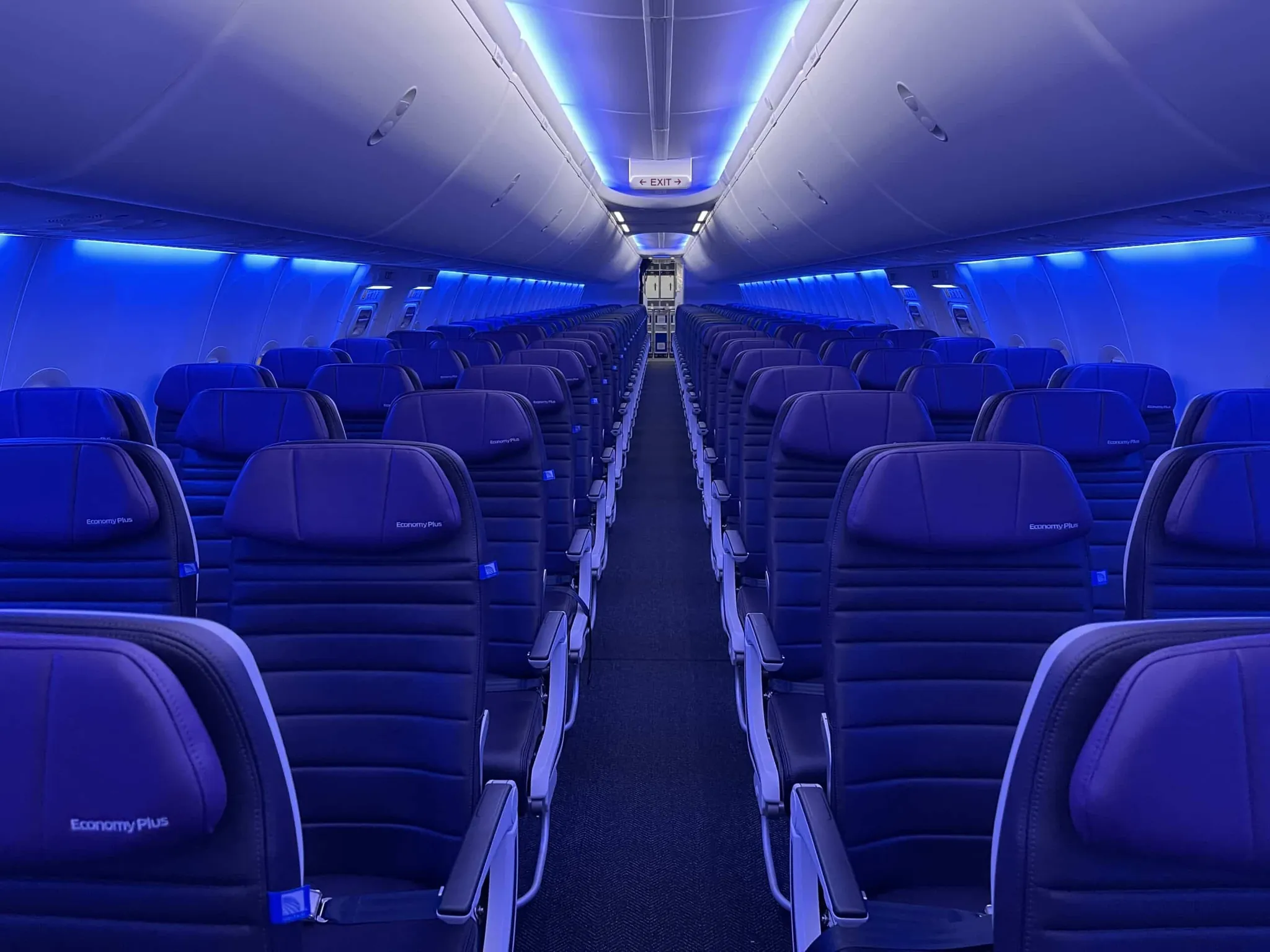
| Inspection exposure | Up to 69 track-mounted passenger seat assemblies per airplane |
| FAA labor cost estimate | $85 per seat assembly for inspection |
| On-condition action | $85 per seat assembly if re-installation is needed; no parts cost estimated |
| Comment deadline | September 10, 2026 |
| Procedural anchor | Boeing Special Attention Requirements Bulletin 737-25-1927 RB, dated December 10, 2025 |
Those figures are the useful starting point. A low unit number can still become a fleet-planning item: at the FAA's estimate of up to 69 seat assemblies on each of 453 U.S.-registered aircraft, the inspection line alone reaches up to $2,656,845 for U.S. operators, before any on-condition re-installation work is counted.[1]
What the unsafe condition is
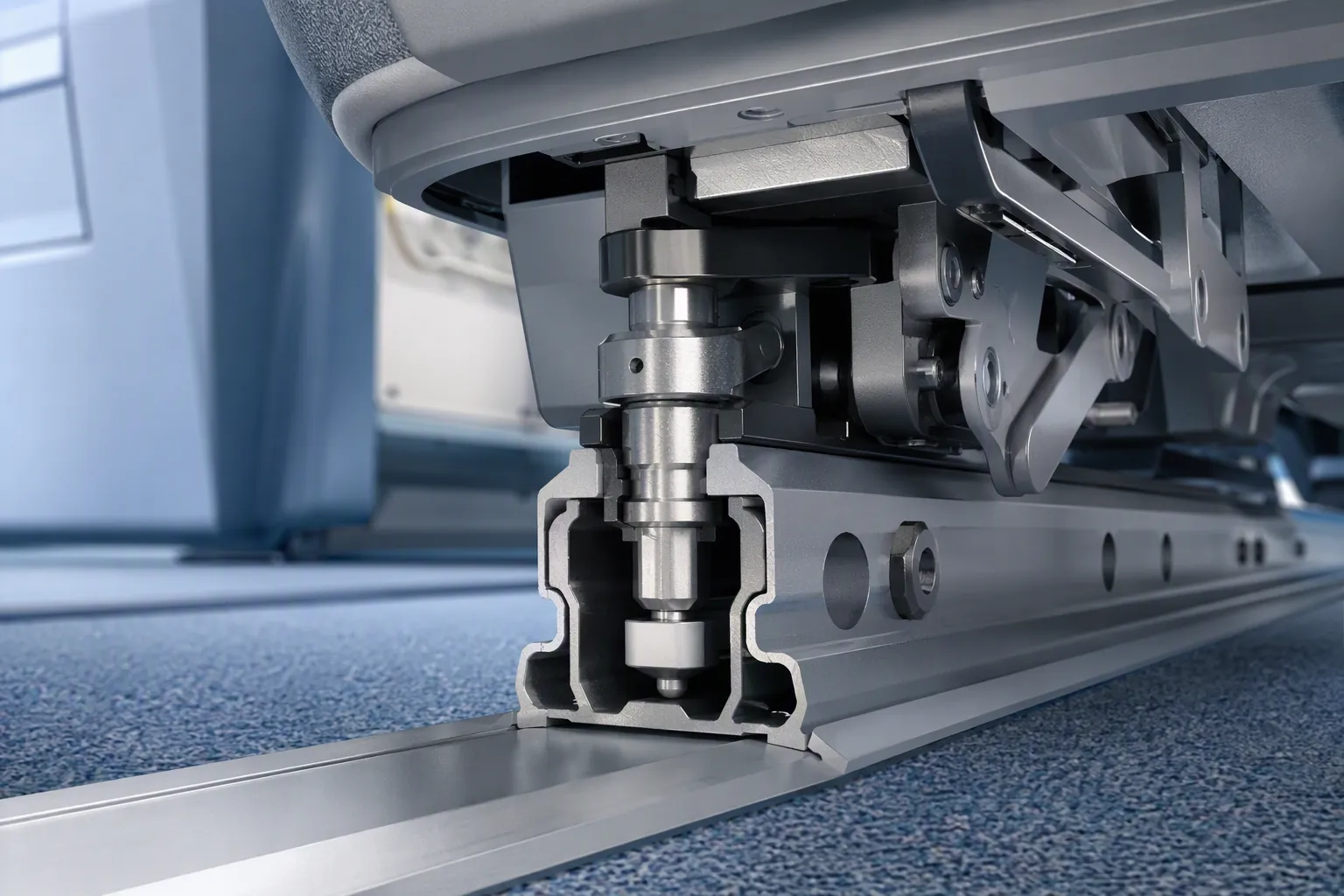
The proposed AD is not about seat comfort, upholstery, or cabin layout. It is about whether the aft fitting shear plungers on certain track-mounted passenger seat assemblies are correctly lowered and engaged in the seat tracks.[1] In plain terms, the FAA is focused on the mechanical lock between the seat assembly and the aircraft seat track.
The notice states that incorrectly engaged shear plungers could allow a passenger seat assembly to detach during high-load events, including turbulence or an emergency landing.[1] That is why the proposal is framed as an airworthiness issue rather than a cabin-condition discrepancy. The relevant question for an operator is not whether a seat looks properly installed from the aisle, but whether the engagement condition identified in the Boeing service information has been verified.
The inspection procedure is tied to Boeing's requirements bulletin
For compliance teams, the procedural anchor is Boeing Special Attention Requirements Bulletin 737-25-1927 RB, dated December 10, 2025. The FAA's NPRM proposes to require the actions identified in that service information, and the Federal Register notice describes the required inspection at the level of checking the aft fitting shear plungers on the track-mounted passenger seat assemblies.[1]
That distinction matters for maintenance planning. The Federal Register notice gives the affected models, unsafe condition, cost assumptions, and rulemaking posture. It does not need to reproduce every shop-level instruction for an airline to recognize that the Boeing requirements bulletin is the document maintenance planning will have to control against if the AD is adopted. Until the final AD is issued, however, the enforceable text is not yet in place.
The NPRM estimates one work-hour per seat assembly at $85 per hour, with no parts cost for the inspection.[1] If an affected seat assembly requires re-installation, the FAA assigns the same $85 per seat assembly as an on-condition labor estimate, again with no parts cost.[1] Those are FAA planning estimates, not invoices, vendor quotes, or warranty determinations.
Fleet scope: clear models, bounded U.S. count
The proposed applicability is limited to Boeing 737-8, 737-9, and 737-8200 airplanes.[1] The FAA estimates that 453 U.S.-registered aircraft would be affected.[1] That bounded scope is important because it gives U.S. operators a first-pass aircraft list to compare against their own configuration records, lease files, and cabin modification history.
Seat count is a separate matter. The FAA uses up to 69 track-mounted passenger seat assemblies per airplane for the proposed cost estimate.[1] Forbes, citing Cirium, reported an independent estimate of more than 80,000 seats across the 453 affected aircraft, but that is an analyst-derived fleet estimate rather than the FAA's official unit basis for the NPRM.[2]
An airline should therefore avoid treating a media seat-total estimate as the compliance denominator. The safer internal approach is to start with the FAA applicability, identify aircraft in the operator's own fleet that match the proposed AD, and then map the relevant seat assemblies using the Boeing bulletin and the operator's configuration records.
Proposal-stage planning is not the same as AD compliance
The current document is a Notice of Proposed Rulemaking. The FAA has proposed making the inspection mandatory, invited public comment, and set a September 10, 2026 comment deadline.[1] After the comment period, the agency may issue a final AD, revise the proposal, or otherwise respond through the rulemaking process. The scope, wording, and estimates in the final rule could differ from the proposal.
That is the point at which careless wording creates operational noise. Saying the FAA already “requires” these inspections overstates the present legal status. The proposed AD is concrete enough to justify internal scoping and budget work, but it is not yet the same thing as a final directive with a running compliance clock.
The notice identifies Julie Linn, Engineer, FAA, 2200 South 216th St., Des Moines, Washington, as the FAA contact for the proposal, with phone number 206-231-3584 and email [email protected].[1] Operators or counsel preparing comments should work from the docket and primary notice rather than relying on second-hand summaries of the service bulletin or assumed compliance periods.
Warranty and Boeing's position
Boeing has said it supports the FAA making the guidance mandatory, and CNN reported that Boeing indicated some or all inspection costs may be covered under warranty.[3] That is relevant for recovery analysis, but it does not erase the planning burden. Warranty coverage depends on the applicable terms, the aircraft and seat configuration, and the operator's documentation path.
For airline legal and finance teams, the practical split is straightforward: use the FAA's $85-per-assembly estimate for regulatory cost scoping, then separately preserve whatever records may be needed for warranty review. Those are related workstreams, not the same conclusion.
How this fits into FAA oversight of Boeing
The timing will naturally be read against the FAA's broader Boeing oversight posture. Earlier in July 2026, the FAA restored Boeing's authority to self-issue airworthiness certificates for 737 MAX and 787 aircraft, a development covered separately in the certification authority update. That context is useful, but it should not displace the narrower task here: this NPRM concerns a defined seat-assembly engagement condition on identified 737 MAX-family models.
No foreign regulator action has been identified for this proposed AD, and the Federal Register notice is directed to U.S.-registered aircraft.[1] Operators outside the United States may watch FAA action closely, but the NPRM does not confirm EASA, CAAC, or other authority action.
What operators can do before September 10
Before the comment deadline, the useful work is disciplined preparation rather than premature escalation. A U.S. 737 MAX operator can identify aircraft that fall within the proposed applicability, compare seat configurations against the proposed inspection exposure, and estimate the maximum labor budget using the FAA's $85-per-seat-assembly figure.[1]
- Confirm whether each Boeing 737-8, 737-9, or 737-8200 aircraft in the fleet falls within the proposed applicability.
- Map the relevant track-mounted passenger seat assemblies against the Boeing requirements bulletin and internal configuration records.
- Use the FAA's $85 inspection estimate, and the same $85 on-condition re-installation estimate, as a preliminary regulatory cost model.
- Preserve installation, modification, and warranty records that may matter if inspection or re-installation costs are later claimed.
- Submit comments by September 10, 2026 if the proposed scope, assumptions, or service-information references raise operational or legal concerns.
The proposed directive is not a grounding order and not yet a binding AD. It is still specific enough for operators and counsel to calendar the comment deadline, preserve the right records, and prepare maintenance-planning estimates against the primary-source NPRM rather than against headlines.
References
- Airworthiness Directives; The Boeing Company Airplanes, Federal Register, July 27, 2026.
- FAA: Improperly Installed Seats On Boeing 737 Max, Forbes, July 28, 2026.
- Boeing 737 Max seats incorrectly installed, FAA says, CNN, July 27, 2026.
Related records
Tool profile
Browse tool evaluations →Governing regulation
Browse the obligations tracker →Preventive workflow
Browse verification workflows →
Report a correction or tip
Spotted an outdated figure, a misstated fact, or a ruling this case record should reflect? Public comments are disabled for this content given the professional cost of a misreported case outcome, penalty amount, or rule text — use the structured correction channel instead.
Report a correction or tip for this record →