
Fatehabad court bomb threat halted a day of hearings
An email purportedly from 'Khalistan' halted Fatehabad Sessions Court on July 31, 2026; no explosives were found and judicial work resumed by afternoon, but the record is press-only, not court-confirmed. Haryana counsel can use the record to verify hearing-date impact and separate confirmed facts from claims still under police investigation.
- Jurisdiction
- India (Haryana)
- Court
- Fatehabad Sessions Court
- AI tool named
- None reported
- Ruling date
- Jul 31, 2026
- Source document
- View primary court order ↗
- Last verified
- Aug 2, 2026
Lex Machina Review is an independent risk-tracking and reference resource. Nothing on this site is legal advice, and using it does not create an attorney-client relationship. Every record is reviewed against primary sources but may not reflect the most current status of a matter — always verify directly against the cited court order, rule text, or a licensed attorney before relying on it.
Companion explanation — secondary to the source document above
Risk Digest status
| Field | Record |
|---|---|
| Category | Risk Digest incident record |
| Status | Reported, not court-confirmed |
| Jurisdiction and forum | Fatehabad, Haryana; Sessions Court complex |
| Incident date | July 31, 2026 |
| Source basis | Press account anchored to The Times of India’s Fatehabad report; no public court order or FIR identified in the materials reviewed as of August 2, 2026 [1] |
| Last verified | August 2, 2026 |
| AI tool named | None reported for the Fatehabad email |
| Operational effect | Court complex evacuated; search conducted; no explosives found; judicial work resumed in the afternoon [1] |
| Use note | For litigation-risk tracking only. Not legal advice; counsel should verify hearing status, filing access, and docket consequences from the relevant court registry or official channel. |
| Editorial review | Reviewed for confirmed-vs-reported separation by Meera Saran, litigation-risk editor |
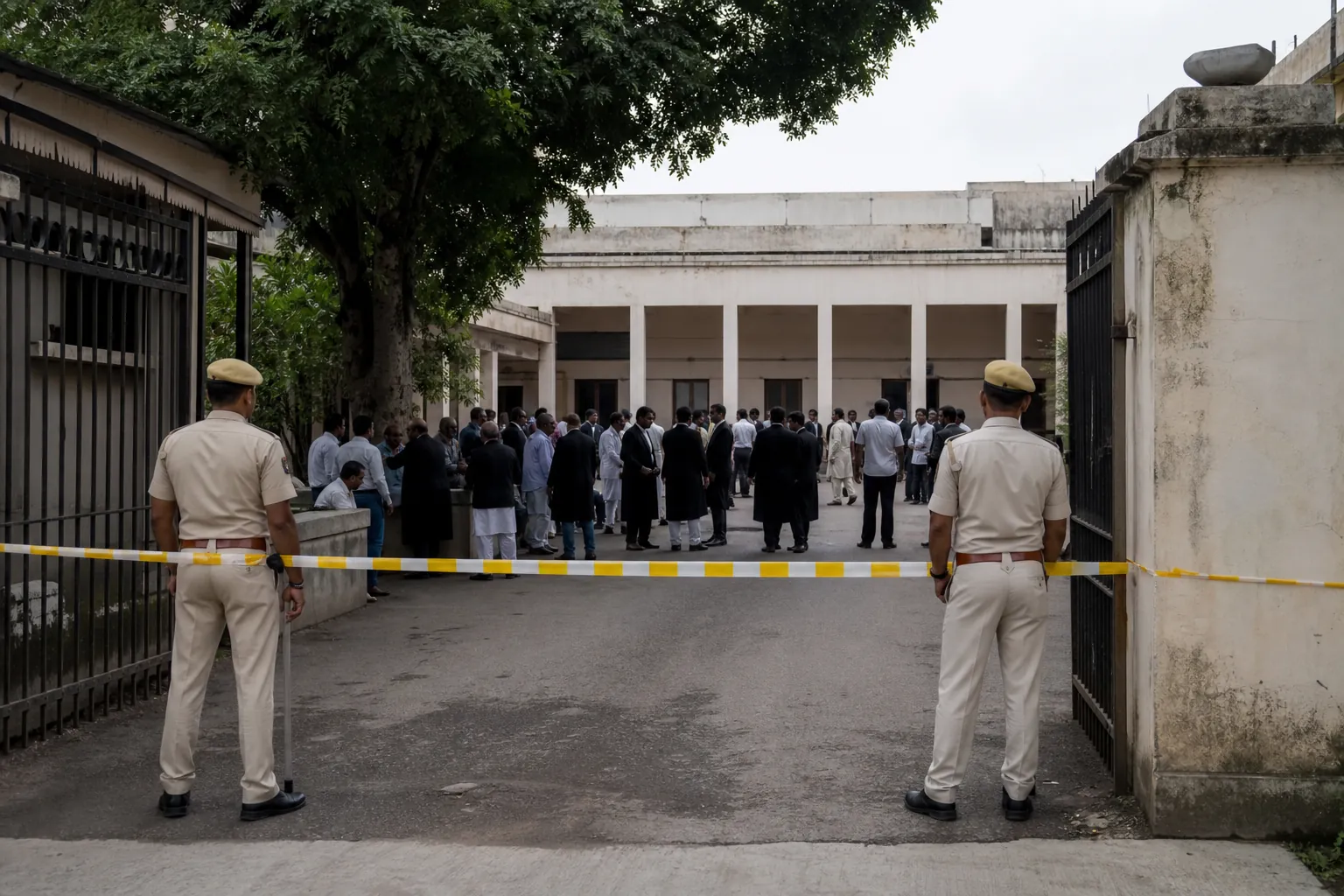
For anyone searching the Fatehabad court bomb threat Khalistan Haryana record, the usable event is narrower than the headline. On July 31, 2026, an email purportedly from “Khalistan” was reportedly received at about 9 a.m. on the official account of the Fatehabad Sessions Court, warning of blasts at the Fatehabad complex and also referring to courts across Haryana and Delhi and Parliament [1]. The court complex was evacuated. Judges, lawyers, litigants, and staff were moved out; bomb-disposal and dog squads were brought from Hisar; Superintendent of Police Nikita Khattar was on site; and a search lasting more than two hours found no explosives [1]. The complex reopened, and judicial work resumed in the afternoon [1].
That sequence matters more for counsel than the claimed sender identity. A hoax still stopped the ordinary work of a sessions court for part of the day. Hearings may have been delayed or adjourned, access to court staff may have been interrupted, and filing or mention work may have needed fresh confirmation. The immediate litigation-risk question is not whether the email’s political label was real; it is whether a matter listed that day moved, whether a filing step was missed or deferred, and whether the record needs a verified explanation for the disruption.
What can be treated as the Fatehabad event record
The operational facts supported by the anchor account are: an email was received on the Sessions Court’s official account; the premises were evacuated; police and specialist search teams responded; no explosives were found; the court reopened; and judicial work resumed in the afternoon [1]. Police were also reported to have launched an inquiry to trace the email’s origin [1].
| Point | Treatment in this record |
|---|---|
| Email received around 9 a.m. on July 31, 2026 | Reported operational fact from the press account [1] |
| Evacuation of judges, lawyers, litigants, and staff | Reported operational fact from the press account [1] |
| Bomb-disposal and dog squads rushed from Hisar | Reported operational fact from the press account [1] |
| SP Nikita Khattar on site | Reported named-official detail from the press account [1] |
| Search lasted more than two hours | Reported operational fact from the press account [1] |
| No explosives found | Reported search outcome from the press account [1] |
| Judicial work resumed in the afternoon | Reported operational fact from the press account [1] |
| Sender was “Khalistan” or linked to a Khalistan group | Claimed or purported identity; not verified in a public court or police record reviewed for this article |
| AI involvement | None reported for the Fatehabad email |
The same report described this as the second hoax affecting Fatehabad in roughly six months, after an earlier email concerning the mini-secretariat through the Deputy Commissioner’s office was also found to be a hoax [1]. That background supports a repeat-disruption concern. It does not, by itself, identify a sender or prove a common operator.

The Khalistan attribution remains a claim, not a finding
The careful wording is “purportedly from” or “claiming” a Khalistan identity. The available Fatehabad material does not establish that the email was sent by a particular organization, that a named group had operational involvement, or that the same sender was behind other threats. Police origin-tracing was reported, but no public result is available in the materials reviewed for this record [1].
This distinction is not cosmetic. A claimed sender identity can be part of the threat’s language while still being false, borrowed, automated, or deliberately misleading. For docket and hearing management, counsel do not need to adopt the attribution to act on the disruption. They need to preserve the fact that the courthouse day was interrupted and verify what happened to listed matters.
Counsel impact: the risk sits in adjournments, listings, and filing access
The Fatehabad report says judicial work resumed in the afternoon, which is a useful limiting fact [1]. It means the record should not be treated as proof that the entire working day was lost for every matter. It also does not prove that every listed case proceeded normally once the premises reopened. The correct working assumption for lawyers and KM teams is matter-by-matter verification.
- Check the cause list and any revised board or post-evacuation listing for July 31, 2026.
- Confirm whether the matter was taken up before evacuation, after reopening, or not taken up.
- If a deadline or filing step depended on physical court access, record the interruption and verify the registry position rather than relying on a news headline.
- For client reporting, separate “no explosive found” from “no procedural consequence.” The first concerns security outcome; the second must be checked from the case record.
- Where a matter has downstream dates, circulate only the verified listing consequence to the matter team.
This is the kind of incident that belongs in a Risk Digest file because the legal effect is usually indirect. The threat itself may be a hoax, but the evacuation can still create missed appearances, changed boards, client anxiety, and avoidable internal confusion if teams treat the headline as a substitute for registry verification.
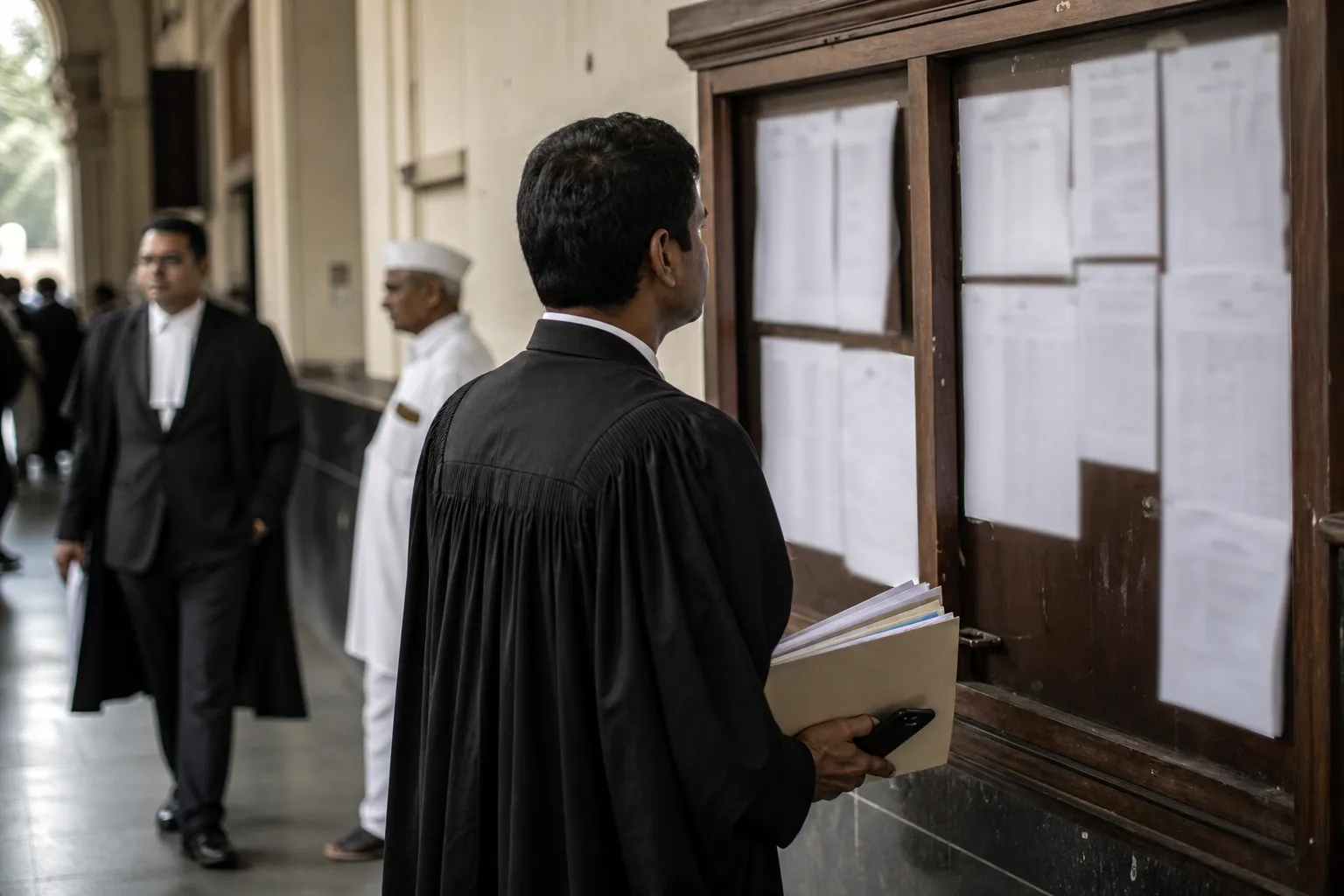
Same-day Haryana context without merging the records
Fatehabad was not the only Haryana court-related site reported in the July 31 threat wave. The Hindu reported that Gurugram’s District Court and Mini Secretariat received a bomb threat, with proceedings suspended and hearings postponed [2]. The Tribune separately reported a Gurugram threat email targeting the Deputy Commissioner’s office, courts, and a school, and said the email claimed the identity “Khalistan National Army” [3].
The Tribune account described further contents of that Gurugram email, including specific timings, a demand connected to withdrawal of FIRs, threats extending through August 5, and an instruction to circulate the message to media and judges [3]. Those details help explain why multiple public institutions treated the messages as operational threats. They do not convert the Fatehabad email into a confirmed “Khalistan National Army” act.
| Reported site | What is safe to carry forward |
|---|---|
| Fatehabad Sessions Court | Evacuated; searched; no explosives found; reopened; judicial work resumed in the afternoon [1] |
| Gurugram District Court and Mini Secretariat | Threat received; proceedings suspended and hearings postponed, as reported by The Hindu [2] |
| Gurugram DC office, courts, and school | Threat email reported by The Tribune; claimed “Khalistan National Army” identity and additional demands or threats remain reported contents of the email [3] |
| Haryana, Delhi courts, and Parliament mentioned in Fatehabad-linked reporting | Reported threat content, not proof that each named forum had the same verified operational disruption [1] |
For litigation teams, the comparison is useful only if it remains compartmentalized. Gurugram postponements do not establish Fatehabad adjournments in a specific case. Fatehabad reopening does not establish that Gurugram’s board recovered the same way. Each court’s registry record controls the matter consequence.
Repeat-wave background and attribution limits
The July 31 cluster sits against a broader pattern of email bomb threats reported across courts, schools, and government facilities in northern India. Hindustan Times reported bomb-threat emails affecting Chandigarh schools, the Haryana Secretariat, and the Ferozepur court [4]. ETV Bharat also reported bomb-threat emails triggering panic at courts and schools across multiple states [5]. This background supports a repeat-wave risk for courthouse operations; it does not supply a verified sender for the Fatehabad email.
Attribution may remain unresolved even when an email is available. A News18 explainer on bomb-hoax email investigations described the investigative difficulty created by VPN use, encrypted-mail services, and no-log infrastructure [6]. That is a general explanation of why origin-tracing may stall. It should not be read as a finding that those tools were used in the Fatehabad incident.
Arrest-count figures in this broader class of cases can vary across outlets. Unless a public police record, FIR, remand order, or court filing is available for the particular incident, those figures should stay in the “reported” column rather than being imported into a Fatehabad matter note.
No reported AI involvement in the Fatehabad email
No source reviewed for this Fatehabad record reports that an AI tool generated, translated, routed, or otherwise assisted the July 31, 2026 email. That should remain explicit because a separate Punjab and Haryana High Court bomb-threat report from April 2026 did involve a prima facie police/source assessment that the threat email was AI-generated or AI-translated [7]. The April High Court assessment is a different incident, not evidence about Fatehabad.
The Punjab and Haryana High Court also issued a separate April 2026 direction barring judicial officers from using AI tools to write judgments, which belongs in a Regulation & Ethics cross-reference rather than this Fatehabad threat record [8]. Teams handling adversarial or unverifiable digital content can use the site’s Verification Workflows group for process discipline, but the Fatehabad entry should not be reclassified as an AI incident on the present record.
Current takeaway for Haryana and Punjab matters
As of August 2, 2026, the Fatehabad record is a reported courthouse-disruption incident, not a court-confirmed attribution record. No explosive was found, no AI involvement has been reported for the Fatehabad email, and no verified sender identity is available in the materials reviewed. The practical risk that did occur was interruption of sessions-court work: evacuation, search, temporary loss of normal access, and afternoon resumption after clearance [1].
Counsel should therefore act on the court-work interruption and verify the case-specific consequence. The Khalistan label, same-day Haryana cluster, and broader threat-wave background should be carried as reported context unless later supported by a public police or court record.
References
- 'Khalistan' bomb threat triggers security scare at Fatehabad court, The Times of India
- Gurugram District Court, Mini Secretariat receive bomb threat, The Hindu
- bomb-threat email targets Gurugram DC office, courts, school, The Tribune
- Chandigarh schools, Haryana secretariat, Ferozepur court get bomb threat on email, Hindustan Times
- Bomb Threat Emails Trigger Panic At Courts And Schools Across Multiple States, ETV Bharat
- Bomb Hoax Email Trail: Why Most Investigations Do Not Lead To Sender Explained, News18
- Punjab and Haryana High Court Receives AI-Generated Bomb Threat Via Email, Lokmat Times
- Punjab and Haryana High Court bars judicial officers from using AI tools to write judgments, The Hindu
Related records
Tool profile
Browse tool evaluations →Governing regulation
Browse the obligations tracker →Preventive workflow
Browse verification workflows →
Report a correction or tip
Spotted an outdated figure, a misstated fact, or a ruling this case record should reflect? Public comments are disabled for this content given the professional cost of a misreported case outcome, penalty amount, or rule text — use the structured correction channel instead.
Report a correction or tip for this record →