
Who is suing Flock Safety over its license plate cameras
A docket-level snapshot of the active and recently resolved legal proceedings against Flock Safety and the agencies deploying its ALPR cameras, from a California AG enforcement action to a pending Fourth Circuit appeal. Each record includes court, docket number, ruling date, case status, and a last-verified stamp so litigators and counsel can check exposure before filing or advising.
- Jurisdiction
- US federal - Fourth Circuit
- Court
- U.S. District Court for the Eastern District of Virginia
- Judge
- Mark Davis
- AI tool named
- Flock Safety ALPR cameras
- Ruling date
- Jan 27, 2026
- Source document
- View primary court order ↗
- Last verified
- Aug 4, 2026
Lex Machina Review is an independent risk-tracking and reference resource. Nothing on this site is legal advice, and using it does not create an attorney-client relationship. Every record is reviewed against primary sources but may not reflect the most current status of a matter — always verify directly against the cited court order, rule text, or a licensed attorney before relying on it.
Companion explanation — secondary to the source document above
For anyone tracking litigation over Flock Safety license plate cameras, the practical Q3 2026 question is no longer abstract. The record now includes a pending Fourth Circuit appeal, a California Attorney General enforcement action, a California class-action track, a public-records settlement, and related criminal and procurement disputes. This is a litigation-risk record, not legal advice. Last verified against the source set below: August 4, 2026, UTC.
The procedural center is Schmidt v. Norfolk. Judge Mark Davis’s January 27, 2026 ruling in the Eastern District of Virginia held that Norfolk’s Flock ALPR deployment did not amount to a Fourth Amendment search on the record before him, but the appeal is now pending in the Fourth Circuit as No. 26-1227.[1][2] That appeal, rather than any vendor statement or advocacy tracker, is the place where the open constitutional question sits.
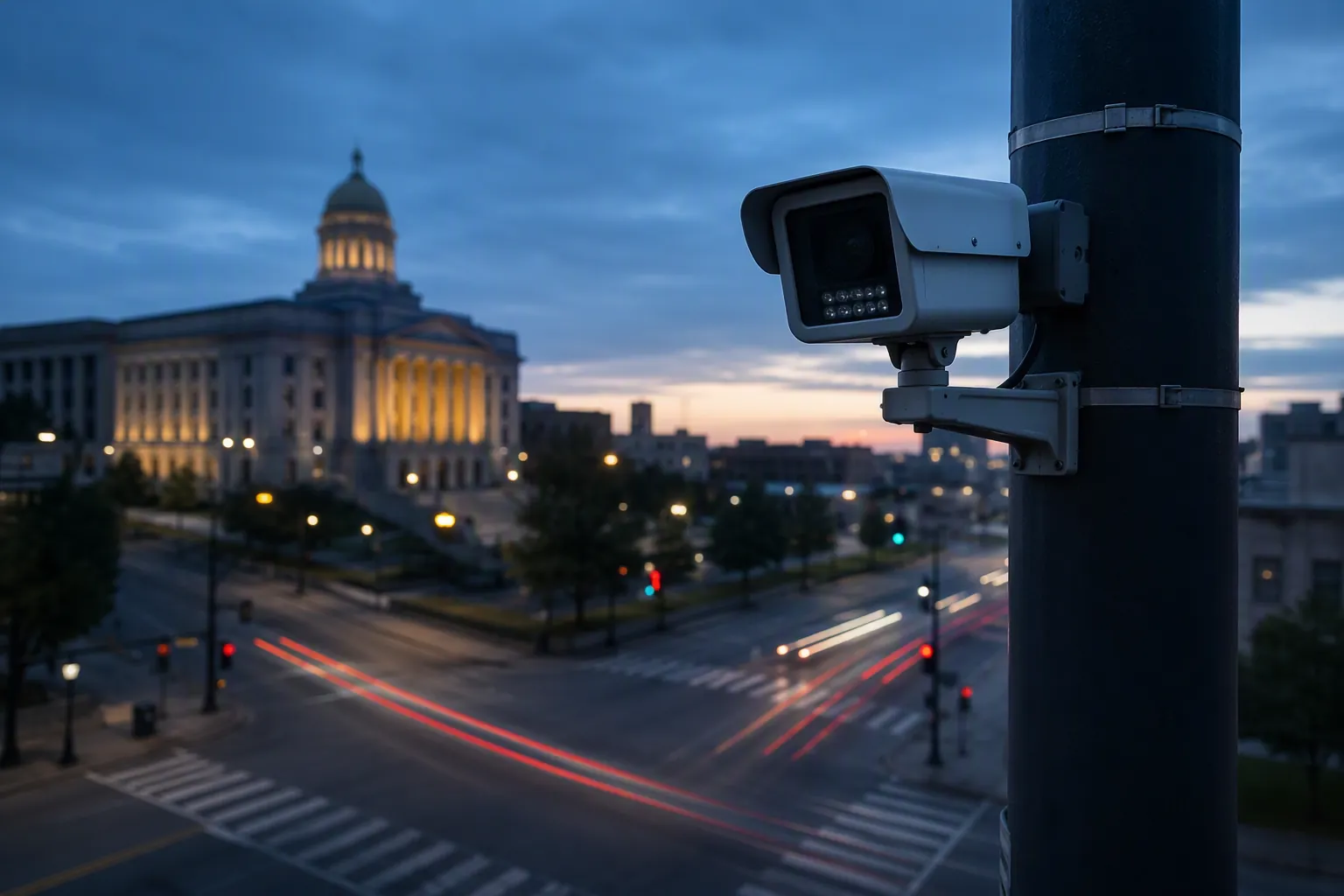
Docket snapshot: active and recently resolved Flock-related proceedings
| Matter | Forum / docket | Current posture | Source-status note |
|---|---|---|---|
| Schmidt v. Norfolk | E.D. Va., No. 2:24-cv-621; appeal pending, Fourth Cir., No. 26-1227 | District-court ruling entered Jan. 27, 2026; Fourth Circuit appeal pending; amicus briefs filed Apr. 20, 2026 by ACLU/ACLU-VA/EFF, EPIC, NCLA, NYU Policing Project, Cato, and 16 states plus D.C.[1][2] | Primary doctrinal record for whether a citywide ALPR network is a Fourth Amendment search. |
| People v. City of El Cajon | California state enforcement action; docket number not verified in reviewed source set | Filed Oct. 3, 2025 by California Attorney General Rob Bonta, alleging unlawful out-of-state ALPR data sharing.[3] | Government enforcement track; not a private damages suit. |
| Gibbs Mura class action against Flock Safety | Court and docket number not verified in reviewed source set | Amended complaint filed Apr. 3, 2026 alleging California privacy-law violations from sharing ALPR data with out-of-state and federal agencies.[4][5] | Private class-action track; pleaded damages theory should not be treated as an adjudicated damages amount. |
| SIREN v. San Jose | Federal suit; docket number not verified in reviewed source set | EFF/ACLU-NorCal suit filed Nov. 2025 alleging warrantless searches of ALPR data; EFF reports 3,965,519 queries between June 5, 2024 and June 17, 2025.[6] | Do not conflate with the separate Institute for Justice San Jose class action on behalf of three residents. |
| Commonwealth v. Church / Commonwealth v. Bell | Va. Ct. App., No. 0737-25-1 | Flock states the Virginia Court of Appeals reversed the Norfolk Circuit Court’s warrant-required ruling on Oct. 14, 2025.[7] | Company description only in the reviewed source set; the primary opinion PDF should be checked before quoting or characterizing the holding beyond that. |
| LAPD Flock contract lapse | Procurement / audit record, not a court case | Los Angeles allowed a three-year Flock contract signed in July 2023 to lapse in July 2026 after privacy and liability concerns around the program were reported.[8] | Audit figures should be verified directly from the Inspector General report before use. |
| Everett, Washington public-records settlement | Washington state public-records litigation; docket number not verified in reviewed source set | $25,000 settlement approved in June 2026 after state courts held Flock photos were public records.[9] | Records-retention and disclosure exposure, not a Fourth Amendment ruling. |
The snapshot is deliberately conservative. Several proceedings are named and procedurally important even though the reviewed materials do not supply a docket number. That is a reason to flag the gap, not to fill it with a plausible citation. It also matters that Flock is not the defendant in every record above. Some exposure runs through municipal deployment, state-law compliance, procurement renewal, or public-records obligations.
Schmidt is the constitutional case to watch
Schmidt carries the question that could alter how the remaining risk records are read: whether a citywide ALPR camera network, as deployed, is a Fourth Amendment search. Norfolk’s system involved 176 Flock cameras placed in 75 clusters, and Judge Davis held that the plaintiffs had standing to challenge image capture but not the city’s later warrantless queries.[2]
On the merits, the district court concluded that Norfolk’s use of the cameras was not a search. The opinion did not give cities a blank check. Judge Davis cautioned that “the constitutional balancing could conceivably tip the other way,” a sentence that now does real work because the Fourth Circuit has the issue in front of it.[2]
The amicus docket confirms why the appeal is not just another ALPR dispute. The ACLU, ACLU of Virginia, EFF, EPIC, NCLA, the NYU Policing Project, Cato, and a coalition of 16 states plus the District of Columbia filed amicus briefs on April 20, 2026.[1] That is the current source-backed reason to treat Schmidt as the law-shaping proceeding. It is not a reason to predict reversal or affirmance.
For litigators, the preservation point is narrow but important. Schmidt separated image capture, database querying, standing, and the Fourth Amendment search inquiry. A complaint or suppression motion that collapses those events into a single surveillance narrative may be easier to read, but it risks missing the procedural distinctions the district court already used.
California presents a different exposure mechanism
The California records should not be folded into Schmidt. They turn less on federal search doctrine and more on statutory privacy, data-sharing limits, and compliance with state rules governing ALPR information.
People v. City of El Cajon is the government-enforcement track. Attorney General Bonta filed the case on October 3, 2025, alleging that El Cajon systematically shared ALPR data out of state in violation of California law.[3] The named defendant in that enforcement record is the city, not Flock, but the proceeding still matters to Flock-facing procurement and indemnity review because it tests the compliance consequences of how agency users configure or share data.
The Gibbs Mura action is separate. The amended complaint filed April 3, 2026 alleges that Flock Safety violated California privacy law by sharing ALPR data with out-of-state and federal agencies.[4][5] The cited California Civil Code provision supplies a pleaded minimum-damages theory of $2,500 per violation, but that is a litigation-risk figure, not a judicial damages finding.[4]
SIREN v. San Jose belongs near the California cluster, but not inside either El Cajon or Gibbs Mura. EFF describes the November 2025 federal suit, brought with ACLU of Northern California, as challenging warrantless ALPR searches and reports 3,965,519 ALPR database queries between June 5, 2024 and June 17, 2025.[6] That query count is an advocacy-source figure; it is useful for orienting the scale alleged, but it should retain its provenance in any brief, memo, or complaint.
There is also a separate Institute for Justice San Jose class-action track on behalf of three residents. The reviewed source set flags that proceeding’s existence but does not provide a docket record sufficient to merge it into the SIREN discussion. Treating both San Jose matters as one case would be a preventable docket error.
Virginia criminal litigation is part of the same map, with a source caveat
Commonwealth v. Church, Va. Ct. App. No. 0737-25-1, is relevant because it sits near the same Virginia ALPR terrain as Schmidt and because it followed the Norfolk Circuit Court’s warrant-required ruling in Commonwealth v. Bell. In the reviewed materials, the available description comes from Flock’s own company blog, which states that the Virginia Court of Appeals reversed the lower-court ruling on October 14, 2025.[7]
Flock also says Bell was the only adverse LPR constitutionality decision in the country and asserts that two federal circuits, 20 federal district courts, and four state appellate courts have upheld LPR constitutionality.[7] Those are litigation-position statements from a company with an obvious interest in the issue. They may be directionally useful for issue-spotting, but they should not be repeated as a neutral national survey unless the underlying opinions are checked.
The immediate Virginia takeaway is therefore modest. Schmidt is the pending federal constitutional appeal. Church is a related state criminal-appellate marker. Bell remains important historically because it generated the reversed warrant-required ruling, but any precise statement about the Church holding should wait for the primary Virginia opinion PDF.
Audit and procurement risk: LAPD is not a merits ruling, but it matters
Los Angeles is not in this record because it produced a Fourth Amendment holding. It belongs here because a major agency allowed a Flock contract to lapse in July 2026 after reported privacy, accuracy, and liability concerns around the program.[8] For municipal counsel and vendor-facing clients, that is a different kind of exposure: renewal risk, audit risk, and the possibility that a procurement file will become the practical battleground before a court ever reaches a constitutional question.
The reviewed reports attribute specific false-flag numbers to an Inspector General audit, but this record does not reproduce those figures because the underlying IG report PDF was not part of the verified source set. That distinction is not cosmetic. Vendor accuracy claims, police-use narratives, and audited error findings are not interchangeable evidence. The same vendor-claim-versus-audit discipline appears in Lex Machina Review’s procurement work on Palantir due diligence, Microsoft MAI model-risk gaps, and SITA OptiFlight audit evidence.
Everett shifts the lens to public records
Everett, Washington adds a records-law problem that is easy to miss if every Flock discussion is forced into the Fourth Amendment frame. A $25,000 settlement was approved in June 2026 after Washington state courts held that Flock photos were public records.[9] That result does not decide whether a camera network is a search. It affects retention, disclosure, records management, and the agency’s ability to promise confidentiality around ALPR images.
The Everett record also reportedly prompted Washington SB 6002 exempting ALPR data from the Public Records Act.[9] For public-records counsel, that sequence matters: litigation first treated the images as records; legislation then altered the disclosure environment. A city evaluating a Flock renewal should not assume the answer travels cleanly from one state to another.
Adjacent legal-risk markers to keep on the renewal checklist
- Oregon SB 1516: signed March 31, 2026 and effective immediately, with a 30-day retention rule, sanctuary-law restrictions, a private right of action against vendors, and audit obligations reported in the reviewed materials.[10]
- Virginia HB 2724: effective July 1, 2025, with a 21-day retention period for ALPR data.[11]
- Senator Wyden agreement: announced July 25, 2025 as an agreement with Flock to protect Oregonians’ data from immigration- and abortion-related abuses.[12]
- 404 Media ICE report: relevant to federal-access concerns, but any precise immigration-query count should be rechecked against the full report or underlying records before use.[13]
- ACLU of Massachusetts contract investigation: useful for template-contract and cross-agency access review, with the usual caveat that advocacy compilations should be attributed as advocacy-source findings.[14]
- Brennan Center and Congressional Research Service materials: better treated as legal-status and policy background than as proof of what happened in any named Flock proceeding.[15][16]
Those adjacent materials are not substitutes for the named-proceeding record. They are the items counsel should have nearby when reviewing retention clauses, data-sharing permissions, audit rights, indemnity language, public-records treatment, and restrictions on immigration or reproductive-health-related access.
Where the exposure stands now
Flock’s legal exposure is now a named, checkable surface. It is not limited to one privacy complaint, one city contract, or one advocacy campaign. It spans federal constitutional litigation, California statutory enforcement, private class-action allegations, state criminal-appellate litigation, public-records treatment, and procurement fallout.
The next genuinely law-shaping answer is pending in Schmidt v. Norfolk at the Fourth Circuit. Until No. 26-1227 is resolved, the cleanest professional position is to separate what has actually been ruled from what has merely been alleged, reported, audited, promised, or advertised.
References
- Schmidt v. Norfolk, ACLU
- Judge holds Norfolk’s license plate reader use constitutional, Courthouse News Service
- Attorney General Bonta Sues El Cajon Illegally Sharing License Plate Data Out-of-State, California Department of Justice, Oct. 3, 2025
- Class-action lawsuit alleges Flock license plate readers violate CA law, privacy of residents, KTVU
- Flock Safety License Plate Reader Cameras Lawsuit, Gibbs Law Group
- EFF’s Investigations Expose Flock Safety’s Surveillance Abuses: 2025 in Review, Electronic Frontier Foundation, Dec. 2025
- Flock Applauds Virginia Court of Appeals Ruling Affirming Constitutionality of LPR Cameras, Flock Safety
- LAPD suspends use of Flock surveillance cameras over privacy issues, Los Angeles Times, July 11, 2026
- Everett settles Flock cameras records lawsuit, Snohomish County Tribune, June 10, 2026
- Oregon law regulating use of license plate data goes into effect: What to know, OregonLive, Apr. 2026
- HB2724ER, Virginia Legislative Information System
- Wyden Announces Agreement by License Plate Surveillance Tech Company to Protect Oregonians’ Data from Immigration and Abortion-Related Abuses, Senator Ron Wyden, July 25, 2025
- ICE Taps Into Nationwide AI-Enabled Camera Network, Data Shows, 404 Media
- Flock Gives Law Enforcement All Over the Country Access to Your Location, ACLU of Massachusetts, Oct. 7, 2025
- Automatic License Plate Readers: Legal Status and Policy Recommendations, Brennan Center for Justice
- CRS IF13068, Congressional Research Service
Related records
Tool profile
Browse tool evaluations →Governing regulation
Browse the obligations tracker →Preventive workflow
Browse verification workflows →
Report a correction or tip
Spotted an outdated figure, a misstated fact, or a ruling this case record should reflect? Public comments are disabled for this content given the professional cost of a misreported case outcome, penalty amount, or rule text — use the structured correction channel instead.
Report a correction or tip for this record →