
How to file your Google Assistant $68M claim today
Today, August 27, 2026, is the filing deadline for the Google Assistant $68 million privacy settlement. Learn whether you qualify under either class, how to submit a valid online or postmarked-by-today mail claim through administrator A.B. Data, and why final payouts remain points-based estimates until the October 1, 2026 court hearing.
- Jurisdiction
- US federal
- Court
- U.S. District Court for the Northern District of California
- AI tool named
- Google Assistant
- Ruling date
- Jan 23, 2026
- Source document
- View primary court order ↗
- Last verified
- Aug 27, 2026
Lex Machina Review is an independent risk-tracking and reference resource. Nothing on this site is legal advice, and using it does not create an attorney-client relationship. Every record is reviewed against primary sources but may not reflect the most current status of a matter — always verify directly against the cited court order, rule text, or a licensed attorney before relying on it.
Companion explanation — secondary to the source document above
Verified against the court-authorized settlement website and claim form on August 27, 2026 (UTC). Today is the filing deadline. An online claim must be submitted through googleassistantprivacylitigation.com by August 27, 2026, or a paper claim must be postmarked by today. The official materials do not specify an exact online cutoff hour, so do not assume the form will remain available until 11:59 p.m. in your time zone.[1][2]
This article provides general information, not legal advice. If eligibility is uncertain or filing could affect your legal rights, consult a qualified attorney promptly.
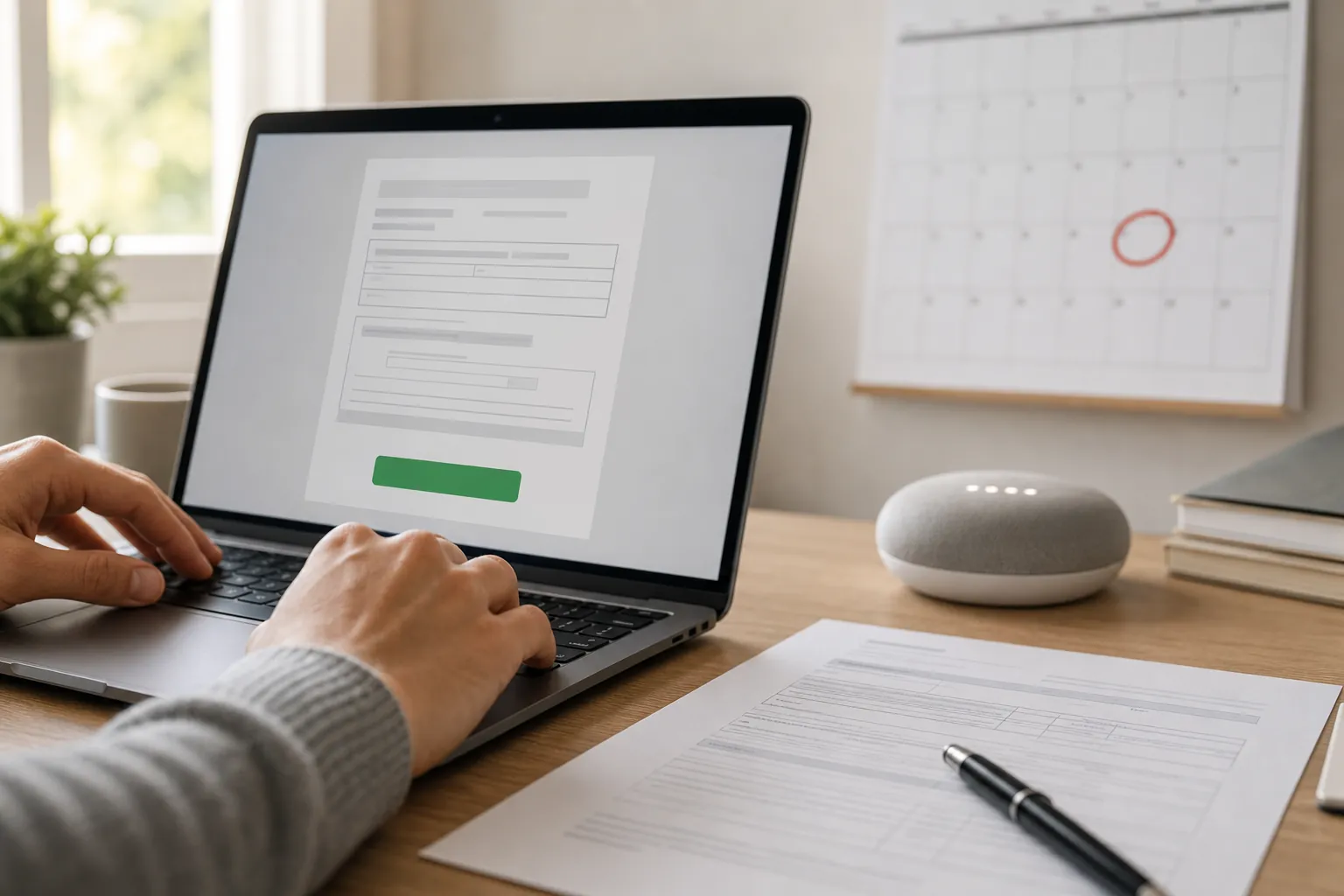
File today: two routes, one authorized administrator
The settlement administrator is A.B. Data, Ltd. The court-authorized domain is googleassistantprivacylitigation.com, and the official toll-free number is 1-877-411-4704. These are identity checks: a search result, social-media advertisement, claims aggregator, or similarly named website is not a substitute for the administrator’s site.[1]
- Online: Open the administrator’s official website, follow its claim link, complete the form, certify it, and submit it today. Save the confirmation page, confirmation number, and any email receipt.
- By mail: Complete the official claim-form PDF and send it to Google Assistant Privacy Litigation, c/o A.B. Data, Ltd., P.O. Box 170500, Milwaukee, WI 53217. The envelope must be postmarked August 27, 2026.[2]
If mailing, handing the envelope to a postal clerk and requesting evidence of acceptance is safer than leaving it in a collection box after the day’s final pickup. Keep a complete copy of the signed form, supporting material, envelope, and mailing receipt.
Do not call the court about the claim. The official materials direct claimants to the administrator, and they prohibit bulk or aggregator submissions. Submit your own claim through the authorized channel rather than giving personal or payment information to a third-party filing service.[1][2]
Check whether you belong to either class
The settlement uses two class definitions, with different ways of establishing a claim. Read the exact definitions and certifications on the official form before signing; owning a Google product by itself does not establish every type of claim.
Purchaser class
The purchaser-class route concerns covered Google Assistant-enabled devices purchased during the class period of May 18, 2016 through March 19, 2026. Reported covered products include Google Home, Google Home Mini, Google Home Max, Nest Hub, Nest Hub Max, and Pixel smartphones.[2][3]
A purchaser-class claim requires proof of purchase. Before starting, gather documentation connecting you to each device claimed, then compare it with the form’s instructions. Do not claim a device merely because it was used in your household if you cannot truthfully make the required purchaser certification and provide the required proof.
Privacy class
The privacy-class route concerns people asserting that Google Assistant activated and recorded or captured conversations without the intended hot-word prompt during the same class period. Instead of requiring purchaser proof for this part of the claim, the form requires the claimant to make the applicable attestation under penalty of perjury.[2][3]
That distinction matters. A receipt or device record supports a purchaser claim; it does not automatically prove that an unintended activation occurred. Conversely, the privacy-class attestation is a sworn certification, not a box to select because a claimant suspects that smart speakers sometimes activate unexpectedly. Answer only what the form asks and only as you can truthfully certify it.
A claimant who satisfies both definitions may claim under both, subject to the settlement’s combined points cap. If you qualify only under one definition, complete only that portion. The form—not an unofficial eligibility quiz—controls the language you will be asked to certify.
Complete the form without mixing the proof standards
Have the following ready before opening the online form or filling out the PDF:
- Your current contact information, entered consistently throughout the form.
- The type and number of covered devices you purchased and intend to claim.
- Proof of purchase for each purchaser-class device, in the form accepted by the official instructions.
- Enough information to decide whether you can truthfully make the privacy-class attestation under penalty of perjury.
- A payment method you can still access when distributions occur.
Work from the official form in one sitting if possible, but do not rush past the certifications. Check device counts against your supporting records, verify your email and mailing address, and review any uploaded files before submission. A confirmation screen is evidence that a form was transmitted; an unfinished browser page is not.
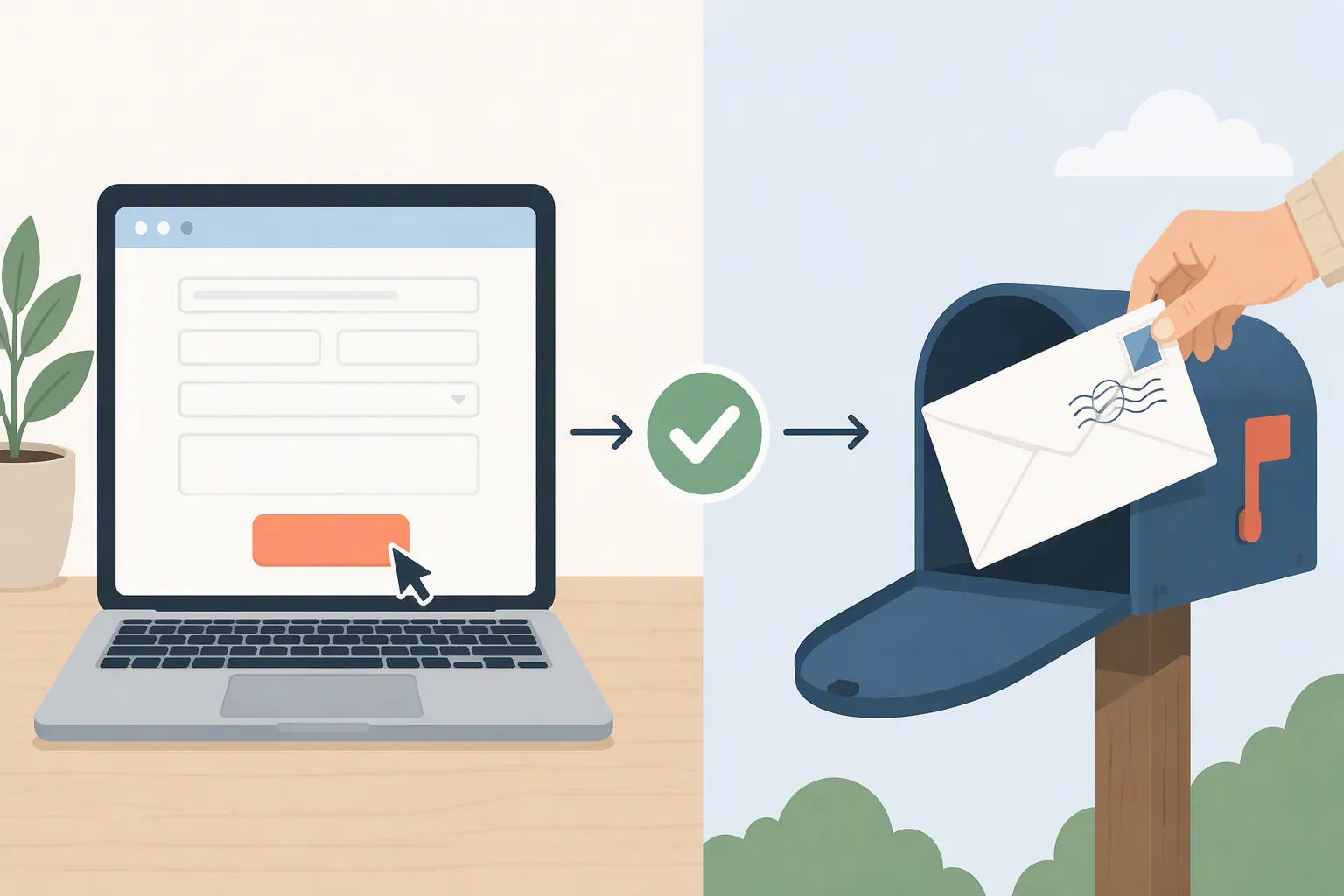
Selecting a payment method
Reported payment options include ACH, Zelle, PayPal, Venmo, and a paper check.[4] Use the options actually displayed by the authorized form, because a secondary settlement tracker cannot override the form. Select a method tied to an account you expect to retain, and carefully verify the email address, phone number, bank details, or mailing address associated with it.
Electronic payment may avoid a check being sent to an old address, but it is useful only if the destination details are correct and the account remains active. If you select a check, use a stable mailing address and monitor future administrator notices for any address-update procedure.
Final review before submission
- Confirm that you are on googleassistantprivacylitigation.com or using the PDF hosted on that domain.
- Check which class—or both classes—you are claiming under.
- Match each purchaser-class device to the required proof of purchase.
- Read the privacy-class attestation and penalty-of-perjury language before certifying it.
- Verify contact and payment details.
- Submit online today and save confirmation, or obtain an August 27 postmark for the mailed form.
The $68 million fund is not a promised personal payout
The settlement uses points rather than assigning every claimant a fixed dollar amount. An eligible device is worth four points, with purchaser-class device points capped at 12. A qualifying privacy-class claim is worth one point. A claimant qualifying under both classes can therefore receive no more than 13 points.[2]
| Claim basis | Points | Cap |
|---|---|---|
| One eligible purchaser-class device | 4 | Purchaser-class total capped at 12 points |
| Two eligible purchaser-class devices | 8 | Purchaser-class total capped at 12 points |
| Three or more eligible purchaser-class devices | 12 | Additional devices do not increase the purchaser-class points |
| Qualifying privacy-class claim | 1 | One privacy-class point |
| Both classes | Purchaser points plus 1 privacy point | 13 points combined |
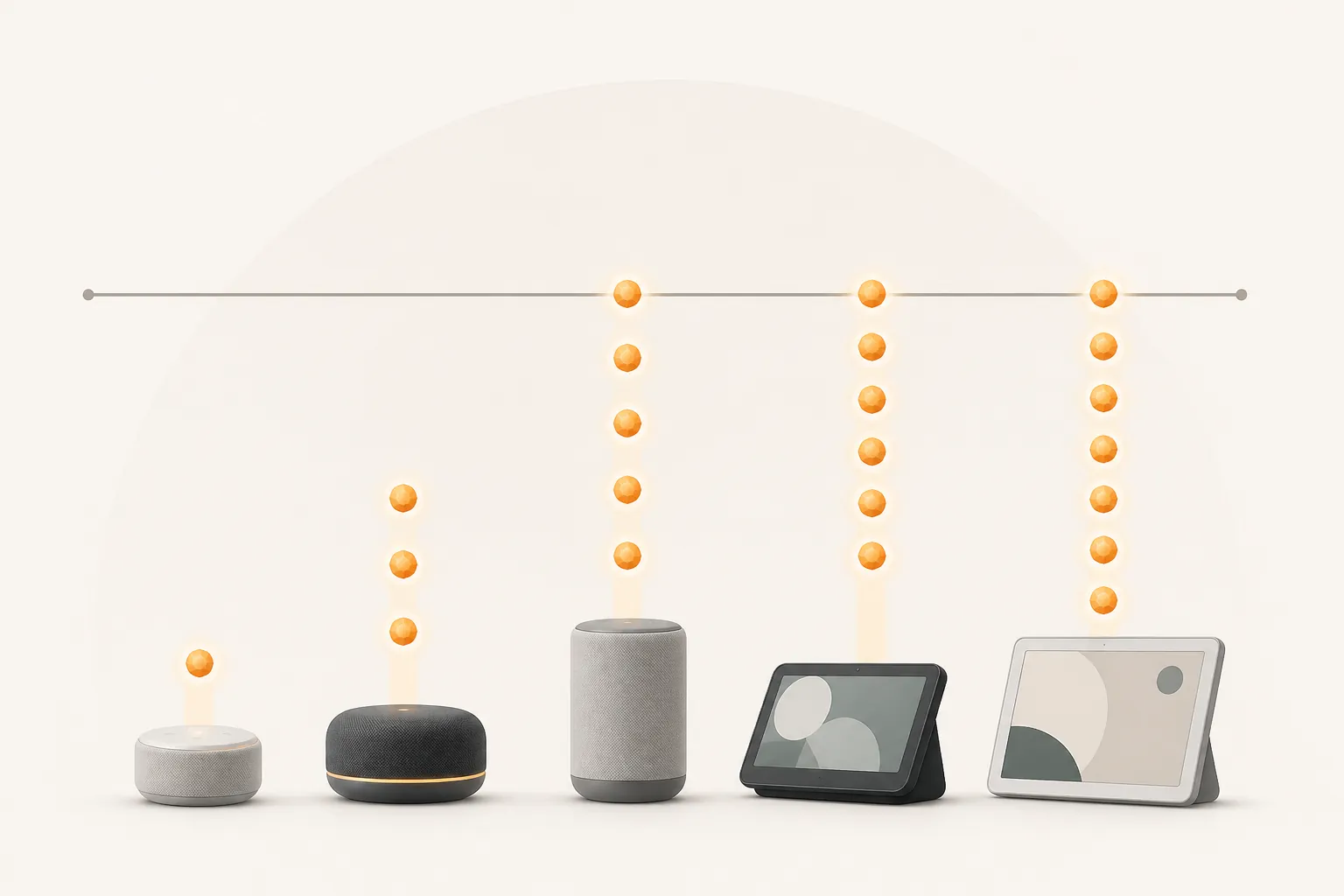
The eventual value of a point depends on the amount available for distribution and the total number of valid points approved across all claimants. That is what pro rata distribution means here: a larger pool of approved claims reduces the amount represented by each point, while a smaller pool increases it, subject to the settlement terms and the court’s orders.
One third-party tracker estimates that approximately $43.92 million could remain for class members after fees, expenses, and service awards.[5] That is an estimate of a net pool, not an official personal-payment calculation. Another tracker reports a possible attorney-fee request of up to $22,666,667.[4] Until the court resolves approval and related requests, using either figure to announce a precise check amount would create certainty the record does not provide.
For illustration only, a claimant with one approved device claim would have four points, while someone with three approved devices and a qualifying privacy claim would have 13. The second claimant would have more than three times as many points, but neither claimant can convert those points into dollars today because the total approved point pool is unknown.
Why the Siri settlement is only a rough comparison
Reports about payments from Apple’s separate $95 million Siri settlement offer limited perspective, not a forecast. WGN-TV cited anecdotal Reddit reports of roughly $8 per device, including one reported payment of $40.10 for five devices.[6] Those are self-reported user figures from a different settlement with its own claimant pool and distribution terms; they are neither independently verified payment data for every claimant nor evidence of what a Google Assistant point will be worth.
What happens after a claim is filed
The litigation alleged that Google Assistant recorded users after unintended activations. The settlement was reported after a court document was filed on January 23, 2026, in federal court in San Jose.[7] A settlement resolves disputed litigation through agreed terms; the filing deadline does not itself determine that every submitted claim is valid or establish the amount any claimant will receive.
A settlement tracker identifies class counsel as Erin Green Comite of Scott+Scott and Christian Levis of Lowey Dannenberg.[5] Those case details matter to the legal record, but they do not change today’s claimant task: use the authorized administrator, satisfy the applicable proof or attestation requirement, and retain evidence of timely submission.
The final fairness hearing is scheduled for October 1, 2026 at 9:00 a.m. Pacific Time in San Jose.[5] The court will consider final approval and related matters. Processing and distribution depend on what happens after that hearing, so a timely claim is not a promise of immediate payment.
Filing correctly and on time is the part within a claimant’s control. Final approval, the number of valid claims, and the dollar value assigned to each point are not yet known.
References
- Google Assistant Privacy Litigation — A.B. Data, Ltd.
- In re Google Assistant Claim Form — A.B. Data, Ltd.
- Who qualifies for $68M settlement over Google Assistant? — WGN-TV / Nexstar
- Google Assistant Privacy Litigation — ClaimDepot, August 26, 2026
- Google Assistant Privacy Settlement — Dapeer Law
- Payments from $95M Siri settlements going out: How big are they? — WGN-TV / Nexstar
- Google settles for $68 million after lawsuit claimed it secretly recorded users — The Hill / Nexstar
Related records
Tool profile
Browse tool evaluations →Governing regulation
Browse the obligations tracker →Preventive workflow
Browse verification workflows →
Report a correction or tip
Spotted an outdated figure, a misstated fact, or a ruling this case record should reflect? Public comments are disabled for this content given the professional cost of a misreported case outcome, penalty amount, or rule text — use the structured correction channel instead.
Report a correction or tip for this record →