
Heinecke v. NCAA lawsuit details and current status
A primary-source-linked case record of Heinecke v. NCAA: the parties, claims, key rulings, and the procedural timeline from the March 23, 2026 filing through the July 2026 journal-entry dispute, with docket links for verification. It clarifies the case's live status — the preliminary injunction remains in force and the NCAA's appeal is stalled — as of August 1, 2026.
- Jurisdiction
- Oklahoma, USA
- Court
- District Court of Cleveland County, Oklahoma
- Judge
- Thad Balkman
- AI tool named
- none
- Ruling date
- Apr 17, 2026
- Source document
- View primary court order ↗
- Last verified
- Aug 1, 2026
Lex Machina Review is an independent risk-tracking and reference resource. Nothing on this site is legal advice, and using it does not create an attorney-client relationship. Every record is reviewed against primary sources but may not reflect the most current status of a matter — always verify directly against the cited court order, rule text, or a licensed attorney before relying on it.
Companion explanation — secondary to the source document above
For anyone checking Heinecke v. NCAA lawsuit details today, the operative answer is narrow: the Cleveland County preliminary injunction remains in place, the NCAA has noticed an appeal, and the appeal has not moved forward because the final journal-entry problem has not been cured. The trial docket is on OSCN as Heinecke v. NCAA, Case No. CV-2026-743; the appellate docket is NCAA v. Heinecke, Case No. 124021; and the April 17 preliminary-injunction order is available as a PDF copy of the order.[1][2][3]
| Item | Current case record |
|---|---|
| Trial court | District Court of Cleveland County, Oklahoma [1] |
| Trial case number | CV-2026-743 [1] |
| Assigned judge | Judge Thad Balkman [1] |
| Trial filing date | March 23, 2026 [1] |
| Appellate case | NCAA v. Heinecke, Oklahoma Supreme Court Case No. 124021 [2] |
| Key order now governing eligibility | April 17, 2026 preliminary-injunction order [3] |
| Last status checked for this article | August 1, 2026 |
| Practical status | No final journal entry has been filed; hearing continued to September 2026; injunction remains operative pending a new ruling [6] |

What the dispute is actually about
Owen Heinecke is an Oklahoma football player whose NCAA eligibility dispute traces back to a short Ohio State lacrosse stint during the 2021–22 academic-year frame. The date description is not perfectly uniform across public accounts: McAfee & Taft, trial counsel for Heinecke, describes the lacrosse appearances as occurring in spring 2022, while other sports-law and sports-news accounts describe them as part of the 2021 season. The safe formulation is that the challenged NCAA eligibility treatment arose from three Ohio State lacrosse games in the 2021–22 academic-year period.[4][5]
Those three appearances mattered because the NCAA treated them as triggering the five-year clock under NCAA Bylaw 12.6. Heinecke’s position, as reported in the injunction materials and counsel account, is that roughly 15 minutes of lacrosse should not consume a full season of eligibility in the circumstances presented. Oklahoma sought a blanket waiver on December 31, 2025; the NCAA denied that request on January 28, 2026; and the appeal of that waiver denial was denied on February 19, 2026.[4][5]
The verified center of the case is not a broad judicial rewriting of NCAA eligibility rules. The theories that can be stated most securely from the available injunction record are breach of contract, framed through third-party-beneficiary status, and arbitrary or capricious application of NCAA rules. Some early coverage used antitrust language, but the injunction fight described in the available record is doing its work through contract and arbitrariness, not through a merits ruling on an antitrust theory.[4][5]
The April injunction: a real order, not a final merits win
The preliminary-injunction hearing occurred on April 16, 2026. Hearing accounts describe a record that was not evenly built on both sides: 171 pages of Oklahoma medical records, testimony from Oklahoma head coach Brent Venables, surgeon Dr. Richard Nagy, and Oklahoma compliance director Brady Newville, and no witnesses called by the NCAA despite witness-list filings. Newville also reportedly testified that an October 2025 NCAA waiver involving Nalani Lyde/Kaysia was not in the NCAA’s reference system.[4][5]
That hearing record explains why the injunction matters in human terms. While the docket fight continues, the difference between an injunction and no injunction is the difference between eligibility now and a lost season that cannot be restored by a later appellate clarification. It is hard to read the reported record without noticing the asymmetry: a player trying to preserve a finite playing window, a university submitting medical and compliance evidence, and the NCAA electing not to put on witnesses at the hearing described in the public accounts.[4][5]
But the written order is much narrower than many retellings make it sound. The April 17 order is a terse five-line preliminary-injunction order. It states that Heinecke satisfied the four-factor test for temporary injunctive relief by clear and convincing evidence, and it grants the preliminary injunction. It does not itself spell out a detailed analysis of the NCAA’s totality-of-the-circumstances review, good-faith treatment, or irreparable harm.[3]
Those fuller findings come from hearing accounts, not from the face of the written order. McAfee & Taft and Sports Litigation Alert report that Judge Balkman found the NCAA failed to consider the totality of Heinecke’s circumstances, that Heinecke was not treated in good faith, and that he would suffer irreparable harm without relief. Those are important reported bench findings. They are not the same thing as a final judgment, and they should not be cited as if the Oklahoma appellate courts have already adopted them.[4][5]
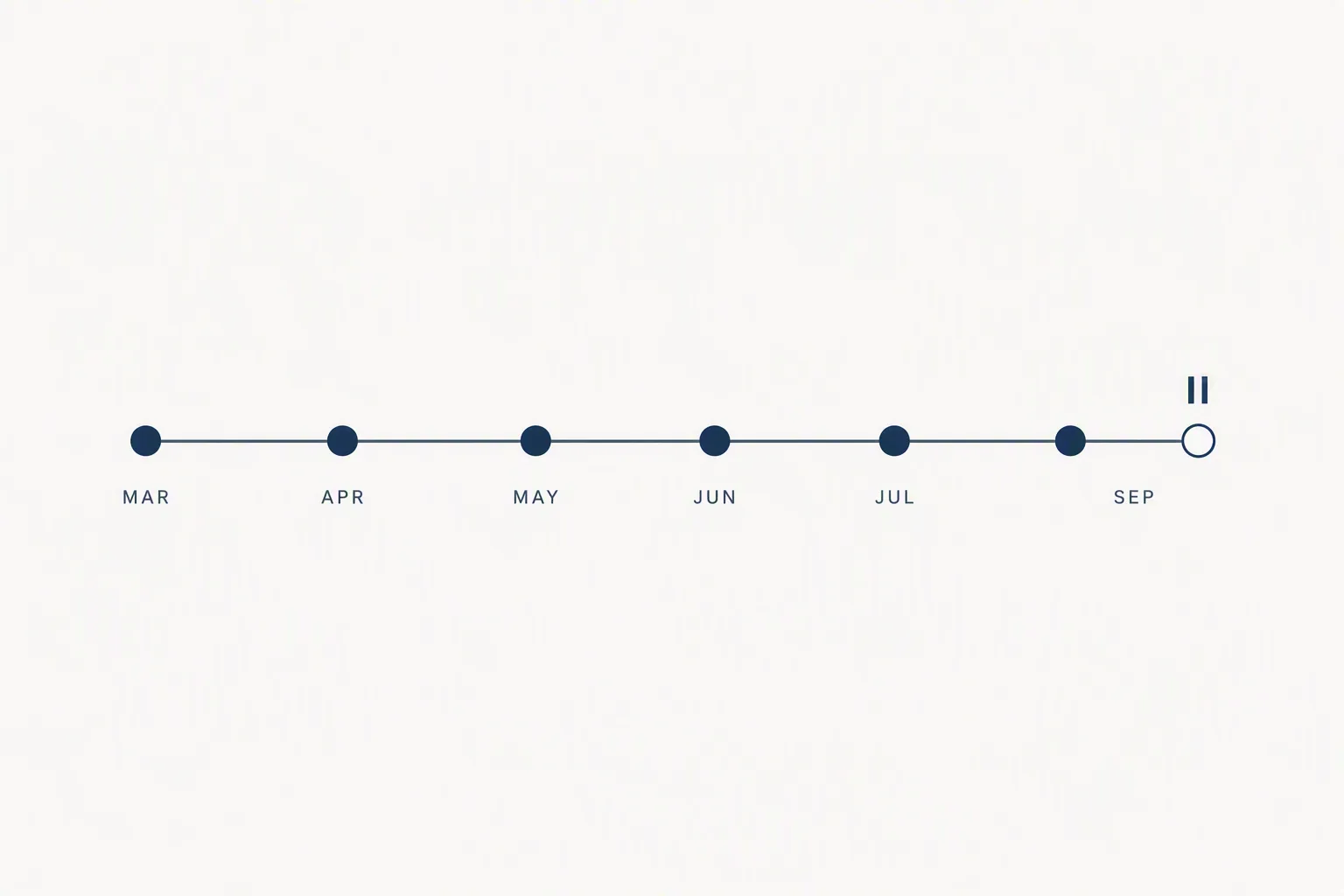
Procedural timeline through the stalled appeal
| Date | Event | Why it matters |
|---|---|---|
| March 23, 2026 | Heinecke filed Case No. CV-2026-743 in Cleveland County District Court; the case was assigned to Judge Thad Balkman. [1] | This is the trial-court case that produced the eligibility injunction. |
| April 16, 2026 | Judge Balkman granted preliminary injunctive relief from the bench after the injunction hearing. [4][5] | The bench ruling is where the fuller reported reasoning appears. |
| April 17, 2026 | The court entered a short written preliminary-injunction order. [3] | This order is operative, but its text is limited. |
| April 24, 2026 | The NCAA filed an appeal in Oklahoma Supreme Court Case No. 124021. [2] | This started the appellate track, but did not end the injunction. |
| April 27, 2026 | Chief Justice Rowe directed the NCAA to file an amended petition by May 11 attaching a memorialized certified copy of the order and denied fast-track treatment. [2] | The appellate court identified a problem with appealability and certification. |
| May 2026 | Heinecke argued the appeal was premature. [2] | The fight shifted from eligibility merits to whether there was a proper appealable order. |
| June 8, 2026 | The NCAA filed journal-entry materials that later became part of the redline dispute. [6] | The parties still had not produced the final journal entry needed to cleanly move the appeal. |
| July 23, 2026 | Heinecke’s side criticized the June 8 filing as attaching two copies of the same document rather than a proper redline. [6] | This is the sort of clerical-looking dispute that can control appellate timing. |
| July 28, 2026 | The NCAA filed a notice of errata. [6] | The journal-entry problem remained live. |
| July 29, 2026 | The hearing was continued to September 2026. [6] | As of August 1, no final journal entry had been filed, and the injunction remained in effect. |
March 23 to April 17: the trial court acts quickly
The case moved from filing to injunction in less than a month. That speed is not surprising in an eligibility case. If the player’s requested relief is the ability to participate in a season, ordinary civil-litigation pacing can itself decide the dispute. The March 23 filing put the case in Cleveland County District Court, and the April 16 hearing put the immediate eligibility question before Judge Balkman before the season window could be consumed by briefing alone.[1][4][5]
The April 17 written order should be read as what it is: the court’s operative grant of preliminary relief. It is enough to keep Heinecke eligible while the case continues. It is not a detailed opinion, and it does not convert every reported bench statement into a formally memorialized appellate holding.[3]
April 24 to April 27: the NCAA appeals, but the appellate court flags the paper problem
The NCAA filed its appeal on April 24, 2026, creating Oklahoma Supreme Court Case No. 124021. Three days later, Chief Justice Rowe entered an order directing the NCAA to file an amended petition by May 11 with a memorialized certified copy of the order. The April 27 order treated the April 17 order as “not a memorialized appealable interlocutory order” and denied the NCAA’s fast-track motion.[2]
That is not a footnote. In this posture, the NCAA’s complaint about the injunction cannot simply leap to full appellate review unless the appellate record contains the correct appealable order. Heinecke’s premature-appeal argument fits that same lane: before the Oklahoma Supreme Court reaches what the trial judge did or did not properly decide, the parties must first get the appeal into a procedurally reviewable form.[2]
June and July: the journal entry becomes the case’s choke point
By June and July, the public status of the case had become less about NCAA eligibility theory and more about journal-entry mechanics. The NCAA’s June 8 filing reportedly attached two copies of the same document rather than the proper redline version, a problem Heinecke’s side called out in a July 23 reply. The NCAA then filed a July 28 notice of errata, and on July 29 the hearing was continued to September 2026.[6]
What the injunction presently lets Heinecke do
As of August 1, 2026, the practical effect is straightforward: the preliminary injunction remains in force, so Heinecke is eligible to practice and play unless and until a later order changes that status. The NCAA has not lost the whole case on the merits. Heinecke has not obtained a final declaration that the NCAA’s five-year clock can never be applied this way. The current order preserves his eligibility while the litigation remains live.[3][6]
That distinction matters for compliance offices and reporters. If the question is whether Oklahoma may treat Heinecke as eligible right now, the answer follows from the operative injunction. If the question is whether Heinecke has created settled precedent against the NCAA’s clock rule, the answer is no. The appellate docket has not produced that kind of merits resolution.[2][3][6]
What to verify before citing the case
Start with the docket, not with a headline. The Cleveland County docket verifies the trial-court case number, assignment, and filings; the Oklahoma Supreme Court docket verifies the appellate case and appellate orders; the April 17 PDF verifies the actual written injunction text. The fuller bench reasoning should be attributed to hearing accounts unless and until a final journal entry or transcript supplies the same detail in the court record.[1][2][3][4][5]
- Do not cite the April 17 written order for detailed findings it does not contain.
- Do not treat the NCAA’s appeal notice as proof that appellate review is already proceeding on the merits.
- Do not flatten the 2021 versus spring 2022 lacrosse-date ambiguity; the safer description is the 2021–22 academic-year frame.
- Do not describe the case as an antitrust ruling when the verified injunction record centers on contract and arbitrary-or-capricious treatment.
- Do not assume the July status remains current without rechecking OSCN.
The clean status sentence, as of August 1, 2026, is this: no final journal entry has been filed, the hearing has been continued to September 2026, the preliminary injunction remains operative, and the NCAA’s appeal remains stalled until the record contains the appealable order the Oklahoma Supreme Court required. Re-check the OSCN trial and appellate dockets before relying on that posture, because this is exactly the kind of case that can change with one entry.[1][2][6]
References
- OSCN docket, Heinecke v. NCAA, Case No. CV-2026-743 (Cleveland County) — OSCN
- OSCN docket, NCAA v. Heinecke, Case No. 124021 (Oklahoma Supreme Court) — OSCN
- Preliminary Injunction Order — April 17, 2026
- OU linebacker Owen Heinecke scores big win against NCAA — McAfee & Taft
- In Pivotal Case, Oklahoma Linebacker Overcomes NCAA Opposition To Win Injunction To Play In 2026 — Sports Litigation Alert
- Latest appeal status as of July 29-30, 2026 — On3/Sooner Scoop
Related records
Tool profile
Browse tool evaluations →Governing regulation
Browse the obligations tracker →Preventive workflow
Browse verification workflows →
Report a correction or tip
Spotted an outdated figure, a misstated fact, or a ruling this case record should reflect? Public comments are disabled for this content given the professional cost of a misreported case outcome, penalty amount, or rule text — use the structured correction channel instead.
Report a correction or tip for this record →