
Why Josh Heupel's Carter suspension response is different
Josh Heupel's July 29 statement on Arion Carter's NCAA suspension went beyond standard coach disappointment, calling the penalty 'wrong' and detailing a timeline that he argued shows Carter acted ethically. This article examines why that response signals a shift in the coach-NCAA relationship and what it means for future enforcement.
- Jurisdiction
- United States
- Court
- NCAA
- AI tool named
- None
- Ruling date
- Jul 29, 2026
- Source document
- View primary court order ↗
- Last verified
- Jul 30, 2026
Lex Machina Review is an independent risk-tracking and reference resource. Nothing on this site is legal advice, and using it does not create an attorney-client relationship. Every record is reviewed against primary sources but may not reflect the most current status of a matter — always verify directly against the cited court order, rule text, or a licensed attorney before relying on it.
Companion explanation — secondary to the source document above
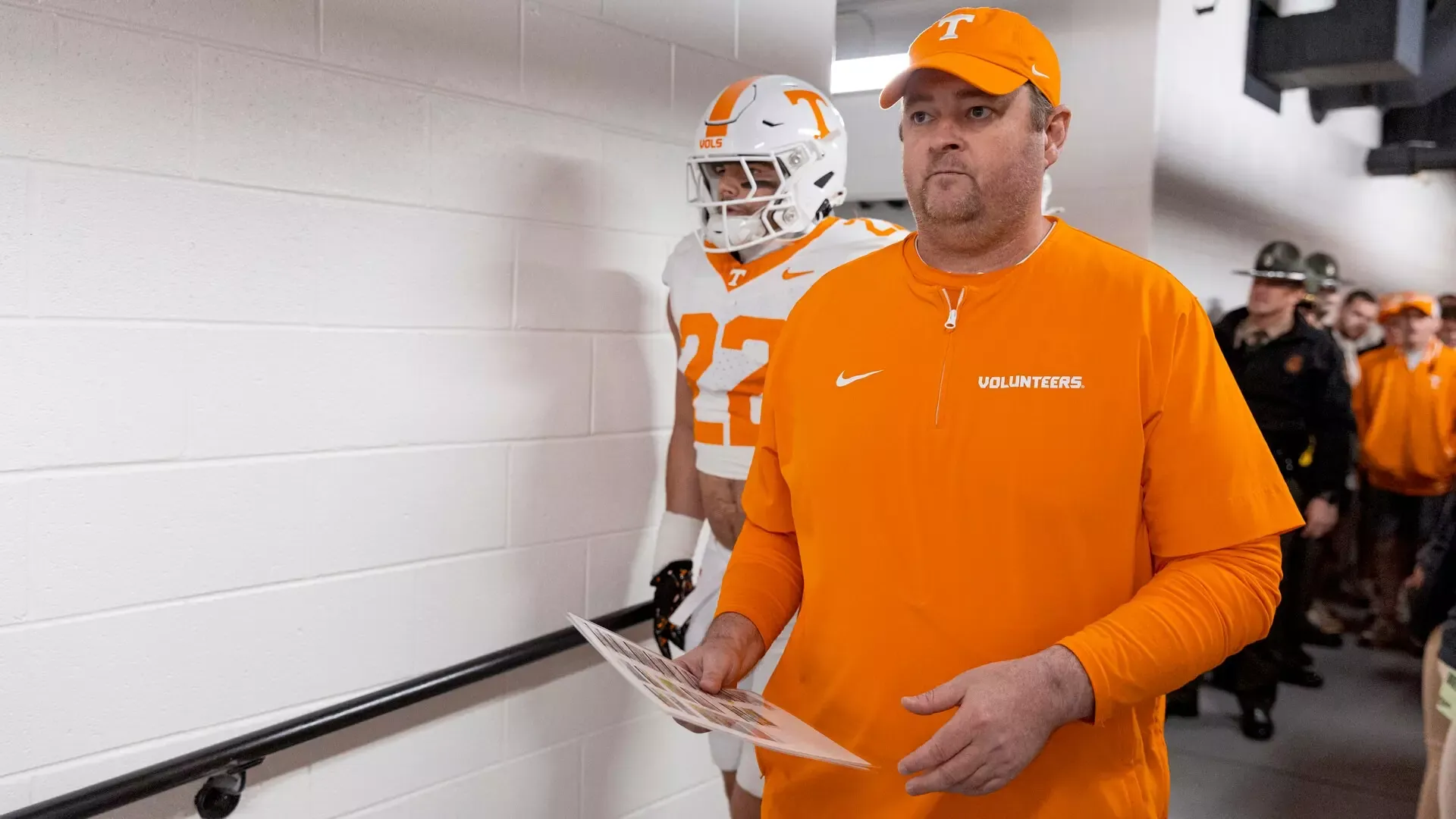
Josh Heupel did not dress up his July 29 response in the usual coach language. He did not stop at disappointment, process, or respect for the ruling. In his reaction to the NCAA suspension of Volunteer linebacker Arion Carter, Heupel called the decision “wrong” and then built the rest of his statement around a sequence of facts meant to show that Carter had already corrected the problem before the NCAA ever reached him. [1]
That is the departure. Coaches complain about availability all the time. They object to timing, precedent, consistency, and the invisible hand of the NCAA. Heupel’s statement went somewhere more specific: it argued that the punishment was disconnected from the conduct. The known benefit was a $427.48 flight connected to a professional representation agreement after Carter had declared for the NFL draft, and the part Heupel clearly wanted foregrounded was that Carter repaid it in full before NCAA contact. [1]
The distinction matters because this is not cleanly a generic NIL fight. Carter did not merely interact with a marketing representative in the new college-athlete economy. He signed with an agent for professional representation after declaring for the draft, and that gave the NCAA a rule-based path to treat an agent-paid flight as a violation. The harder question is whether a two-game suspension, reduced from an initial three-game penalty on appeal, fits a case the NCAA classified as Level III — a “basic breach of conduct.” [2]
The chronology is why Heupel’s statement landed differently
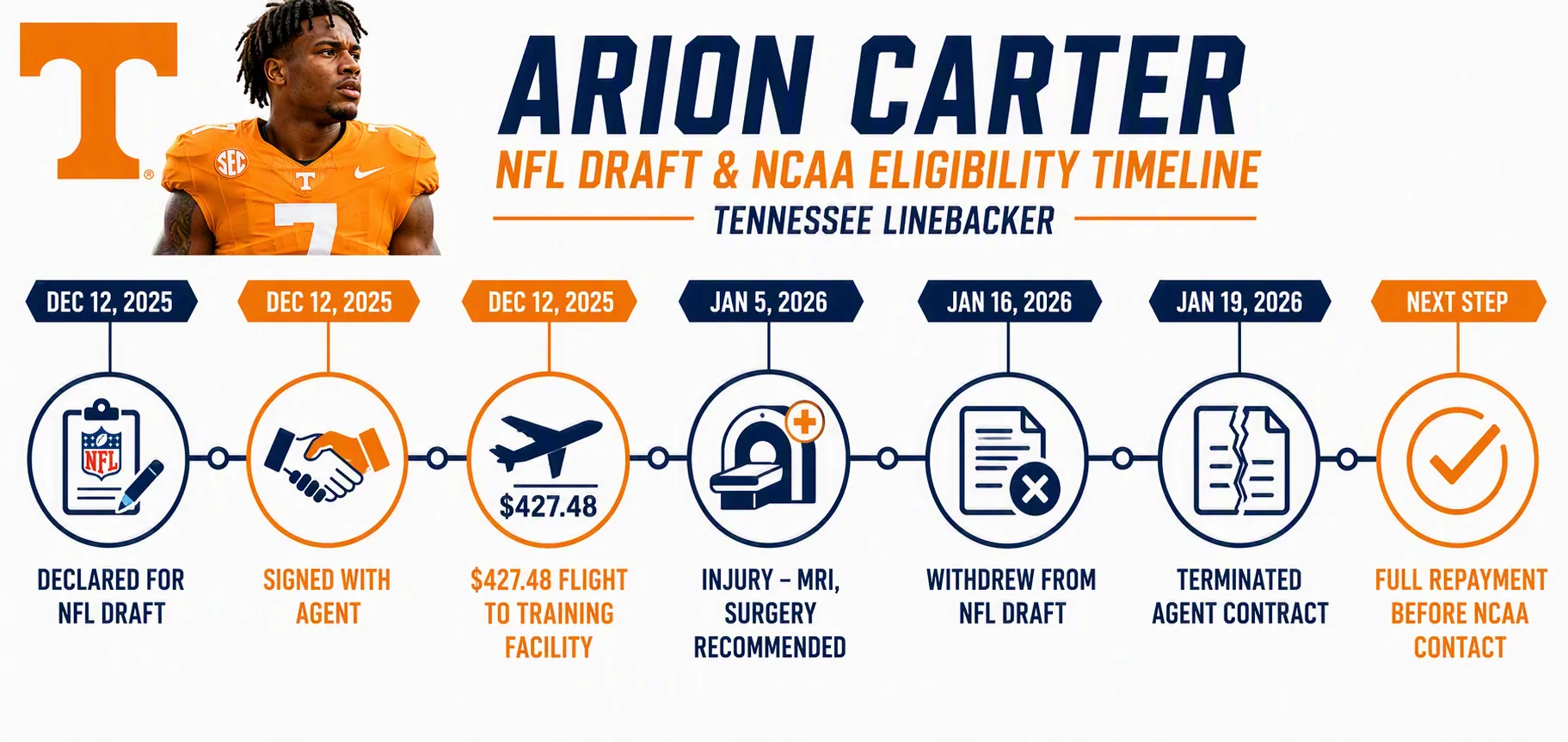
Strip the case down to the dates and it becomes easier to see why Tennessee pushed back so sharply. The defense is not that nothing happened. It is that the thing that happened was small, traceable, and remedied before the enforcement process began.
| Date | Event | Why it matters |
|---|---|---|
| Dec. 12, 2025 | Carter declared for the NFL draft. | This moved the case into professional-draft and representation territory, rather than a simple NIL discussion. [1] |
| After declaring | He signed a professional representation agreement and received a $427.48 flight. | The flight is the known benefit at the center of the NCAA violation. [1] |
| Jan. 5, 2026 | Carter received injury information after an MRI, including a surgery recommendation. | Heupel’s timeline frames the later draft withdrawal as driven by medical information, not NCAA pressure. [1] |
| Jan. 16, 2026 | Carter withdrew from the NFL draft. | The withdrawal came before the deadline and before the later agent-contract termination. [1] |
| Jan. 19, 2026 | Carter terminated the professional representation contract. | Heupel emphasized that the contract ended voluntarily within 13 days of signing. [1] |
| Before NCAA contact | Carter repaid the $427.48 flight in full. | This is the key remedial fact in Tennessee’s proportionality argument. [1] |
A compliance case does not disappear because the money was returned. That is not how eligibility rules work, and it would be too easy if it were. But the repayment timing changes the moral and practical texture of the case. There is a difference between an athlete returning a benefit after an investigator finds it and an athlete repaying it before the NCAA makes contact. Heupel’s statement was built around that difference.
It also explains why the statement did not read like a plea for mercy. Heupel was not asking people to ignore the agent-paid flight. He was arguing that Carter’s conduct after the flight — medical reassessment, draft withdrawal, contract termination, repayment — showed a player trying to restore his college eligibility properly rather than exploit a loophole. The NCAA still had a violation to process. Tennessee’s argument is that the penalty failed to credit the cleanup in a proportionate way.
Heupel made Carter’s character part of the enforcement record
There is a familiar version of coach advocacy that turns every suspended player into a vague “great kid.” Heupel chose a more concrete route. He said Carter represents “everything that is right about college athletics,” and pointed to his public health degree, four-year Dean’s List record, team captain role, and selection as Tennessee’s representative at SEC Media Days. [1]
That material was not just decoration. It was doing work. Heupel was trying to make the enforcement outcome morally legible to people who might otherwise see only the phrase “agent benefit” and move on. In his framing, Carter is not a player caught hiding an impermissible arrangement. He is a captain and high-performing student who entered a professional process, received medical information that changed the decision, unwound the representation relationship, and paid back the only known benefit before the NCAA contacted him.
That does not erase the professional-representation problem. It sharpens the dispute. If this had been an NIL marketing agent issue, the public argument would be simpler and probably sloppier: athletes are allowed to earn money now, so why is the NCAA punishing one? But Carter’s case sits in a different lane. The NCAA’s reasoning depends on the agent’s professional role and the flight tied to that representation. Heupel’s response is stronger because it does not need to pretend otherwise.
The penalty scale is the pressure point
The NCAA initially assessed a three-game suspension, and Tennessee’s appeal reduced it to two games. The violation was classified as Level III, a category described as a “basic breach of conduct,” yet the resulting multi-game suspension was reported as among the harsher penalties at that violation level. [2]
That combination is why the case has more force than a standard preseason eligibility complaint. A Level III label tells the public one thing: the infraction is not being treated as a major scheme. A two-game suspension for one of Tennessee’s best defensive players tells the public another: the consequence is substantial. Heupel’s statement lives in the space between those two messages.
Tennessee also was not approaching NCAA enforcement from a blank institutional memory. The school had already been fined $8 million and placed on probation in 2023, a backdrop that makes Heupel’s sharper 2026 language easier to understand without proving that Tennessee has adopted some fully coordinated new communications strategy. [2]
There is also a narrower rules-policy complaint around football and basketball draft exploration. Knox News reported the asymmetry as part of the Carter context, but the specific bylaw comparison has not been independently verified here from the NCAA rulebook. So it is best treated as a reported point of friction, not as the article’s foundation. [1]
The firmer foundation is proportionality. The NCAA could look at the agent-paid flight and identify a violation. Tennessee could look at the same file and say the remedy, timing, amount, and player conduct should have produced something less than lost games. Heupel did not merely say the Volunteers were disappointed. He put the facts in public and made the audience weigh them against the penalty.
This is not just about two games, but the two games matter
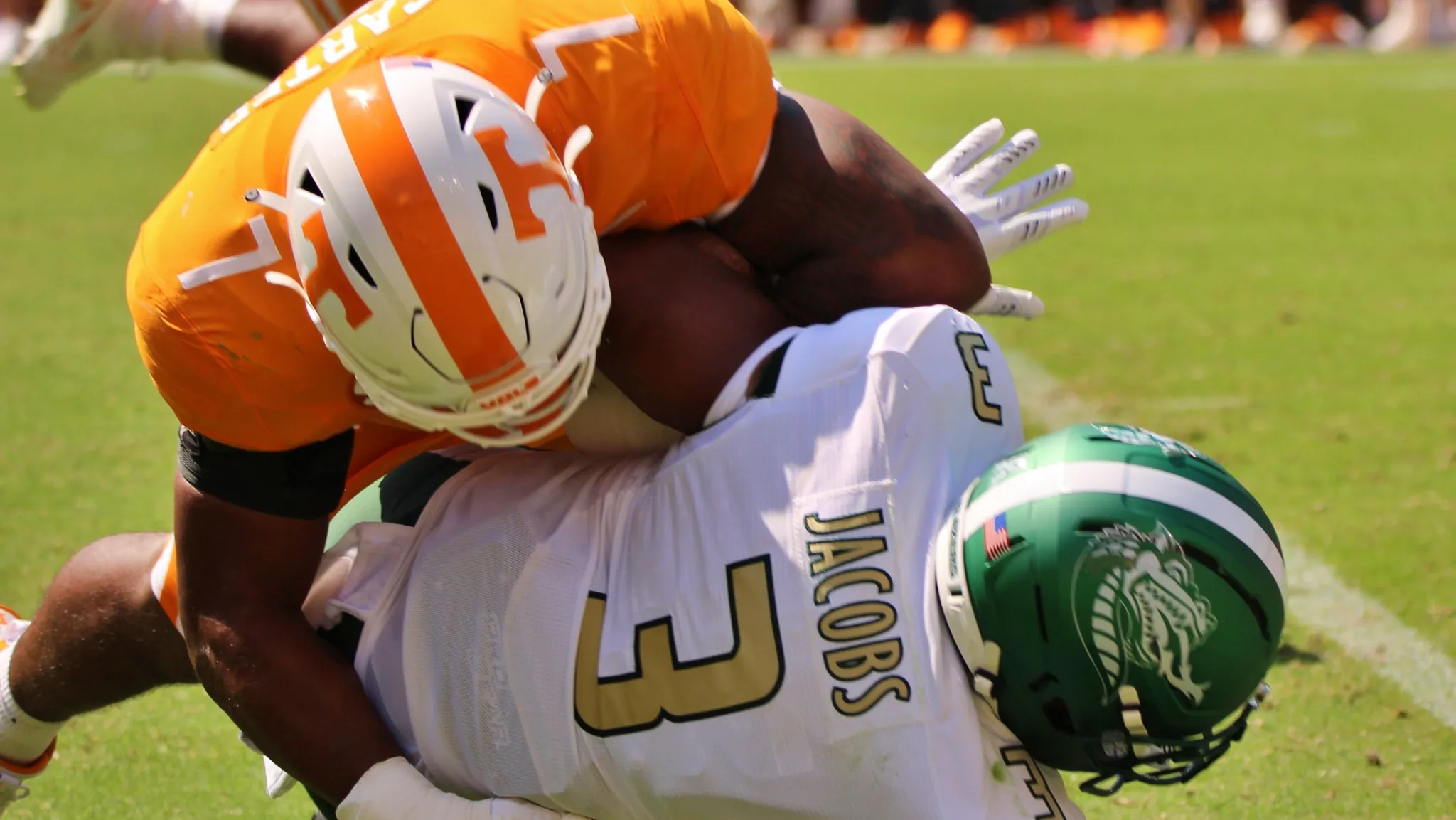
Carter’s suspension is not symbolic. In 2025, he had 76 tackles in 10 games, led the SEC at 7.6 tackles per game, and earned second-team All-SEC recognition. [3]
Tennessee is not empty behind him. Edwin Spillman had 81 tackles, Jeremiah Telander had 80, and Penn State transfer Amare Campbell arrived after recording 103 tackles. [1]
That depth keeps the suspension from becoming a depth-chart emergency, but it does not make the penalty weightless. Losing a captain-level linebacker for two games affects substitution patterns, communication, and defensive continuity, especially early in a season when staffs are still sorting out roles.
Still, the competitive impact should remain secondary to why this statement is notable. If Heupel had focused only on Carter’s tackles, the response would have sounded like every coach defending an important player. He led with conduct. He led with repayment. He led with the claim that the enforcement outcome itself was wrong.
What changed in the coach-NCAA posture
The NIL-era enforcement environment has created plenty of loud objections, many of them too broad to be useful. This one is more pointed. Heupel’s statement did not ask fans to reject NCAA authority in general. It challenged one decision by placing a documented timeline next to a multi-game suspension and asking whether those two things fit.
That is a different kind of coach response. It is public-facing, but it is also compliance-literate. It concedes enough of the NCAA’s premise to be credible: an agent-paid flight tied to professional representation is not nothing. Then it presses the facts that make the punishment feel excessive: the amount, the medical reason for withdrawing from the draft, the voluntary termination of the contract, and the repayment before NCAA contact.
Heupel’s July 29 statement suggests that coaches in high-profile eligibility cases may increasingly answer NCAA penalties with public factual records rather than ritual regret. In Carter’s case, that record was not offered to excuse the violation. It was offered to contest the fairness of the punishment itself.
References
- Josh Heupel statement on NCAA suspension of Arion Carter Tennessee football, Knox News, July 29, 2026
- Arion Carter suspended NCAA Tennessee football violation NFL draft, The Tennessean, July 29, 2026
- Josh Heupel reacts to NCAA's decision to suspend Tennessee Volunteers linebacker Arion Carter, 247Sports, July 29, 2026
Related records
Tool profile
Browse tool evaluations →Governing regulation
Browse the obligations tracker →Preventive workflow
Browse verification workflows →
Report a correction or tip
Spotted an outdated figure, a misstated fact, or a ruling this case record should reflect? Public comments are disabled for this content given the professional cost of a misreported case outcome, penalty amount, or rule text — use the structured correction channel instead.
Report a correction or tip for this record →