
How Japanese drug law treats Hiroshima Carp home searches
A dated, primary-source-anchored timeline of the Hiroshima Carp etomidate case, from the December 16, 2025 positive urine test through the July 30, 2026 warrant searches of two players' homes and the team dormitory. Every investigative stage is mapped to Japanese criminal procedure — designated-drug statute, judge-issued warrant basis, pre-indictment custody, bail, and sentencing — so readers can verify who was arrested, indicted, convicted, or only searched, and what the investigation's expansion to additional players legally implies.
- Jurisdiction
- Japan
- Court
- Hiroshima District Court
- AI tool named
- none
- Ruling date
- May 15, 2026
- Source document
- View primary court order ↗
- Last verified
- Aug 4, 2026
Lex Machina Review is an independent risk-tracking and reference resource. Nothing on this site is legal advice, and using it does not create an attorney-client relationship. Every record is reviewed against primary sources but may not reflect the most current status of a matter — always verify directly against the cited court order, rule text, or a licensed attorney before relying on it.
Companion explanation — secondary to the source document above
Last verified: August 4, 2026. This is a Japan criminal-process explainer, not legal advice. The immediate legal implication of the July 30 Hiroshima Carp home searches in the drug investigation is narrower than the headlines may suggest: police searched the homes of infielders Yano Masaya and Maekawa Seita and the Carp dormitory under warrant, while Hatsuki remains the only player in the public record documented as convicted to date. A warrant search is a serious procedural step. It is not an indictment, not a conviction, and not a public finding that the searched players used etomidate.
The July 30 report describes Hiroshima Prefectural Police executing warrants at Yano’s and Maekawa’s homes and at the team dormitory, followed by a same-day apology from Carp owner Matsuda Hajime. That establishes investigative expansion, not charging status for those two players. Hatsuki’s record is different: public reporting documents arrest, indictment, bail, club termination, and a one-year prison sentence suspended for three years in a case involving etomidate, a designated drug commonly reduced in headlines to “zombie cigarettes.”[1][2]

The source split matters. The case dates below come from public news reports. The procedural rules are anchored separately in legal annotation and government sources: a judge-issued warrant basis under Japan’s Code of Criminal Procedure, search concepts covering an accused person’s residence and articles, and a consular overview of custody and bail practice. None of those procedural sources proves what happened in a particular evidence file; they explain what the reported procedural labels mean.
The dated record: what changed, and what did not
| Date | Reported event | Procedural significance |
|---|---|---|
| December 16, 2025 | Hatsuki reportedly accompanied police voluntarily, submitted a urine sample, and the sample tested positive. | This is the investigative trigger reported before arrest; it is not itself an indictment.[3] |
| January 27, 2026 | Hatsuki was arrested on suspicion of using etomidate. | Arrest moved the matter into formal criminal custody on suspicion of designated-drug use.[3] |
| February 17, 2026 | Prosecutors indicted Hatsuki for allegedly using a small amount of etomidate around December 16 at his Hiroshima home. | The indictment is the public charging step; it is the point at which the allegation became a formal prosecuted case.[4] |
| February 18, 2026 | Hatsuki was released on bail of ¥3 million. | The reported bail followed indictment; it should not be confused with pre-indictment release practice.[5] |
| February 24, 2026 | The Hiroshima Carp terminated Hatsuki’s contract. | The club employment consequence came one week after indictment, not merely after a search.[6] |
| May 15, 2026 | Japan Forward/Sankei reported that the first hearing concluded the same day with a one-year prison sentence suspended for three years. | This is the documented conviction outcome used here; a later July 30 report gives a conflicting July 15 date, so the date conflict is flagged rather than hidden.[2][1] |
| July 30, 2026 | Police searched Yano’s home, Maekawa’s home, and the Carp dormitory under warrant. | This shows judge-authorized investigative expansion. It does not document arrest, indictment, or conviction of Yano or Maekawa.[1] |
That table is the safest way to read the case. Hatsuki’s path is a complete public prosecution path. Yano and Maekawa, as of the cited record, are in a different column: searched under warrant. Collapsing those labels into one scandal noun is how bad legal briefings get written.
From urine test to indictment: where suspicion became a charge
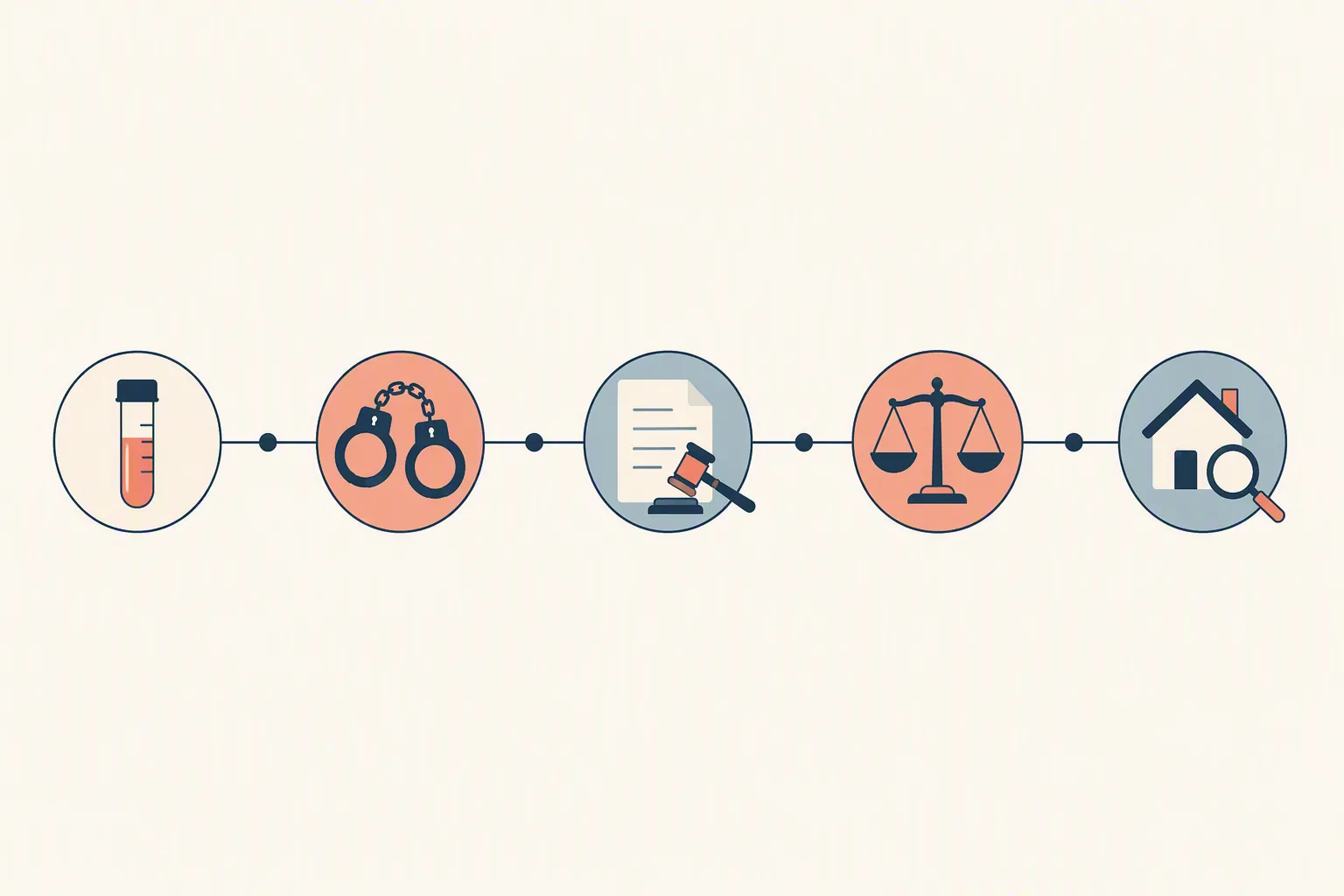
The first reliable procedural hinge is December 16, 2025. Japan Times reported that Hatsuki was voluntarily accompanied by police, provided a urine sample, and later tested positive for etomidate. The same report placed the arrest on January 27, 2026, on suspicion of using the drug.[3] The substance matters because the reported charge was designated-drug use under the Act on Pharmaceuticals and Medical Devices, not a stimulant case under the Stimulants Control Act. The nickname “zombie cigarette” helps identify the public subject of the reports; it should not do any legal work beyond that.
There is a month-plus gap between the reported positive test and the arrest. That gap should not be padded with assumptions. Public reports do not disclose the full evidence file, investigative interviews, chain-of-custody material, or internal prosecution assessment. What can be said is more limited and more useful: police had a reported test result and, by January 27, had taken the formal step of arresting Hatsuki on suspicion of etomidate use.[3]
The charge arrived on February 17. Kyodo reported that prosecutors indicted Hatsuki for using a small amount of etomidate around December 16 at his home in Hiroshima.[4] That is the date when the public record stops being only an arrest narrative and becomes a charging record. If a reader needs one line for a partner or editor, it is this: the documented charge attaches to Hatsuki on February 17, not to every player later touched by the investigation.
The next day, Hatsuki was released on bail of ¥3 million.[5] That sequence is procedurally important. A Canadian government overview of Japan’s criminal-law system describes a pre-indictment custody framework that can last up to 23 days and states that bail is available only after indictment.[9] The overview is not a case filing and does not tell us why a judge made a particular bail decision in Hatsuki’s case. It does, however, keep the labels straight: pre-indictment detention and post-indictment bail are different legal moments.
The baseball consequence followed quickly. On February 24, the Carp terminated Hatsuki’s contract, one week after the indictment was reported.[6] That timing deserves more weight than the club optics around apology statements. Termination after indictment is a concrete employment action tied to a formal criminal charge in the public record. It is not the same thing as deactivating or scrutinizing players whose homes were later searched.
Conviction, suspended sentence, and the date conflict
Japan Forward, citing Sankei coverage, reported that Hatsuki’s first hearing was held on May 15, 2026, and concluded the same day with a sentence of one year’s imprisonment, suspended for three years. The report also says the court referred to his “affinity for designated drugs.”[2] That is the verified outcome this article relies on: a conviction with a suspended custodial sentence. It is stronger than any loose discussion of possible statutory ceilings because it is the actual reported case result.
The date is not perfectly clean across public reports. Chosun’s July 30 article gives July 15, while Japan Forward/Sankei and Chosun’s May 29 follow-up place the hearing and sentence on May 15.[1][2][10] Without the primary court record available here, the responsible treatment is to cite the May 15 date as the better-supported date in the available materials and to disclose the conflict. Pretending the conflict does not exist would be worse than using the narrower proposition the sources can bear: by the time of the July 30 searches, Hatsuki had already been reported convicted and sentenced.
What a July 30 warrant search means under Japanese criminal procedure
The July 30 searches are legally meaningful because they were reported as warrant searches. Japan’s Code of Criminal Procedure Article 218(1), as identified in a Japanese government privacy-commission letter, supplies the judge-issued warrant basis for seizure in criminal investigations.[7] Separately, the Criminal Justice and Anti-Corruption Database entry for Code of Criminal Procedure Article 102 reflects search authority over the accused person’s body, articles, residence, or other premises.[8] Those sources explain why the phrase “under warrant” should be taken seriously.
They also explain why the phrase should not be inflated. A warrant authorizes a search or seizure when the legal standard for that investigative step has been met. It does not announce that prosecutors have indicted the person whose home is searched. It does not say that the person searched will be charged. It does not convert a team dormitory into proof of a team-wide offense.
That distinction is especially important for Yano and Maekawa. Chosun reported that police searched Yano’s and Maekawa’s homes and the Carp dormitory on July 30, and that the searches followed Hatsuki’s etomidate case and subsequent statements about other players.[1] The report does not document arrests or indictments of Yano or Maekawa. As of the current record, the verified procedural status is therefore: searched under warrant.
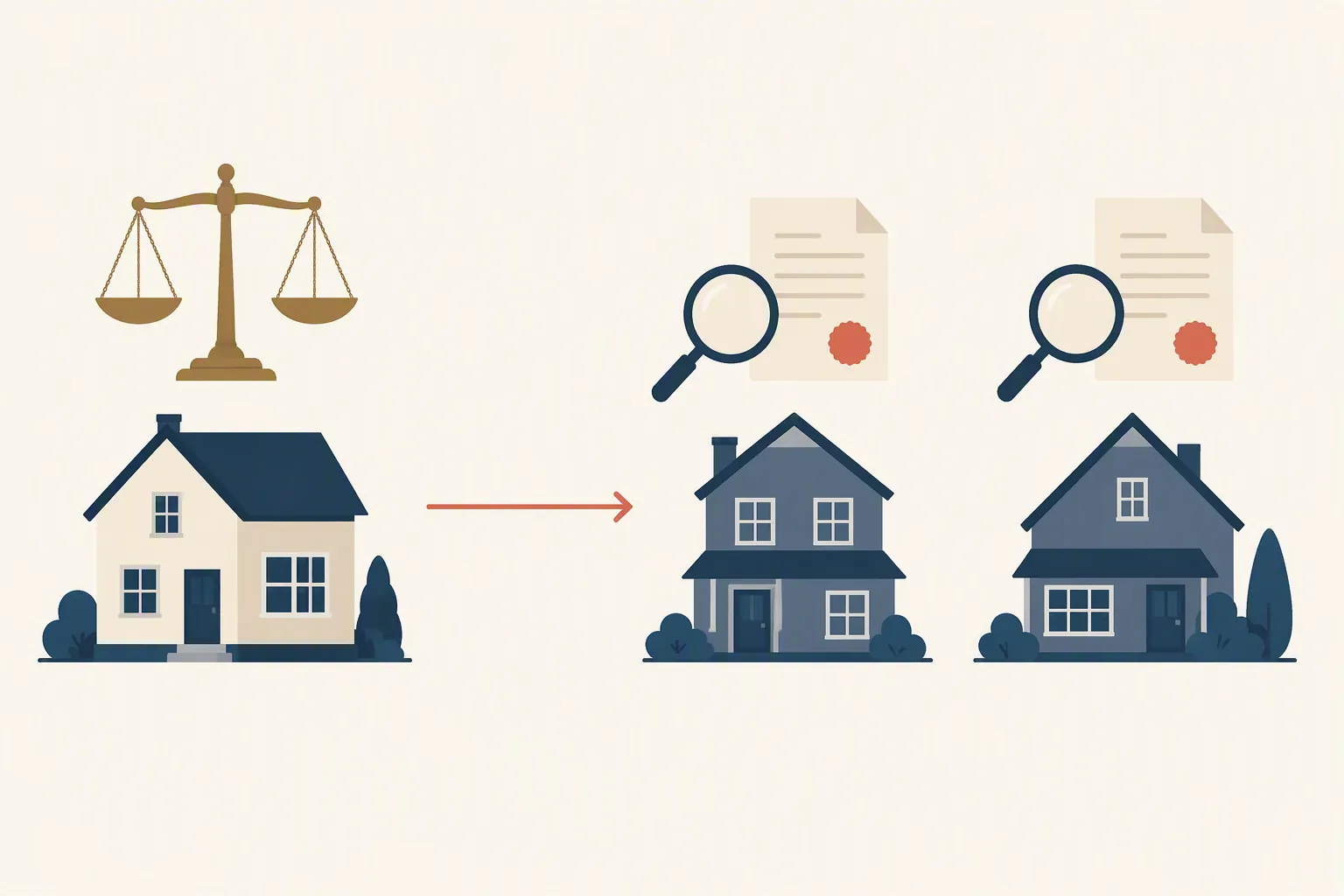
The dormitory search adds another practical point. A team facility search can be publicly dramatic because it brings the club into the scene. Procedurally, however, the question remains what location was authorized to be searched, what items were sought or seized, and how any seized material connects to a suspect or charge. Public coverage does not yet supply that level of detail.
Open items that should stay open
Several points are relevant but not settled enough to carry more weight than the dated record. Chosun’s May 29 report covered Hatsuki’s social-media allegations that teammates were involved, while the July 30 report refers to searches of Yano and Maekawa and describes prior allegations in the background.[10][1] Public reports also vary in how they count unnamed teammates, with five-versus-six formulations appearing across coverage. That discrepancy is a warning label, not an invitation to average the numbers or supply names.
There is also a reported supplier-side thread. World Baseball Network reported a charge involving Ryosuke Takiguchi in connection with alleged supply of the substance and discussed Yano’s deactivation amid the scandal.[11] That is a separate status point from proving use by any searched player. It should be tracked as an open related item unless and until public charging records connect it more specifically to Yano, Maekawa, or another identified Carp player.
Name handling needs the same restraint. The record in English-language coverage includes transliteration variance around Hatsuki, including Hatsuki, Hazuki, and Hachiuma. Unless a source is being quoted or indexed exactly, the practical approach is to use one consistent spelling and note the variance when it affects verification. A status table cannot be reliable if the reader cannot tell whether two spellings refer to the same person.
Current public status by player and institution
| Person or entity | Status supported by the cited record | What is not established |
|---|---|---|
| Hatsuki | Voluntary accompaniment and positive urine test reported; arrested January 27; indicted February 17; bailed February 18; contract terminated February 24; reported sentenced to one year, suspended for three years.[3][4][5][6][2] | The available sources do not include the full court file or complete evidentiary record. |
| Yano Masaya | Home searched under warrant on July 30, 2026.[1] | No cited source documents arrest, indictment, conviction, or final prosecutorial theory as of August 4, 2026. |
| Maekawa Seita | Home searched under warrant on July 30, 2026.[1] | No cited source documents arrest, indictment, conviction, or final prosecutorial theory as of August 4, 2026. |
| Hiroshima Carp dormitory | Searched under warrant on July 30, 2026.[1] | A facility search does not establish team-wide guilt or identify every person whose conduct is under review. |
| Hiroshima Carp | Terminated Hatsuki’s contract after indictment and issued an owner apology after the July 30 searches.[6][1] | Club discipline and apology statements do not substitute for criminal charges against additional players. |
The legal implication is therefore precise and limited. The Carp case documents a full designated-drug prosecution path for Hatsuki: test, arrest, indictment, bail, termination, and suspended sentence. The July 30 searches document a warrant-based expansion toward Yano, Maekawa, and the team dormitory. They do not, on the cited record, document charges against the searched players.
References
- Police raid Carp players’ homes in zombie cigarette scandal, Chosun, July 30, 2026.
- Zombie Cigarettes: Carp Player Hatsuki Etomidate Trial, Japan Forward, May 2026.
- Hiroshima Carp player arrested over 'zombie cigarette' use, The Japan Times, January 29, 2026.
- Ex-Hiroshima Carp player indicted over use of 'zombie cigarette', Kyodo News, February 17, 2026.
- Former Hiroshima Carp player released on bail in zombie cigarette case, News On Japan.
- Carp terminate Hatsuki contract, The Japan Times, February 25, 2026.
- Letter from the Government of Japan regarding access to personal data by public authorities, Personal Information Protection Commission.
- Japan: Code of Criminal Procedure, Article 102, Criminal Justice and Anti-Corruption Database.
- Japan criminal law system, Government of Canada.
- Former Carp player claims teammates used zombie cigarettes, Chosun, May 29, 2026.
- NPB Hiroshima Carp Deactivate Masaya Yano Amid Zombie Cigarettes Scandal, World Baseball Network.
Related records
Tool profile
Browse tool evaluations →Governing regulation
Browse the obligations tracker →Preventive workflow
Browse verification workflows →
Report a correction or tip
Spotted an outdated figure, a misstated fact, or a ruling this case record should reflect? Public comments are disabled for this content given the professional cost of a misreported case outcome, penalty amount, or rule text — use the structured correction channel instead.
Report a correction or tip for this record →