
Which Hong Kong tokenisation regulation applies to you?
A layered obligations map of Hong Kong's tokenisation rules: which SFC or HKMA instrument applies to your planned issuance or trading activity, which authority requires prior consultation, and which licensing and legislative items are still pending.
- Jurisdiction
- Hong Kong
- Court
- SFC/HKMA
- AI tool named
- None
- Ruling date
- Apr 20, 2026
- Source document
- View primary court order ↗
- Last verified
- Aug 5, 2026
Lex Machina Review is an independent risk-tracking and reference resource. Nothing on this site is legal advice, and using it does not create an attorney-client relationship. Every record is reviewed against primary sources but may not reflect the most current status of a matter — always verify directly against the cited court order, rule text, or a licensed attorney before relying on it.
Companion explanation — secondary to the source document above
Record status: non-advice regulatory tracker. Last verified: 5 August 2026. Legal-background reviewer: to be completed against the publication record before release. The operational flags below are tied to the cited primary or identified secondary sources, not to market practice shorthand.
| Activity or instrument | Governing source | Authority | Status at 5 Aug 2026 | Prior consultation / notification | Practical trigger |
|---|---|---|---|---|---|
| Tokenised securities generally | SFC Circular 23EC52; SFO, C(WUMP)O and Part IV SFO offer regimes | SFC; Companies Registry or other authorities may also matter depending on instrument mechanics | Live. 2019 STO statement superseded. | Consult SFC where the structure, offer, distribution or intermediary activity raises SFC-regulated issues. | A security is issued, offered, distributed, managed or traded using tokenisation as the record or transfer layer. Tokenisation does not displace the securities analysis. [1] |
| Primary dealing of tokenised SFC-authorized products | SFC Circular 26EC22, revised 20 Apr 2026 | SFC; HKMA where an authorized institution is involved | Live. Circular 23EC53 is superseded and should not be used as the operative citation. | Mandatory prior consultation with the SFC before launch. | An SFC-authorized fund or other SFC-authorized product is to be tokenised and dealt in at the primary level. [2] |
| Secondary trading of tokenised SFC-authorized open-ended funds on platform | SFC Circular 26EC23, 20 Apr 2026 | SFC; HKMA notification where applicable | Live for the framework described in the circular. | SFC and HKMA notification / prior-consultation duties apply as set out in the circular. | Retail on-platform secondary trading is planned through an SFC-licensed VATP, with price, NAV, market-making and onboarding controls. [3] |
| Fiat-referenced stablecoin issuance or offering | Stablecoins Ordinance, Cap. 656 | HKMA | In force from 1 Aug 2025. | HKMA licensing required where the regulated stablecoin activity falls within the ordinance. | A person issues or offers a fiat-referenced stablecoin in scope of the Hong Kong regime. [4] |
| Company register / debenture-holder record mechanics using DLT | FSTB-HKMA first-phase DLT legal review; Companies Registry FAQs | FSTB, HKMA, Companies Registry | First-phase review concluded 29 Jun 2026; legal environment described as sufficiently flexible for tokenised bond issuances. | No single SFC-style pre-launch consultation follows from this item alone, but instrument-specific authority checks remain necessary. | A DLT-maintained register of debenture holders or digital bond record architecture is used for Companies Ordinance record-keeping. [5] |
| Coming VA dealing and VA custodian regimes | Policy Statement 2.0 / LEAP; VA dealing and VA custodian consultations | SFC as lead licensing authority; HKMA registration for banks and stored value facilities as proposed | Pending. Consultations closed 29 Aug 2025; no final law or effective date confirmed in the provided materials. | Status must be reverified before launch; proposed licensing perimeter cannot be treated as live law. | A business model involves VA dealing or custody outside the existing VATP / securities product route. [6][7] |
| Second-phase DLT legal-infrastructure review | FSTB-HKMA DLT legal review | FSTB and HKMA | Pending. Second-phase review begins in H2 2026. | No final legislative obligation confirmed in the provided materials. | The structure depends on electronic execution of issuance documents, electronic signatures in trust creation, or legal concepts of possession and transfer. [5] |

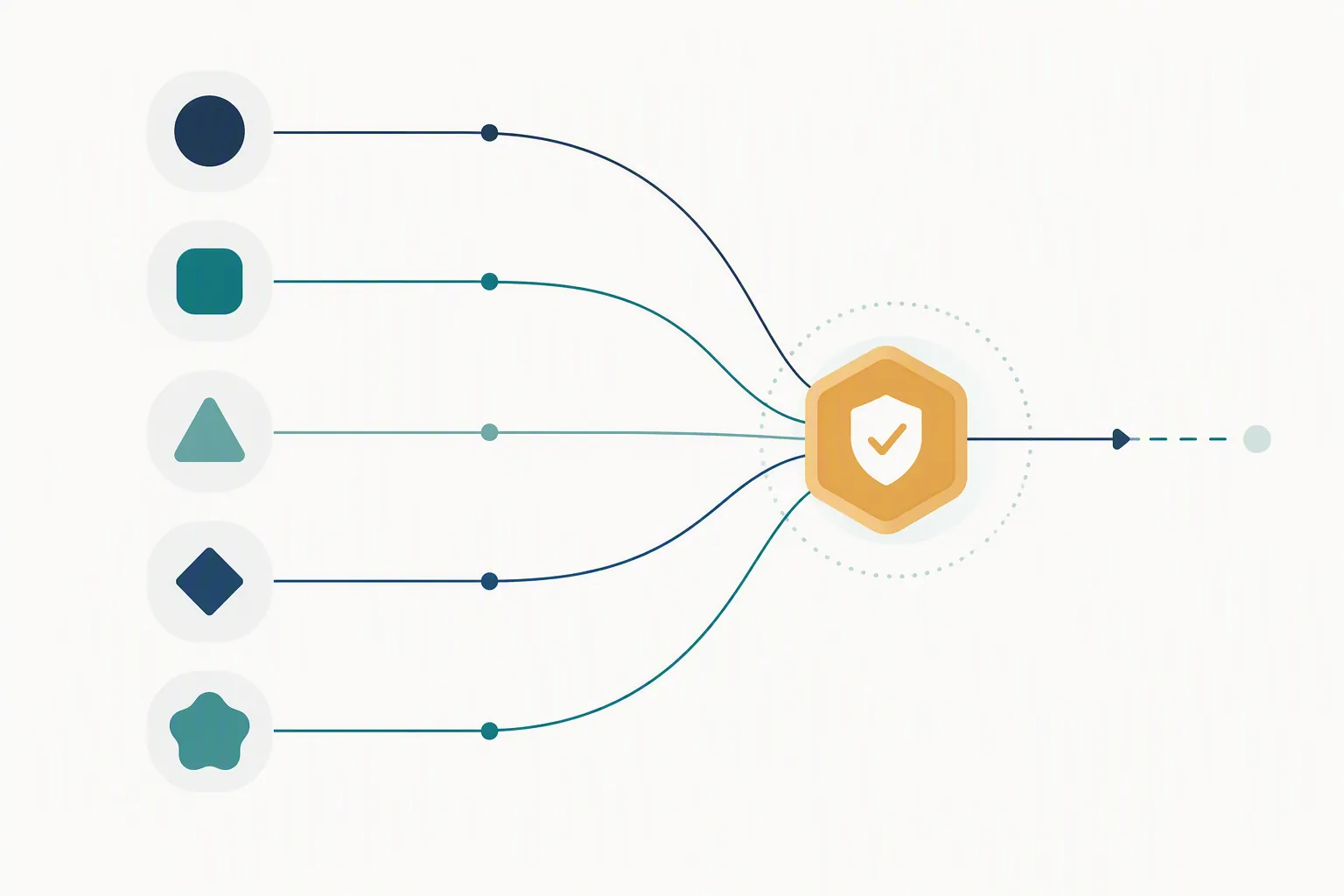
The safest first question is not whether a project is “tokenised.” It is what the tokenisation is being used to route: a security issuance, an SFC-authorized product, secondary trading on a virtual asset trading platform, a fiat-referenced stablecoin, a custody or dealing function, or a legal-record infrastructure question. Hong Kong’s framework is no longer just a policy direction, but it is still layered enough that a launch memo can go wrong by citing the right word and the wrong instrument.
This record uses the same staged-obligation discipline as other financial-product and digital-asset status trackers, including the site’s South Korea leveraged ETF curbs tracker and pending-legislation records such as the CLARITY Act digital-asset status tracker. The point is not to flatten every digital-asset rule into one compliance label. It is to keep live obligations, superseded instruments and pending perimeter items visibly separate.
The securities baseline: the wrapper does not change the securities question
For tokenised securities, the starting position remains deliberately unglamorous. The SFC describes tokenised securities as “fundamentally traditional securities with a tokenisation wrapper,” and applies the “same business, same risks, same rules” approach. The Securities and Futures Ordinance analysis therefore does not fall away because an ownership interest is recorded or transferred through distributed ledger technology. [1]
That matters at the public-offer stage. Circular 23EC52 superseded the SFC’s 29 March 2019 Statement on Security Token Offerings and removed the old assumption that security token offerings were necessarily confined to professional investors. That removal should not be overread. Public offers of tokenised securities can still raise prospectus issues under the Companies (Winding Up and Miscellaneous Provisions) Ordinance and offers-of-investments issues under Part IV of the SFO. [1]
The operational consequence is simple but often missed: the token record is not the product classification. A tokenised note, bond, fund interest or other investment exposure still needs the same authorization, exemption, intermediary and offer-analysis work that would have been done before the token label was added. The token layer then creates additional control questions: who maintains the ownership record, who can reverse or correct an error, what happens if the network fails, and whether investors or intermediaries are being asked to bear technology risk they have not been onboarded to understand.
Primary dealing of tokenised SFC-authorized products: the product provider stays on the hook
Circular 26EC22 is the current instrument for primary dealing of tokenised SFC-authorized products. It supersedes Circular 23EC53, so an internal tracker that still treats 23EC53 as the operative source is stale at the point where pre-launch controls are most likely to be negotiated. [2]
The product provider remains ultimately responsible for the tokenisation arrangement even if the operational build is outsourced. That responsibility covers the soundness of the tokenisation arrangement, proper ownership records, and technology controls. The circular also requires at least one competent staff member with relevant experience to be in place. For a product committee, this changes the approval sequence: vendor selection and legal structuring cannot sit in separate files if the provider is still the party the SFC will look to for the tokenisation arrangement. [2]
The public-permissionless network point is especially important. Circular 26EC22 does not treat a public-permissionless network as unusable in every case, but it does say tokenised SFC-authorized products should not be issued on such networks without additional and proper controls. That is not a branding concern; it is a control-evidence concern. The file should show what the network choice changes for settlement finality, transfer restrictions, wallet controls, loss events, record correction and investor-facing disclosures. [2]
Distribution is also not free-form. Circular 26EC22 limits distribution to regulated intermediaries, and those intermediaries remain responsible for suitability and onboarding duties. This can be the difference between a tokenisation build that is ready for regulatory discussion and a launch plan that has a technology vendor, a product term sheet and no defensible route to clients. [2]
The mandatory pre-launch step is prior consultation with the SFC. For authorized institutions, the HKMA may also be in the chain. In practice, the consultation package should not merely describe the product as tokenised; it should identify the legal issuer or product provider, the register or ownership-record design, the network and wallet controls, the outsourcing chain, the staff competence evidence, the distributor route and the investor disclosures that address tokenisation-specific risk.
Secondary trading: when the VATP layer becomes the gate
Circular 26EC23 deals with secondary trading of tokenised SFC-authorized open-ended funds. The retail on-platform route runs through SFC-licensed virtual asset trading platforms. That is a different compliance file from primary issuance of a tokenised SFC-authorized product, even when the underlying fund is the same. [3]
| Secondary-trading item | What the launch file needs to show |
|---|---|
| SFC-licensed VATP route | Retail on-platform secondary trading must be arranged through an SFC-licensed VATP under the conditions in Circular 26EC23. [3] |
| Price Deviation Alert | The VATP must operate a Price Deviation Alert against indicative NAV, so the trading screen cannot be treated as a normal exchange-style price display without fund-value context. [3] |
| Indicative NAV cadence | Indicative NAV is typically updated at least every 15 seconds, which makes valuation-feed governance part of the launch checklist. [3] |
| Market maker | At least one market maker is required for each product, with not less than three months’ notice before termination. [3] |
| Client onboarding | Client risk-confirmation before onboarding is required; investor access is therefore not only a platform-permissioning question. [3] |
| OTC route | OTC trading is case-by-case, not a general workaround for the on-platform controls. [3] |
The Price Deviation Alert and indicative NAV requirements deserve more attention than they usually get in product announcements. They turn secondary trading into a joined operating model between the fund’s valuation process, the platform’s trading interface, the market maker and the investor-onboarding process. If one group treats indicative NAV as a data feed and another treats it as a regulatory control, the launch file will not match the circular’s practical demand. [3]
Market-maker continuity is another non-cosmetic condition. A product with one required market maker and a notice requirement before termination needs a contingency plan before launch, not after a liquidity issue appears. The same is true for client risk-confirmation. A platform can have a technically functioning token-trading venue and still be unready if its onboarding flow does not capture the specific risk acknowledgment required for this product route. [3]
Stablecoins: a live HKMA licensing layer, not a fund-token shortcut
The Stablecoins Ordinance, Cap. 656, has been in force since 1 August 2025. The regime is an HKMA licensing layer for fiat-referenced stablecoin issuance and offering. The cited secondary analysis states that the ordinance requires, among other things, HK$25 million minimum paid-up capital, full reserve backing, redemption at par, no algorithmic stablecoins and no interest payments. [4]
The stablecoin analysis should be kept separate from the securities and SFC-authorized product analysis. A tokenised fund unit is not regulated as a stablecoin merely because it is transferred on-chain, and a fiat-referenced stablecoin is not cleared from HKMA licensing analysis merely because it is used inside a securities settlement workflow. If a product memo uses a stablecoin as cash leg, collateral instrument, settlement asset or investor-facing product, the stablecoin layer needs its own HKMA question.
DLT legal infrastructure: what is settled, and what is still under review
The FSTB-HKMA first-phase DLT legal review concluded on 29 June 2026. The official release states that Hong Kong’s legal environment is already sufficiently flexible to support tokenised bond issuances, and that Companies Registry FAQs confirm DLT-maintained registers of debenture holders can fulfil Companies Ordinance record-keeping requirements. [5]
That conclusion should not be stretched into a blanket answer for every digital asset record. The same release identifies a second-phase legislative review beginning in H2 2026, covering electronic execution of issuance documents, electronic signatures in trust creation, and the legal concepts of possession and transfer. Those subjects remain pending on the materials provided. [5]
For a bond or fund launch, this means the legal-record question should be isolated from the product-authorization question. A DLT-maintained register may be workable under the Companies Ordinance record-keeping analysis, while the same transaction still needs SFO, SFC circular, offering-document, trustee, custody or platform approvals. Treating the DLT review as a single green light would collapse layers that the official materials keep separate.
Pending perimeter closure: VA dealing and custody are not yet live licensing rules on these materials
Policy Statement 2.0, also known as LEAP, identifies the SFC as the leading authority for the coming virtual-asset dealing and virtual-asset custodian licensing regimes. It also assigns the FSTB and HKMA to lead the legal review work, and includes commitments on regularising tokenised government bond issuance and clarifying stamp duty treatment for tokenised ETFs. [6]
The VA dealing and VA custodian consultations were issued on 27 June 2025 and comments closed on 29 August 2025. The cited secondary analysis describes proposals for SFC licensing, HKMA registration for banks and stored value facilities, HK$5 million minimum capital for VA dealers, HK$10 million for VA custodians and no proposed transitional period. But the same layer must be flagged pending here: the provided materials do not confirm final legislation or an effective date. [7]
This is the status flag most likely to be lost in a business presentation. A proposed no-transitional-period model is commercially important because it affects build timing, staffing and capital planning. It is not, however, the same thing as an in-force licensing obligation. Any launch plan that depends on VA dealing or custody outside the already-live SFC or HKMA regimes should reverify the final legislative position before committing to a public timetable.
Market records show why the routing problem is now practical
The market context is no longer theoretical, but it should be used as context only. The SFC said in April 2026 that, as of March 2026, Hong Kong had 13 tokenised products with tokenised-class assets under management of US$10.7 billion. That figure helps explain why the circulars matter; it does not decide which circular applies to a particular structure. [8]
The Government also told LegCo in July 2025 that Hong Kong saw its first retail tokenised gold product in 2024 and three retail tokenised money market funds authorized in the first quarter of 2025, described as the first in Asia Pacific, with over US$700 million in assets under management at end-March 2025. [9]
On the settlement and bond side, HKMA’s EnsembleTX material describes tokenised deposit settlement moving toward 24/7 tokenised central bank money, while its EvergreenHub repository records three government digital bond issuances in February 2023, February 2024 and November 2025. The November 2025 issuance was over HK$10 billion, with subscriptions exceeding HK$130 billion. [10][11]
Those records make Hong Kong’s framework relevant to live product work, not only regulatory horizon scanning. They still do not merge the routes. A government digital bond record, a tokenised money market fund, a VATP-traded tokenised fund and a fiat-referenced stablecoin each starts from a different legal instrument.
Pre-launch routing rule
Before announcement, classify the plan by legal function rather than token label:
- If it is a security, start with the SFO, C(WUMP)O and Part IV SFO analysis, using Circular 23EC52 for the tokenised-securities overlay.
- If it is a tokenised SFC-authorized product at primary level, use Circular 26EC22 and consult the SFC before launch.
- If it is secondary trading of a tokenised SFC-authorized open-ended fund, identify whether an SFC-licensed VATP route is involved and apply Circular 26EC23.
- If it involves fiat-referenced stablecoin issuance or offering, check the Stablecoins Ordinance and the HKMA licensing perimeter.
- If it involves VA dealing or custody outside the existing live regimes, flag the layer as pending and reverify the final legislation.
- If the structure depends on electronic execution, trust-signature mechanics, possession or transfer concepts, flag the second-phase DLT legal review as pending.
The launch decision should then name the authority to be consulted or notified: SFC for securities, SFC-authorized products, VATP trading and proposed VA dealing or custody licensing; HKMA for stablecoins and authorized-institution or bank-registration issues; FSTB, HKMA and Companies Registry materials for DLT legal infrastructure where the corporate or issuance mechanics are the gating item.
References
- Circular 23EC52, Securities and Futures Commission, 2 Nov 2023.
- Circular 26EC22, Securities and Futures Commission, revised 20 Apr 2026.
- Circular 26EC23, Securities and Futures Commission, 20 Apr 2026.
- Hong Kong’s New Stablecoin Licensing and Regulatory Regime, Davis Polk, 8 Jul 2025.
- FSTB and HKMA conclude first phase of Project Ensemble’s legal and regulatory review, Hong Kong Monetary Authority, 29 Jun 2026.
- Policy Statement 2.0 on the Development of Digital Assets in Hong Kong, Government of the Hong Kong Special Administrative Region, 26 Jun 2025.
- A Great LEAP Forward: Hong Kong Consults on Crypto Dealing and Custody, Latham & Watkins, Jul 2025.
- SFC welcomes launch of secondary trading of tokenised money market fund on virtual asset trading platform, Securities and Futures Commission, 20 Apr 2026.
- LCQ10: Development of digital assets, Government of the Hong Kong Special Administrative Region, 30 Jul 2025.
- EnsembleTX kicks off to support real-value transactions with tokenised deposits, Hong Kong Monetary Authority, 13 Nov 2025.
- Digital Bond Knowledge Repository, Hong Kong Monetary Authority.
Related records
Tool profile
Browse tool evaluations →Governing regulation
Browse the obligations tracker →Preventive workflow
Browse verification workflows →
Report a correction or tip
Spotted an outdated figure, a misstated fact, or a ruling this case record should reflect? Public comments are disabled for this content given the professional cost of a misreported case outcome, penalty amount, or rule text — use the structured correction channel instead.
Report a correction or tip for this record →