
How to File the Costco $14M Settlement Claim
This step-by-step guide uses the Costco $14M CEMA settlement as a worked example to show legal professionals and claimants how to verify settlement notices against court dockets and avoid common fraud tactics.
- Jurisdiction
- Washington State, USA
- Court
- King County Superior Court
- Judge
- Janet Helson
- AI tool named
- None
- Ruling date
- Oct 2, 2026
- Source document
- View primary court order ↗
- Last verified
- Jul 25, 2026
Lex Machina Review is an independent risk-tracking and reference resource. Nothing on this site is legal advice, and using it does not create an attorney-client relationship. Every record is reviewed against primary sources but may not reflect the most current status of a matter — always verify directly against the cited court order, rule text, or a licensed attorney before relying on it.
Companion explanation — secondary to the source document above
Before you file a Costco $14 million settlement claim, verify that the notice, website, administrator, case name, and court event all point to the same proceeding. For this matter, the proceeding to match is Aaland v. Costco Wholesale Corp., Case No. 25-2-16392-0 SEA, in King County Superior Court before Judge Janet Helson, with a final approval hearing scheduled for October 2, 2026 at 3:30 p.m. PT in Courtroom W728.[1]
That verification step is not a formality. A class action notice can look polished and still be the wrong channel. A legitimate claim process becomes credible when independent pieces agree: the docket, the settlement administrator, the official portal, Class Counsel, the notice terms, and the payment options.
| Verification item | What should match for this Costco settlement |
|---|---|
| Case | Aaland v. Costco Wholesale Corp. |
| Case number | 25-2-16392-0 SEA |
| Court | King County Superior Court, Washington |
| Judge | Judge Janet Helson |
| Administrator | Verita |
| Official portal | WashingtonCommercialEmailSettlement.com |
| Phone number | 888-808-6247 |
| Class Counsel | HKM Employment Attorneys LLP |
| Final approval hearing | October 2, 2026 at 3:30 p.m. PT, Courtroom W728 |
| Status | Pending final court approval; payment is not immediate |
Start With the Case, Not the Link
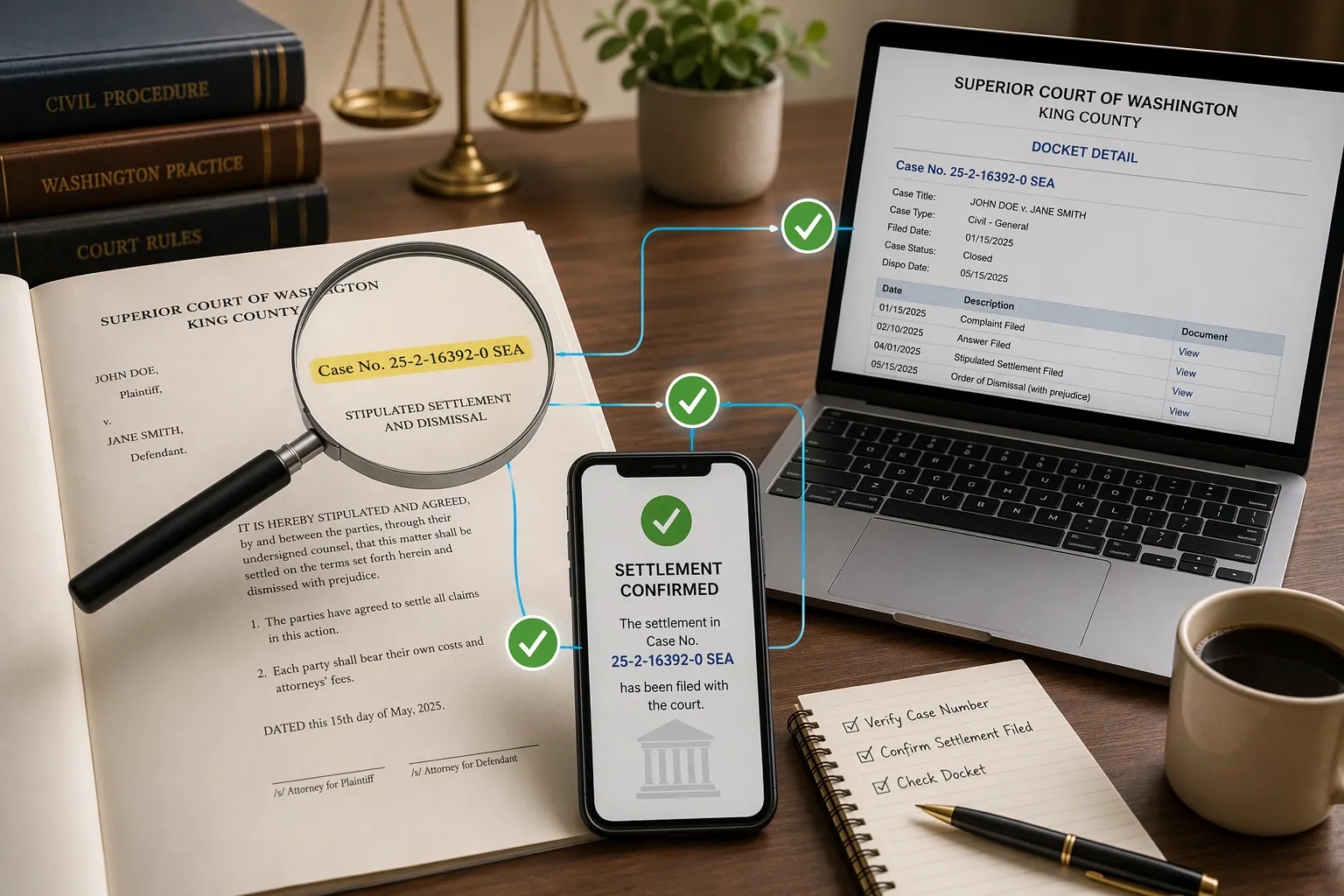
The safest way to answer “how to file Costco 14 million settlement claim” is to begin one step earlier: identify the court case. The settlement notice should connect to Aaland v. Costco Wholesale Corp., not merely to a page using Costco’s name or a generic phrase such as “email settlement.” ClassAction.org identifies the case as Case No. 25-2-16392-0 SEA, filed in June 2025 in King County Superior Court.[1]
A case name and docket number give you something outside the notice to test. Search the King County Superior Court docket for the case number, or use another docket-access route available to you. The point is not to read every filing. The point is to confirm that the case exists, that Costco Wholesale Corp. is the defendant, that Judge Janet Helson is associated with the proceeding, and that the settlement activity in the notice fits the court record.
The final approval hearing is especially useful because it is concrete. For this settlement, secondary sources consistently report a hearing set for October 2, 2026 at 3:30 p.m. PT before Judge Janet Helson in Courtroom W728 of King County Superior Court.[1] A scam page may copy a headline; it is less likely to line up cleanly with a docket-verifiable court event.
Then Confirm the Administrator and Portal
After the case checks out, match the administrator and claim portal. For this Costco Washington commercial email settlement, Verita is identified as the settlement administrator, the official portal is WashingtonCommercialEmailSettlement.com, and the toll-free number is 888-808-6247.[2][3]
Do not treat a search-result ad, forwarded email button, or shortened URL as enough. Type the official portal address directly into the browser, or navigate from a trusted source that identifies the same case name, administrator, and phone number. If an email sends you to a lookalike domain, a domain with extra words, or a page that avoids naming the case number, stop and re-check.
There is one caveat worth making explicit: the official settlement website was not directly accessible for this check. Its URL and details are still supported here because multiple independent secondary sources identify the same portal, administrator, and phone number. That is useful cross-verification, but if you are filing now, you should still compare the live site against the docket and any court-approved notice you can access.
Check Class Counsel Before You Trust the Form
Class Counsel provides another independent anchor. The sources cited here identify HKM Employment Attorneys LLP as Class Counsel, with Joseph Wright, Jason Rittereiser, Donald Heyrich, and Rachel Emens associated with the matter.[3] That does not mean you should call a lawyer before filing a routine claim. It does mean the notice should not invent a different firm, omit counsel entirely, or send questions only to an unverifiable private address.
For a law-firm intake team or KM desk, this is the part to standardize. Keep one internal note that lists the case name, court, administrator, portal, phone number, Class Counsel, and hearing date. When the twentieth person asks whether the Costco settlement email is real, the answer should not depend on whoever happens to search fastest.
Compare the Payment Options Against the Legitimate Notice
The Costco settlement sources identify several possible payment methods: PayPal, Venmo, Zelle, virtual prepaid card, or physical check.[2] That variety matters. A notice that insists on only one payment method, demands banking credentials, or says a claimant must pay a fee before receiving money is not behaving like the legitimate claim process described in the cited sources.
| If the notice says... | Treat it as... |
|---|---|
| File through WashingtonCommercialEmailSettlement.com | Consistent with the identified official portal, assuming the case and administrator also match |
| Call 888-808-6247 for administrator information | Consistent with the identified administrator phone number |
| Choose PayPal, Venmo, Zelle, virtual prepaid card, or check | Consistent with reported legitimate payment options |
| Pay a processing fee to unlock your settlement money | Red flag |
| Provide your banking password or full account login | Red flag |
| Use a different case name, different court, or no docket number | Red flag until independently verified |
| Click a shortened or unrelated domain to claim immediately | Red flag; navigate to the verified portal yourself |
OpenClassActions states that legitimate settlement administrators do not charge a fee to release a payment and do not ask for banking passwords.[3] AARP also warns that a legitimate class action notice should include a case name that can be verified through court records.[4] Those two checks catch many bad variants: the money-release fee and the notice that cannot survive a docket search.
How to File Once the Channel Is Verified
Once the case, portal, administrator, and notice terms line up, filing is straightforward. Use the verified settlement portal, WashingtonCommercialEmailSettlement.com, rather than a link copied from an email or social post. Confirm that the page identifies Verita as administrator and connects to Aaland v. Costco Wholesale Corp., Case No. 25-2-16392-0 SEA.
- Open the verified settlement portal directly in your browser.
- Confirm the case name, case number, court, administrator, and contact phone number on the site.
- Choose the online claim option if you are ready to submit.
- Provide only the information requested by the verified claim form.
- Select one of the legitimate payment options offered by the form.
- Save or print the confirmation page after submission.
One feature deserves attention because it is helpful but unusual: the sources cited here state that a claim can be filed without a Claim ID or PIN.[3] That can reduce friction for a person who received notice indirectly or cannot find the original email. It should also make you more careful, not less. If the form allows filing without those credentials, the surrounding identifiers become more important: correct domain, correct case, correct administrator, correct court, and correct hearing information.
Do not add information the form does not require. A settlement claim may ask for contact information, eligibility information, and a payment selection. It should not need your email password, bank login, remote-access approval, or payment to “release” funds.
What the $14 Million Figure Does and Does Not Tell You
The headline number is useful for identifying the settlement, but it does not tell an individual claimant what they will receive. The actual payment depends on later court approval, the number of valid claims, approved fees and costs, and any other deductions approved by the court. Dapeer notes that payment would occur only after final approval and the resolution of any appeals, a process that can take a year or more.[5]
Some public estimates discuss a possible net fund around $9.36 million based on maximum requested attorneys’ fees of one-third, but that is not the same as a guaranteed distribution amount. Treat any notice promising a fixed personal payout before the claim count and court approval are settled as suspect unless it is backed by the verified settlement materials.
Do Not Confuse This With Other Costco Settlements
Costco has appeared in other class action settlement coverage, including matters involving different products, pricing allegations, or injury claims. This workflow is about the Washington commercial email settlement in Aaland v. Costco Wholesale Corp. If a notice concerns a New York product-pricing settlement, a display-cabinet injury suit, or another Costco-related matter, do not borrow this portal or case number. Start over with that matter’s own docket, administrator, counsel, and claim site.
A Reusable Verification Workflow
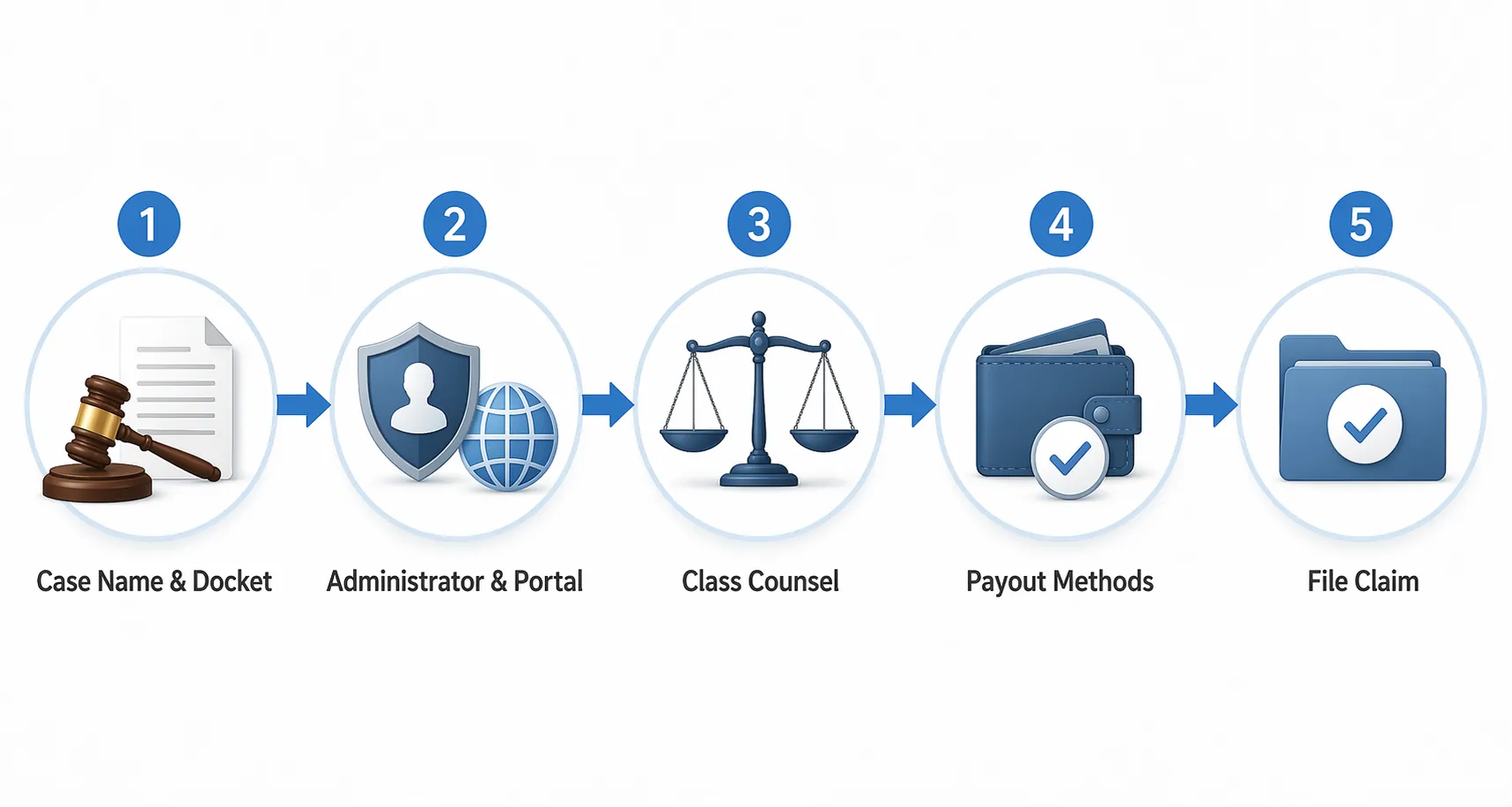
For this Costco claim, the working sequence is simple: docket first, administrator second, counsel third, payment terms fourth, claim form last. The same order works for future class action notices because it does not depend on brand familiarity or email design.
- Match the case name and docket number against court records.
- Confirm the administrator and portal through more than one reliable source.
- Check that Class Counsel and the court event line up with the notice.
- Reject fee demands, banking-password requests, and unrelated domains.
- File only through the verified channel, and keep your submission confirmation.
The operational judgment for this Costco matter is narrow but useful: a notice pointing to Aaland v. Costco Wholesale Corp., Verita, WashingtonCommercialEmailSettlement.com, HKM Employment Attorneys LLP, and the October 2, 2026 King County Superior Court hearing is consistent with the legitimate settlement materials. A notice that changes those anchors, demands money, asks for banking passwords, or pushes you through an unverifiable link should be treated as unverified until the docket or administrator confirms it.
References
- Costco Wholesale Washington Commercial Email Settlement, ClassAction.org
- Costco $14M Washington Commercial Email Settlement, ClaimDepot.com
- Costco $14 Million Email Settlement, OpenClassActions
- How to Spot a Class Action Settlement Scam, AARP
- Costco $14M Email Settlement: What Washington Consumers Should Know, dapeer.com
Related records
Tool profile
Browse tool evaluations →Governing regulation
Browse the obligations tracker →Preventive workflow
Browse verification workflows →
Report a correction or tip
Spotted an outdated figure, a misstated fact, or a ruling this case record should reflect? Public comments are disabled for this content given the professional cost of a misreported case outcome, penalty amount, or rule text — use the structured correction channel instead.
Report a correction or tip for this record →