
Six wounded, zero charges in Humboldt Park shooting
As of July 29, 2026, no arrests or charges have been filed in the July 26 Humboldt Park mass shooting that wounded six. This record documents the current investigation status and the legal barrier to charging without a suspect identification.
- Jurisdiction
- Illinois
- Court
- Not Applicable
- AI tool named
- None
- Ruling date
- Jul 26, 2026
- Source document
- View primary court order ↗
- Last verified
- Jul 29, 2026
Lex Machina Review is an independent risk-tracking and reference resource. Nothing on this site is legal advice, and using it does not create an attorney-client relationship. Every record is reviewed against primary sources but may not reflect the most current status of a matter — always verify directly against the cited court order, rule text, or a licensed attorney before relying on it.
Companion explanation — secondary to the source document above
As of July 29, 2026, no arrests or criminal charges have been reported in the July 26 Humboldt Park Chicago shooting that wounded six people. ABC7 Chicago reports the shooter remains at large, and the public record contains no named suspect, no released suspect description, no vehicle description beyond reports that shots were fired from a vehicle, and no stated motive.[1]
| Case record item | Verified status as of July 29, 2026 |
|---|---|
| Incident | Six people wounded in a July 26, 2026 shooting at a large outdoor gathering in Humboldt Park |
| Location | 900 block of North Central Park Avenue, Chicago |
| Arrests | None reported |
| Charges | None filed |
| Suspect status | Shooter unidentified and at large |
| Investigating unit | CPD Area Four detectives |
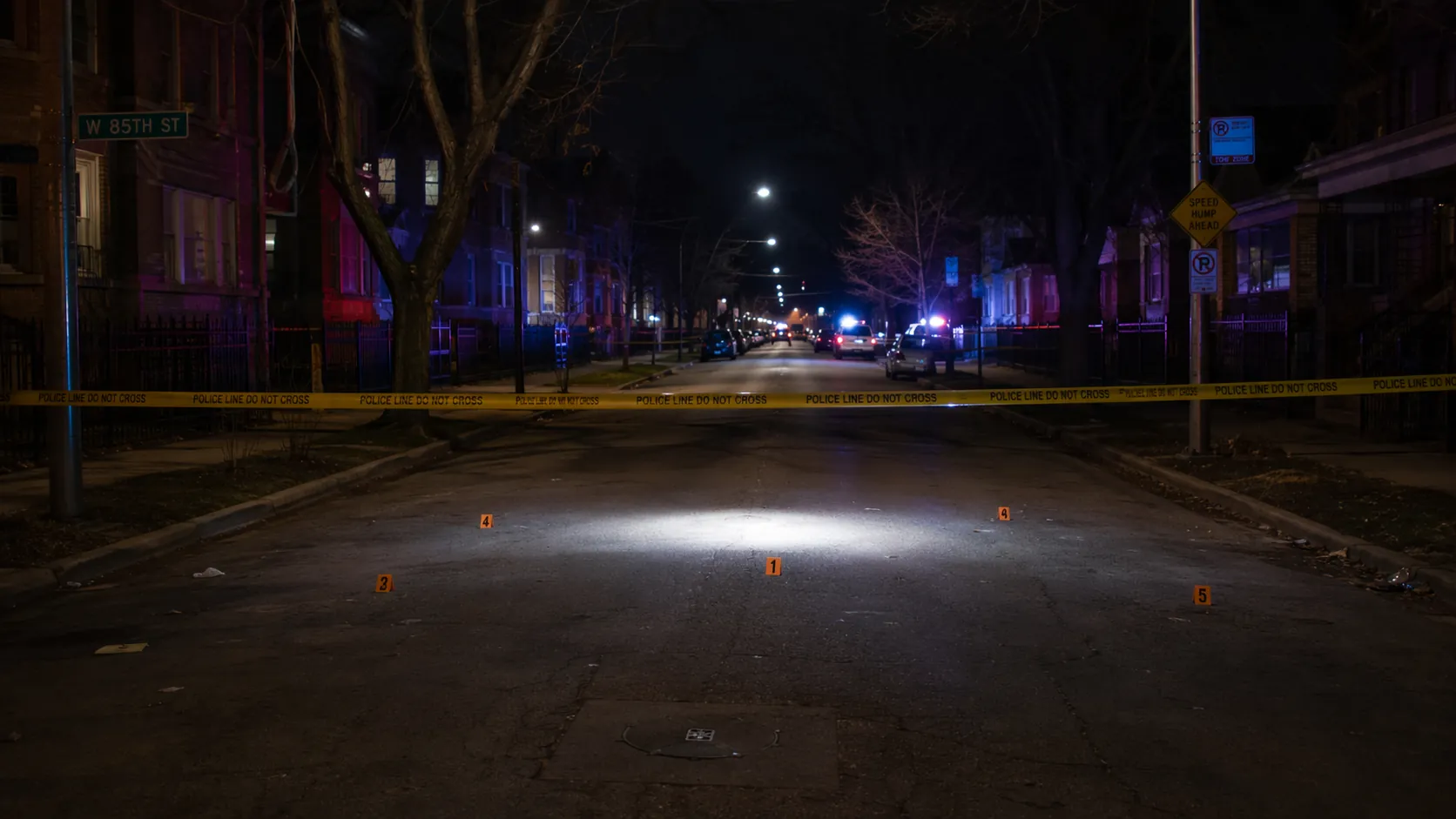
What Is Actually on the Record
The shooting happened at about 8:30 p.m. on July 26, 2026, in the 900 block of North Central Park Avenue during a large outdoor gathering in Humboldt Park. The Chicago Tribune reported that six people were hospitalized after the shooting, with two initially listed in critical condition.[2]
Block Club Chicago, relying on police information, described the shooter only as an "unidentified offender" who fired from a vehicle.[3] That phrasing matters. It is not a synonym for a suspect whose name is being withheld. It means the public record, at least as released, has not crossed the basic identification line.
ABC News reported that all six victims were expected to survive.[4] That is a material update for injury severity, but it does not change the charging posture. A survivable injury can still support serious felony charges. The missing element here is not harm. It is a chargeable person.
Why Six Victims Do Not Automatically Produce Charges
Public certainty that a crime occurred is not the same thing as probable cause to charge a particular defendant. Illinois prosecutors need a legally usable basis to allege that a specific person committed the offense. A complaint cannot proceed against "the shooter" as an abstract figure, even when the underlying event is well documented and the victim count is not in dispute.
That distinction is where many early shooting updates become unreliable. A scene can produce shell casings, hospital notifications, witness accounts, surveillance leads, and a police report without yet producing an identification strong enough to put a name on a charging document. The law does not ask only whether shots were fired. It asks whether there is probable cause tying a person to the firing.
On the known facts, the gap is visible. No outlet in the cited record reports that police have released a name. No cited report gives a description of the person who fired. No cited report identifies a vehicle make, model, plate, or direction of flight. No cited report states a motive. That is not a minor omission for charging purposes; it is the difference between an open investigation and a filed case.
The Unidentified-Offender Problem
The phrase "unidentified offender" is doing most of the legal work in this record. It tells the reader that police have classified the event as criminal conduct, but it does not tell the reader that police have a suspect. The first proposition supports investigation. The second would support movement toward arrest and charging.
A multi-victim outdoor shooting may feel, from the outside, like the kind of event that should quickly generate a name. It happened in public. It happened at a gathering. There may have been witnesses. But the available reporting does not say that a witness made an identification, that video captured a usable face or plate, or that forensic evidence matched a known person. Without one of those bridges, the number of victims does not solve the defendant problem.
This is also why social-media claims about custody or pending charges should not be treated as part of the case record unless they are corroborated by CPD or reliable reporting. The consistent verified status is no arrests and no charges. Anything stronger than that overstates the file.
Custody Would Not Necessarily End the Question
A nearby comparison makes the point without turning this into a second case narrative. In the June 26, 2026 Humboldt Park road-rage fatal shooting of Shaday Ingram, ABC7 Chicago reported that a female suspect had been taken into custody but was released without charges three days later.[5]
That case does not prove anything about who fired on July 26. It does show the procedural floor. Even physical custody is not the same thing as a filed charge if prosecutors or police do not have enough to proceed. The July 26 case is one step further back: the public record does not identify anyone in custody at all.
What Would Change the Charging Status
The charging status could change quickly if detectives obtain evidence that identifies a suspect and ties that person to the shooting. The most direct paths are familiar: a witness identification that can withstand review, video that shows the shooter or vehicle clearly enough to connect to a person, forensic evidence that links a firearm or other physical evidence to a suspect, or an arrest supported by facts that meet the probable-cause threshold.
- A name alone would not be enough if it came from an untested rumor.
- A vehicle description would matter more if it connected to ownership, use, video, witness observation, or recovered evidence.
- A motive could help explain the shooting, but motive is not a substitute for identification.
- An arrest would be significant, but charges would still depend on the evidence prosecutors can put behind a complaint.
For now, the narrow disposition is this: six people were wounded, all were expected to survive, and no chargeable defendant has been publicly identified. The absence of charges is procedurally predictable on that record, not an indication that the shooting is being treated as legally insignificant.
Current Disposition
Last verified July 29, 2026: the July 26 Humboldt Park mass shooting remains an open investigation. No arrests have been reported. No criminal charges have been filed. The shooter remains unidentified and at large.
References
- Humboldt Park shooting today: 6 wounded in Chicago mass shooting, ABC7 Chicago
- 6 hospitalized after Humboldt Park mass shooting, Chicago Tribune, July 26, 2026
- Mass Shooting At Humboldt Park Gathering Wounds 6, Police Say, Block Club Chicago, July 26, 2026
- Assailant sought in Chicago shooting that left 6 wounded, ABC News
- No charges after Humboldt Park shooting kills Shaday Ingram, ABC7 Chicago
Related records
Tool profile
Browse tool evaluations →Governing regulation
Browse the obligations tracker →Preventive workflow
Browse verification workflows →
Report a correction or tip
Spotted an outdated figure, a misstated fact, or a ruling this case record should reflect? Public comments are disabled for this content given the professional cost of a misreported case outcome, penalty amount, or rule text — use the structured correction channel instead.
Report a correction or tip for this record →