
How ICE's AI Tools Found a Southwest Flight Attendant
The detention of Southwest flight attendant Lorenzo Thompson by ICE reveals a rapidly expanding AI enforcement infrastructure that immigration lawyers must understand to challenge evidence and protect clients' due-process rights.
- Jurisdiction
- US Federal
- Court
- U.S. Immigration Court (EOIR)
- AI tool named
- Mobile Fortify, ELITE, Hurricane Score
- Ruling date
- Jul 27, 2026
- Source document
- View primary court order ↗
- Last verified
- Jul 27, 2026
Lex Machina Review is an independent risk-tracking and reference resource. Nothing on this site is legal advice, and using it does not create an attorney-client relationship. Every record is reviewed against primary sources but may not reflect the most current status of a matter — always verify directly against the cited court order, rule text, or a licensed attorney before relying on it.
Companion explanation — secondary to the source document above
Lorenzo Thompson, the Southwest flight attendant detained by ICE in an asylum case, is not yet a proven AI-evidence case. As of July 27, 2026, he remains in ICE custody, there has been no merits ruling in the case, and no public record has confirmed the exact enforcement tools used to identify, locate, classify, or detain him.
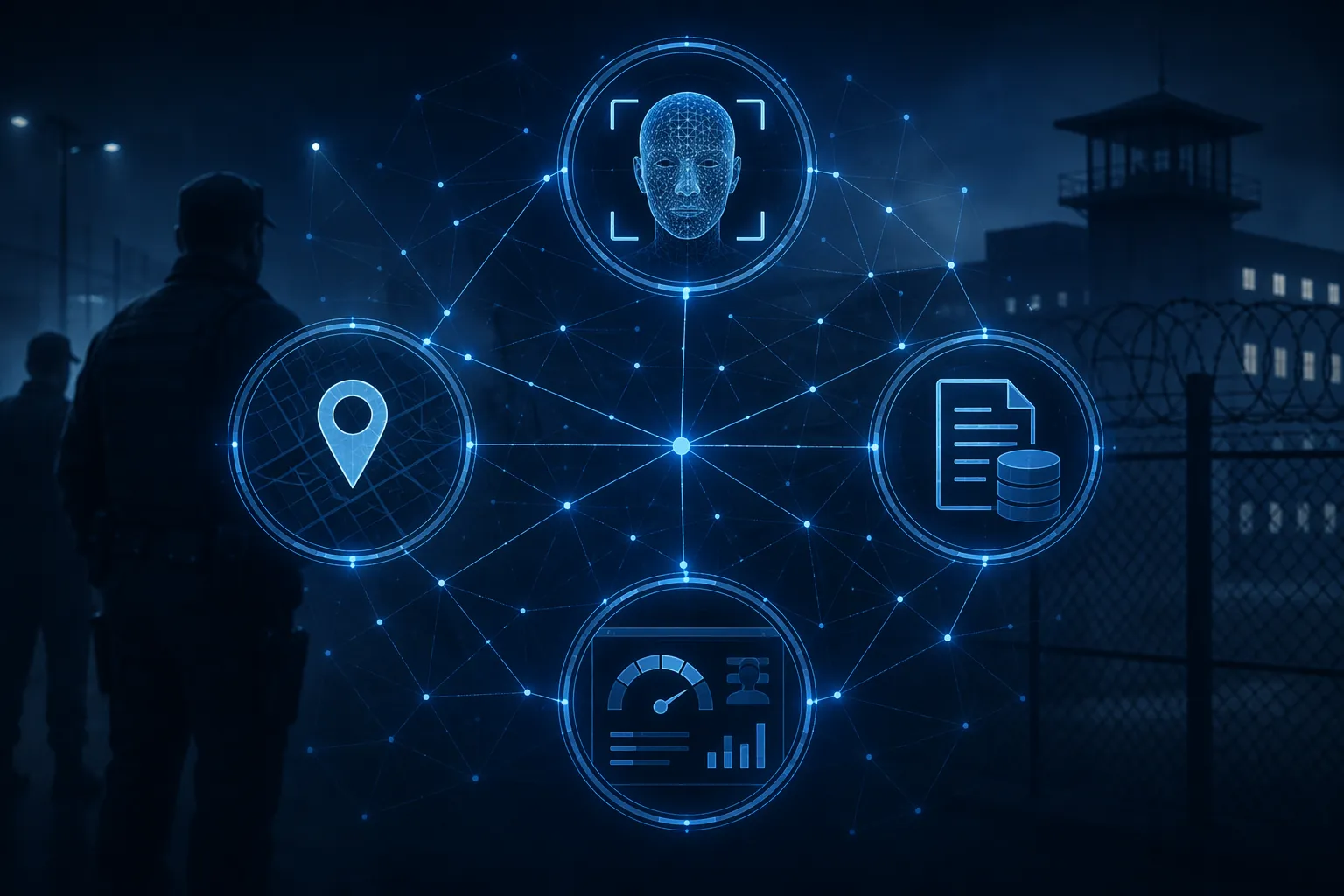
That boundary matters. The useful legal update is not that a named ICE algorithm detained Thompson. The record does not support that claim. The useful update is that his detention sits inside an enforcement system where AI-assisted facial recognition, address extraction, risk assessment, and contractor skip tracing are no longer experimental side projects. They are reported, procured, and operationally relevant systems that can turn a database hit into a person in custody before counsel has a clean view of how the file was built.
The first legal question is traceability
A removal-defense lawyer looking at a Thompson-style detention should begin with a modest question: what touched the file before the arrest, custody decision, or charging document? That question is narrower than “Is ICE using AI?” and more useful than trying to prove, from outside the agency, a complete tool chain that has not been disclosed.
The Department of Homeland Security’s AI Use Case Inventory reports 51 active or pre-deployment ICE AI systems in 2025, with the ICE inventory updated July 15, 2026. The same inventory record shows ICE’s reported AI use-case count nearly doubled from 2024 to 2025.[1] Across DHS, ICE and CBP together accounted for more than half of 238 reported AI use cases in 2025, which means immigration enforcement is not a marginal corner of DHS’s AI program; it is one of the places where the program is concentrated.[2]
The inventory should be treated as a starting point, not a complete map. DHS’s Office of Inspector General found that ICE initially omitted 66 AI use cases from mandatory reporting to Congress.[2][3] That omission is not proof that any one undisclosed system was used in Thompson’s case. It is, however, a reason not to let public inventory labels define the outer edge of discovery.
Where an AI-assisted lead can enter an ICE case
The enforcement path that matters for removal practice is not a single dramatic moment. It is a sequence of ordinary government acts: a person is identified, an address is associated with that person, a file is scored or prioritized, a contractor or database supplies location intelligence, and a field action follows. Each step can be described inside the agency as lead generation or operational support. Each step can also affect liberty.
| Enforcement function | Reported or contracted system type | Why it matters in removal defense |
|---|---|---|
| Identifying a person | Mobile Fortify and other facial-recognition or biometric-matching tools | A false match or weak match can shape who is stopped, questioned, or linked to a file. |
| Locating a person | ELITE address extraction and contractor skip-tracing tools | An extracted or purchased address can become the place where an arrest or custody event begins. |
| Prioritizing a person | Risk-scoring or classification tools, including the now-retired Hurricane Score | A score can affect how urgent, risky, or enforcement-worthy a person appears to the agency. |
| Turning leads into evidence | Case-management entries, officer notes, database exports, and vendor returns | Counsel needs to know whether the government is relying on the underlying source, the AI output, or a cleaned-up version of both. |
Facial recognition: Mobile Fortify and the problem of the match
Mobile Fortify deserves close attention because facial recognition produces a deceptively simple courtroom object: a name, a face, and a claimed match. The Guardian, reporting on a Mijente analysis, described Mobile Fortify as having scanned thousands of immigrants’ and protesters’ faces and reported multiple documented misidentifications.[3] That does not mean every Mobile Fortify use is wrong, and it does not establish that Mobile Fortify was used against Thompson. It means a facial-recognition lead should not be treated as if it were an officer’s independent observation unless the government can show how the match was generated, reviewed, and carried into the file.

The evidentiary problem is practical. Who captured the image? What database was searched? Was the result a candidate list, a confidence score, or a single returned identity? Did a human examiner verify it? Was the match preserved, overwritten, summarized, or simply turned into a note that later reads like ordinary investigative fact? If counsel receives only the final officer narrative, the most important part of the chain may already have been stripped out.
Address extraction: ELITE and the quiet power of a location
ELITE is less visually dramatic than a facial scan, but it may be more familiar to lawyers who deal with custody events. DHS’s ICE inventory identifies ELITE as an AI use case involving address extraction.[1] In removal practice, an address is not just contact information. It can become a surveillance lead, an arrest location, a claimed residence, a notice issue, or a fact used to argue that a respondent is likely to appear or unlikely to appear.
Address-extraction systems raise different questions from facial recognition. The issue may not be whether a face was misidentified, but whether the source document was current, whether the system extracted the right field, whether multiple people were associated with the same address, and whether the address was treated as verified when it was only machine-derived. A stale or misread address can still produce a very current enforcement consequence.
Skip tracing: when “administrative” contracts become location infrastructure
The scale of ICE location intelligence is no longer easy to dismiss as back-office support. The Guardian reported that ICE surveillance technology contract spending reached a record $513 million in 2026, up from $310 million in 2025.[3] Separately, a Jeelani Law Firm analysis identified at least 13 private companies holding skip-tracing contracts potentially totaling $1.2 billion over two years, targeting more than 1 million individuals.[4]
Skip tracing sounds procedural until it is attached to a person. It can mean commercial data, address histories, phone records, property records, social-media-adjacent traces, or other location signals being packaged for enforcement. The legal issue is not only whether a contractor found the right person. It is whether ICE can identify the contractor, the data source, the search terms, the date of the query, the confidence attached to the result, and the path by which the contractor’s return became an agency action.
Risk scoring: Hurricane Score leaves a retirement mark
Hurricane Score should be handled with care. DHS’s ICE inventory lists the Hurricane Score risk-assessment tool as retired in June 2026.[1] The inventory entry does not, by itself, say why the tool was retired. It would be too much to say that Hurricane Score explains Thompson’s detention, and the public record does not confirm that it touched his case.
The retirement still belongs in the legal map because risk scoring changes the posture of a file. A risk label can influence custody, supervision, bond arguments, field priority, or the way later reviewers read neutral facts. If the government has used a risk model and then presents only the downstream conclusion, counsel may need the model name, the input variables, the validation record, the output, and any human review that translated the score into action.
The discovery problem created by underreporting
The OIG underreporting finding changes how a lawyer should read the public inventory. If ICE initially omitted 66 AI use cases from mandatory congressional reporting, then a discovery request that asks only for tools listed in the current public inventory may be too narrow.[2][3] The better issue-spotting frame is functional: did any automated, algorithmic, biometric, data-extraction, risk-scoring, or contractor-location tool contribute to the identification, location, classification, detention, custody recommendation, or evidentiary file?
That approach does not assume misconduct. It recognizes how government records are often built. A database result becomes an officer lead. The officer lead becomes a field note. The field note becomes a charging narrative. By the time the respondent sees the allegation, the machine step may have disappeared behind a human sentence.
This is issue-spotting, not legal advice. The point is to identify evidence questions that may matter in a particular case, not to prescribe a motion or claim for every respondent.
- Source-system identification: Which databases, AI tools, biometric systems, extraction systems, risk models, or contractor platforms were queried before the enforcement action?
- Lead-versus-evidence separation: Did the government use an AI-assisted output only to generate an investigative lead, or is it relying on that output to prove identity, address, removability, credibility, flight risk, or danger?
- Chain of custody: Who received the output, who reviewed it, what was preserved, what was summarized, and what was omitted from the final file?
- Vendor involvement: Was a private company involved in locating the person, associating addresses, matching identities, or enriching the file, and what contractual or audit records exist?
- Accuracy and misidentification: For facial recognition, identity matching, or risk scoring, what error rates, validation materials, known misidentifications, or human-review requirements apply?
- Disclosure gap: If the government says no AI tool was used, does that answer include contractor tools, non-inventory tools, pilot systems, retired systems, and systems used only for lead generation?
How the challenge changes by tool type
A generic objection to “AI” will usually be too blunt. The legal weakness of an AI-assisted file depends on what kind of system touched it and what the government wants the output to prove.
With facial recognition, the pressure point is identity. Counsel may need the probe image, the searched gallery, the match list, confidence information, human-review notes, and any policy limiting how the match may be used. If the government presents a later officer statement as if it independently establishes identity, the missing question is whether the officer’s certainty began with a machine match.
With address extraction, the pressure point is provenance. A respondent may be linked to an address through a document, a database field, a commercial record, or a machine-extracted entry that no person verified at the time. The defense question is whether the government can show why that address belonged to that person on the relevant date.
With skip tracing, the pressure point is vendor opacity. A contractor return can arrive with the polish of a government record while concealing private-data sources, matching logic, update frequency, and confidence assumptions. If the contractor’s output led officers to a person, the contractor’s role may matter even if the government later relies on officer observations made at the scene.
With risk scoring, the pressure point is translation. A number, category, or flag may not appear in the charging document, but it can shape custody recommendations and enforcement priority. The relevant question is not only whether a model was accurate in the abstract. It is whether the score was used, whether the respondent could test the inputs, and whether the adjudicator is seeing the score’s influence without seeing the score.
What Thompson’s case can and cannot prove right now
Thompson’s detention gives the machinery a human face, but it does not yet prove the machinery’s path. No confirmed public record identifies the exact AI tools used in his detention. That uncertainty should prevent overclaiming, not end the inquiry.
For immigration practitioners, the lesson is procedural and immediate. A client does not need to be the subject of a public technology scandal before counsel asks whether AI-assisted identification, address extraction, risk scoring, or contractor skip tracing entered the file. The public inventory, the spending records, the skip-tracing contracts, the Mobile Fortify misidentification reports, the Hurricane Score retirement, and the OIG underreporting finding all point in the same direction: the enforcement record may contain more machinery than the charging document reveals.
That does not mean AI challenges will defeat removal, custody, or inadmissibility allegations. It means the government’s path from lead to evidence should be traceable before a respondent is asked to answer the final version of the file. Thompson’s case is not yet a proven AI-evidence case. It is a warning that the next removal defense may turn on whether counsel can reconstruct how ICE found the person in the first place.
References
- DHS AI Use Case Inventory — U.S. Department of Homeland Security, updated July 15, 2026
- Law enforcement leading DHS use of AI — Nextgov/FCW, January 2026
- ICE tech surveillance arsenal — The Guardian, June 24, 2026
- ICE Use AI To Track Immigrants — Jeelani Law Firm
Related records
Tool profile
Browse tool evaluations →Governing regulation
Browse the obligations tracker →Preventive workflow
Browse verification workflows →
Report a correction or tip
Spotted an outdated figure, a misstated fact, or a ruling this case record should reflect? Public comments are disabled for this content given the professional cost of a misreported case outcome, penalty amount, or rule text — use the structured correction channel instead.
Report a correction or tip for this record →