
India's AI Citation Rule for School Van Fee and RTO Disputes
India's Supreme Court now treats unverified AI-generated citations as advocate misconduct and voids any order built on them. This record details the July 2026 Pooja Ramesh Singh ruling and the pre-filing verification duty it imposes on school van fee, RTO, and other routine Indian filings.
- Jurisdiction
- India
- Court
- Supreme Court of India
- Judge
- P.S. Narasimha and Alok Aradhe
- AI tool named
- None
- Ruling date
- Jul 2, 2026
- Source document
- View primary court order ↗
- Last verified
- Aug 3, 2026
Lex Machina Review is an independent risk-tracking and reference resource. Nothing on this site is legal advice, and using it does not create an attorney-client relationship. Every record is reviewed against primary sources but may not reflect the most current status of a matter — always verify directly against the cited court order, rule text, or a licensed attorney before relying on it.
Companion explanation — secondary to the source document above
Risk record: Supreme Court of India, 2 July 2026
| Field | Verified record |
|---|---|
| Case | Pooja Ramesh Singh v. Jammu & Kashmir Bank Ltd. |
| Citation | 2026 INSC 668 |
| Court and date | Supreme Court of India, 2 July 2026 |
| Case number | Civil Appeal No. 11950 of 2025 |
| Bench | Justices P.S. Narasimha and Alok Aradhe |
| Proceeding below | NCLT order in a Section 7 Insolvency and Bankruptcy Code application, affirmed by NCLAT |
| Result | NCLT and NCLAT orders set aside; Section 7 application restored to NCLT for fresh consideration |
| AI tool identified | None. The judgment does not name an AI platform and does not identify the person who generated the defective citations. |
| Key risk rule | Unverified AI-generated citations can amount to “misconduct on the part of an advocate”; judicial reliance on such material is a “serious lapse”; a decision tainted by even “an iota” of hallucinated material is “no decision in the eyes of the law.” |
| Last verified | 3 August 2026, against the judgment text available on Indian Kanoon. [1] |
For anyone handling a school van fee hike, an RTO-permit dispute, a consumer-style complaint, or a low-value regulatory filing in India, the point is not that those matters have suddenly become insolvency cases. It is narrower and more useful: the Supreme Court did not create a relaxed citation standard for routine disputes. If an AI-assisted draft carries a fake authority into a filing, and that authority later infects an order, the procedural damage can be out of proportion to the money at stake.
What went wrong before the NCLT and NCLAT
The underlying dispute was an insolvency matter. Jammu & Kashmir Bank filed a Section 7 application under the Insolvency and Bankruptcy Code against Essel Infraprojects Ltd. The NCLT dismissed the application. The NCLAT upheld that dismissal. When the matter reached the Supreme Court, the problem was not simply that one side disliked the result below. The problem was that six authorities used in the NCLT’s reasoning could not survive verification. [1]
That is the part of the record that matters for ordinary filings. The defective material passed through two adjudicatory layers before the Supreme Court stopped the chain. A fake citation is not a private drafting blemish once it becomes part of an order. It becomes a task for the next lawyer, the next forum, and the client who thought the dispute had already been decided.
The Supreme Court recorded an affidavit from Jammu & Kashmir Bank stating that its counsel had not cited any of the six authorities before the NCLT. The NCLT was recorded as having obtained them through its own research. That detail should prevent lazy blame. The judgment does not say which tool generated the citations, who entered the query, or whether a particular advocate produced the defective list. It does, however, state the professional and judicial consequences once unverified AI-generated material enters the record. [1]
The six authorities: three did not exist, three were distorted
The Supreme Court’s breakdown is unusually useful because it separates non-existent citations from real cases that were misdescribed or padded with invented content. Both categories are dangerous, but they fail in different ways. A non-existent case should be caught by a basic database search. A real case with a wrong name or invented paragraph can look more respectable because something with a similar shape may be found.
| Authority used below | Supreme Court’s verification finding | Risk shown |
|---|---|---|
| ICICI Bank v. Urban Infrastructure Real Estate | Non-existent authority | A citation can look institutionally plausible while having no legal existence. |
| V.S. Dempo v. Reliance Communications | Non-existent authority | Recognizable commercial names do not make a case real. |
| Sarbjit Singh v. Union Bank of India | Non-existent authority | A conventional party-name format is not verification. |
| SBI v. Shree Ram Urban Infrastructure | Genuine case distorted by wrong case name or invented material | A real dispute can be converted into false authority by misnaming or embellishment. |
| Everest Kento Cylinders | Genuine case distorted by wrong case name or invented material | A searchable case may still not support the proposition attributed to it. |
| Canara Bank v. N.G. Subbaraya Setty | Genuine case distorted by wrong case name or invented material | Invented paragraphs are not cured by the existence of the underlying decision. |
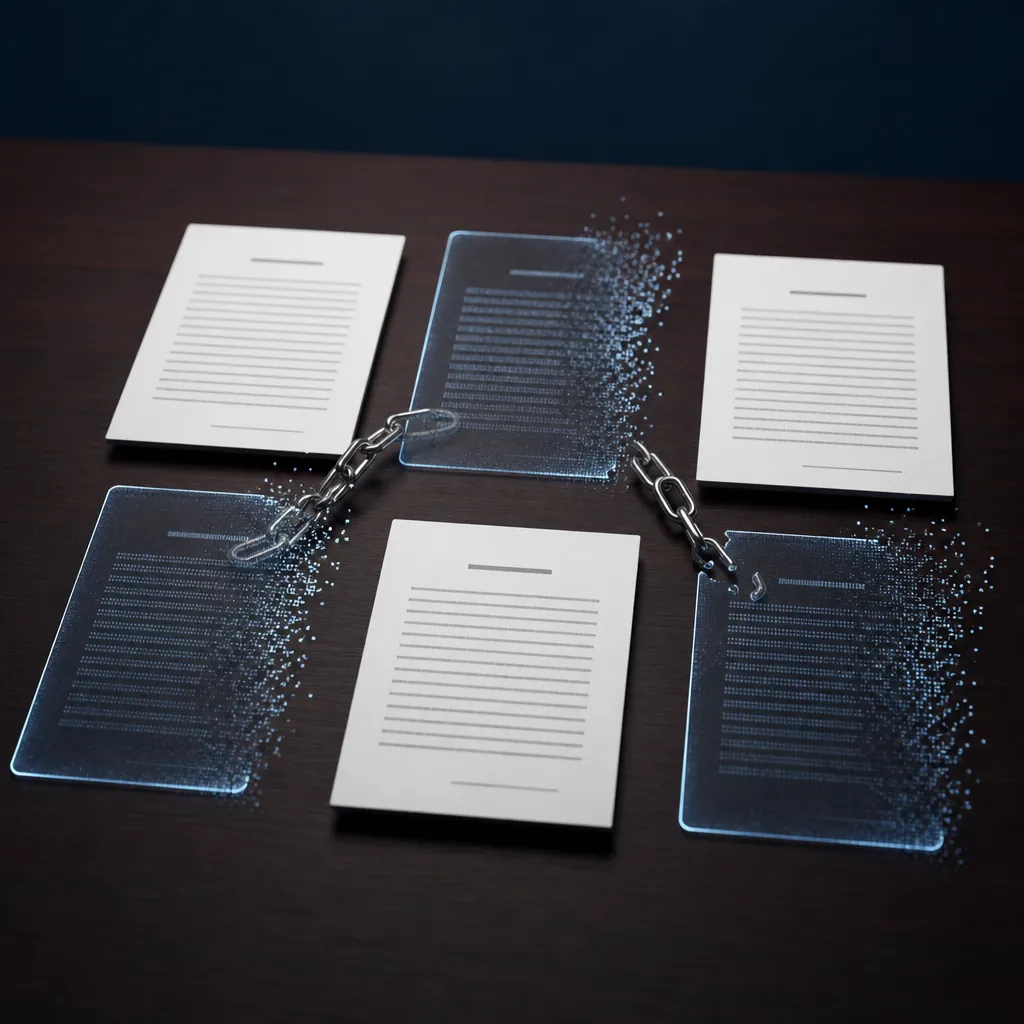
The first three failures are the bluntest kind. If an authority is not in the books, not in the database, and not otherwise traceable as a decision of the court to which it is attributed, it should not get near a filing, much less a tribunal order. The Supreme Court treated those as non-existent citations. [1]
The next three are more treacherous. A lawyer or clerk doing a hurried check may find a case name resembling the draft and stop there. Pooja Ramesh Singh shows why that is not enough. The verification task is not only “does this case exist?” It is also “is this the correct case, under the correct name, and does it contain the paragraph or proposition for which it is being used?”
That distinction is especially important in routine work, where templates and recycled notes move quickly. A school transport fee filing may rely on education-department circulars, transport conditions, parent representations, or local regulatory material. An RTO-permit dispute may involve statutory rules, permit conditions, notices, and regional transport authority practice. In both settings, a fabricated case can pass more easily when everyone assumes the matter is administrative and familiar.
The operative rule: misconduct, serious lapse, and nullity risk
The judgment’s language is not advisory housekeeping. The Court held that citing an AI-generated authority without verification amounts to “misconduct on the part of an advocate” within the professional framework of the Advocates Act. It also described judicial reliance on such material as a “serious lapse.” [1]
The consequence is what changes the filing-risk calculation. The Court said that if even “an iota” of hallucinated material has entered the decision-making process, the resulting decision is “no decision in the eyes of the law.” In this case, that meant the orders of the NCLT and NCLAT were set aside and the Section 7 application was restored for fresh consideration. [1]
The Court also used a sharp image for the damage caused by fabricated legal material, comparing it to “the release of methyl isocyanate in the province of law and justice.” That phrasing is severe, but the reason is practical. Once a false authority is absorbed into an order, later participants have to spend time separating the actual law from the contaminated reasoning. [1]
There is a narrower reading that should be preserved. The judgment does not hold that every AI-assisted document is invalid. It does not ban AI-assisted drafting. It does not identify a named platform as the source of the fabricated material. The ruling is aimed at unverified AI-generated legal authorities and at the institutional failure that occurs when such authorities are relied on.
Why this matters for school van fee and RTO disputes
There is no verified indexed case, on the materials reviewed here, where an Indian court sanctioned an AI citation error in a combined school van fee hike and RTO dispute. That absence should be stated plainly. The read-across from Pooja Ramesh Singh is legal and procedural, not factual: if a routine fee or transport-regulatory matter uses authorities generated or summarized with AI, the same verification duty applies before filing.
School transport disputes are not imaginary pressure points. In Bengaluru, parents were reported in 2022 as objecting to rising school vehicle fees, with some hikes described as up to 60%, and the report noted parent concern over the absence of rules regulating school van fees. [2] That kind of dispute can produce urgent letters, representations, writ drafts, consumer complaints, or regulatory correspondence. The speed of the filing environment is exactly why citation discipline matters.
The practical risk is easy to picture without inventing a case. A parent association challenges a transport-fee increase. A school or operator points to fuel, staffing, vehicle, or compliance costs. An RTO issue sits nearby because vehicle permits, safety conditions, or transport authorization may affect the dispute. Someone asks for a quick note on maintainability, regulatory powers, or interim relief. If an AI-assisted draft supplies a neat but false High Court authority, the modest nature of the dispute will not make that citation safer.
The same point applies to ordinary RTO-permit filings. Older press snippets and local reporting can be useful leads, but they are not a substitute for current rules, notifications, permit documents, or primary orders. Where the factual material is local and time-sensitive, the legal authorities need more checking, not less.
What remains unknown
The judgment leaves several questions open because the record did not answer them. It does not name the AI system, if any specific system was used. It does not identify the individual who generated the six citations. It does not say that Jammu & Kashmir Bank’s counsel cited those authorities; the affidavit recorded by the Court says the opposite. It does not convert all AI use into misconduct. The misconduct finding is tied to reliance on unverified AI-generated citations. [1]
That restraint matters. A risk record should not become a rumor mill. The safe conclusion is that Indian advocates now need a documented verification habit for authorities used in pleadings, written submissions, notes, and draft orders. The unsafe conclusion would be to blame a named tool, a particular court officer, or a particular advocate beyond what the Supreme Court recorded.
Regulatory context: BCI committee and pending Supreme Court AI draft
The Supreme Court directed the Bar Council of India to constitute a committee to frame norms for preventing the use of unverified AI-generated material and to consider disciplinary consequences. That direction is part of the operative significance of the case, because it moves the issue from an isolated appellate correction toward professional regulation. [1]
There is also a pending draft regulatory track. Draft Supreme Court Regulations for the Use of Artificial Intelligence in Courts, 2026 were released in June 2026, and reporting on the draft notes that it would keep AI in an assistive role and require disclosure for AI-assisted documents under Regulation 43(3). Those draft regulations are not in force on the materials reviewed here, so they should be treated as pending regulatory context rather than current procedural law. [3]
The filing standard after Pooja Ramesh Singh
For filing desks, the standard is not complicated. Before a legal authority is filed or handed up, someone must verify that the case exists, that the name and citation are correct, that the cited paragraph exists, and that the proposition in the draft is actually supported by the decision. A search-result preview is not enough. A model answer is not enough. A remembered case name is not enough.
- Check the authority in a reliable legal database or primary court source.
- Open the judgment, not only the search result.
- Match the party name, court, date, citation, paragraph number, and proposition.
- Mark any AI-assisted research output as unverified until this check is complete.
- Do the same check in routine matters, including school van fee, RTO, permit, consumer, and local regulatory disputes.
Pooja Ramesh Singh changes the consequence of a fake citation from embarrassment to exposure: advocate misconduct where unverified AI-generated authorities are cited, judicial lapse where they are relied on, and possible nullity where even a trace of hallucinated material enters the decision. The preventive duty sits before filing, not after appeal.
References
- Pooja Ramesh Singh vs Jammu And Kashmir Bank Ltd, Indian Kanoon, 2 July 2026, https://indiankanoon.org/doc/113338666/
- Parents fume over rising school vehicle fee in Bengaluru, Times of India, 22 June 2022, https://timesofindia.indiatimes.com/city/bengaluru/parents-fume-over-rising-school-vehicle-fee-in-bengaluru-seek-regulation/articleshow/92372508.cms
- 10 cases that show Indian courts have an AI hallucination problem, MediaNama, https://www.medianama.com/2026/07/223-10-cases-ai-hallucination-cases-in-indian-courts/
Related records
Tool profile
Browse tool evaluations →Governing regulation
Browse the obligations tracker →Preventive workflow
Browse verification workflows →
Report a correction or tip
Spotted an outdated figure, a misstated fact, or a ruling this case record should reflect? Public comments are disabled for this content given the professional cost of a misreported case outcome, penalty amount, or rule text — use the structured correction channel instead.
Report a correction or tip for this record →