
Iran's AI-altered supreme leader photo reveals a legal void
The March 2026 case of Iran state media distributing AI-altered photos of Supreme Leader Mojtaba Khamenei exposes a gap that no existing US or international legal framework directly addresses. This article maps the defamation, right-of-publicity, election-deepfake, and humanitarian-law frameworks that miss this conduct, giving litigators and in-house counsel a risk framework for state-generated synthetic leader imagery.
- Jurisdiction
- Iran
- Court
- No court
- AI tool named
- Google SynthID
- Ruling date
- Mar 9, 2026
- Source document
- View primary court order ↗
- Last verified
- Jul 25, 2026
Lex Machina Review is an independent risk-tracking and reference resource. Nothing on this site is legal advice, and using it does not create an attorney-client relationship. Every record is reviewed against primary sources but may not reflect the most current status of a matter — always verify directly against the cited court order, rule text, or a licensed attorney before relying on it.
Companion explanation — secondary to the source document above
The legally difficult part of the March 2026 Iran image story is not that an AI-altered political image circulated online. It is that the alleged speaker, subject, forum, and injury do not line up with the legal categories most often invoked after synthetic-media incidents. Reuters reported that BBC Verify’s Shayan Sardarizadeh used Google SynthID to identify AI alteration in images of Iran’s Khamenei that had been presented as showing the leader amid rubble; the fact-check also made the narrower point that the image was AI-made, not that every surrounding political claim had been judicially established.[1]
That distinction matters. A watermark or detector result is an evidence posture, not a cause of action. It can tell a newsroom, platform trust team, or counsel that an image provenance claim deserves escalation. It does not by itself answer who has standing, which sovereign can be sued, whether a domestic statute reaches the conduct, or whether a wartime legal regime has even switched on.
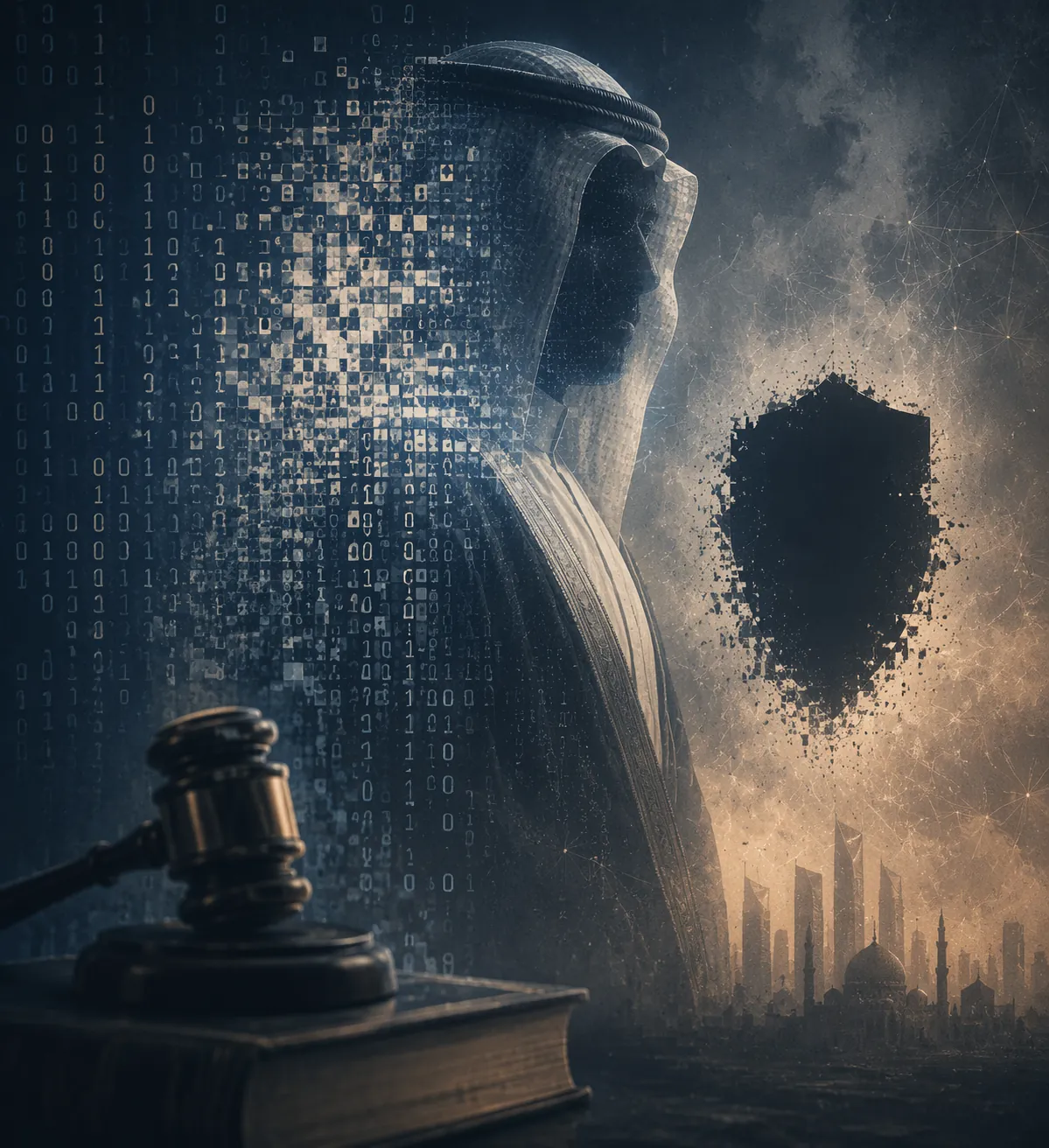
The public reporting also came with a political context that makes the case harder rather than easier. The New York Post reported that Iranian state media used an AI-altered image of Khamenei after he had not appeared publicly, while NDTV described a profile image flagged as AI-generated amid injury reports concerning Mojtaba Khamenei.[2][3] Those accounts point toward a “proof of life” or succession-management use case: synthetic imagery used by a state-linked information channel to shape perceptions of leadership continuity. That is a different legal animal from a campaign deepfake, a fake celebrity endorsement, or non-consensual intimate imagery.
The Usual Legal Map Starts Adjacent to the Conduct
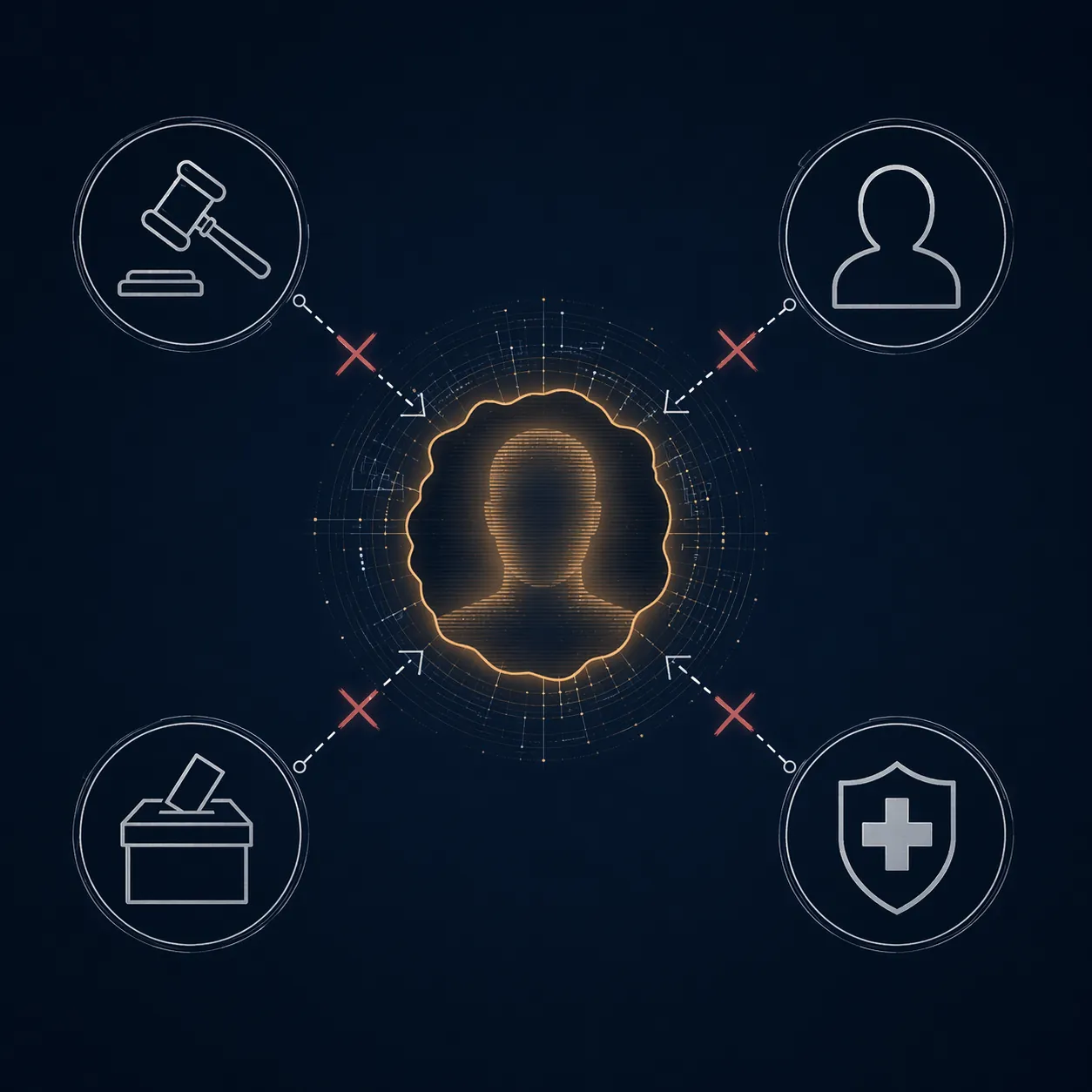
A quick legal screen produces familiar labels: defamation, right of publicity, election deepfake statutes, platform takedown laws, foreign sovereign immunity, and international humanitarian law. Each can matter in a nearby synthetic-media dispute. None cleanly captures the core configuration here: a foreign state or state media apparatus allegedly distributing an AI-altered image of its own supreme leader or succession figure for domestic and geopolitical signaling.
| Framework | Why it is tempting | Why it does not cleanly fit this case |
|---|---|---|
| Defamation | Synthetic images can imply false facts about a public figure | The alleged speaker is tied to the same foreign sovereign system as the subject; forum, standing, falsity, and actual-malice litigation would be unusually strained |
| Right of publicity | AI replication can appropriate name, image, likeness, or voice | US publicity rights are state-law patchworks and do not obviously give a foreign leader a practical claim against his own state media |
| Election deepfake laws | Many new statutes target deceptive political synthetic media | The 2026 US patchwork focuses on domestic candidates, campaigns, and election harms, not foreign sovereign succession imagery |
| TAKE IT DOWN Act | It is a new federal deepfake-related law with platform obligations | Its focus is non-consensual intimate imagery, not synthetic images of political leaders |
| International humanitarian law | Deepfakes can be relevant to deception in armed conflict | Perfidy and ruses are armed-conflict concepts; peacetime state propaganda sits outside that lane |
That table is not a declaration that synthetic political imagery is “unregulated.” It is a warning against treating adjacent regulation as coverage. For counsel, the question is not whether a doctrine sounds thematically relevant. It is whether the statute or cause of action reaches the actor, protects the claimant, names the harm, and supplies a forum capable of enforcing a remedy.
Defamation Is a Poor First Theory
Defamation is usually the first doctrinal reflex when a false image appears to say something damaging about a person. In US law, however, the public-figure frame is demanding. A public official or public figure typically must show that the defendant made a false statement of fact with actual malice under the standard associated with New York Times Co. v. Sullivan. That doctrine was built around domestic press and political speech disputes, not a foreign state’s image management around its own leadership structure.
The Khamenei image also does not present the clean injury pattern that makes defamation legible. If a hostile foreign outlet fabricates an image showing a leader accepting a bribe, the alleged reputational harm and adversarial speaker relationship are easier to identify. Here, the reported distribution channel was state media, and the image appears tied to continuity, survival, or control of a succession narrative. The subject whose reputation is supposedly injured may be the beneficiary of the portrayal, the captive of it, or simply an instrument in a state information operation. Those are materially different litigation positions.
Even before sovereign immunity enters, a US defamation case would face practical questions: who sues, in which jurisdiction, against which defendant, over what publication, and with what damages theory. If the alleged wrong is not reputational injury to Khamenei but deception of the public about regime stability, defamation is already the wrong container.
Right of Publicity Looks Closer, Then Fractures
Right of publicity is the more tempting US framework because it directly concerns control over a person’s identity. AI image and voice replication has pushed that body of law out of celebrity merchandising and into a much broader risk category. Crowell & Moring described the current US landscape as a state-law patchwork, with 25 states recognizing statutory rights and roughly 38 states recognizing some form of protection; post-mortem duration can vary sharply, including examples such as 10 years in Tennessee and 70 years in California.[4]
Recent AI-specific developments make the attraction understandable. Tennessee’s ELVIS Act, enacted in 2024, was described as the first state law explicitly aimed at prohibiting AI replication of a person’s voice, image, and likeness.[5] New York’s 2025 legislation added civil remedies and registration requirements in the post-mortem publicity-right context, reflecting the pressure synthetic media has placed on older likeness doctrines.[6]
But the Iran image case is not a conventional appropriation dispute. Publicity law usually asks whether someone used a person’s identity for a commercial or otherwise prohibited purpose without consent. It is awkward but at least recognizable when an advertiser clones an actor’s voice or a scam account fabricates a celebrity endorsement. A foreign state’s portrayal of its own political leader or succession figure does not present the same plaintiff, defendant, market, or remedy structure.
The standing problem is not cosmetic. A foreign leader might theoretically claim an interest in name, image, likeness, or voice. Yet a claim against a state media outlet or sovereign instrumentality would immediately raise foreign sovereign immunity and forum questions. The Foreign Sovereign Immunities Act is not a general-purpose fairness valve for synthetic media. If the defendant is a foreign state or its agency or instrumentality, the plaintiff needs an applicable exception. A publicity-right theory would then have to survive not only state-law variation but also the sovereign-defendant screen.
There is also an uncomfortable consent problem. In a celebrity case, consent is often disputed but conceptually straightforward: did the person authorize the use? In an authoritarian or highly centralized state information environment, “consent” by the head of state, family member, media apparatus, intelligence service, or party structure may not be separable in a way a US court can use. The more the fact pattern concerns succession control rather than market exploitation, the more publicity law starts doing work it was not designed to do.
This is where broad talk about the legal and ethical implications of AI-generated supreme-leader images can mislead. The ethical issue may be obvious: a public may be shown synthetic evidence of leadership presence or resilience when the underlying reality is uncertain. The legal claim is not obvious. US publicity rights protect identity interests through state-law mechanisms; they do not create a portable international entitlement to truthful sovereign imagery.
Election Deepfake Laws Do Not Reach Foreign Succession Imagery
The election-law patchwork is the other obvious place to look because it is where US lawmakers have moved fastest on synthetic political media. As of May 13, 2026, StackCyber tracked election deepfake laws in 30 US states.[7] MultiState reported on February 12, 2026, that 14 states plus the District of Columbia still lacked laws regulating AI-generated election content.[8] Those numbers are time-stamped because the 2026 midterm cycle is still moving the map.
The problem is statutory target. These laws generally focus on domestic electoral harms: candidates, campaigns, ballot questions, electioneering communications, deceptive media close to voting, disclaimers, and takedown windows. That is a rational target for a state legislature. It is not a natural fit for a foreign state’s synthetic portrayal of its own supreme leader after reported nonappearance or injury.
The litigation around state political-deepfake rules reinforces the boundary. California’s AB 2839 was partially struck down in August 2025 by Judge John Mendez, with the court identifying a conflict with Section 230 in the challenged enforcement structure.[9] Minnesota’s HF 1370 has also faced a challenge from X, and commentary through October 2025 treated the case as part of the unresolved constitutional and platform-liability fight over deepfake political speech.[9] These disputes matter for US election content. They do not convert election-deepfake law into a remedy for foreign sovereign image operations.
Federal preemption did not settle the field either. A proposed 10-year moratorium on state AI regulation was stripped from the federal “One Big Beautiful Bill” by a 99-1 Senate vote, and the bill was signed on July 4, 2025, without the AI preemption language.[10] The result is continued state experimentation, not a federal answer to synthetic leader imagery abroad.
The Brennan Center and NCSL materials are useful for mapping the political deepfake arena because they show lawmakers working through disclaimers, bans, timing windows, and election-integrity harms.[11][12] They are less useful for the Iran fact pattern precisely because the regulated object is different. A domestic candidate impersonation can change voter behavior. A synthetic image of a foreign supreme leader may change intelligence assessments, sanctions risk, crisis timing, diaspora perception, or market assumptions. Those are serious consequences, but they are not automatically election-law injuries.
TAKE IT DOWN Is a Boundary Marker, Not a Solution
The TAKE IT DOWN Act is worth mentioning because it is one of the most concrete recent federal interventions involving deepfake abuse. It was signed in May 2025, imposed a platform compliance deadline of May 19, 2026, and prompted the FTC to send pre-deadline warning letters to major platforms including Meta, Apple, Microsoft, TikTok, Reddit, Snapchat, and X.[10] The first criminal conviction under the statute was reported in Ohio in April 2026.[10]
Its relevance stops at the boundary. TAKE IT DOWN addresses non-consensual intimate imagery, including AI-generated intimate imagery. The Iran image was not reported as intimate imagery. It was political leader imagery. Treating TAKE IT DOWN as proof that federal law has “covered deepfakes” would be the kind of category error that gives a client false comfort.
International Humanitarian Law Only Helps After the Threshold Is Crossed
Once domestic US categories fail, it is tempting to reach for international law. That move should narrow the analysis, not inflate it. The Lieber Institute’s discussion of deepfakes and the law of armed conflict focuses on how synthetic media might interact with concepts such as perfidy and ruses during armed conflict.[13] That threshold matters. International humanitarian law is not a general truth-in-government code for peacetime propaganda.
If a synthetic leader image were used during an armed conflict to induce an adversary to rely on protected status, surrender terms, medical protection, or another legally significant signal, the analysis could change. The relevant questions would include whether the content was part of a military operation, whether it invoked protection under the law of armed conflict, and whether the deception fell on the permissible-ruse or prohibited-perfidy side of the line. Those are not the questions answered by the March 2026 public reporting.
Diplomacy & Law’s broader discussion of deepfakes in international law similarly identifies gaps rather than a settled enforcement path.[14] That is the important point for risk teams. There is commentary, there are plausible analogies, and there may be state-responsibility arguments in more extreme cases. There is not, on the materials available here, a directly on-point international judgment treating a state’s synthetic image of its own leader as an internationally actionable wrong.
China Shows Domestic Regulation Is Possible, Not International Coverage
China’s Deep Synthesis Provisions are useful as a comparator because they show that a state can regulate synthetic-media consent and labeling inside its own information system. The provisions took effect in January 2023 and require, among other things, labeling and consent-related controls for deep synthesis services.[15] That is a domestic-governance model, not an internationally enforceable answer to what Iran did through Iranian state media.
The comparison also cuts against loose claims that the issue is simply “unregulated.” Some jurisdictions regulate parts of the synthetic-media pipeline: service providers, labels, platform duties, election ads, or intimate-image takedowns. The uncovered space is narrower and more operationally important: foreign sovereign use of synthetic leader imagery where the injury is geopolitical misperception rather than a private claimant’s market loss, a domestic voter’s deception, or a battlefield violation.
What Counsel Should Track Separately
For litigators and in-house risk leads, the practical response is not to label every synthetic leader image unlawful. It is to stop routing all of them through frameworks built for other harms. The March 2026 Iran case belongs in a separate geopolitical synthetic-media risk file because the usual legal hooks sit around the conduct rather than on top of it.
- Verify the provenance claim first: identify whether the assertion rests on watermark detection, metadata, visual analysis, source admission, platform labeling, or a combination; treat detection as an escalation signal rather than courtroom-grade certainty.
- Identify the actor and subject separately: a hostile foreign impersonator, a domestic campaign, a private scammer, and state media depicting its own leader create different legal pathways.
- Test speech and personality claims before assuming them: defamation, false light, and publicity rights require a claimant, injury theory, applicable law, and defendant reachable by the forum.
- Screen election statutes by statutory target: ask whether the law protects candidates, voters, ballot processes, or campaign communications; do not treat domestic election coverage as a proxy for foreign succession imagery.
- Run the sovereign-immunity problem early: if the actor is a foreign state, state media organ, or instrumentality, the legal analysis changes before the merits are reached.
- Ask whether armed conflict changes the file: international humanitarian law concepts may matter only if the armed-conflict threshold and operational connection are present.
- Mark the residual gap: if the image concerns regime continuity, proof of life, succession positioning, or crisis signaling, the risk may be real even when no direct US or international cause of action is available.
That last step is the one most likely to be missed in a fast advisory note. The absence of a clean claim does not make the image irrelevant. It may affect sanctions screening, contract timing, physical-security decisions, source validation, crisis communications, and intelligence assumptions. It may also require a different internal escalation path than a celebrity deepfake, campaign fake, or intimate-image abuse report.
Current as of July 25, 2026, the better legal characterization is narrow: synthetic political imagery is regulated in many adjacent ways, but a foreign state’s AI-altered portrayal of its own supreme leader or succession figure remains a distinct legal-risk gap. For counsel, “AI-generated leader imagery” should now be treated as its own geopolitical risk signal.
References
- Reuters fact-check, Video, image of Iran's Ali Khamenei in rubble made with AI, Reuters, March 9, 2026
- NY Post, Iran used AI on newly released photo of Iran’s no-show supreme leader Khamenei, NY Post, March 12, 2026
- NDTV, Mojtaba Khamenei's Profile Photo Flagged As AI-Generated Amid Injury Reports, NDTV
- Crowell & Moring, AI and the Right of Publicity: A Patchwork of State Laws, the Only Guidance for Now, December 2023
- CRS, LSB11052
- Blank Rome, New York Enacts Digital Replica Law
- StackCyber, AI Deepfake Laws, May 13, 2026
- MultiState, How AI-Generated Content Laws Are Changing Across the Country, February 12, 2026
- Cornell Journal of Law and Public Policy, The Legal Gray Zone of Deepfake Political Speech, October 2025
- Wiley, AI Restrictions in Political Ads: What to Know About Deepfake Disclaimers and Bans, June 30, 2026
- Brennan Center, Regulating AI Deepfakes and Synthetic Media in the Political Arena
- NCSL, Artificial Intelligence (AI) in Elections and Campaigns
- Lieber Institute, Deepfakes
- Diplomacy & Law, Deepfakes in International Law: Legal Status and Gaps
- Princeton Legal Journal, The High Stakes of Deepfakes: The Growing Necessity of Federal Legislation to Regulate this Rapidly Evolving Technology
Related records
Tool profile
Browse tool evaluations →Governing regulation
Browse the obligations tracker →Preventive workflow
Browse verification workflows →
Report a correction or tip
Spotted an outdated figure, a misstated fact, or a ruling this case record should reflect? Public comments are disabled for this content given the professional cost of a misreported case outcome, penalty amount, or rule text — use the structured correction channel instead.
Report a correction or tip for this record →