
Knight v. Elon University Dismissed for Failure to Exhaust
Knight v. Elon University ended without prejudice on May 27, 2026, after the M.D.N.C. found the pro se plaintiff never alleged exhaustion of his NDAA whistleblower retaliation claim. This record details the ruling, the state-law claim the court declined, and what must happen before Knight could refile — with no AI tool implicated.
- Jurisdiction
- U.S. federal (M.D.N.C.)
- Court
- U.S. District Court for the Middle District of North Carolina
- Judge
- David A. Bragdon
- AI tool named
- None
- Ruling date
- May 27, 2026
- Source document
- View primary court order ↗
- Last verified
- Aug 2, 2026
Lex Machina Review is an independent risk-tracking and reference resource. Nothing on this site is legal advice, and using it does not create an attorney-client relationship. Every record is reviewed against primary sources but may not reflect the most current status of a matter — always verify directly against the cited court order, rule text, or a licensed attorney before relying on it.
Companion explanation — secondary to the source document above
Record signals
For anyone checking whether the Ray Knight Elon University lawsuit was dismissed, the answer is yes — but the important word is procedural. On May 27, 2026, Judge David A. Bragdon of the U.S. District Court for the Middle District of North Carolina granted Elon University’s Rule 12(b)(6) motion, dismissed Knight’s federal NDAA whistleblower retaliation claim without prejudice for failure to allege administrative exhaustion, and declined supplemental jurisdiction over the remaining state-law claim. The case is docketed as Knight v. Elon University, No. 1:26-cv-00124.[1][2]
| Signal | Current record |
|---|---|
| Court | U.S. District Court for the Middle District of North Carolina |
| Judge | Judge David A. Bragdon |
| Ruling date | May 27, 2026 [1] |
| Disposition | Rule 12(b)(6) motion granted; federal NDAA retaliation claim dismissed without prejudice; state-law claim declined [1] |
| Case status, last verified | Dismissal order entered; recheck docket before treating the dispute as closed in substance [2] |
| Penalty or sanction amount | None identified in the dismissal order [1] |
| AI tool implicated | None. No AI use, hallucinated authority, or AI-related sanction appears in the order [1] |
| Primary procedural defect | Failure to allege exhaustion under 41 U.S.C. § 4712(b)–(c) [1] |

The dismissal order does not decide whether Knight’s retaliation allegations were true. It decides that the federal pleading never got through the statutory entry gate. That distinction matters because a without-prejudice dismissal leaves room for a later filing if the missing condition can be satisfied; it also means the order should not be cited as a merits defeat of the retaliation theory.
Local coverage supplies useful orientation about the employment dispute and campus context, but the operative record is the court’s order. Elon News Network reported the dismissal in July 2026, after the court had already entered its May order.[3] The reason the case belongs in a risk file is narrower than the broader controversy: the federal claim failed because the complaint did not allege the administrative path required before suit.
The omission the court treated as decisive
Knight, a licensed attorney proceeding pro se, asserted a retaliation claim under the National Defense Authorization Act whistleblower provision. The court did not apply the more forgiving construction sometimes given to nonlawyer pro se litigants. It stated that, because Knight was an attorney, he was “not entitled to the liberal construction of his pleadings that is afforded pro se litigants who are not attorneys.”[1]
That posture shaped the exhaustion ruling. The court found that Knight had “three distinct opportunities to allege that he exhausted his administrative remedies and has not done so.” Those opportunities were his original complaint, his amended complaint, and his opposition to Elon’s motion to dismiss. The order also noted that Knight never alleged that he submitted a complaint to the relevant agency’s Inspector General.[1]
This is the kind of defect that can look clerical until it controls the case. Exhaustion is not a stylistic preference or a detail to be supplied later if challenged. Under the NDAA provision discussed by the court, the plaintiff must first take the administrative route Congress put in front of the courthouse door. If the complaint does not allege facts showing that route was taken, a federal court can dismiss before reaching retaliation, causation, damages, tenure politics, or institutional motive.
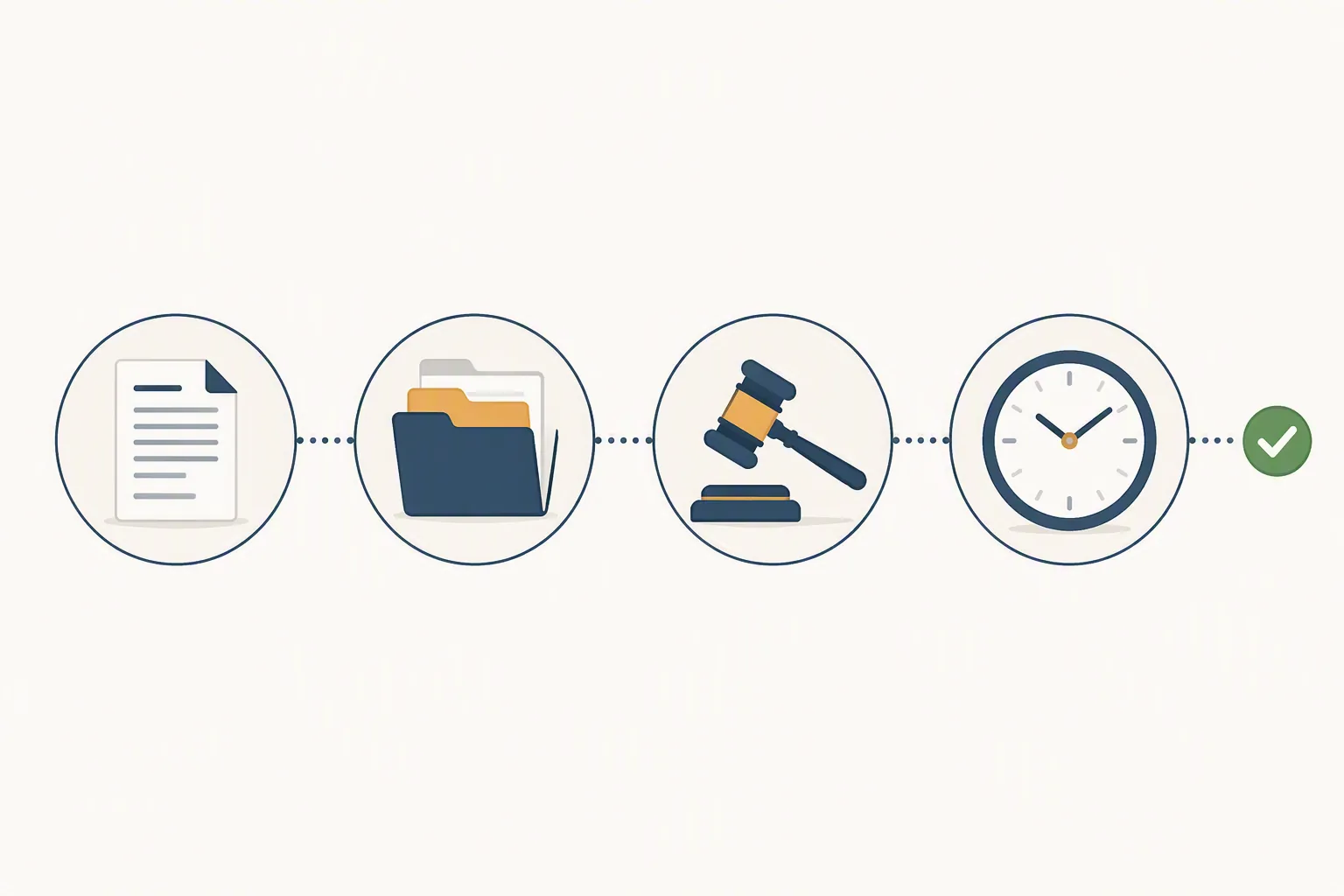
What the NDAA exhaustion path required here
The relevant exhaustion mechanics in the order come from 41 U.S.C. § 4712(b)–(c). The statute, as applied by the court, sends the whistleblower first to the appropriate Inspector General. The Inspector General investigates and submits a report. The agency head then has a decision window. If the agency head denies relief, or if the agency does not act within the statutory period, the employee may be able to bring a de novo action in federal court.[1]
| Exhaustion point | Why it mattered in Knight |
|---|---|
| Complaint to the relevant Inspector General | The court found Knight did not allege that he submitted such a complaint [1] |
| Inspector General report | The statutory path contemplates an IG investigation and report before the agency-head stage [1] |
| Agency-head decision | The order described a 30-day agency-head decision window after receipt of the IG report [1] |
| Deemed exhaustion | The order described a 210-day path that can permit suit if the administrative process has not produced the required decision [1] |
| Federal refiling | A later action would need to account for exhaustion and timing rather than simply restating the dismissed pleading |
The 210-day feature is especially easy to misread. It is not a general waiting period that makes any whistleblower complaint ready for court after enough calendar time passes. In the order’s framing, it is tied to the statutory administrative process: the employee must first submit the complaint through the required channel, and the later right to sue depends on what happens, or does not happen, inside that process.[1]
That is why the without-prejudice dismissal has a practical double meaning. It is less severe than a merits dismissal with prejudice, but it is not an invitation to refile the same pleading immediately. A viable refiling would need to show the exhaustion facts that were missing: the relevant IG submission, the administrative timing, and either the agency-head outcome or the statutory basis for treating the process as exhausted.
The point should stay confined to this statutory claim. The order concerns the NDAA whistleblower retaliation route at issue in Knight. It should not be converted into a blanket rule that every employment retaliation or whistleblower claim requires the same administrative exhaustion sequence.
The sur-reply did not reopen the pleading problem
Knight also sought leave to file a sur-reply. The court denied that request for lack of good cause. In the risk record, that ruling is not a side drama; it confirms the court’s approach to the pleadings. The judge had already looked across the complaint, amended complaint, and motion-to-dismiss briefing and found no exhaustion allegation. The proposed additional filing did not change the procedural posture the court considered dispositive.[1]
For the record, the point is not that sur-replies are categorically unavailable. It is that a late procedural filing is a weak place to repair a statutory prerequisite that should have been pleaded clearly from the start. By the time the court is counting the number of opportunities a plaintiff had to allege exhaustion, the missing allegation has already become the center of the case.
What happened to the state-law claim
After dismissing the federal NDAA claim, the court declined to exercise supplemental jurisdiction over Knight’s state-law claim. That leaves the state claim outside the federal merits ruling. A federal court declining supplemental jurisdiction is not the same thing as adjudicating the state claim to final judgment on the merits.
The order nevertheless included a warning about the state theory. It noted that, under the North Carolina authorities cited, denial of tenure does not qualify as a discharge. The court discussed Claggett v. Wake Forest University and also referenced Bigelow and Joyner in explaining that point.[1]
That observation matters, but it should be filed in the right drawer. The federal court did not retain and decide the state-law claim after disposing of the federal hook. The state-law residue remains procedurally distinct from the NDAA exhaustion dismissal, even if the order signals a serious problem with treating tenure denial as a discharge under the cited North Carolina cases.
Why this belongs in a procedural-risk file, not an AI-incident file
No AI tool is implicated in Knight v. Elon University. The dismissal order does not describe AI-assisted drafting, fabricated citations, hallucinated authority, or any AI-related sanction.[1] The case should not be tagged or summarized as an AI filing failure.
Its relevance to AI-assisted pro se litigation is contextual. Employment defendants and litigation-risk teams are already watching AI-assisted pro se filings as a category because procedural defects can be scaled, repeated, and made harder to triage when drafting tools lower the cost of filing. Baker Donelson’s April 2026 discussion framed AI-assisted pro se employment litigation as a developing risk area for employers.[6] Knight is useful beside that discussion only as a confirmed example of a fragile pro se employment pleading stopped by a statutory prerequisite — not as proof that AI was involved.
That distinction is not cosmetic. If the record says “no AI,” adding an AI storyline would create the same verification problem the risk record is meant to prevent. The defensible label is narrower: attorney pro se plaintiff, employment-related retaliation claim, Rule 12(b)(6), failure to allege NDAA administrative exhaustion, dismissal without prejudice.
Verification cautions before citing the dismissal
A few small record mismatches should travel with any citation to this case. They do not change the dismissal holding, but they do matter for docket hygiene.
- Filed versus docketed date: CourtListener’s docket reflects the case as filed on February 4, 2026, with the complaint docketed on February 6, 2026. Elon News Network reported February 6, 2026. Treat this as a filed/docketed-date distinction unless checking the original docket sheet directly.[2][3]
- Nature-of-suit coding: PacerMonitor lists the case under “375 Other Statutes — False Claims Act” with cause “31:3729,” while the dismissal order addresses an NDAA retaliation claim under 41 U.S.C. § 4712. Do not convert the docket coding into a merits description of the claim without checking the pleadings and order.[1][4]
- Secondary reporting: Alamance News and Elon News Network provide local context about the dispute, but the dismissal reason should be taken from the court’s order rather than from shorthand descriptions in coverage.[1][3][5]
- Service, filing-fee, and counsel details: if those details are needed for a timeline or metadata field, verify them against the primary docket or PDFs before publishing. They are not necessary to the exhaustion holding.
- Current status: because the federal claim was dismissed without prejudice, recheck for later administrative exhaustion, a new complaint, or a related state-court filing before citing the dispute as substantively over.
As last verified on August 2, 2026, Knight v. Elon University is a without-prejudice procedural dismissal. The federal court did not decide the retaliation merits, did not impose a sanction, and did not identify any AI component. The live risk signal is more prosaic and more useful: for this NDAA retaliation route, exhaustion and timing determine whether the courthouse door opens.
References
- KNIGHT v. ELON UNIVERSITY — Order on Motion to Dismiss (ECF No. 16) — M.D.N.C., May 27, 2026
- KNIGHT v. ELON UNIVERSITY, 1:26-cv-00124 — CourtListener
- Judge dismisses former Elon University professor's wrongful termination lawsuit — Elon News Network, July 13, 2026
- Knight v. ELON UNIVERSITY (1:26-cv-00124), North Carolina Middle District Court — PacerMonitor
- Elon University sued for wrongful termination by accounting professor who filed whistleblower complaint — Alamance News, February 19, 2026
- The Rise of AI Assisted Pro Se Employment Litigation: What Employers Need to Know — Baker Donelson, April 16, 2026
Related records
Tool profile
Browse tool evaluations →Governing regulation
Browse the obligations tracker →Preventive workflow
Browse verification workflows →
Report a correction or tip
Spotted an outdated figure, a misstated fact, or a ruling this case record should reflect? Public comments are disabled for this content given the professional cost of a misreported case outcome, penalty amount, or rule text — use the structured correction channel instead.
Report a correction or tip for this record →