
Kratom wrongful death settlement benchmarks for 2026
With only two published compensation events for kratom wrongful death through mid-2026—an $11 million default judgment and a $2.5 million jury verdict—the valuation range is wide. This article examines the factors that will determine settlement amounts in the six new 2026 filings, including defendant solvency, product type, and state damages caps.
- Jurisdiction
- US - Florida
- Court
- Florida State Court
- AI tool named
- None
- Ruling date
- Jul 30, 2026
- Source document
- View primary court order ↗
- Last verified
- Jul 30, 2026
Lex Machina Review is an independent risk-tracking and reference resource. Nothing on this site is legal advice, and using it does not create an attorney-client relationship. Every record is reviewed against primary sources but may not reflect the most current status of a matter — always verify directly against the cited court order, rule text, or a licensed attorney before relying on it.
Companion explanation — secondary to the source document above
The public money record is short, and it is easy to misuse
For anyone searching “kratom overdose wrongful death settlement amount 2026,” the honest starting point is not a payout calculator. Through July 30, 2026, the public record contains two wrongful-death compensation benchmarks that can be discussed by amount, and neither is a disclosed 2026 settlement. One is an $11 million Florida default judgment against Grow LLC; the other is a $2.5 million Washington jury verdict after a contested trial.[1][2] A separate $8.75 million Botanic Tonics settlement belongs in the file, but not in the same valuation column, because it resolved deceptive-marketing class claims rather than a wrongful-death damages claim.[3]
| Public amount | Matter type | Posture | How useful for valuing a new death case |
|---|---|---|---|
| $11 million | Florida kratom wrongful death claim against Grow LLC | Default judgment after the defendant failed to participate | Useful as a public outcome, weak as a contested-case benchmark |
| $2.5 million | Washington kratom wrongful death trial | Defended jury verdict | More comparable procedurally, still limited to one venue and one record |
| $8.75 million | Botanic Tonics / Feel Free class settlement | Class settlement over deceptive-marketing claims | Excluded from wrongful-death valuation; relevant to defendant resources and marketing theories, not death damages |
The spread between $11 million and $2.5 million looks like a range only if the procedural posture is stripped away. It should not be. A default judgment records what the court entered after nonparticipation by the defendant; it does not show what a jury accepted after cross-examination, expert disputes, causation challenges, warning evidence, and damages defenses. A defended verdict is not automatically “typical” either, but it has survived more friction.

That distinction matters because settlement value is usually negotiated in the shadow of what the parties think will happen if the case is defended, collected, appealed, or constrained by state law. A plaintiff may cite the Florida number in a demand package. A defense carrier may answer with the Washington verdict. Neither side can responsibly stop there.
Why the $11 million judgment does not set a market price
The Florida default judgment is the headline number because it is large and specific: $11 million in a kratom wrongful-death matter involving Grow LLC.[1] It is also the number most likely to be overread. Default judgments can be meaningful to a family, and they can create public pressure around a product category. But for settlement valuation, the first question is whether the judgment reflects adversarial testing. Here, the published posture matters as much as the amount: the defendant failed to participate.[1]
A nonappearing defendant does not force the plaintiff to litigate the same way a solvent, insured, motivated defendant does. There may be less developed expert testimony on alternative causation, less pressure on product identification, less contest over warning adequacy, and less evidence about comparative fault or decedent history. The number entered at the end may be lawful and emotionally comprehensible without being a reliable predictor of what another defendant will pay to avoid trial.
Collectability is the quieter problem. A judgment against a thinly capitalized seller can be very different from money actually paid. Public reports on the Grow LLC judgment do not supply a complete insurance-and-assets picture, and that missing information is not a footnote. In wrongful-death settlement practice, available coverage and reachable assets often decide whether a seven- or eight-figure demand is bargaining leverage or paper value.
The defended verdict is more comparable, but still only one case
The $2.5 million Washington verdict is a better procedural comparator because it came out of a contested wrongful-death trial.[2] That does not make it a universal anchor. Washington damages law, the decedent’s circumstances, the specific product proof, the warnings in the record, the credibility of experts, and the defendant’s trial posture all traveled with that verdict. Move the same general allegations to a different state, different product, or different defendant balance sheet, and the settlement discussion changes.
The verdict still performs one useful job: it shows that a defended kratom wrongful-death claim can produce a multimillion-dollar public outcome. It does not show that every pending 2026 case should settle near that figure. It also does not prove that the Florida default judgment is merely an outlier with no strategic use. Demand letters often use the full public record. Valuation memos should not.
The Botanic Tonics class settlement belongs outside the death-damages column
The $8.75 million Botanic Tonics settlement is relevant to the broader kratom litigation environment, but it should not be blended into wrongful-death benchmarks.[3] It resolved class claims tied to alleged deceptive marketing of Feel Free products, not an individualized death case requiring proof of causation, statutory beneficiaries, economic loss, noneconomic loss, and potentially punitive damages.[3]
It can still matter in a defense exposure file for a narrower reason: it suggests that at least one kratom-adjacent defendant had enough resources or settlement incentive to resolve aggregate consumer claims publicly. That is not the same as saying wrongful-death plaintiffs can price their cases against other manufacturers, distributors, or retailers by dividing a class fund into moral equivalents. Class relief and death damages answer different legal questions.
The six 2026 filings are exposure signals, not settlement benchmarks
At least six kratom wrongful-death cases were filed in 2026 in Missouri, Kansas, Florida, Texas, California, and Louisiana. As of July 30, 2026, none has produced a publicly disclosed trial verdict or settlement amount. That makes them important for monitoring litigation momentum and defendant targeting, but not yet useful for quoting a 2026 settlement number.
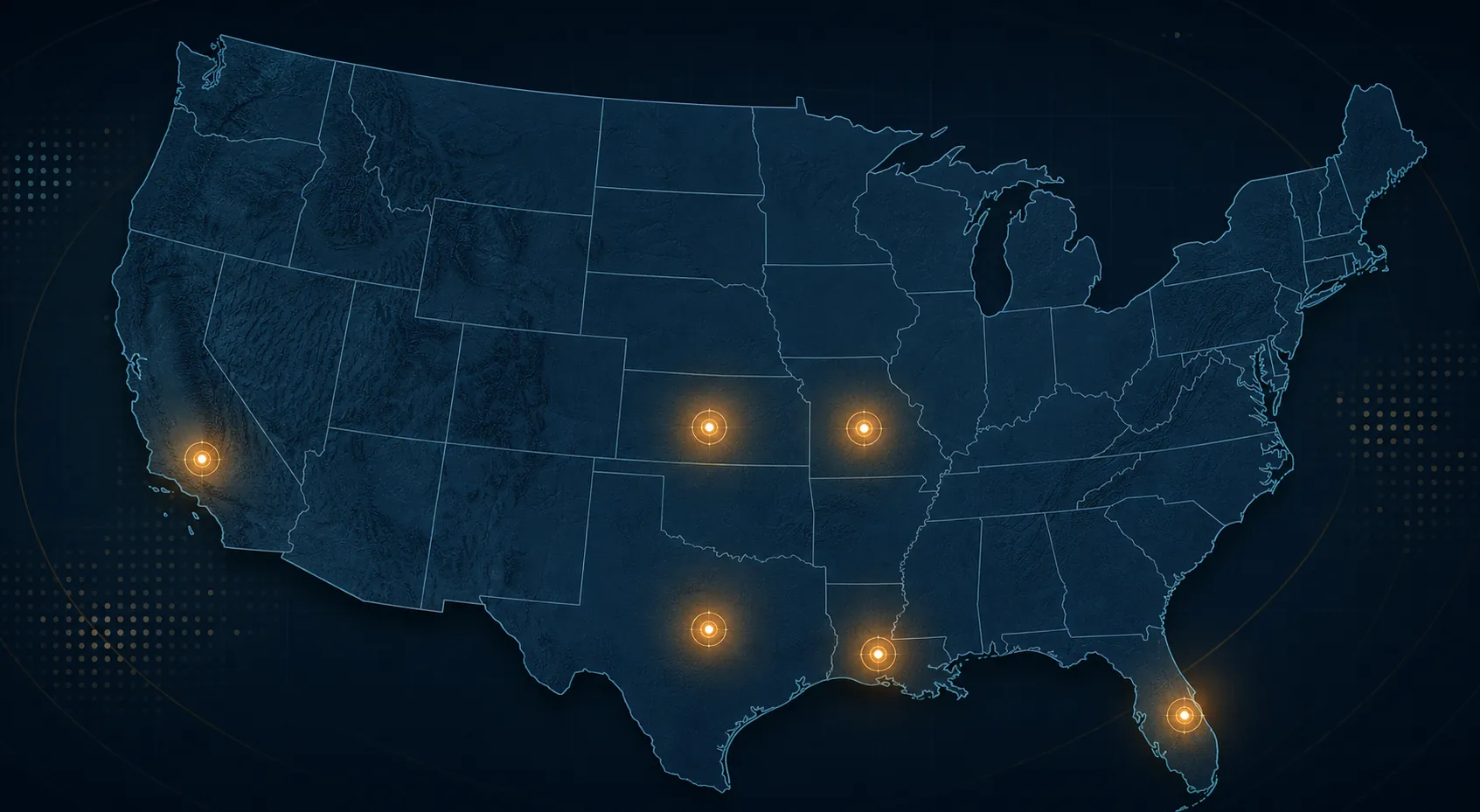
The Missouri filing deserves particular attention because public reporting describes a convenience-store 7-OH death theory, with allegations that the product used innocuous packaging and lacked dosage guidance.[4] If those allegations survive motion practice and discovery, they could move the case into a different warning-risk category than an older traditional-kratom leaf or powder case. The valuation question would not be “kratom, yes or no.” It would be what the seller put in front of the consumer, what warnings accompanied it, and what a reasonable retailer or manufacturer knew at the time of sale.
| 2026 filing venue | Public valuation status through July 30, 2026 | Why it is being watched |
|---|---|---|
| Missouri | Filed; no disclosed settlement or verdict | Reported convenience-store 7-OH death allegations involving packaging and dosage-warning issues |
| Kansas | Filed; no disclosed settlement or verdict | Part of the new multi-state wrongful-death inventory |
| Florida | Filed; no disclosed settlement or verdict | Venue already associated with the prior Grow LLC default judgment |
| Texas | Filed; no disclosed settlement or verdict | Regulatory and enforcement activity around 7-OH may shape pleading and punitive-damages theories |
| California | Filed; no disclosed settlement or verdict | State-law damages and consumer-protection theories may affect leverage |
| Louisiana | Filed; no disclosed settlement or verdict | Part of the geographic spread of new death filings |
The filing pattern also changes who has to pay attention. Plaintiffs’ firms can compare pleadings, product names, retailer chains, and warning language across states. Defense counsel have to sort manufacturer exposure from distributor and retailer exposure, then ask whether each defendant has insurance, indemnity rights, or assets worth pursuing. Families see a list of lawsuits and understandably look for a number. The public docket does not yet give them one.
7-OH allegations may value differently from traditional kratom claims
The newer filings should not be flattened into a single “kratom” category when some involve 7-hydroxymitragynine, commonly called 7-OH. The FDA recommended scheduling 7-OH in July 2025, and the research record cited in current litigation discussions describes 7-OH as 13 to 30 times more potent than morphine.[5] Those facts do not prove any individual death claim. They do help explain why plaintiffs may frame concentrated 7-OH products as a more acute failure-to-warn problem than traditional kratom products sold before that regulatory attention.
Timing is critical. A label drafted before a regulatory recommendation will be evaluated against what was knowable then, not against every later headline. A label used after heightened regulatory warnings or enforcement activity may face a different argument. The stronger plaintiff theory is usually not that all kratom sellers should have predicted every later agency position; it is that a particular seller marketed or packaged a concentrated product without instructions or risk disclosure proportionate to what was already known.
Texas enforcement activity supplies another reason 7-OH cases may be pleaded differently. The Texas Attorney General brought an action against Smokey’s Paradise for allegedly selling 7-OH products at 50 times the legal limit.[6] That is not a wrongful-death verdict, and it does not establish liability for unrelated sellers. But enforcement allegations can become part of the background plaintiffs use to argue notice, recklessness, or punitive exposure where state law permits it.
What actually moves settlement value
The public numbers are thin enough that a valuation memo has to be built from variables rather than averages. The important variables are not exotic. They are the same pressure points that decide whether a product-death claim becomes a collectible settlement or a long judgment-enforcement problem.
- Procedural posture: a default judgment, a defended verdict, a confidential settlement, and a pending complaint carry different evidentiary weight.
- Defendant solvency and insurance: a large theoretical claim against an undercapitalized seller may be worth less than a smaller claim against an insured manufacturer or retailer.
- Product type: concentrated 7-OH allegations may create different warning, potency, and regulatory arguments than traditional kratom powder or leaf products.
- Warning evidence: packaging, dosage guidance, risk disclosures, marketing language, and the timing of label revisions can all affect liability and punitive exposure.
- State damages law: caps, wrongful-death beneficiary rules, punitive-damages standards, comparative fault, and evidentiary rules can change settlement leverage before trial.
- Causation record: toxicology, co-ingestants, medical history, product identification, and expert admissibility determine whether a case can survive long enough to pressure settlement.
State law deserves more attention than it usually gets in public payout articles. A case filed in a state with strict punitive-damages rules or noneconomic-damages limits is not priced the same way as a case in a state where those categories are more available. Wrongful-death statutes also vary in who can recover and what losses count. A surviving spouse, minor children, adult children, and parents do not occupy identical damages positions in every jurisdiction.
The same is true for defendant layering. A roadside retailer, a smoke shop, a distributor, a product formulator, a brand owner, and an online marketplace may all appear in a pleading, but their risk profiles are not identical. Defense-side commentary on the emerging kratom litigation landscape has emphasized multi-tier exposure across manufacturers, distributors, and retailers.[7] That observation is useful because settlement may come from the party with coverage and documents, not necessarily the party whose name attracts the most public anger.
The epidemiology supports litigation momentum, not a payout formula
Public-health figures help explain why plaintiff firms are investing in kratom intake, but they do not translate cleanly into wrongful-death settlement amounts. Reported kratom exposure calls to poison centers reached 14,449 from 2015 through 2026, an increase of more than 1,200%, and CDC-documented deaths exceeded 91 in the cited record.[8] Those figures establish a broader safety signal. They do not answer whether a particular decedent used a specific defendant’s product, whether the product caused the death, or what damages law allows in the filing state.
The recruiting environment is also visible. Firms including mctlaw, The Lanier Law Firm, Sokolove Law, Carlson Law Firm, Anapol Weiss, and Wagstaff & Cartmell have been associated with active kratom case intake or litigation activity.[1][9] That matters for docket growth. It does not mean the filed cases have settled, and it does not prove that private settlements, if any, match advertised verdict headlines.
Confidentiality is the public-record problem that will not go away. Product-death settlements often close with nondisclosure terms, especially when defendants want to avoid creating a demand floor for the next claimant. As a result, the visible record tends to overrepresent unusual events: a large default judgment, a tried verdict, a public class settlement, or a regulator’s enforcement action. The middle of the settlement distribution is usually where the public cannot see.
How to read a future 2026 settlement report
If one of the six 2026 cases later produces a disclosed settlement, the first question should not be whether it is higher or lower than $11 million. The first question should be what kind of number it is. A gross settlement can include liens, fees, multiple defendants, confidential allocation terms, or noncash conditions. A policy-limits settlement may say more about insurance than case merit. A high-low agreement after trial begins is different from an early pre-discovery resolution.
A usable report would identify the product, the defendant roles, the state, the posture, the available coverage if disclosed, the warning evidence, and whether the claim involved 7-OH or traditional kratom. Without those details, the amount is a headline with too many missing denominators.
| Question | Why it matters |
|---|---|
| Was the amount paid, awarded, or merely entered as a judgment? | Collectability and litigation pressure differ sharply. |
| Was the defendant participating and defended by counsel? | Contested outcomes carry more valuation weight than defaults. |
| Was the product 7-OH, an extract, or traditional kratom? | Potency, warnings, and regulatory notice theories may differ. |
| What did the label and packaging say at the time of sale? | Failure-to-warn value depends on contemporaneous information. |
| Which state’s wrongful-death and punitive-damages law applied? | Caps and beneficiary rules can materially change recoverable damages. |
| Was insurance or defendant solvency disclosed? | Settlement value is constrained by reachable money. |
Through mid-2026, kratom wrongful-death settlement amounts remain case-specific and mostly unknowable from public records. The two published death compensation events are too different in posture to produce a reliable range, and the newer filings have not yet supplied disclosed outcomes. The most defensible benchmark is therefore not a dollar figure. It is the combination of posture, solvency, product type, warning evidence, and state-law limits that determines whether a future number is comparable at all.
References
- Kratom wrongful death default judgment, mctlaw, mctlaw.com
- Kratom lawsuit settlement amounts overview with payout data, ConsumerShield, 2026, ConsumerShield
- Botanic Tonics $8.75 million class action settlement, ClassAction.org, ClassAction.org
- Missouri convenience-store 7-OH death lawsuit report, KCTV5, July 15, 2026, KCTV5
- FDA July 2025 scheduling recommendation for 7-OH, FDA, July 2025, FDA
- Texas Attorney General enforcement action against Smokey’s Paradise, Texas Attorney General, Texas AG
- The emerging kratom litigation landscape, Mayer Brown, May 2026, Mayer Brown
- Kratom exposure reports and CDC-documented deaths, poison center and CDC data cited in research brief, CDC
- Kratom safety crisis and growing wave of lawsuits, Rain Intelligence, Rain Intelligence
Related records
Tool profile
Browse tool evaluations →Governing regulation
Browse the obligations tracker →Preventive workflow
Browse verification workflows →
Report a correction or tip
Spotted an outdated figure, a misstated fact, or a ruling this case record should reflect? Public comments are disabled for this content given the professional cost of a misreported case outcome, penalty amount, or rule text — use the structured correction channel instead.
Report a correction or tip for this record →