
LeDoux v. Outliers Blueprint: AI Hallucinations as Defense Leverage
This risk digest entry documents the LeDoux v. Outliers case, where plaintiff's counsel filed multiple documents containing AI-hallucinated citations, a fabricated state statute, and identical errors across two expert reports. The court's show-cause order provides defense counsel with a replicable blueprint for systematically auditing opposing filings and building Rule 11 motions that target professional misconduct rather than product causation.
- Jurisdiction
- US Federal
- Court
- U.S. District Court for the Western District of Washington
- AI tool named
- Not specified
- Ruling date
- Mar 1, 2026
- Source document
- View primary court order ↗
- Last verified
- Jul 28, 2026
Lex Machina Review is an independent risk-tracking and reference resource. Nothing on this site is legal advice, and using it does not create an attorney-client relationship. Every record is reviewed against primary sources but may not reflect the most current status of a matter — always verify directly against the cited court order, rule text, or a licensed attorney before relying on it.
Companion explanation — secondary to the source document above
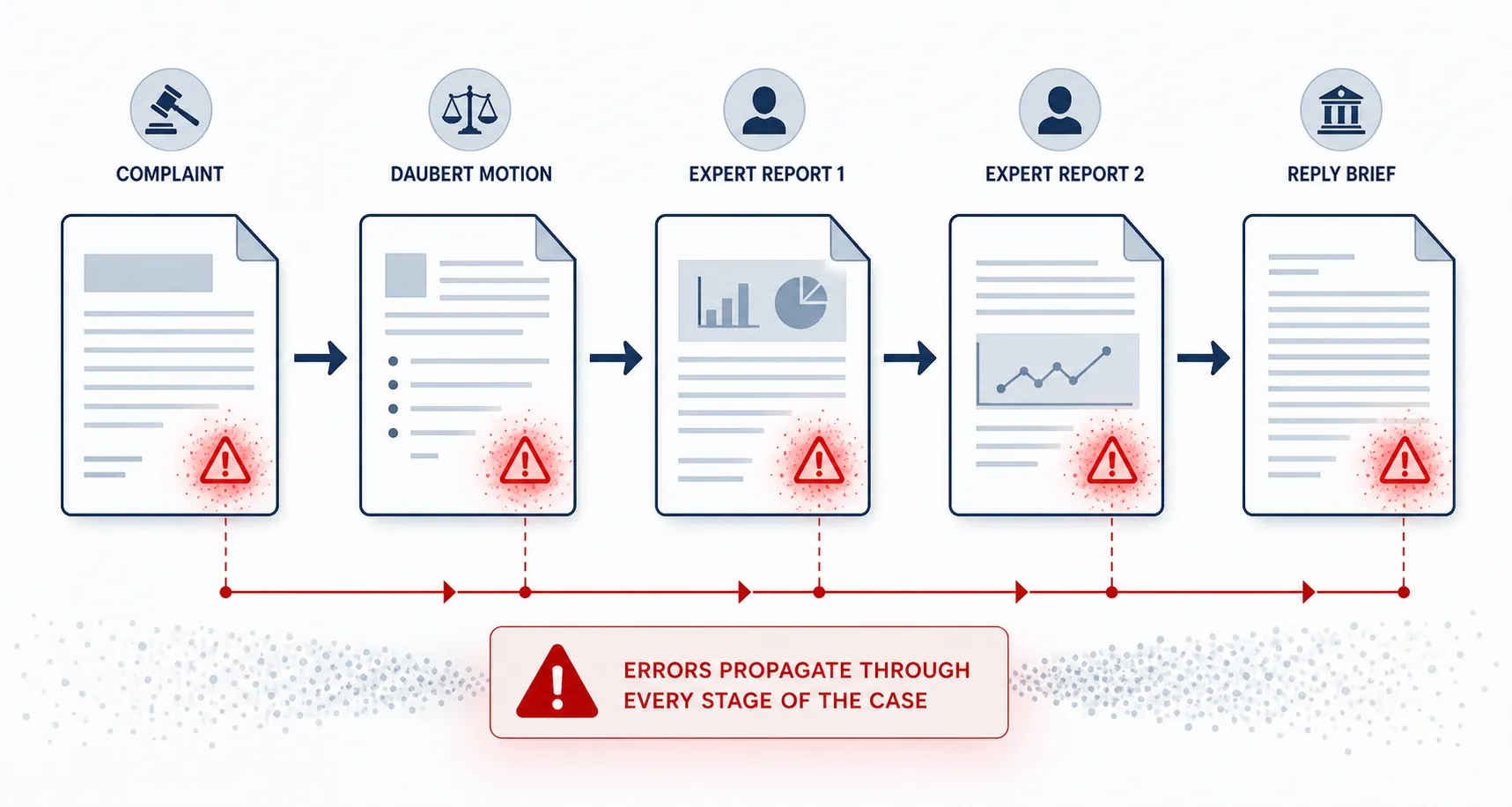
The tactically useful fact in LeDoux is not that a lawyer allegedly used AI badly. It is that the alleged contamination did not stay in one pleading. The defense identified problems across the proposed amended complaint, a Daubert motion, multiple expert reports, and reply briefing, including a fabricated Washington product-liability statute, non-existent cases, fake expert references, and attempted corrections that drew their own criticism from the court.[1]
For anyone arriving through the search phrase “levothyroxine recall 2026 lawsuit,” the boundary matters at the outset: LeDoux v. Outliers, Inc. was a nootropics and dietary-supplement product-liability lawsuit, not a levothyroxine recall case and not an FDA-regulated prescription-drug MDL.[1] Its value is procedural. The order shows how a defense team can turn citation verification into Rule 11 exposure, expert-independence pressure, and credibility leverage without having to win the product-causation fight first.
| Risk Digest field | Entry |
|---|---|
| Case | LeDoux v. Outliers, Inc. |
| Court | U.S. District Court for the Western District of Washington |
| Product context | Nootropics / dietary supplements, not prescription drugs |
| Ruling status | Show-cause order under Rule 11(b); final sanctions are not established in the available source materials |
| Core defense discovery | Alleged AI-hallucinated authorities and references across more than five plaintiff filings |
| AI tool named? | Not specified in the available source materials |
| Docket number | Not supplied in the available source materials; confirm from the court docket before using this entry in a filing |
| Last verified for this article | July 28, 2026 |
The audit trail mattered because it crossed filing boundaries
A single bad cite is irritating. It may support a correction request, a footnote, or a short credibility point. LeDoux was more useful to the defense because the same problem appeared in different procedural forms. That changed the shape of the argument. The defense was not merely saying, “Counsel missed a case.” It was able to point to a pattern that reached pleadings, expert work, motion practice, and post-challenge remediation.[1]
That is the part worth preserving for product-liability litigation. A complaint amendment tests whether counsel has a viable legal theory. A Daubert motion tests how counsel frames expert reliability. Expert reports are supposed to reflect the expert’s own analysis. Reply briefs show what counsel does after being put on notice. If fabricated or corrupted authorities appear across all of those surfaces, the defense can argue process failure rather than typographical accident.
The show-cause posture also keeps the result in proportion. The court ordered plaintiff’s counsel to show cause under Rule 11(b), but the available source materials do not establish final sanctions.[1] That distinction is not housekeeping. A show-cause order is a live procedural opportunity, not a completed trophy. Its force lies in what the court was willing to examine and why.
The fabricated statute is the citation error that should bother product-liability counsel most
Fake case citations are now familiar enough that most litigation teams know to check them. LeDoux went further. The defense identified a fabricated version of Washington’s product-liability statute, RCW 7.72.010(2), containing the phrase “supplying a component part,” language that does not appear in the actual statutory text.[1]
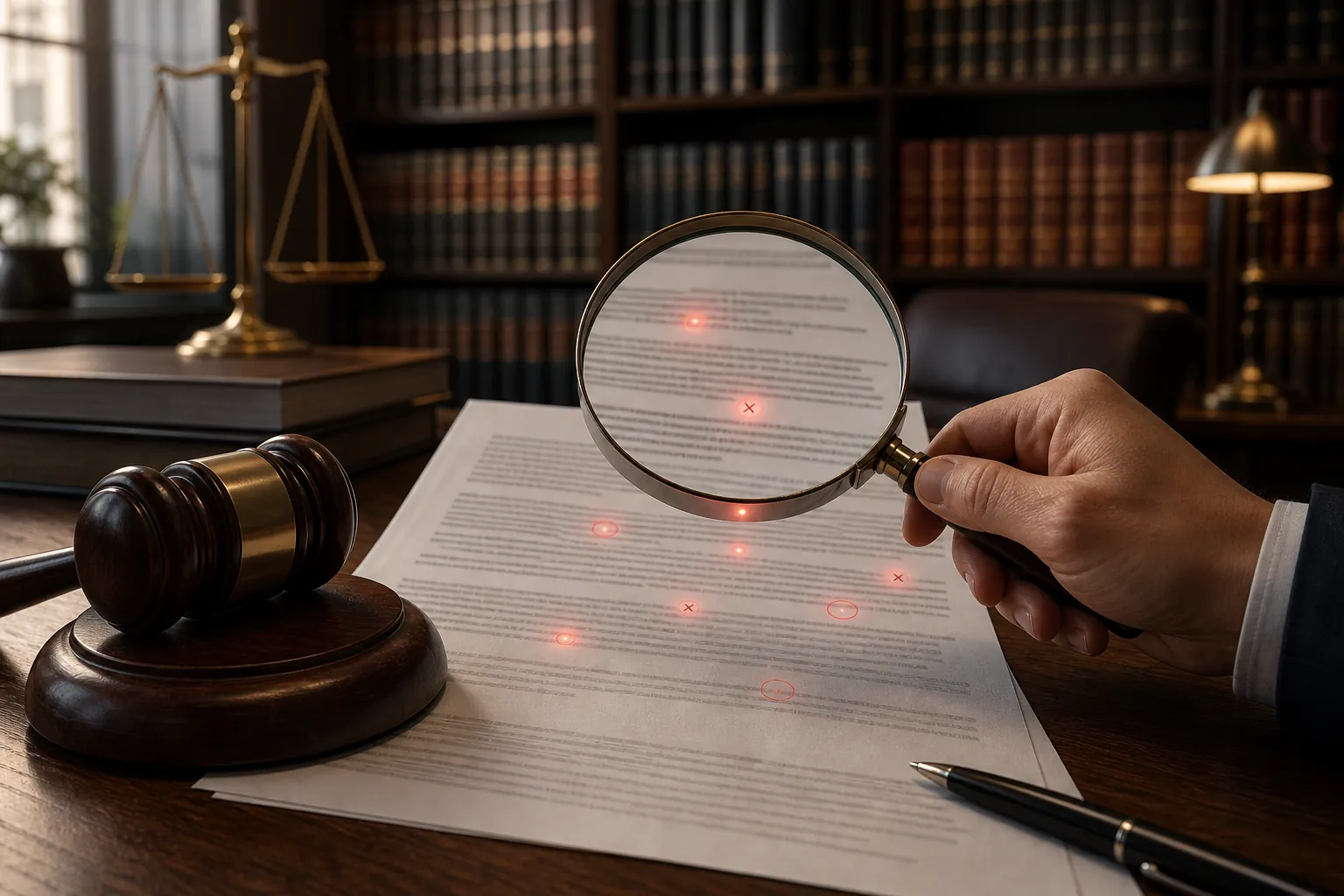
That is not a cosmetic error. In a product-liability lawsuit, statutory wording can determine who counts as a manufacturer, seller, product seller, supplier, or component participant. When invented language is inserted into the governing statute, the error is not just “authority support” gone wrong. It can alter the legal pathway by which a party is brought into the case or kept there.
For a defense team, this category deserves a different response from the ordinary missing-case-cite chart. The useful comparison is not just “cited authority versus Westlaw result.” It is “quoted statutory language versus the enacted text.” That means checking every statutory quotation, every parenthetical describing a statutory definition, and every argument that depends on a defined term. If the opposing brief paraphrases a statute in a way that expands liability, the original text should be in the audit file before anyone assumes it is merely advocacy.
This is where LeDoux travels beyond supplements. Prescription-drug, device, consumer-health, and ingredient-supply cases all have statutory or regulatory vocabulary that can be made to do quiet work in a brief. The product category changes. The discipline of comparing asserted legal text against actual legal text does not.
Different hallucinations create different leverage
The LeDoux record grouped several kinds of alleged hallucination into one procedural problem, but they are not all useful in the same way. A fake statute attacks the legal theory. A non-existent case attacks counsel’s Rule 11 inquiry. A fake expert reference attacks the factual and scientific scaffolding. A corrupted correction attacks candor after notice.
| Error type | What the defense should extract from it |
|---|---|
| Fabricated statutory language | Whether the opposing party expanded a liability theory by quoting or paraphrasing law that does not exist |
| Non-existent cases | Whether counsel conducted a reasonable prefiling inquiry before presenting legal contentions |
| Real articles attributed to wrong authors | Whether expert or counsel work product contains unreliable scientific sourcing |
| Identical errors across expert reports | Whether counsel’s drafting role may have compromised expert independence |
| Incomplete or misleading corrections | Whether remediation after notice created a new credibility problem |
The expert-reference problem is especially easy to underuse. If a report cites a real article but attributes it to the wrong author, the instinct may be to treat it as less serious than a non-existent source. That is too generous in expert practice. Expert opinions depend on a chain of materials reviewed, methods applied, and authorities relied upon. A garbled reference may matter because it obscures what the expert actually read, whether the expert checked the source, and whether the report was assembled from counsel-provided text rather than expert analysis.
The identical expert-report errors were the strongest pressure point
The most useful passage in the LeDoux account is not the one about a fake case. It is the court’s concern that identical citation errors across two expert reports suggested counsel may have been “so involved with the drafting of expert reports as to jeopardize the experts’ independence.”[1]
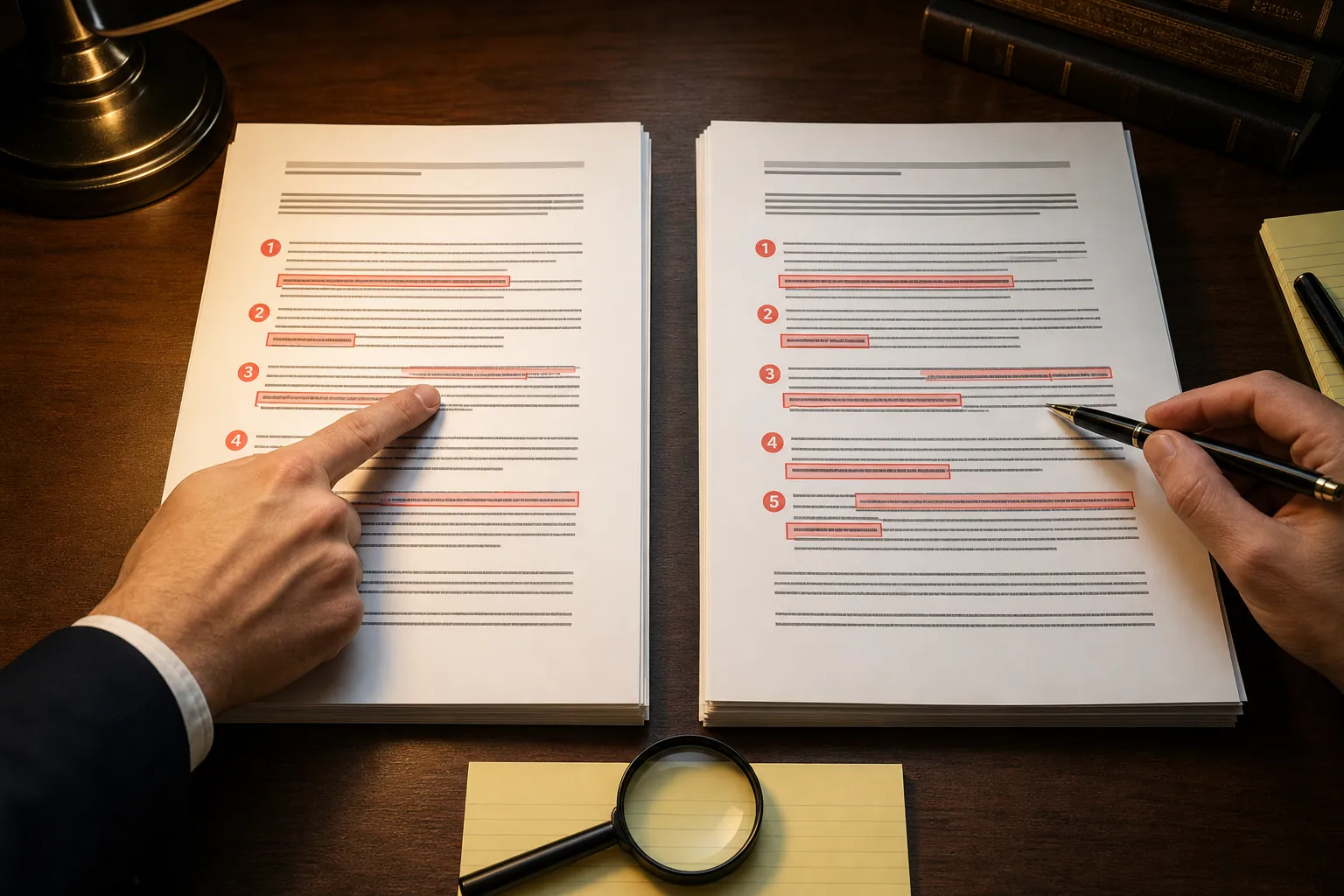
That gives defense counsel a cleaner move than a generic AI-sanctions accusation. The question becomes less about whether a lawyer used an AI tool and more about whether the expert reports bear marks of common drafting that undermine independence. Two reports with the same false references, the same malformed citations, or the same invented support invite a report-to-report comparison before the Daubert argument is even fully framed.
The practical audit is straightforward enough to run without making it mechanical. Put the reports side by side. Pull every citation, quotation, article title, author name, journal reference, and scientific proposition that appears in both. Then separate shared reliance from shared error. Experts in the same case may rely on some of the same literature. That is not suspicious by itself. The leverage appears when the same mistake repeats in places where independent expert work should not naturally produce identical wrong output.
That point matters in drug and device defense because expert independence is often more valuable than a sanctions skirmish. A court may hesitate to impose severe sanctions for a citation failure. It may still care deeply if the record suggests that counsel’s drafting process blurred the line between lawyer advocacy and expert opinion. LeDoux is useful because the court itself connected identical citation errors to that independence concern.[1]
Corrections can become the second exhibit
The defense opportunity did not end when the errors were challenged. Plaintiff’s attempted corrections became part of the problem. The court described the corrections as “incomplete at best and misleading at worst,” and found that one corrected Daubert motion replaced fabricated quotations with real quotations while “completely changing their meaning.”[1]
That sequence is worth more than a passing mention because remediation has its own evidentiary life. Once a party is on notice that authorities may be false, the next filing shows how seriously counsel treated the problem. Did the corrected filing identify every affected citation, or only the ones the defense already found? Did it preserve the original proposition, or quietly substitute a different proposition supported by real authority? Did it tell the court that a citation was corrected while leaving the argument materially changed?
A defense team should therefore keep two charts, not one. The first chart captures the original hallucination: cited source, asserted proposition, actual source status, and location in the filing. The second chart captures the correction: what changed, what remained wrong, and whether the new authority supports the same proposition. If the correction alters the meaning, the issue is no longer only prefiling inquiry. It becomes notice, candor, and reliability of the cleanup effort.
Where to look first in the next product-liability lawsuit
LeDoux does not require defense counsel to audit every comma in every filing with equal intensity. It does suggest where the first hours should go when a case begins to smell wrong.
- Proposed amended complaints: check whether new defendants, new statutory theories, or new product-chain allegations depend on quoted legal language.
- Daubert motions and oppositions: verify quoted passages from cases and scientific articles, especially when the quotation does unusually heavy work.
- Expert reports: compare source lists, author names, article titles, and repeated propositions across experts.
- Reply briefs: look for new authorities introduced after the defense has already exposed weaknesses.
- Corrected filings: compare the correction against the original proposition, not merely against the existence of a real source.
The preventive version of the same discipline is the verification-first workflow described in “How to Use AI Legal Research Without Getting Sanctioned.” The LeDoux record supplies the litigation consequence when that discipline is absent: the opposing party gets to turn source-checking into motion practice.
The point is not to file a sanctions motion every time a citation is wrong. That would waste briefing capital and, in the wrong case, irritate the court. The point is to recognize when the errors line up across filings, across experts, or across correction attempts. That is when a citation chart stops being internal quality control and becomes a procedural record.
What LeDoux can and cannot support
LeDoux should not be oversold. It is one supplement-product case in show-cause posture, not proof that courts will impose sanctions in every AI-contaminated filing and not a substitute for drug- or device-specific authority. It also does not eliminate the possibility that some citation errors arise from rushed drafting, bad delegation, or ordinary human sloppiness rather than intentional misconduct.
Its value is narrower and more useful. It gives defense counsel a court-tested pattern: audit across the litigation lifecycle, separate error types by tactical consequence, compare expert reports for identical defects, and treat failed corrections as new record evidence. In a product-liability lawsuit, that pattern can move the court’s attention from product causation to the integrity of the filing process when the record justifies it.
References
- AI Hallucinations in Court: A Case Study in How Bad It Can Get, Drug & Device Law blog, March 2026, https://www.druganddevicelawblog.com/2026/03/ai-hallucinations-in-court-a-case-study-in-how-bad-it-can-get.html
Related records
Tool profile
Browse tool evaluations →Governing regulation
Browse the obligations tracker →Preventive workflow
Browse verification workflows →
Report a correction or tip
Spotted an outdated figure, a misstated fact, or a ruling this case record should reflect? Public comments are disabled for this content given the professional cost of a misreported case outcome, penalty amount, or rule text — use the structured correction channel instead.
Report a correction or tip for this record →