
What Phone Records Show in the Lindsay Clancy Trial
A timestamp-ordered breakdown of the Jan. 24, 2023 digital evidence in Commonwealth v. Clancy — phone searches, Apple Maps queries, texts, call logs, and store surveillance — separating what the records prove from the prosecution's planning narrative and the defense's competing read of the same artifacts.
- Jurisdiction
- Massachusetts, United States
- Court
- Massachusetts Superior Court
- AI tool named
- Apple Maps
- Ruling date
- Jan 24, 2023
- Source document
- View primary court order ↗
- Last verified
- Jul 31, 2026
Lex Machina Review is an independent risk-tracking and reference resource. Nothing on this site is legal advice, and using it does not create an attorney-client relationship. Every record is reviewed against primary sources but may not reflect the most current status of a matter — always verify directly against the cited court order, rule text, or a licensed attorney before relying on it.
Companion explanation — secondary to the source document above

Last checked July 31, 2026, UTC. This Lindsay Clancy trial update is limited to the Jan. 24, 2023 digital-evidence spine identified in the available record summary: phone searches, Apple Maps activity, call and text records, and store surveillance. It is not legal advice and does not attempt to resolve guilt, criminal responsibility, or mental state.
The useful starting point is the record, not the conclusion someone wants from it. A phone search proves a phone search occurred if the extraction and timestamp are accepted. A map query proves a route or travel-time query occurred if the app data is accurately described. A call log proves a call event, not the caller’s unspoken purpose. The trial fight begins in the space between those artifacts and the explanation each side asks a factfinder to accept.
The timestamped chain identified in the record summary
The Commonwealth’s planning theory depends on accumulation. None of the listed digital entries, standing alone, carries the whole argument. The force comes from sequence: a search, then a takeout search and drive-time query, then CVS activity, followed by communications and store-record corroboration. That is why the chronology matters more than any one artifact treated as a dramatic clue.
| Time or sequence point | Artifact described in the available record | What the artifact can prove | Prosecution use | Defense recharacterization |
|---|---|---|---|---|
| 4:02 p.m. | Phone search for Miralax for kids | That the search occurred at the recorded time, assuming the device data and timestamp are accepted | Places the device in an afternoon sequence the Commonwealth treats as deliberate and organized | Can be read as an ordinary household or child-care search without proving planning by itself |
| 4:13 p.m. | ThreeV takeout search and Apple Maps drive-time query | That takeout and travel-time information were queried at that time | Supports an argument that the afternoon was being arranged around another person’s movements and timing | Can be read as routine dinner logistics or errand planning; a map query is not, by itself, proof of intent |
| 4:47 p.m. | CVS website visit and store call | That website and call activity connected to CVS occurred at the recorded time | Fits the theory that the errand window was being created, checked, or reinforced | Can be characterized as ordinary pharmacy or store-related activity unless tied to a stronger inference by surrounding facts |
| Later communications | Texts and call logs identified as part of the same afternoon record set | That communications occurred, and in the case of texts, that recorded content and timestamps exist as preserved | Allows the Commonwealth to argue continuity and coordination across the afternoon | Allows the defense to argue that ordinary family communications are being overread after the fact |
| Store-record point | Store surveillance described as part of the corroborating record | That a camera captured events at the store-linked time if the video and timing are authenticated | Corroborates the errand timeline against phone and map activity | Corroborates timing, but not necessarily the meaning of the prior phone activity |
The careful reading is deliberately narrower than the argument. The 4:13 p.m. Apple Maps query may become important because it sits beside the takeout search and later CVS activity. But a drive-time query does not announce why it was run. It can help establish that someone was thinking about distance or timing. It does not, without inference, establish the ultimate reason for that timing.
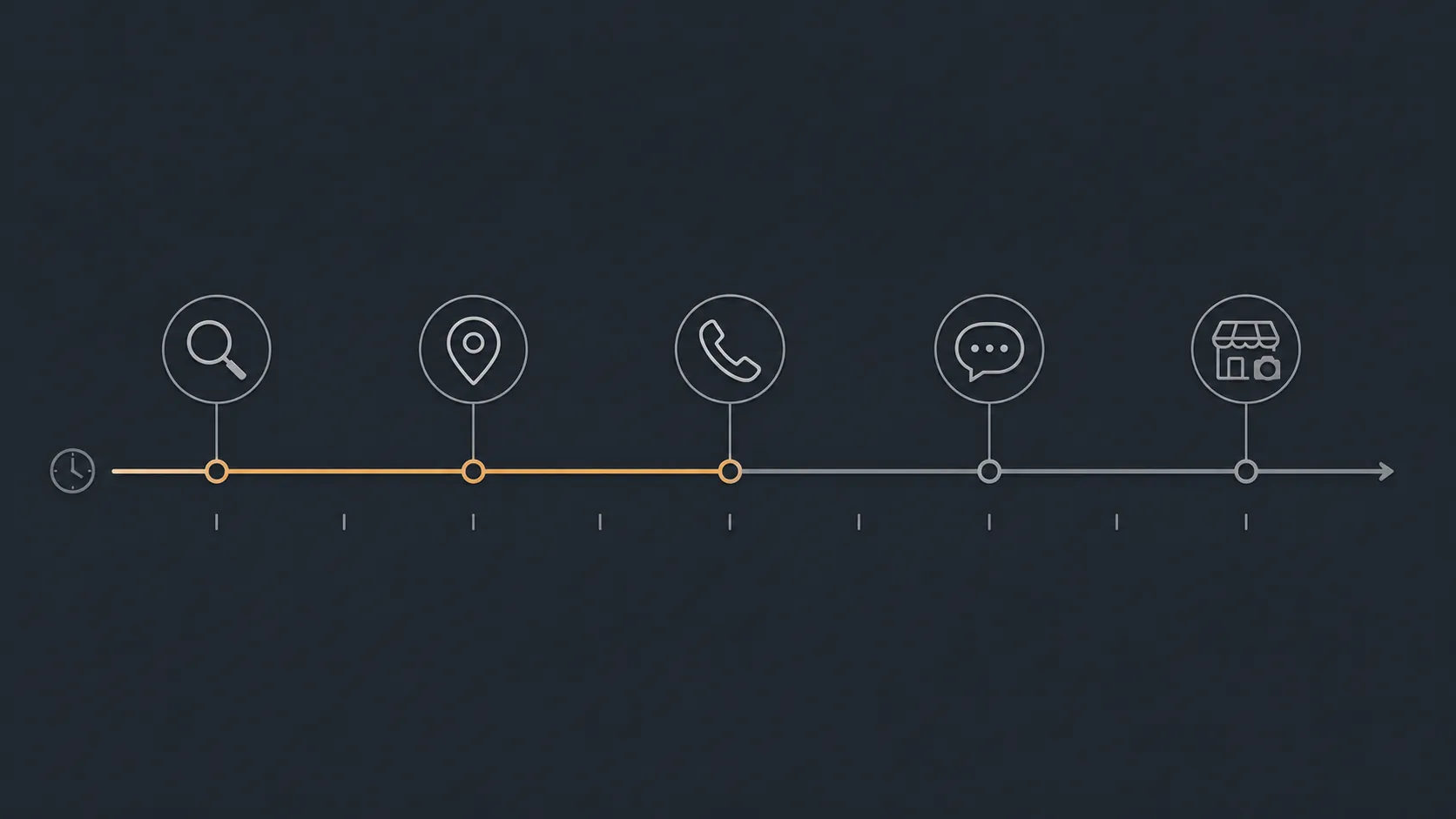
What the Commonwealth can build from the sequence
The prosecution value of the Jan. 24 digital record is organizational. It gives the afternoon a spine. Instead of relying only on a general claim that an errand happened, the Commonwealth can point to a series of recorded acts: a search at 4:02 p.m., a takeout search and Apple Maps query at 4:13 p.m., a CVS website visit and store call at 4:47 p.m., then related communications and store surveillance.
That sort of evidence can be powerful because it reduces the number of unsupported gaps in a timeline. A factfinder does not have to accept a witness’s broad recollection of the afternoon without anchors. The anchors are machine-generated or record-preserved entries, each capable of being placed against the next.
But the prosecution still has to cross from chronology to purpose. The record can show that information was searched. It can show that a route or drive time was queried. It can show that a website was visited and a call was placed. It can show that store footage lines up with the errand account. The planned-killings theory asks the factfinder to treat those acts as coordinated steps, not isolated errands or household tasks.
That is a legitimate evidentiary move, but it is still an inferential one. The more tightly the entries align, the harder they may be to dismiss as coincidence. Yet the entries remain records of conduct, not direct records of mental state.
Phone searches and map queries need different treatment
A search query and a map query are not the same kind of artifact. The Miralax search records an information request. The ThreeV search records interest in a restaurant or takeout source. The Apple Maps query records a request for travel information. Each may be extracted from the same device environment, but each answers a different factual question.
The Miralax search matters chiefly because of its place in the sequence. Its content is not self-evidently incriminating on the limited record supplied here. A factfinder may hear it as ordinary child-care activity. The Commonwealth’s better use is not to treat it as a standalone admission, but to place it as the first identified entry in an afternoon that later includes takeout, drive-time, CVS, call, text, and surveillance data.
The 4:13 p.m. pairing is more probative for timing. A takeout search followed by an Apple Maps drive-time query can support an argument that the user was checking logistics. If the broader case theory is that another adult’s absence was being arranged or measured, the query becomes a timing artifact. It still does not say, on its own, what the user intended to do during that absence.
That distinction is not a defense technicality. It is the difference between a record and a conclusion. Lawyers can argue from one to the other; they should not collapse them.

Calls, texts, and store video corroborate timing more cleanly than intent
The 4:47 p.m. CVS website visit and store call move the timeline from general logistics records to a specific errand-related record. For the Commonwealth, that helps connect earlier searches and map activity to a real-world movement. For the defense, it remains compatible with routine store or pharmacy conduct unless the surrounding facts make the innocent explanation less plausible.
Call logs are often cleaner on occurrence than on meaning. A log can show a call was placed, received, missed, or connected, depending on the data available. It may show duration. Unless there is a recording or other admissible content evidence, it does not show what was said. Even when a call sits at a meaningful point in the timeline, the factfinder still has to decide whether the call was logistical, casual, manipulative, urgent, or something else.
Texts can carry more content than call logs, but they raise their own discipline problem. A sent timestamp is not always the same as proof that the recipient read the message at that moment. A preserved message can prove the words recorded and the time associated with them; the claimed effect of those words may require additional proof.
Store surveillance is strongest as corroboration. It can place a person, vehicle, or transaction-linked event within the camera’s recorded time window if authenticated. It should not be asked to do more than that. In this record, its evident function is to test the phone-based timeline against a non-phone source.
The defense does not have to erase the artifacts to contest the inference
The defense’s strongest use of the same material is not necessarily to deny every timestamp. It is to separate occurrence from characterization. The phone can have searched for Miralax. The device can have queried takeout and drive time. CVS activity can have occurred. Communications can have been exchanged. Store video can have corroborated an errand. The contested question is whether those entries add up to planning.
That recharacterization has room because the identified artifacts are not confessions. They are behavioral traces. A parent can search for children’s medicine or related products for ordinary reasons. A spouse can check takeout and travel time for dinner logistics. A CVS call can be mundane. A text can be functional rather than strategic. The defense asks the factfinder to resist reading the afternoon backward from the alleged outcome.
The prosecution answer is that ordinary explanations become less persuasive when too many entries align with the same disputed window. That is the burden the digital chain places on the defense. It does not require the defense to disprove the existence of the searches and calls, but it does require an account of why the sequence should not be treated as coordinated.
For cross-examination, the practical questions are narrow and repetitive in the best sense: What exactly was extracted? Which device or account generated it? What timestamp field is being used? Is the time local, converted, or displayed through a tool? Does the artifact show content, or only activity? Does it show a message was read, or only sent? Does the store camera timestamp independently match the phone records? Each answer either tightens the chain or exposes a joint in it.
Admission fights are different from meaning fights
The available record summary supports discussion of the artifacts as part of the Commonwealth’s Jan. 24 timeline, but it does not provide a separate, item-by-item account of every admissibility ruling for each digital entry. That matters. Authentication, extraction reliability, hearsay objections, completeness, prejudice, and expert explanation are legal gateways. Once an artifact is before the factfinder, the more common fight is weight and meaning.
A party can lose an admissibility objection and still argue that the admitted record is ambiguous. A party can authenticate a timestamp and still overstate what the timestamp proves. The distinction is especially important in digital-evidence coverage because the visual neatness of a timeline can make interpretive gaps look smaller than they are.
What this trial update can fairly say
The Commonwealth has a dense, timestamped chain for the afternoon of Jan. 24, 2023: a 4:02 p.m. Miralax-for-kids search, a 4:13 p.m. ThreeV takeout search and Apple Maps drive-time query, a 4:47 p.m. CVS website visit and store call, followed by related texts, call logs, and store surveillance as part of the same evidentiary spine.
That chain matters because it gives the prosecution a way to organize the afternoon into a planning narrative. The records can make timing concrete and can corroborate one another across device and store sources. They can also make an innocent or routine account harder to maintain if the factfinder sees the sequence as too coordinated to be accidental.
The records themselves prove a narrower set of facts: that the searches, queries, calls, texts, purchases, or surveillance-captured events occurred when the accepted record says they occurred. Whether that sequence becomes proof of planning is the contested inference, not a property automatically contained inside the timestamps.
Related records
Tool profile
Browse tool evaluations →Governing regulation
Browse the obligations tracker →Preventive workflow
Browse verification workflows →
Report a correction or tip
Spotted an outdated figure, a misstated fact, or a ruling this case record should reflect? Public comments are disabled for this content given the professional cost of a misreported case outcome, penalty amount, or rule text — use the structured correction channel instead.
Report a correction or tip for this record →