
Legal Implications of the Maple Leaf Foods Bacon Recall
How much legal exposure does a Class I food recall create when no illnesses are confirmed? For the July 2026 Maple Leaf bacon recall, that exposure is primarily regulatory and reputational — with civil risk bounded by FSIS enforcement mechanics, consumer economic-loss and failure-to-warn theories, and the outer limits set in Maple Leaf's own 2008 settlement and 2020 SCC ruling.
- Jurisdiction
- United States
- Court
- None
- AI tool named
- None
- Ruling date
- Jul 24, 2026
- Source document
- View primary court order ↗
- Last verified
- Jul 31, 2026
Lex Machina Review is an independent risk-tracking and reference resource. Nothing on this site is legal advice, and using it does not create an attorney-client relationship. Every record is reviewed against primary sources but may not reflect the most current status of a matter — always verify directly against the cited court order, rule text, or a licensed attorney before relying on it.
Companion explanation — secondary to the source document above
Last verified against the FSIS public recall record on July 31, 2026. The agency record—not the company’s description of the problem—is the starting point: FSIS Recall 011-2026 is a Class I, high-risk recall of approximately 12,036 pounds of not-ready-to-eat smoked bacon imported from Canada without benefit of FSIS import reinspection. The recall was announced July 24, 2026, remains listed as active in the FSIS record, and the agency says there have been no confirmed reports of adverse reactions due to consumption of the products. The problem was discovered during routine FSIS inspection, not through a reported illness cluster. [1]
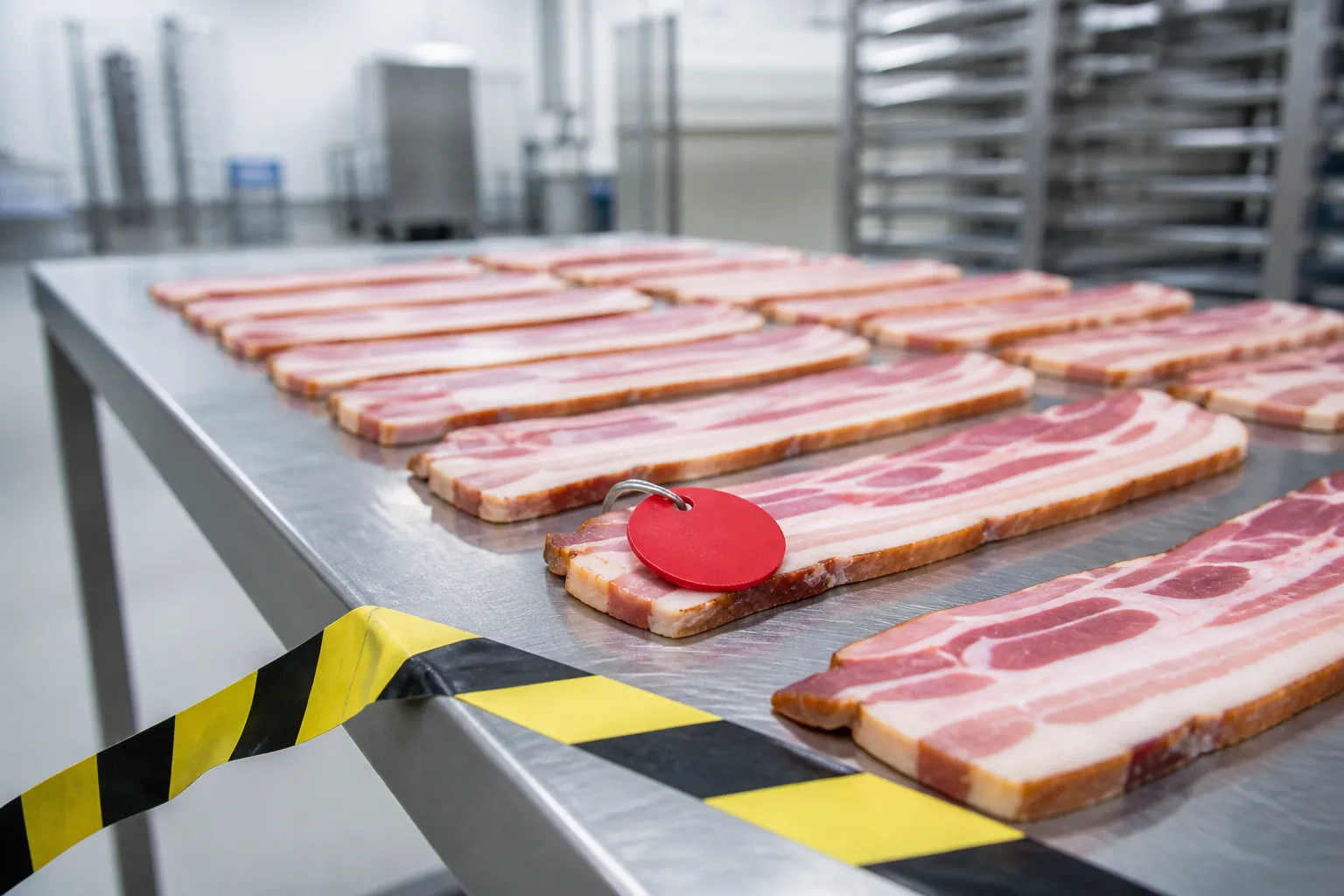
That combination answers the central legal question better than either of the easy headlines. A Class I recall increases regulatory urgency and puts retailers, distributors, and the importer under immediate operational pressure. It does not, by itself, prove that anyone was injured or that a civil damages case is already viable.
| Recall field | Record value |
|---|---|
| Recall number | FSIS Recall 011-2026 |
| Class and reason | Class I / High; Import Violation |
| Firm identified by FSIS | Maple Leaf Foods, Inc., Lisle, Illinois |
| Product volume | Approximately 12,036 pounds |
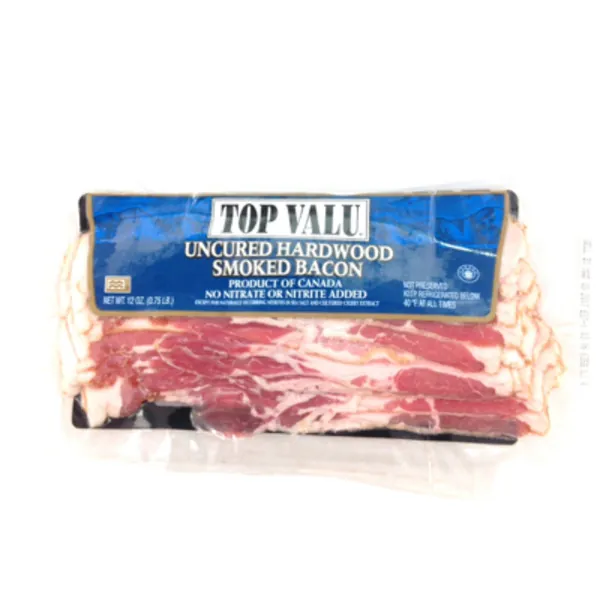
| Products | 12-oz Royale Natural Applewood Smoked All Natural Uncured Bacon, Product of Canada; 12-oz TOP VALU Uncured Hardwood Smoked Bacon, Product of Canada |
| Sell-by dates | Royale: SEP 01 and SEP 07 2026; TOP VALU: SEP 01, 02, 04, 05, and 07 2026 |
| Establishment / certificate | Canadian EST. 1; health certificate 2026-S732971612 |
| Production window | June 9 through June 15, 2026 |
| Distribution identified by FSIS | Grocery Outlet distributors and retailers in Idaho, Oregon, and Washington |
| Illness status in FSIS notice | No confirmed reports of adverse reactions |
What the Class I label settles—and what it does not
FSIS defines a Class I recall as a health hazard situation in which there is a reasonable probability that use of the product will cause serious adverse health consequences or death. That is a hazard classification. It is not an agency finding that this bacon caused illness, and it is not a substitute for causation evidence in a civil case. [2]
The distinction matters because the recall reason is an import violation: the products entered U.S. commerce without the required FSIS import reinspection. The FSIS notice does not say the bacon failed a pathogen test, and it does not say consumers became sick. It also does not say the product is proven safe. The legal problem is that the federal inspection step was missed, so the product was not cleared through the regulatory path Congress and USDA require before commercial distribution.
Maple Leaf’s public framing therefore needs attribution. A company spokesperson told Snopes the issue was “simply a lack of paperwork review at the border” and said “the product itself will not cause human illness.” That may be the company’s position, but it is not an FSIS finding in the recall notice. The agency record remains narrower: import reinspection did not occur, the recall is Class I, and no confirmed adverse reactions had been reported. [1][5]
The recall is “voluntary,” but refusal is not a realistic business option
FSIS food recalls are often described as voluntary because FSIS generally asks the firm to remove product rather than issuing the recall in the firm’s name. That word can mislead a commercial audience. In practice, once FSIS has determined that adulterated or misbranded meat, poultry, or egg products may be in commerce, a firm that resists the requested recall faces federal tools that are far more consequential than bad optics. FSIS materials describe recall as a firm action, but agency recall mechanics sit behind it: product detention, suspension of inspection services, and referral to the Department of Justice for seizure or condemnation can follow when product is not removed. [2][3]
That enforcement backdrop is why the legal exposure starts before a plaintiff files a complaint. For an importer, the immediate questions are whether all affected lots were identified, whether consignees received accurate instructions, whether returned or destroyed product is documented, and whether any distribution path remains unaccounted for. For a retailer, the risk is not only selling a recalled item after notice. It is also failing to segregate inventory, leaving e-commerce pages or shelf tags active, giving customers incomplete return information, or making assurances that go beyond what the agency record supports.
OFW Law’s USDA recall guide puts the point bluntly, describing the process as not “actually voluntary at all” because a firm that refuses to recall can lose inspection services and effectively have operations halted. That is a practitioner description, not the primary agency record, but it captures the practical risk for counsel: the recall decision may be styled as voluntary, while the consequences of noncooperation are regulatory and immediate. [4]
The downstream response should track the FSIS record rather than the press cycle. FSIS advised consumers not to eat the products and to throw them away or return them to the place of purchase. For Grocery Outlet-linked distributors and retailers in Idaho, Oregon, and Washington, that instruction converts into a concrete execution file: pull records, store-level confirmation, customer refund handling, disposal documentation, and a communication log that does not promise more than the facts support. [1]
Civil exposure exists, but the no-illness record narrows it
For the July 2026 Maple Leaf Foods bacon recall, the civil exposure is not zero. It is conditional. The current record supports economic-loss, refund, recall-execution, and warning theories more readily than personal-injury claims. That changes if illnesses are later confirmed and tied to the recalled products.
Consumer economic-loss claims
Consumers who bought recalled food may try to plead economic injury even without physical harm: the purchase price, the alleged overpayment for a product that could not lawfully be sold, or the loss of the bargain represented on the label. Jones Day’s product-recall litigation overview discusses In re Aqua Dots Products Liability Litigation, where the Seventh Circuit recognized standing for purchasers alleging economic loss even without personal injury. The same overview also warns that a prompt recall and refund program can shrink or moot individual damages and can create problems for class certification, citing Jovine v. Abbott Laboratories as an example of recall-related relief affecting consumer claims. [6]
That is the likely first civil lane here if litigation appears before any confirmed illness. The consumer bought bacon, later learned it was recalled, and wants money back. If retailers or the firm provide complete refunds, the remaining case becomes harder to value and harder to certify. If refund access is confusing, uneven, or conditioned in ways consumers challenge, the claims become more expensive to administer even if the underlying injury remains economic.
Retailer and distributor losses
The downstream commercial losses are different: pulled inventory, staff time, disposal, customer refunds, lost sales, and reputational friction at store level. Those losses often move through contracts, indemnity provisions, vendor agreements, insurance, and chargeback processes before they become tort claims. The FSIS notice alone does not answer who ultimately bears them.
For an in-house lawyer, this is where overstatement can create new risk. A retailer can say it is following FSIS instructions and removing identified products. It should be cautious about saying the products were safe, unsafe, contaminated, or harmless unless the statement is tied to an identified source. The agency record supports an import-reinspection violation and a Class I recall. It does not support a retailer’s independent medical conclusion.
Negligent recall and post-sale warning theories
Recall execution can itself become evidence in later litigation. Product-liability plaintiffs often look not only at the original defect or violation but at the speed, scope, and adequacy of the recall notice. Jones Day’s overview discusses post-sale warning and negligent-recall theories under Restatement (Third) of Torts principles, including duties that may arise when a seller knows or should know of a product risk after sale and can reasonably identify and warn affected users. [6]
Federal Rule of Evidence 407 gives some protection for subsequent remedial measures, but it is not a blanket privilege over recall communications. Remedial steps generally cannot be used to prove negligence, culpable conduct, a defect, or the need for a warning, but they may be admitted for other purposes, such as impeachment or feasibility when those issues are disputed. The safer assumption is that recall files will be read later by someone who is not impressed by informal emails, inconsistent customer scripts, or unverified safety assurances. [6]
Personal injury would change the case
As of the July 31 verification point, personal-injury exposure remains contingent because FSIS reports no confirmed adverse reactions. If later-confirmed illnesses are tied to the recalled bacon, the file changes. Plaintiffs would no longer be arguing only over the purchase price or refund process; they would be litigating causation, medical injury, warning adequacy, and potentially punitive narratives if the recall response looked careless after notice.
That is also when the Class I label becomes more dangerous in front of a jury. It still would not prove causation by itself, but it would supply a federal hazard classification around which plaintiffs could organize the story of notice and response. The defense record would then depend heavily on traceability, store-level removal timing, consumer instructions, and whether any allegedly injured consumer actually purchased and consumed a recalled product.
Maple Leaf’s earlier litigation history is a boundary, not a shortcut
Maple Leaf’s name carries a long product-safety shadow because of the 2008 listeriosis outbreak tied to its Bartor Road plant. CBC reported that about 220 products were recalled, recall costs were reported near $20 million, and the company agreed in December 2008 to settle four provincial class actions for $25 million to $27 million, with compensation tiers that included payments to estates of deceased victims and to class members with hospitalization or psychological-injury claims. [7]
That settlement is useful here only as an outer boundary. It shows what a confirmed outbreak, broad recall, and injury-centered class resolution can cost. It does not make the July 2026 bacon recall equivalent. The current FSIS record has no confirmed illness, no identified outbreak, and no agency statement that the bacon tested positive for a pathogen. Treating the 2008 settlement as proof of present liability would collapse the difference between historical reputation and current evidence.
The more legally surgical Maple Leaf precedent is the Supreme Court of Canada’s 2020 decision in 1688782 Ontario Inc. v. Maple Leaf Foods Inc. The case arose from Mr. Sub franchisees’ pure economic-loss claims after Maple Leaf recalled contaminated ready-to-eat meats in 2008. In a 5-4 decision issued November 6, 2020, the Court held that Maple Leaf owed no duty of care to 424 franchisees for their alleged lost profits, lost sales, capital value losses, and goodwill losses. The majority reasoned that the relevant danger “evaporated” once the affected products were recalled and destroyed, leaving only de minimis disposal, destruction, and clean-up costs potentially recoverable under the dangerous-goods framework. It also noted that the franchisees could protect themselves through contract or insurance. [8]
That is Canadian authority, not U.S. product-liability law. It should not be imported into an Idaho, Oregon, Washington, or federal consumer case as if it controlled the result. Its value for this recall is conceptual and commercial: once dangerous or noncompliant product is removed from the stream of commerce, downstream businesses may face sharp limits on tort recovery for purely economic ripple effects, especially where contract allocation was available.
The paperwork explanation creates its own messaging risk
There is a narrow way to say what happened: FSIS says the bacon was imported without benefit of import reinspection. There is a broader, riskier way: describing the issue as only paperwork and assuring the public that the product cannot cause illness. Maple Leaf’s spokesperson used that broader framing in comments reported by Snopes, but downstream parties do not have to adopt it and should be careful if they do. [5]
The issue with “paperwork” language is not that paperwork is trivial or serious in the abstract. The issue is that import reinspection is the legal gate. If the gate was missed, a retailer cannot honestly convert that into an independent safety conclusion unless it has a reliable basis for doing so. A customer-service script that says “we are removing the products identified by FSIS and offering refunds” is different from one that says “the product is safe.” The first sentence tracks the record. The second invites a later cross-examination if facts change.
The same discipline applies to public-company and lender-facing communications. Securities or financing risk would not arise because a recall exists in isolation; it would arise if public statements about the recall, exposure, insurance, supply continuity, or customer impact outran what management knew or failed to disclose a material operational consequence. The legal problem is not bad news. It is unsupported certainty.
Nothing in the FSIS notice attributes the recall to tariffs, trade policy, or a Canada-U.S. political dispute. Those topics may explain why readers notice a Canadian bacon recall in July 2026, but they do not supply the legal cause of this recall on the agency record. The cause identified by FSIS is an import-reinspection violation. [1]
Risk position as of July 31, 2026
On the present record, the Maple Leaf Foods bacon recall is primarily a regulatory and reputational event. The federal classification is serious, and the recall must be executed as if the risk is real. But a Class I notice with no confirmed illnesses is not the same thing as an outbreak case, and it is not automatic civil liability.
- Regulatory exposure is immediate: FSIS has classified the recall as Class I, the status remains active in the agency record, and the products should be removed, returned, or discarded according to FSIS instructions.
- Consumer civil exposure is plausible but bounded: purchase-price, overpayment, refund, and consumer-protection theories are easier to plead than physical-injury theories while the no-illness record holds.
- Retailer and distributor exposure turns on execution: whether affected lots were found, whether store-level pulls were completed, whether customers received accurate instructions, and whether contracts or insurance allocate the loss.
- Personal-injury exposure remains contingent: it would become materially more serious only if later illnesses are confirmed and causally connected to recalled product.
- Messaging risk is live now: statements that adopt the company’s “paperwork” and “will not cause human illness” framing without qualification may create avoidable problems if the factual record changes.
Materials reviewed for this article did not identify a filed lawsuit tied to FSIS Recall 011-2026 as of July 31, 2026. That is only a verification point, not a prediction. Civil liability remains contingent on later illness evidence, deficient recall execution, misleading public statements, or economic-loss theories that survive standing, mootness, and class-certification limits.
References
- Maple Leaf Foods Inc. Recalls Not-Ready-To-Eat Bacon Product Imported Without Benefit of Import Reinspection, Food Safety and Inspection Service, July 24, 2026.
- Understanding FSIS Food Recalls, Food Safety and Inspection Service.
- What Are Food Recalls and How Do They Work?, National Agricultural Law Center.
- USDA Recall Guide, OFW Law.
- Did Maple Leaf Foods Recall Bacon Because of Tariffs?, Snopes.
- Product Recalls: Anticipating the Product Liability Lawsuits, Jones Day, February 2012.
- Maple Leaf settles class-action listeriosis lawsuits for $27M, CBC, December 2008.
- 1688782 Ontario Inc. v. Maple Leaf Foods Inc., Supreme Court of Canada, November 6, 2020.
Related records
Tool profile
Browse tool evaluations →Governing regulation
Browse the obligations tracker →Preventive workflow
Browse verification workflows →
Report a correction or tip
Spotted an outdated figure, a misstated fact, or a ruling this case record should reflect? Public comments are disabled for this content given the professional cost of a misreported case outcome, penalty amount, or rule text — use the structured correction channel instead.
Report a correction or tip for this record →