
Meta's $16.7 billion settlement is not final yet
A record-level explainer of the $16.7 billion Meta headline: the proposed consent judgment in MDL 3047, filed Aug 26, 2026 before Judge Yvonne Gonzalez Rogers, is still pending court approval. Each figure — the filing maximum, the guaranteed floor, the contingent tranche, exclusions, and the obligations — is attributed to its primary source so counsel can brief from the record rather than the headline.
- Jurisdiction
- US (N.D. California)
- Court
- U.S. District Court for the Northern District of California
- Judge
- Yvonne Gonzalez Rogers
- AI tool named
- Meta
- Ruling date
- Aug 26, 2026
- Source document
- View primary court order ↗
- Last verified
- Aug 27, 2026
Lex Machina Review is an independent risk-tracking and reference resource. Nothing on this site is legal advice, and using it does not create an attorney-client relationship. Every record is reviewed against primary sources but may not reflect the most current status of a matter — always verify directly against the cited court order, rule text, or a licensed attorney before relying on it.
Companion explanation — secondary to the source document above
| Record field | Verified status |
|---|---|
| Proceeding | In re: Social Media Adolescent Addiction/Personal Injury Products Liability Litigation, MDL No. 3047 [1] |
| Court and judge | U.S. District Court for the Northern District of California; Judge Yvonne Gonzalez Rogers [1] |
| Docket | 4:22-md-03047-YGR-PHK; docket opened Oct. 6, 2022 [1] |
| Agreement announced | Aug. 26, 2026 [2] |
| Status on Aug. 27, 2026 | Proposed consent judgment pending court approval; not an entered final judgment [2][3] |
| Headline amount | Up to approximately $16.7 billion under one commonly reported measure, with other sources using different inclusions and framing [2][3][4] |
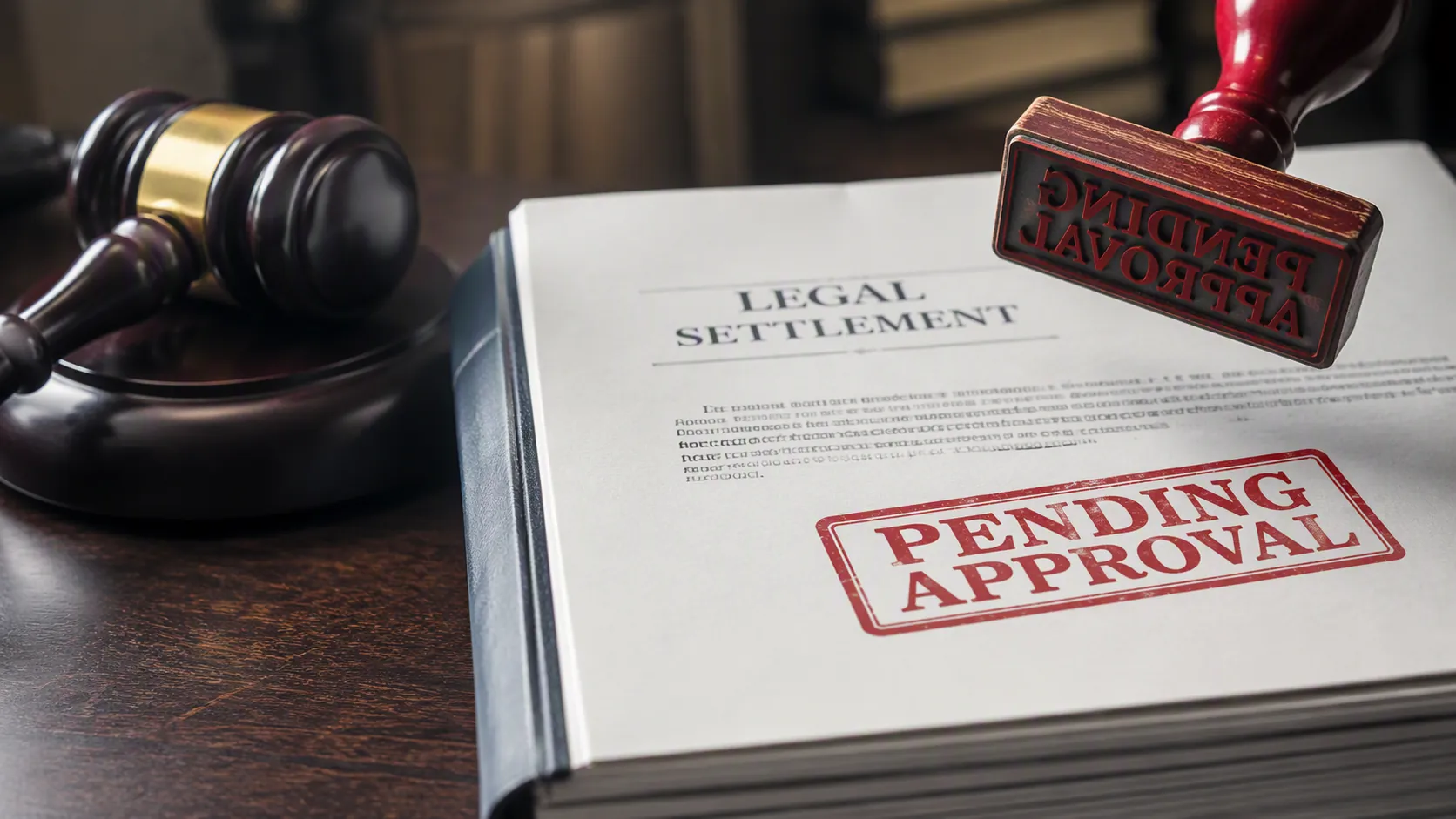
The $16.7 billion headline refers to a proposed consent judgment in MDL 3047, the federal teen social-media-addiction litigation in Oakland. The parties announced the agreement on Aug. 26, 2026, after the federal trial had begun, but Judge Yvonne Gonzalez Rogers had not approved or entered the judgment as of Aug. 27.[2][3]
This is not Meta’s separate Texas facial-recognition and biometrics settlement. That agreement arose under Texas biometric-privacy law and was announced as a deal worth more than $1 billion. It is a different case, payment structure and set of alleged harms.[7]
What the docket establishes—and what it does not
The Judicial Panel on Multidistrict Litigation centralized the adolescent social-media litigation in the Northern District of California in October 2022. The resulting docket is MDL No. 3047, case number 4:22-md-03047-YGR-PHK.[1] In 2023, a coalition of state attorneys general brought claims alleging that Meta’s platforms harmed young users and that the company misrepresented platform safety. California identifies itself, Colorado, Kentucky and New Jersey as co-leaders of the government case.[2]

The federal trial opened in Oakland on Aug. 18, 2026. It was then suspended while the court considered the proposed agreement announced eight days later.[2][8] That suspension is consequential, but it is not the same procedural event as approval of a consent judgment.
New Jersey’s release points readers to a joint motion and a fully executed proposed consent judgment filed as ECF No. 572, Exhibit 1.[3] “Fully executed” means the parties have signed the document. It does not mean the judge has entered it. Counsel relying on a provision summarized in a press release should still verify the language, defined terms and effective-date mechanics in that exhibit and any subsequent order on the docket.
Why the appeal waiver does not supply finality
The announced arrangement includes waivers of appeal rights.[2][3] That narrows what the parties may do after an approved judgment is entered; it does not substitute their agreement for the court’s approval. A waiver can reduce the prospect of a later party appeal without answering the prior question of whether, when and on what terms the court will enter the proposed judgment.
Until an approval order appears, the defensible status line remains “proposed consent judgment pending court approval.” It is premature to describe the full payment as completed or the proposed operating restrictions as currently effective.
Why the reported amounts do not match
The competing figures are not necessarily competing accounts of one fixed check. They reflect different maximums, floors and additional claims, as well as different ways of describing payments scheduled over time. None should be presented without its source and scope.
| Figure | What the source appears to measure | How to brief it |
|---|---|---|
| $16.7 billion | The maximum associated with the proposed MDL agreement in widely circulated coverage [6] | A filing-level maximum, not a payment already made |
| $17.1 billion | Attorney-general framing that includes more than $459 million to $460 million connected with separate Cambridge Analytica-related claims [3][5] | Attribute the figure and disclose the additional inclusion |
| Approximately $18 billion | Meta’s total framing, payable in annual installments over 10 years if the proposed agreement is approved [4] | Use as Meta’s characterization, not as a reconciled substitute for the other figures |
| Approximately $12.1 billion to $12.7 billion | Differing descriptions of the guaranteed portion from attorney-general and Meta materials [3][4][5] | Present as a source-dependent range rather than a single agreed floor |
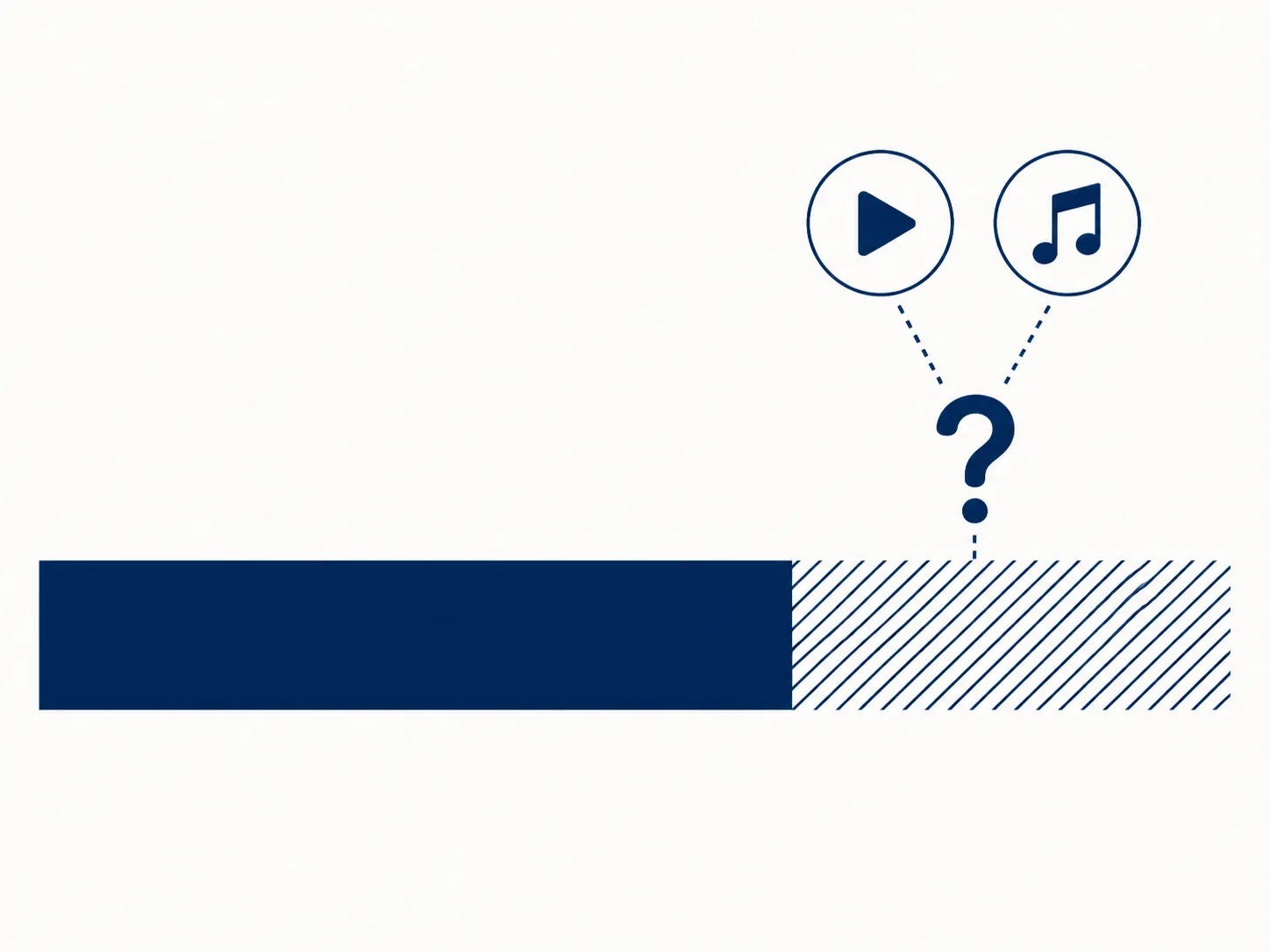
| Approximately $5.3 billion | The remaining contingent tranche, dependent on specified action and matching payments by YouTube and TikTok [3][4][5] | Do not add it to the expected payout without stating the contingency |
Contemporary reports also used a more precise $16.68 billion formulation. Without a common reconciliation in the primary materials, that precision should not be treated as proof that every outlet counted the same components. For a filing, client alert or board memorandum, $16.7 billion is best labeled as the reported maximum associated with the proposed consent judgment—not a guaranteed floor and not cash already transferred.
The contingent tranche depends on competitors
The distinction between the floor and the maximum matters because roughly 70% is described as guaranteed under the proposed agreement, while approximately $5.3 billion depends on YouTube and TikTok adopting comparable safeguards and making matching payments. Half of that contingent amount is tied to each rival platform, according to the public descriptions.[3][4][5]
The triggering package is described as including a one-hour daily limit, night mode and age assurance, together with the matching financial contribution.[4] The releases identify the contingency, but they do not establish that either competitor will accept it. The proposed maximum therefore includes money whose availability depends on decisions by companies that are not parties to the proposed judgment.
Meta also said it would record an approximately $10 billion accrual in the third quarter of 2026 in connection with the arrangement.[4] An accounting accrual is relevant to Meta’s financial treatment of the exposure. It is not proof that the court has approved the judgment, that the total maximum has become payable or that the contingent platform conditions have been satisfied.
Who receives the money
The announced payment structure concerns participating states and territories and includes jurisdiction-level allocations.[2][3][5] It should not be described as a direct $16.7 billion compensation fund for individual young users or families. The MDL contains personal-injury litigation, but this proposed government consent judgment has its own parties, allocation terms and exclusions.
The operating obligations described by the parties
The financial figures have taken most of the attention, but the proposed judgment is also an operating-rule record. Every measure below remains subject to court approval. The descriptions come from the parties’ public materials; the filed consent judgment and any approval order control where wording, definitions or implementation dates matter.[2][3][4][5]
Time limits and time-of-day controls
If approved, the proposed judgment would require a default cumulative limit of two hours a day for users under 18 across the covered Meta services for five years. The public descriptions say the regime could extend to 10 years, with a one-hour per-application limit, if YouTube and TikTok join the matching safeguards arrangement.[2][3][4]
Also pending approval are a midnight-to-6 a.m. night block and muted notifications during the school day, described as 8 a.m. to 3 p.m. from Aug. 15 through June 15. The proposed controls include prompts after 15, 60 and 90 minutes of use.[2][3] Those details matter to implementation teams because a daily cap, a login block and notification suppression are different controls with different testing records.
Product choices and age assurance
Subject to approval, young users would receive options or defaults intended to reduce engagement pressure, including hidden like counts, a non-algorithmic feed option and autoplay turned off. The announced terms also describe prohibitions involving cosmetic-surgery and extreme-makeup filters for minors.[2][3][4]
Age assurance is central to the proposed controls because Meta must determine which accounts belong to users under 18 before it can apply youth-specific limits. The public materials describe age-assurance duties as part of the proposed judgment and as one of the safeguards rivals would have to match for the contingent tranche.[3][4][5] Approval alone would not answer every practical question about error handling, age disputes or the evidence used to classify an account; those issues depend on the controlling text and implementation.
Reports, auditing and research
If the court approves the proposed judgment, Meta would be expected to respond within six hours to 90% of teen reports involving harmful content, as measured under the agreement’s terms.[2][3] That is a response target, not a representation that 90% of harmful content will be detected, removed or prevented. Any compliance assessment must preserve the difference between answering a report and resolving the underlying content issue.
The announced package further describes annual review by an independent auditor for five years and the creation of an independent research foundation, both pending approval.[2][3][5] Audit clauses derive much of their force from details that do not fit comfortably in a press release: access to evidence, sampling, exceptions, remediation, reporting recipients and the definition of a failed control. Those provisions should be taken from the filed judgment before counsel characterizes the audit as certification or continuing court supervision.
A proposed no-deception injunction would also restrict misrepresentations about platform safety if approved.[2][3] That provision is broader in character than a single interface setting. It can affect the evidence retained for public claims, regulator communications and internal approval of safety representations.
Exclusions and inconsistent jurisdiction counts
New Mexico, Florida and Texas are described as receiving no payment from this multistate arrangement. New Mexico pursued and won its own case; Florida’s attorney general rejected the proposed terms as insufficiently strict; and Texas announced its separate agreement with Meta.[2][3][7] Their exclusion should be stated when the settlement is described as nationwide.
The public sources also count the participating governments differently. Meta refers to an agreement with 52 attorneys general; California and the District of Columbia use 51; New Jersey describes 47 states plus territories; and Associated Press reports 48 states together with the District of Columbia and territories.[2][3][4][5][8] Texas also appears in Meta’s stated group even though Texas announced a separate deal. These formulations may be counting offices, states, territories, claims or related agreements differently. The available releases do not justify silently converting them into one definitive participation count.
| Date | Procedural event |
|---|---|
| Oct. 6, 2022 | MDL 3047 docket opened in the Northern District of California [1] |
| 2023 | State attorneys general brought the coordinated government case against Meta [2] |
| Aug. 18, 2026 | Federal trial began in Oakland [2][8] |
| Aug. 26, 2026 | Parties announced the proposed consent judgment; trial suspended for court review [2][3] |
| Aug. 27, 2026 | Proposed judgment remained pending approval |
How to state the result without outrunning the record
A defensible briefing sentence is: “On Aug. 26, 2026, Meta and a coalition of attorneys general announced a proposed consent judgment in MDL 3047 that sources value at up to approximately $16.7 billion under one measure, with a lower guaranteed portion and an additional tranche contingent on action by YouTube and TikTok; the proposal remained pending approval in the Northern District of California as of Aug. 27.”
The next docket event matters more than another rounded headline. Counsel should preserve the case number, approval status, excluded jurisdictions and source attached to each amount. Unless and until the court enters the judgment, the agreement is an important indication of potential financial and product obligations—not a completed $16.7 billion payment, an operative injunction or a prediction that YouTube and TikTok will satisfy the contingency.
References
- IN RE: SOCIAL MEDIA ADOLESCENT ADDICTION/PERSONAL INJURY PRODUCTS LIABILITY LITIGATION, CourtListener.
- Attorney General Bonta Secures Transformative $17 Billion Settlement with Meta, California Department of Justice, Aug. 26, 2026.
- Attorney General Davenport Announces Historic $17 Billion Settlement With Meta, New Jersey Office of the Attorney General, Aug. 26, 2026.
- Our Agreement With Bipartisan Attorneys General: Calling on TikTok and YouTube to Join Us in Supporting Teens, Meta Newsroom, Aug. 26, 2026.
- Attorney General Schwalb Announces That Meta Will Pay Up to $17.1 Billion, Office of the Attorney General for the District of Columbia, Aug. 26, 2026.
- Meta settles social media addiction case for $16.7 billion, CNBC, Aug. 26, 2026.
- Attorney General Ken Paxton Secures Over $1 Billion from Meta, Office of the Texas Attorney General.
- Meta reaches $18 billion settlement with states in landmark trial over teen social media addiction, Associated Press, Aug. 26, 2026.
Related records
Tool profile
Browse tool evaluations →Governing regulation
Browse the obligations tracker →Preventive workflow
Browse verification workflows →
Report a correction or tip
Spotted an outdated figure, a misstated fact, or a ruling this case record should reflect? Public comments are disabled for this content given the professional cost of a misreported case outcome, penalty amount, or rule text — use the structured correction channel instead.
Report a correction or tip for this record →