
What Meta's $17.1B teen social media settlement pays
Meta's multistate teen social media settlement carries a $12.1B minimum rising to $17.1B over ten years, but it is not yet court-approved and roughly $5.3B is contingent on rival platforms matching its safety terms. This verified record, anchored to the Aug. 26, 2026 consent judgment in the N.D. Cal. case, separates the confirmed payout structure from conflicting headline figures, per-state allocations, and the unresolved individual and New Mexico claims.
- Jurisdiction
- US-Federal
- Court
- U.S. District Court for the Northern District of California
- Judge
- Yvonne Gonzalez Rogers
- AI tool named
- Ruling date
- Aug 26, 2026
- Source document
- View primary court order ↗
- Last verified
- Aug 28, 2026
Lex Machina Review is an independent risk-tracking and reference resource. Nothing on this site is legal advice, and using it does not create an attorney-client relationship. Every record is reviewed against primary sources but may not reflect the most current status of a matter — always verify directly against the cited court order, rule text, or a licensed attorney before relying on it.
Companion explanation — secondary to the source document above
Meta’s reported teen social media lawsuit payout is not a $17.1 billion check waiting for distribution. On August 26, 2026, the parties filed a joint motion and a fully executed consent judgment in People of the State of California v. Meta Platforms Inc., No. 23-cv-05448, in the Northern District of California before Judge Yvonne Gonzalez Rogers. The filing is a proposed resolution submitted for court approval; as of August 28, it is not yet a final judgment. The agreement sets a $12.1 billion minimum and permits the total to rise to $17.1 billion over ten years. [1][2][3]
The payout map behind the headline
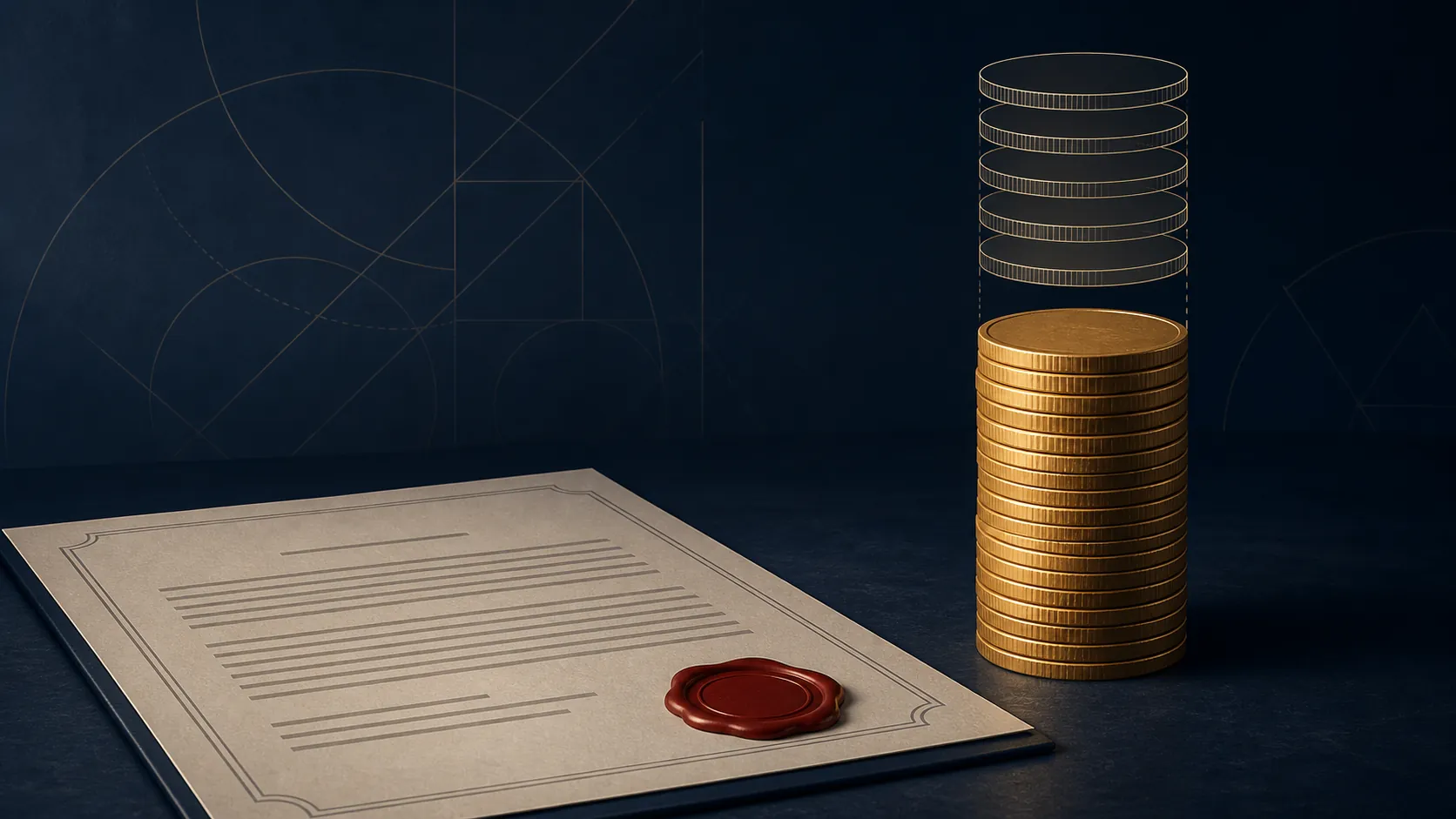
The most useful way to read the settlement is to separate the floor, the ceiling, and the condition attached to the difference. The filed materials describe a base payment that must be made over the agreement’s ten-year period. A further tranche—roughly $5.3 billion, or about 30% of the maximum—becomes available only if YouTube and TikTok adopt matching safety terms and pay an equal share. [1][3]
| Figure | What it represents | Status |
|---|---|---|
| $12.1 billion | Minimum payment under the filed consumer-protection settlement | The contractual floor, subject to court approval [1][3] |
| About $5.3 billion | Contingent portion tied to matching commitments and equal payments by YouTube and TikTok | Not automatic; depends on rival-platform participation [1][3] |
| $17.1 billion | Maximum headline amount when the contingent tranche is included | Potential total over ten years, not a fixed award today [1][3] |
That mechanism also affects the duration of some restrictions. The initial terms include a combined two-hour daily limit with automatic pauses at 15, 60, and 90 minutes for five years. If Snapchat, TikTok, and YouTube match the relevant terms, the limit can change to 60 minutes per platform and certain restrictions can continue for ten years. [3]
The safety obligations are connected to the payment design rather than being a separate policy appendix. The consent judgment addresses nighttime blocks from midnight to 6 a.m., limits on notifications during school hours from 8 a.m. to 3 p.m. on weekdays, like-count and beauty-filter restrictions, age assurance, independent auditing, and a target that 90% of harmful-content reports receive a response within six hours. [3] The important legal question is not whether those provisions sound stringent. It is which provisions are enforceable against which platform, for how long, and which ones trigger the additional money.
Why the same settlement produced several numbers
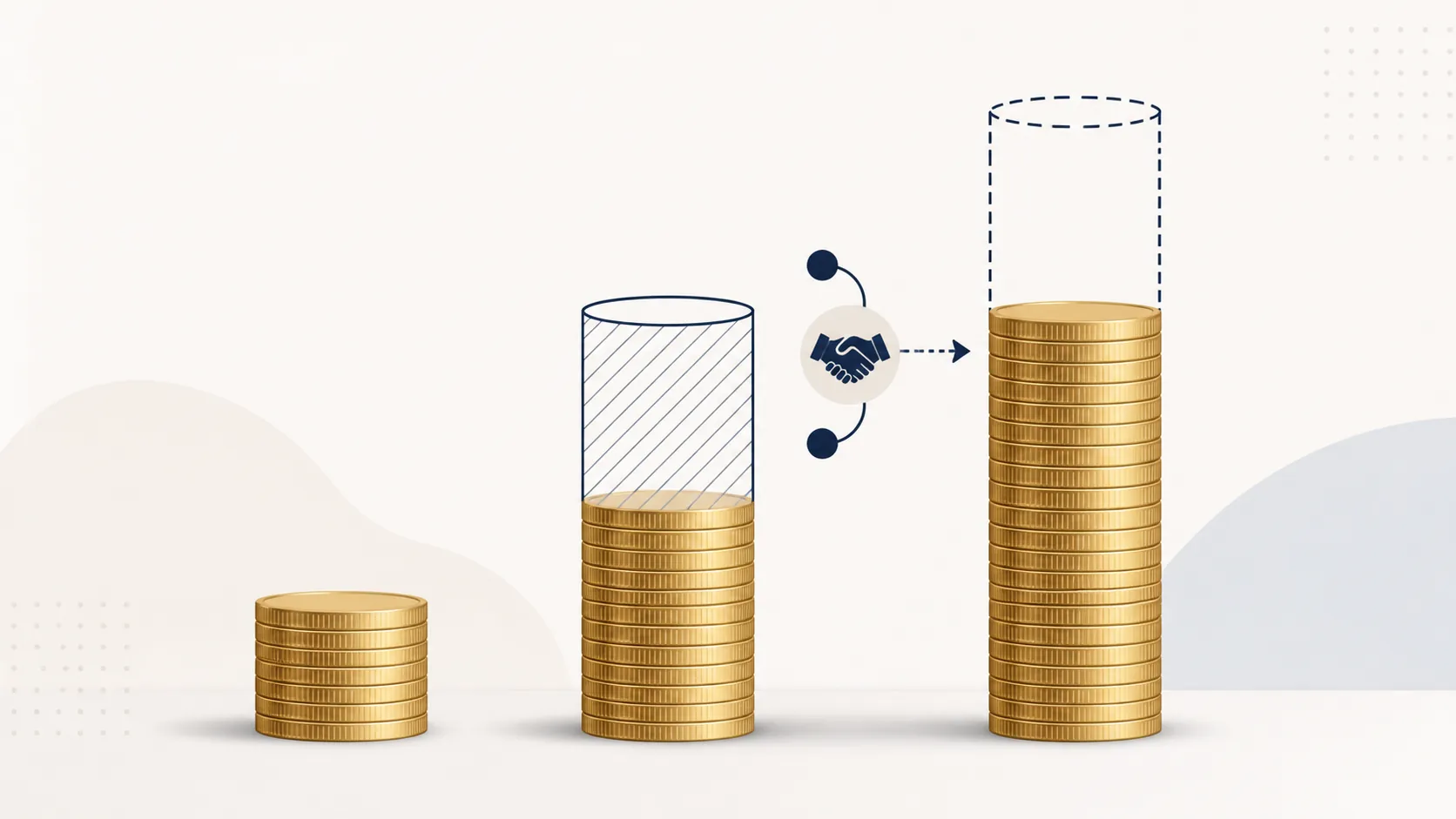
The conflicting $18 billion, $17 billion, $17.1 billion, and $16.68 billion headlines do not necessarily describe the same accounting field. The New Jersey attorney general’s announcement and the filed motion use the $12.1 billion minimum and $17.1 billion potential maximum. The Associated Press reported the deal through rounded $18 billion and $17 billion figures, while a Reuters report carried through Yahoo described $16.68 billion for 29 states. [1][2][4][6]
Those differences matter because a rounded maximum, a state subset, and a minimum obligation answer different questions. For a litigation-risk record, the filed consent judgment is the controlling reference point available before approval. The number to brief as confirmed is the $12.1 billion floor; the number to label conditional is $17.1 billion.
State allocations make “at least” and “potentially” concrete
The state figures show how the two levels operate in practice. California is assigned at least $1.5 billion, with reporting on the agreement describing a potential allocation of up to $2.1 billion. New Jersey is assigned at least $525 million and potentially more than $752 million. [4][5]
The participating governments are asserting sovereign consumer-protection claims. The New Jersey attorney general identifies 47 states plus the District of Columbia, Puerto Rico, American Samoa, and the Northern Mariana Islands; the Associated Press describes the participating group as 48 states plus D.C. and territories. [1][4] That count discrepancy should remain attributed rather than silently converted into a definitive list. It does not change the payment structure set out in the filed agreement.
Who does not automatically receive a payout
The word “payout” can mislead individual users. This agreement resolves government consumer-protection claims; it does not establish an automatic compensation fund for every teenager who used Instagram or another covered service. The payment is allocated through the participating jurisdictions under the settlement’s terms, not announced as a fixed per-person award.
The agreement also leaves more than 3,000 individual multidistrict personal-injury cases unresolved, along with school-district litigation. New Mexico and Florida are outside this multistate deal. [4] Florida Attorney General James Uthmeier has maintained a separate action and criticized the settlement amounts as “peanuts,” a position that describes his separate litigation posture rather than changing the filed federal agreement. [4]
New Mexico provides the clearest reminder that this is not a universal release. A jury awarded $375 million in March 2026, and a New Mexico court later ordered Meta to pay $567 million into an abatement fund. Together, those reported amounts total $942 million to date, but they arise from the separate New Mexico case, not from the $12.1 billion-to-$17.1 billion multistate settlement. [7][8]
The approval gap is legally significant
A signed consent judgment is stronger than a press release or proposed term sheet, but it is still not the same as an entered judgment. The parties filed the joint motion and fully executed agreement on August 26. The federal court had not approved the settlement by August 28. [2][3]
That timing affects both enforceability and appeal rights. The agreement provides for waiver of appeal rights only after final judgment issues.
Meta has denied wrongdoing. The company’s financial scale and market response provide context, but they do not determine what the settlement requires: Meta reported $201 billion in 2025 revenue and $61 billion in second-quarter 2026 revenue, while its shares were reported up about 1.5% midday after the announcement. [4]
A same-day privacy settlement is a separate record
On the same day, Meta also reached a settlement concerning Cambridge Analytica-related data privacy claims reportedly worth more than $460 million, including more than $20 million for New Jersey. [4] That development should not be added to the teen social media safety payout. It concerns a different set of allegations and claims, even though both matters involve Meta and were announced together.
Last verified: August 28, 2026. Filing date: August 26, 2026. The record supports describing this as a conditional multistate consumer-protection settlement filed for court approval. It does not yet support calling it a final judgment, a guaranteed $17.1 billion payment, or a fixed award to individual teenagers.
References
- Attorney General Davenport Announces Historic $17 Billion Settlement with Meta — New Jersey Office of the Attorney General, August 26, 2026
- ECF 572 Joint Motion for Entry — New Jersey Office of the Attorney General, August 26, 2026
- Exhibit 1: MDL Consent Judgment / Settlement Agreement — Fully Executed — New Jersey Office of the Attorney General, August 26, 2026
- Meta settles teen social media addiction trial with states for billions — Associated Press, August 26, 2026
- Meta to pay $17 billion and limit likes for teens in social media settlement with states — CalMatters, August 26, 2026
- Meta settles with 29 states over social media harms — Reuters via Yahoo Finance, August 26, 2026
- Jury reaches verdict in Meta child safety trial in New Mexico — CNBC, March 24, 2026
- Meta to pay into $567 million fund after child harms case in New Mexico — CNBC, August 6, 2026
Related records
Tool profile
Browse tool evaluations →Governing regulation
Browse the obligations tracker →Preventive workflow
Browse verification workflows →
Report a correction or tip
Spotted an outdated figure, a misstated fact, or a ruling this case record should reflect? Public comments are disabled for this content given the professional cost of a misreported case outcome, penalty amount, or rule text — use the structured correction channel instead.
Report a correction or tip for this record →