
Miami Airbnb Party Laws Survive but Face Limits in Court
What is the current legal status of Miami-area Airbnb party-house regulations after all major court challenges? This article synthesizes the three parallel legal tracks—zoning bans upheld, fine schedules struck down, and federal immunity claims settled—to show a fractured enforcement landscape where outcomes depend on jurisdiction.
- Jurisdiction
- Florida
- Court
- Third District Court of Appeal
- AI tool named
- None
- Ruling date
- Dec 1, 2018
- Source document
- View primary court order ↗
- Last verified
- Jul 29, 2026
Lex Machina Review is an independent risk-tracking and reference resource. Nothing on this site is legal advice, and using it does not create an attorney-client relationship. Every record is reviewed against primary sources but may not reflect the most current status of a matter — always verify directly against the cited court order, rule text, or a licensed attorney before relying on it.
Companion explanation — secondary to the source document above
The legal answer to Miami Airbnb party regulations is not a single yes or no. As of Q3 2026, the useful risk question is narrower: which rule, in which jurisdiction, against which actor, with what remedy?
On the present record, the City of Miami’s zoning-based short-term rental restriction in single-family residential districts has survived appellate review. Miami Beach’s underlying short-term rental prohibitions remain meaningful, but its extraordinary escalating fine schedule was cut down. Airbnb’s federal challenge to Miami Beach’s platform-facing ordinance did not produce a clean immunity ruling; it resolved through a settlement requiring listing-number display obligations. Unincorporated Miami-Dade remains a separate enforcement environment, not a footnote to either city.
For Lex Machina Review, this is a regulatory enforcement risk entry rather than an AI-sanction item. The method is the same: separate the forum, identify the surviving remedy, and avoid treating a press release, a platform policy, and an appellate holding as interchangeable legal events.
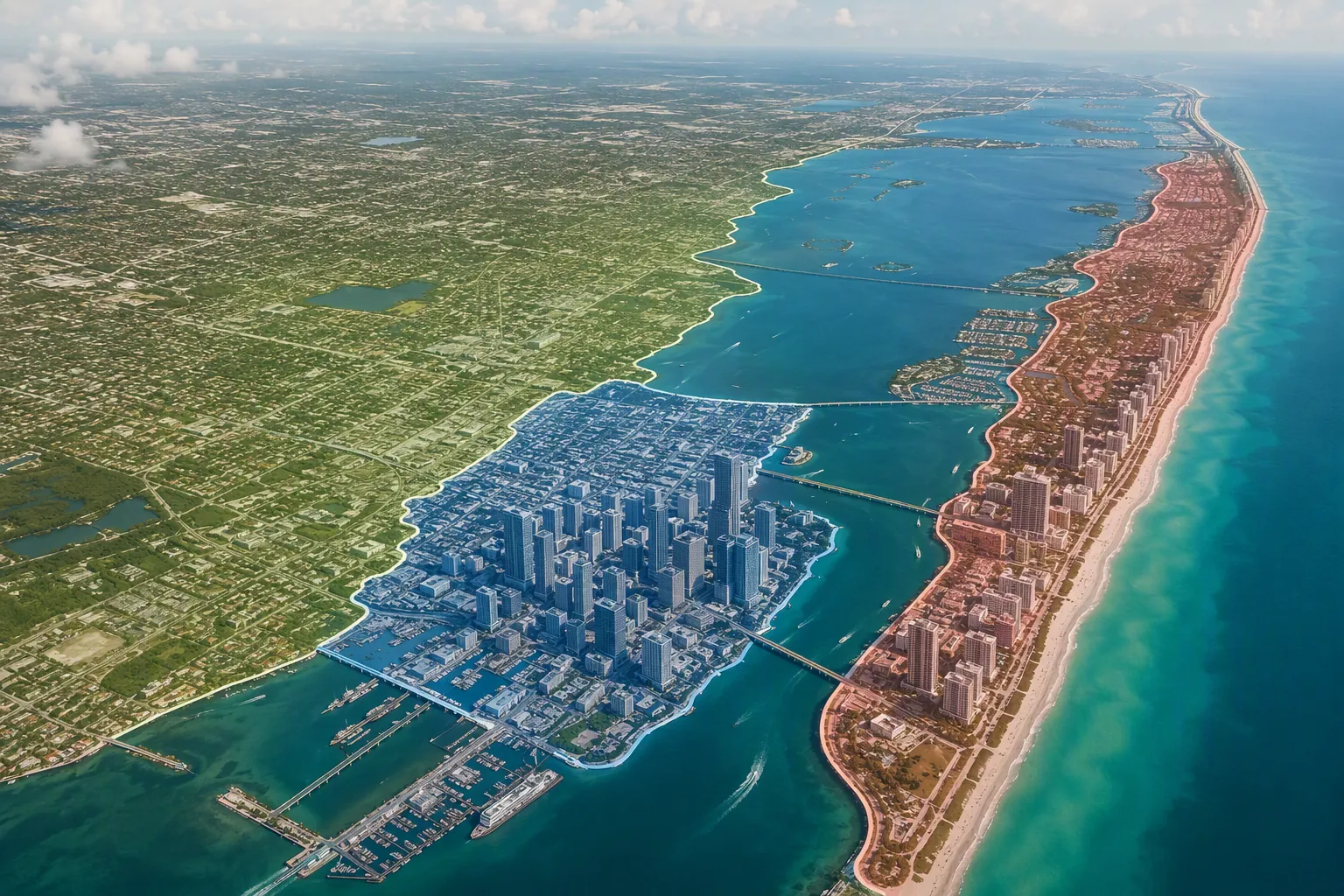
The Current Map Is Fractured, Not Invalidated
The City of Miami track starts with zoning. In City of Miami v. Airbnb Inc., the Third District Court of Appeal treated the dispute as one over whether the city could enforce zoning restrictions that barred short-term rentals in single-family residential zones. The appellate court sided with the city and allowed enforcement of the zoning ban to proceed, rejecting the argument that the city was categorically preempted from applying those land-use rules to short-term rentals.[1]
That holding matters because it keeps the city’s enforcement theory grounded in place-based land use, not in the identity of Airbnb as a platform or the nuisance profile of a particular weekend. A property inside a restricted residential zoning district faces a different first question from a property in a permitted area: the city does not need to prove that every rental produced a party before it can rely on a valid zoning prohibition.
Miami Beach is a different track. Nichols v. City of Miami Beach did not erase the city’s underlying short-term rental restrictions. The decision targeted the fine schedule: the Third District held that Miami Beach’s escalating penalties, reported in the case materials as ranging from $20,000 to $100,000, exceeded the state-law caps in section 162.09, Florida Statutes, which limit code-enforcement fines to $1,000 per day for a first violation and $5,000 per day for a repeat violation.[2]
That distinction is easy to lose and expensive to miss. Nichols is not a shorthand for “Miami Beach lost its home-sharing ban.” It is better read as a remedies case with continuing consequences for penalty design. The city’s pre-2011 occupancy prohibitions were described in the available case materials as remaining enforceable, while the outsized fine amounts could not stand under the state cap framework.[2]
There is also an unresolved caution flag. The Goldwater Institute’s case tracker describes a continuing equal-protection challenge to the underlying Miami Beach home-sharing ban, with a motion to dismiss pending. The open-web record does not confirm the July 2026 docket posture, so a live matter should not rely on that status without a fresh docket check.[3]
Platform Compliance Is a Separate Lane
Airbnb’s federal case against Miami Beach belongs in a separate box. Airbnb challenged Miami Beach’s geo-fencing ordinance under section 230 of the Communications Decency Act, but the dispute settled. The reported settlement required Airbnb to display business tax receipt and resort tax registration numbers on listings, rather than producing a final merits ruling that either fully validated the ordinance or fully insulated the platform from municipal demands.[4]
For enforcement planning, that settlement is narrower than both sides might prefer in a public summary. It supports a platform-facing compliance expectation: listings may need to carry local registration identifiers. It does not answer every question about host liability, zoning violations, nuisance enforcement, or the amount a city may impose when a property owner violates a local code.
Airbnb’s own global party ban, adopted in June 2022, sits outside this municipal-law analysis. It may affect booking terms, account discipline, guest screening, or platform trust-and-safety decisions, but it is a private contractual control. It is not the source of the City of Miami zoning ruling, the Miami Beach fine-cap ruling, or any Miami-Dade code-enforcement remedy.
The Same Rental Pattern Can Land Differently a Few Miles Apart
A Coconut Grove comparison published in November 2024 usefully frames the local geography: City of Miami, Miami Beach, and unincorporated Miami-Dade are not one enforcement unit. The piece describes the City of Miami’s 2015 zoning ban and appellate win, Miami Beach’s pre-2011 grandfathered prohibitions and later fine-schedule setback, and a different posture for unincorporated Miami-Dade.[5]
| Location | Main Legal Track | Risk Question That Comes First |
|---|---|---|
| City of Miami | Zoning restriction in single-family residential districts upheld on appeal | Is the property in a zoning district where short-term rental use is barred? |
| Miami Beach | Underlying prohibitions remain important; extraordinary escalating fines were struck down under state caps | Is the city enforcing the restriction itself, the fine amount, or both? |
| Unincorporated Miami-Dade | Separate county enforcement posture | Which county rule applies, and is the property outside municipal jurisdiction? |
| Airbnb as platform | Federal challenge settled into listing-number display obligations | Is the demand directed at platform listing compliance rather than host land use? |
The table is deliberately not a list of “Miami rules.” It is a triage tool. A cease-and-desist letter to a host, a citation against a property owner, a demand that a platform display registration numbers, and a defense to a six-figure municipal fine are different legal instruments. They may arise from the same party-house complaint, but they do not travel through the same doctrine.
Enforcement Data Shows Pressure, Not Guaranteed Collection
The available enforcement figures show why the legal map still matters after a citation is issued. NBC 6 reported in November 2018 that Miami Beach had issued $12.5 million in vacation-rental fines since 2015 but collected $427,000, about 3.4 percent. Those figures are useful as a historical baseline, not as a current 2026 collection total.[6]
For the City of Miami, the most recent comprehensive figure in the available record comes from the 12 months ending September 2024: 319 short-term rental citations, with only 28 adjudicated. That is not a finding that the remaining citations were invalid. It is a reminder that citation volume, adjudicated liability, collectible penalty amounts, and actual recovery are separate measures.[6]
These numbers should not be overread. The Miami Beach collection figure predates Nichols and is not updated through 2025 or 2026 in the available sources. The City of Miami citation count stops at September 2024. For a live enforcement defense or demand letter, stale enforcement statistics are a weak substitute for docket history, lien records, code-board outcomes, and current municipal reporting.

What Survives for a Legal Response
A legal response to Miami Airbnb party regulations should start with the property’s forum. If the property is in the City of Miami, the zoning classification and the appellate decision upholding enforcement carry the first load. If the property is in Miami Beach, the analysis must separate the underlying prohibition from the penalty amount after Nichols. If the property is in unincorporated Miami-Dade, city-level outcomes should not be imported without checking the county rule.
The actor also matters. A host or owner faces land-use, occupancy, nuisance, tax, and registration issues depending on the local code. A platform may face display, registration-number, or listing-compliance obligations, but the Miami Beach settlement does not transform every host violation into a platform-liability holding. A guest party policy imposed by Airbnb may help explain account consequences, but it does not replace municipal enforcement authority.
The remedy is where many broad summaries fail. “The ban survived” and “the fines were struck down” can both be true because they refer to different legal objects. City zoning authority, Miami Beach’s underlying restriction, Miami Beach’s fine schedule, platform listing obligations, and actual collection capacity each require their own support.
The current operational judgment is therefore limited but firm: the Miami-area party-house crackdown has not been invalidated wholesale, and it should not be treated as a uniform, unlimited enforcement regime. Before relying on it in a live matter, identify whether the property is in the City of Miami, Miami Beach, or unincorporated Miami-Dade; separate zoning authority from fine amounts; separate host liability from platform obligations; and verify both the latest Nichols docket posture and current enforcement statistics.
References
- City of Miami v. Airbnb Inc., FindLaw, December 2018.
- Appellate Court: City’s Vacation Rental Fines Are Not Fine, Bitman O’Brien.
- Challenging the Highest Home-Sharing Fines in the Nation—Nichols v. City of Miami Beach, Goldwater Institute.
- Airbnb, Inc. v. City of Miami Beach, Miami Herald, 2019.
- Home to Headache: Miami’s Battle with Illegal Short-Term Rentals, Coconut Grove Spotlight, November 2024.
- Cities Battle Vacation Rentals Through Fines That Often Go Unpaid, NBC 6 South Florida.
Related records
Tool profile
Browse tool evaluations →Governing regulation
Browse the obligations tracker →Preventive workflow
Browse verification workflows →
Report a correction or tip
Spotted an outdated figure, a misstated fact, or a ruling this case record should reflect? Public comments are disabled for this content given the professional cost of a misreported case outcome, penalty amount, or rule text — use the structured correction channel instead.
Report a correction or tip for this record →