
Midwest Poultry Egg Recall 2026: Product List and Counsel's Legal Guide
A verified product list of all 30-plus SKUs affected by the July 22, 2026 Midwest Poultry Services egg recall, paired with a time-sensitive assessment of standing defenses counsel can use before expected class-action filings.
- Jurisdiction
- US Federal
- Court
- Pre-litigation
- AI tool named
- Not implicated
- Ruling date
- Jul 22, 2026
- Source document
- View primary court order ↗
- Last verified
- Jul 25, 2026
Lex Machina Review is an independent risk-tracking and reference resource. Nothing on this site is legal advice, and using it does not create an attorney-client relationship. Every record is reviewed against primary sources but may not reflect the most current status of a matter — always verify directly against the cited court order, rule text, or a licensed attorney before relying on it.
Companion explanation — secondary to the source document above
Editorial note: This article is outside Lex Machina Review’s usual AI-in-legal-practice lane. It is being treated as a time-sensitive legal-risk analysis for counsel, not as a standing food-safety reference record.
Verification status for July 25, 2026: Midwest Poultry Services L.P. announced the shell-egg recall on July 22, 2026; the product identifiers below come from the FDA recall notice; no filed class-action complaint against Midwest Poultry Services for this recall has been identified in the reviewed sources; no CDC outbreak investigation is identified in the current record; and zero confirmed illnesses is accurate only as of the recall date, July 22, 2026.[1]

Start With the Product Universe, Not the Lawsuit
For counsel, the first useful version of the Midwest Poultry egg recall is not the largest number in the headline. It is the version that can be matched against invoices, DC shipment records, loyalty-card communications, point-of-sale blocks, refund scripts, insurer notices, and preservation holds before the first complaint arrives.
The controlling identifiers are narrow: plant codes P-1950 and 0840962; Julian dates 157 through 184, corresponding to production dates June 6 through July 3, 2026; and sell-by dates from July 20 through August 17, 2026.[1] Any product outside those identifiers may still create customer-service noise, but it should not be treated as inside the recall without a separate source.
| Recall field | Verified information |
|---|---|
| Recalling firm | Midwest Poultry Services L.P. |
| Recall date | July 22, 2026 |
| Product type | Shell eggs |
| Plant codes | P-1950; 0840962 |
| Julian date range | 157 through 184 |
| Production date range | June 6 through July 3, 2026 |
| Sell-by date range | July 20 through August 17, 2026 |
| Distribution states | Texas, Oklahoma, Arkansas, Louisiana, New Mexico, Mississippi |
| Confirmed illnesses | Zero as of July 22, 2026 |
The available recall materials identify more than 30 affected SKUs across Kroger, Simple Truth, Simple Truth Organic, Country Morning, Brookshire’s, Sunups, and Midwest Poultry Services bulk packs, with package formats including 18-count, dozen, 5-dozen, 30-count, and 15-dozen bulk packs.[1] The SKU-level burden matters because a plaintiff who bought eggs from the same retailer, or even the same brand family, still has to get from a general recall notice to a plausible purchase of a recalled unit.
Affected Product List Counsel Should Reconcile
The table below states the verified product universe available from the current record. It should be used as a reconciliation grid, not as a substitute for the underlying FDA SKU schedule where counsel has access to the notice, retailer item masters, or warehouse records. The available materials confirm the affected brands, size categories, plant codes, date codes, sell-by window, and distribution states; they do not provide a line-by-line UPC or item-description schedule for each of the 30-plus SKUs.
| Brand or pack group | Affected formats identified in the brief | Plant codes | Julian dates | Sell-by dates | Distribution states |
|---|---|---|---|---|---|
| Kroger | Shell egg retail packs within the recalled SKU universe; affected formats include 18-count, dozen, 5-dozen, and 30-count categories where matched to the FDA SKU schedule | P-1950; 0840962 | 157-184 | July 20-August 17, 2026 | Texas, Oklahoma, Arkansas, Louisiana, New Mexico, Mississippi |
| Simple Truth | Shell egg retail packs within the recalled SKU universe; affected formats include 18-count, dozen, 5-dozen, and 30-count categories where matched to the FDA SKU schedule | P-1950; 0840962 | 157-184 | July 20-August 17, 2026 | Texas, Oklahoma, Arkansas, Louisiana, New Mexico, Mississippi |
| Simple Truth Organic | Shell egg retail packs within the recalled SKU universe; affected formats include 18-count, dozen, 5-dozen, and 30-count categories where matched to the FDA SKU schedule | P-1950; 0840962 | 157-184 | July 20-August 17, 2026 | Texas, Oklahoma, Arkansas, Louisiana, New Mexico, Mississippi |
| Country Morning | Shell egg retail packs within the recalled SKU universe; affected formats include 18-count, dozen, 5-dozen, and 30-count categories where matched to the FDA SKU schedule | P-1950; 0840962 | 157-184 | July 20-August 17, 2026 | Texas, Oklahoma, Arkansas, Louisiana, New Mexico, Mississippi |
| Brookshire’s | Shell egg retail packs within the recalled SKU universe; affected formats include 18-count, dozen, 5-dozen, and 30-count categories where matched to the FDA SKU schedule | P-1950; 0840962 | 157-184 | July 20-August 17, 2026 | Texas, Oklahoma, Arkansas, Louisiana, New Mexico, Mississippi |
| Sunups | Shell egg retail packs within the recalled SKU universe; affected formats include 18-count, dozen, 5-dozen, and 30-count categories where matched to the FDA SKU schedule | P-1950; 0840962 | 157-184 | July 20-August 17, 2026 | Texas, Oklahoma, Arkansas, Louisiana, New Mexico, Mississippi |
| Midwest Poultry Services bulk packs | 15-dozen bulk packs within the recalled SKU universe | P-1950; 0840962 | 157-184 | July 20-August 17, 2026 | Texas, Oklahoma, Arkansas, Louisiana, New Mexico, Mississippi |
This is where a defensible recall response either starts to become useful or starts to drift. The affected universe is not “eggs sold by Kroger” or “eggs in six states.” It is eggs that match the recalled brand or pack group, plant code, Julian date, and sell-by window. If the retailer’s customer email, web notice, store sign, or refund script omits one of those fields, the omission may matter later: not because every consumer notice has to read like a pleading, but because those details define who was actually put on notice and who can plausibly say they bought a recalled unit.
The available materials also do not support treating every listed brand as present in every affected state or every format as present under every brand. That may be true in the underlying distribution data, but it is not established by the current record. Counsel should therefore preserve the brand-by-state and SKU-by-retailer mapping as a separate record, rather than letting a broad public recall description become the company’s only working fact set.
Why Plaintiffs Firms Are Already Watching
The recall covers 1,589,577 dozen shell eggs, roughly 19 million individual eggs, and was described in contemporaneous press coverage as one of the largest egg recalls of 2026.[1][2][3][4] That scale does not prove injury, contamination of any consumer’s carton, or class certification risk. It does explain why recall-specific intake pages are already economically rational.
The reviewed sources identify live plaintiff-side or litigation-adjacent pages from Schmidt Firm PLLC, classactionlawsuithelp.com, and AboutLawsuits.com as of July 2026.[5][6][7] Those pages are signals, not pleadings. They show that firms are testing search demand, collecting potential claimant information, and framing the recall for consumers. They do not establish that a complaint has been filed, that a named plaintiff exists, or that any court has accepted the recall as an injury.
That distinction is not academic. Post-recall consumer class actions are now an expected sequel to major FDA food recalls, and filing can occur within 5 to 10 days of a recall announcement, according to the legal-industry sources reviewed here.[8][9] For a July 22 recall, that places the first likely complaint window squarely in the period when customer service, operations, insurance, and legal are still trying to agree on the same product list.
The Standing Defense Is Conditional
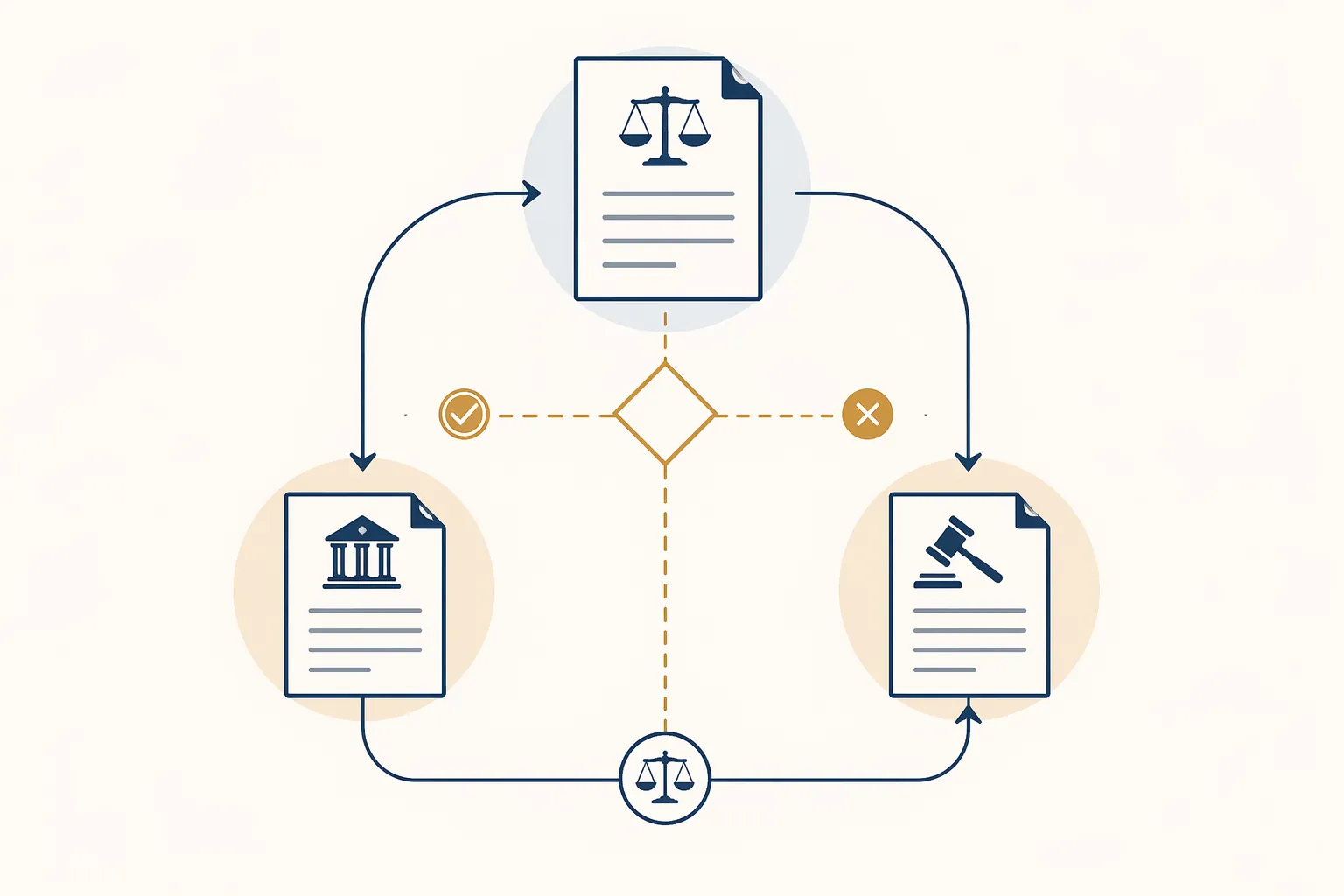
Three recent federal decisions supply the defense outline, but none of them does counsel’s work for them. Ward helps only if defendants can challenge whether the plaintiff bought a contaminated or recalled unit. McLean helps only if the refund program is real in practice, not merely announced. Catalano helps only while symptom-free consumption and the absence of confirmed illness remain accurate facts.
Ward: the recall notice is not the purchase allegation
In Ward v. J.M. Smucker Company, the Sixth Circuit treated a recall notice alone as insufficient for Article III standing; the plaintiff had to plausibly allege purchase of a contaminated unit.[8] Applied here, the defense is not “there was a recall, so no one has standing.” It is narrower: a plaintiff who cannot connect their purchase to the recalled plant code, Julian date range, sell-by window, brand, and pack configuration may have a standing problem.
That argument depends on records that are easy to dilute in the first week. Retailer item files, warehouse pick records, DC-to-store allocations, supplier lot certificates, POS suppression logs, and customer-notice criteria should be held in their original form. If the only retained artifact is a general web notice saying that certain eggs were recalled in six states, Ward becomes much harder to use cleanly.
McLean: a refund program has to function, not just exist
McLean v. Walmart Inc. is the more operationally uncomfortable case because it turns on the refund channel. The Western District of Arkansas treated a functioning refund program as barring economic-loss injury, but the available sources flag the practical caveat: counsel must verify that the program has no barriers such as return shipping burdens, busy phone lines, or expired URLs.[8]
That means legal should not accept “refunds are available” as a complete answer from customer service. Someone should test the phone number, preserve screenshots of the web flow, confirm whether a receipt is required, confirm whether opened cartons are eligible, document store-level authority to issue refunds, and retain call-volume or abandonment data if the company has it. A refund program that fails under ordinary consumer use is weak standing evidence and poor litigation evidence.
Catalano: no symptoms is a fact with an expiration risk
Catalano v. Grimmway Farms is useful only if counsel handles the timing honestly. The Southern District of New York decision is identified in the reviewed sources for the proposition that consuming recalled product without adverse symptoms can negate contamination-based claims.[8] For the Midwest Poultry recall, the supporting fact is that there were zero confirmed illnesses as of July 22, 2026.[1]
That sentence should not be allowed to harden into a permanent company talking point. Illness and outbreak status can change quickly after a recall announcement. Before relying on Catalano in a demand response, motion draft, insurer update, or board note, counsel should recheck the illness record, any CDC posture, and any state health-department communications current to that day.
What Counsel Should Lock Down Before the Filing Window Closes
The next 5 to 10 days matter because the first complaint, if one is filed, may be drafted from public recall text, screenshots of plaintiff-firm pages, customer frustration, and whatever ambiguity exists in retailer communications. The better defense record is built before that happens.
- Freeze the product map: preserve all records tying brands, SKUs, UPCs, plant codes P-1950 and 0840962, Julian dates 157 through 184, sell-by dates July 20 through August 17, 2026, and store or customer distribution.
- Test the refund path: document whether consumers can obtain refunds without unreasonable friction, including phone, web, in-store, receipt, opened-product, and expired-link scenarios.
- Capture consumer notice: retain the exact version history of web notices, store signs, emails, app alerts, call-center scripts, and FAQ language.
- Separate marketing from litigation: monitor plaintiff-firm landing pages, but do not report them internally as filed class actions unless a docket confirms a complaint.
- Refresh injury status daily: recheck confirmed illnesses, CDC activity, and state health communications before using no-injury standing arguments.
- Coordinate privilege and custody: decide which teams own operational facts, which communications need legal review, and which datasets should be preserved in native form.
State product-liability limitations periods do not drive the immediate July 2026 triage. The available sources note that those periods vary by state and can range from 1 to 5 years, so any limitations analysis would need state-by-state treatment rather than a single national deadline.[8] The urgent question is narrower: whether the company can prove, now, which units were in the recall, who received notice, how refunds worked, and whether the plaintiff in a forthcoming complaint can plausibly tie a purchase to a recalled unit.
The same restraint applies to traceability. The current record flags that FSMA traceability enforcement status, including a possible extension to July 20, 2028, should be reverified before publication.[8] That issue may matter later, but it should not displace the records counsel needs today for standing, notice, refund, and preservation decisions.
The Cutoff for a Defensible First Response
As of July 25, 2026, the strongest defense posture is still fact-dependent and still perishable. Ward, McLean, and Catalano give counsel a workable standing framework, but only if the record supports it: a plaintiff’s purchase can be tested against lot-level data; the refund program was accessible when consumers tried to use it; and no-injury arguments are checked against current illness and outbreak information rather than repeated from the July 22 recall notice.
Before relying on that analysis, verify refund-program accessibility, preserve lot-level and distribution records, document consumer notice, and recheck illness, outbreak, and docket status. That is the work that has to be provable by close of business, not after the complaint is served.
References
- FDA.gov recall notice, FDA.gov, July 22, 2026
- USA Today coverage of Midwest Poultry egg recall, USA Today, July 23-24, 2026
- Reuters coverage of Midwest Poultry egg recall, Reuters, July 23-24, 2026
- CBS News coverage of Midwest Poultry egg recall, CBS News, July 23-24, 2026
- Egg salmonella lawsuit landing page, Schmidt Firm PLLC, July 2026
- Simple Truth Cage Free Recall Class Action Lawsuit, classactionlawsuithelp.com, July 2026
- Nationwide egg recall coverage page, AboutLawsuits.com, July 2026
- March 2026 alert on post-recall consumer class actions and standing decisions, Cozen O'Connor, March 2026
- January 2026 analysis of food-recall class-action standing, Hollingsworth LLP, January 2026
Related records
Tool profile
Browse tool evaluations →Governing regulation
Browse the obligations tracker →Preventive workflow
Browse verification workflows →
Report a correction or tip
Spotted an outdated figure, a misstated fact, or a ruling this case record should reflect? Public comments are disabled for this content given the professional cost of a misreported case outcome, penalty amount, or rule text — use the structured correction channel instead.
Report a correction or tip for this record →