
Prosecuting the Minnesota water cyberattack if tied to Iran
An assessment of the federal charges and enforcement tools available for the 2026 Minnesota water utility cyberattack, showing how the documented conduct maps to CFAA claims while attribution — still unconfirmed as of August 5, 2026 — remains the controlling legal issue.
- Jurisdiction
- US federal
- Court
- U.S. District Court for the District of Minnesota
- AI tool named
- Rockwell, Schneider Electric, Siemens PLCs
- Ruling date
- Jul 30, 2026
- Source document
- View primary court order ↗
- Last verified
- Aug 5, 2026
Lex Machina Review is an independent risk-tracking and reference resource. Nothing on this site is legal advice, and using it does not create an attorney-client relationship. Every record is reviewed against primary sources but may not reflect the most current status of a matter — always verify directly against the cited court order, rule text, or a licensed attorney before relying on it.
Companion explanation — secondary to the source document above
If federal investigators can tie the Minnesota water utility cyberattack to Iran-linked actors, the charging path is already visible: Computer Fraud and Abuse Act damage counts, a public-health-or-safety aggravator, conspiracy exposure, and a separate civil route for utilities. If they cannot tie the PLC activity to an attributable actor, the realistic public tools remain defensive advisories, rewards, sanctions, and infrastructure seizures—not a clean indictment. The difference is not academic. It is the line between conduct that fits a statute and evidence that can be signed into a charging document under 18 U.S.C. § 1030.[1]
Record posture, last verified Aug. 5, 2026: no criminal charges have been publicly filed for the Minnesota water utility cyberattack; no official U.S. government attribution for this incident has been announced; the Iran link is reported, not confirmed; and investigators are reported to be examining a possible false-flag lead. Legal-background note: statutory references below were checked against the current text of 18 U.S.C. § 1030. This article is legal information, not legal advice.
| Status flag | What can be said now | Why it matters legally |
|---|---|---|
| Confirmed agency record | The FBI said on July 30, 2026 that malicious actors were targeting internet-facing water and wastewater PLCs in at least seven states, causing degraded operations and changing IP addresses and passwords.[2] | Those facts go to unauthorized access, impairment, loss, and proof of operational disruption. |
| Confirmed agency record | CISA advisory AA26-097A, originally issued April 7, 2026 and updated July 22, 2026, described Iranian-affiliated actors exploiting internet-exposed Rockwell, Schneider Electric, and Siemens PLCs since at least March 2026; it also described modified Add-On Instructions that disabled critical shutdown and alarm logic.[3] | The modified safety logic is the fact pattern that moves the analysis from ordinary intrusion toward damage and public-safety exposure. |
| Reported, not official attribution | WIRED reported that a leaked memo tied Minnesota water utility attacks to Iran; The New York Times reported a likely Iranian assessment based on sourcing.[4][5] | Reported attribution can guide risk assessment, but it is not the same as a DOJ allegation or an official public attribution. |
| Disputed or unresolved | WaterISAC denied providing the memo described in the WIRED report and said it made no attribution assessment; CBS reported that investigators were probing whether an actor faked an Iran fingerprint to “stir the pot” during the U.S.-Iran conflict.[4][6] | A false-flag lead does not defeat an Iran theory. It means the theory is not charge-ready on the public record. |
The charging question starts with damage
The most important public fact is not the geopolitical label. It is the operational conduct: internet-facing PLCs at water and wastewater systems were accessed and manipulated, operations degraded, passwords and IP addresses changed, and operators were left to regain control of equipment that controls physical processes.[2] In the reported Minnesota cluster, CBS and Tenable described more than 30 affected Minnesota water systems; that figure should not be merged into the FBI’s separate seven-state statement as if all sources were counting the same thing on the same date.[6]
For CFAA purposes, that pattern naturally points to § 1030(a)(5). Subsection (a)(5)(A) reaches someone who knowingly causes the transmission of a program, information, code, or command and intentionally causes damage without authorization. Subsection (a)(5)(B) reaches intentional unauthorized access that recklessly causes damage. The statute defines “damage” as impairment to the integrity or availability of data, a program, a system, or information, and it defines “protected computer” broadly enough that internet-connected operational technology will usually be analyzed under the statute rather than treated as legally exotic hardware.[1]
That matters because a PLC compromise is not limited to copying files or viewing a dashboard. If an actor sends commands that alter controller behavior, locks out local personnel through password changes, or changes addressing in a way that prevents operators from reaching devices, prosecutors can frame the case as impairment of system availability. If the proof shows deliberate modification of logic controlling alarms and shutdowns, the case becomes stronger under the intentional-damage theory. If the proof is less direct on intent but shows unauthorized access followed by plainly foreseeable operational disruption, prosecutors may look harder at the reckless-damage tier.
The safety-logic fact is the aggravator
CISA’s advisory deserves more weight than the campaign labels attached to it. The agency described Iranian-affiliated actors exploiting internet-exposed PLCs and modifying Add-On Instructions in a way that “disabled critical shutdown and alarm logic.”[3] In a water utility, that is not just a loss-of-data allegation. It is the kind of conduct that can support the § 1030(c)(4)(A)(i)(IV) aggravator for an offense causing or creating a threat to public health or safety.[1]
The public-health-or-safety aggravator changes the charging conversation. It gives prosecutors a way to explain why a small utility PLC compromise belongs in a serious federal cyber case even if no customer was poisoned, no treatment plant exploded, and no defendant set foot in the United States. The operator who loses alarms, shutdown logic, or reliable access to pressure and flow controls is not dealing with a website defacement. The operator is deciding whether water can be delivered safely, whether pressure loss requires public notice, and whether manual workarounds are enough to keep the system inside safety margins.
The penalties also explain why prosecutors would care about precision. The CFAA penalty provisions attached to the relevant aggravating factors can reach up to 10 years, 20 years for certain repeat offenders, and life where the offense knowingly or recklessly causes or attempts to cause death.[1] That does not mean the Minnesota matter is a life-penalty case on the public record. It means the statute already contains a ladder for operational-technology intrusions that threaten physical safety.
| CFAA component | Publicly documented or reported conduct | Charging significance |
|---|---|---|
| Unauthorized access | Internet-facing water and wastewater PLCs were targeted; the FBI described password and IP-address changes.[2] | Supports access-without-authorization and lockout theories. |
| Transmission of code, command, or information | CISA described modified Add-On Instructions affecting PLC logic.[3] | Supports a § 1030(a)(5)(A) theory if investigators can prove the actor caused the transmission and intended the resulting impairment. |
| Damage | The FBI described degraded operations; CISA described disabled shutdown and alarm logic.[2][3] | Supports impairment to system availability or integrity under the statutory definition of damage. |
| Public health or safety | Water and wastewater PLCs control physical processes; the reported conduct involved pressure, flooding, lockout, and safety-logic concerns.[2][6] | Supports the public-health-or-safety aggravator if prosecutors can connect the intrusion to a qualifying threat. |
| Attribution | Iran linkage remains reported rather than officially announced for this incident.[4][5][6] | Controls whether an Iran-linked prosecution theory can move from plausible to chargeable. |
Conspiracy and civil remedies sit beside the damage count
A foreign-state or proxy case is rarely charged as one person at one keyboard. Section 1030(b) separately covers conspiracy to commit a CFAA offense.[1] If investigators can prove coordinated scanning, credential use, shared infrastructure, tasking, or handoffs among operators, conspiracy gives DOJ a way to charge participants who did not personally touch every affected PLC.
That conspiracy path is especially relevant where the public facts involve multiple utilities and more than one jurisdiction. The FBI’s July 30 PSA described targeting across at least seven states.[2] If those intrusions share infrastructure, tooling, credentials, or command patterns, prosecutors would look for an agreement and participation, not merely a list of separate trespasses. If the similarities are only superficial, conspiracy becomes harder. Same device family, same sector, and same period are useful leads; they are not, by themselves, an agreement.
Utilities also have a civil path that does not depend on DOJ filing a criminal case. Section 1030(g) allows a person who suffers damage or loss by reason of a CFAA violation to bring a civil action for compensatory damages and injunctive or other equitable relief, subject to the statute’s limits and a two-year limitations period measured from the act complained of or the date of discovery of the damage.[1]
That civil remedy is not a magic answer for small water operators. A municipal utility still needs an identifiable defendant, service, jurisdiction, recoverable losses, and a litigation budget. But § 1030(g) matters because the victim’s route is not limited to waiting for a grand jury. If an affected operator can document incident-response costs, restoration work, emergency staffing, engineering review, and system-hardening expenses tied to the unauthorized access, those records may matter both to a civil claim and to any later criminal loss presentation.
For readers following the site’s confirmed-versus-reported frame in open matters, this is the same discipline used in our open-investigation legal update: a legal theory can be mapped before charges exist, but it should not be written as if the docket already exists.
Attribution is where the legal theory has to slow down
The public record contains several Iran-related signals, and they do not all have the same legal weight. CISA’s advisory confirms a broader Iranian-affiliated PLC exploitation pattern since at least March 2026, including activity against internet-exposed industrial controllers.[3] That is important context. It is not, standing alone, a public DOJ attribution of the Minnesota incident.
WIRED reported that a leaked memo tied cyberattacks on Minnesota water utilities to Iran, while also reporting WaterISAC’s denial that it provided the memo and WaterISAC’s statement that it had made no attribution assessment.[4] The New York Times separately reported on July 30, 2026 that officials viewed the attack as likely Iranian.[5] Tenable described the Minnesota activity as consistent with CyberAv3ngers, the Iranian-linked actor name associated with prior water-sector targeting, and reported more than 30 affected Minnesota systems.[7]
Those are usable investigative and risk-management signals. They are not a substitute for chargeable attribution. A prosecutor would need evidence tying specific accounts, infrastructure, malware, commands, operators, financing, tasking, or communications to named defendants or a chargeable group. Classified intelligence may supply part of that picture; foreign-partner evidence may supply another part; infrastructure logs may supply still another. From outside the case, the point is simpler: the public record does not yet show that chain.
The false-flag lead is the reason the Iran label has to remain conditional. CBS reported that investigators were examining whether the actor may have faked an Iran fingerprint to “stir the pot” during the U.S.-Iran conflict.[6] That does not make the Iran theory frivolous. False flags can be clumsy, layered, or themselves part of a state-linked operation. But it does mean that every public sentence should distinguish “Iran-linked conduct pattern,” “reported likely Iranian assessment,” and “official attribution.”
| Source posture | What it supports | What it does not prove |
|---|---|---|
| FBI PSA, July 30, 2026 | At least seven states, targeting of internet-facing water and wastewater PLCs, degraded operations, IP and password changes.[2] | It does not publicly name Iran for the Minnesota incident. |
| CISA AA26-097A | Iranian-affiliated actors targeting internet-exposed PLCs since at least March 2026; modified AOIs disabling critical shutdown and alarm logic.[3] | It does not by itself identify the actor behind each Minnesota utility compromise. |
| WIRED leaked-memo report | Reported Iran tie for Minnesota water utility attacks; also WaterISAC denial/no-attribution position.[4] | It is not an indictment, official attribution, or admissible attribution record on its own. |
| New York Times report | Reported likely Iranian assessment based on sourcing.[5] | It is not a public charging allegation. |
| CBS false-flag report | Open investigative lead that an actor may have faked an Iran fingerprint.[6] | It does not exonerate Iran-linked actors; it prevents treating attribution as settled. |
| Tenable analysis | CyberAv3ngers inference and more-than-30 Minnesota-systems count.[7] | It is vendor analysis, not government attribution. |
The 2016 Iranian cyber indictment is precedent, not proof
DOJ has charged Iranian state-linked cyber actors before, including for an operational-technology-adjacent intrusion. In 2016, the Justice Department announced charges against seven Iranians working for Islamic Revolutionary Guard Corps-affiliated entities, alleging a coordinated campaign against 46 U.S. financial institutions and unauthorized access to the Bowman Avenue Dam control system in Rye, New York.[8]
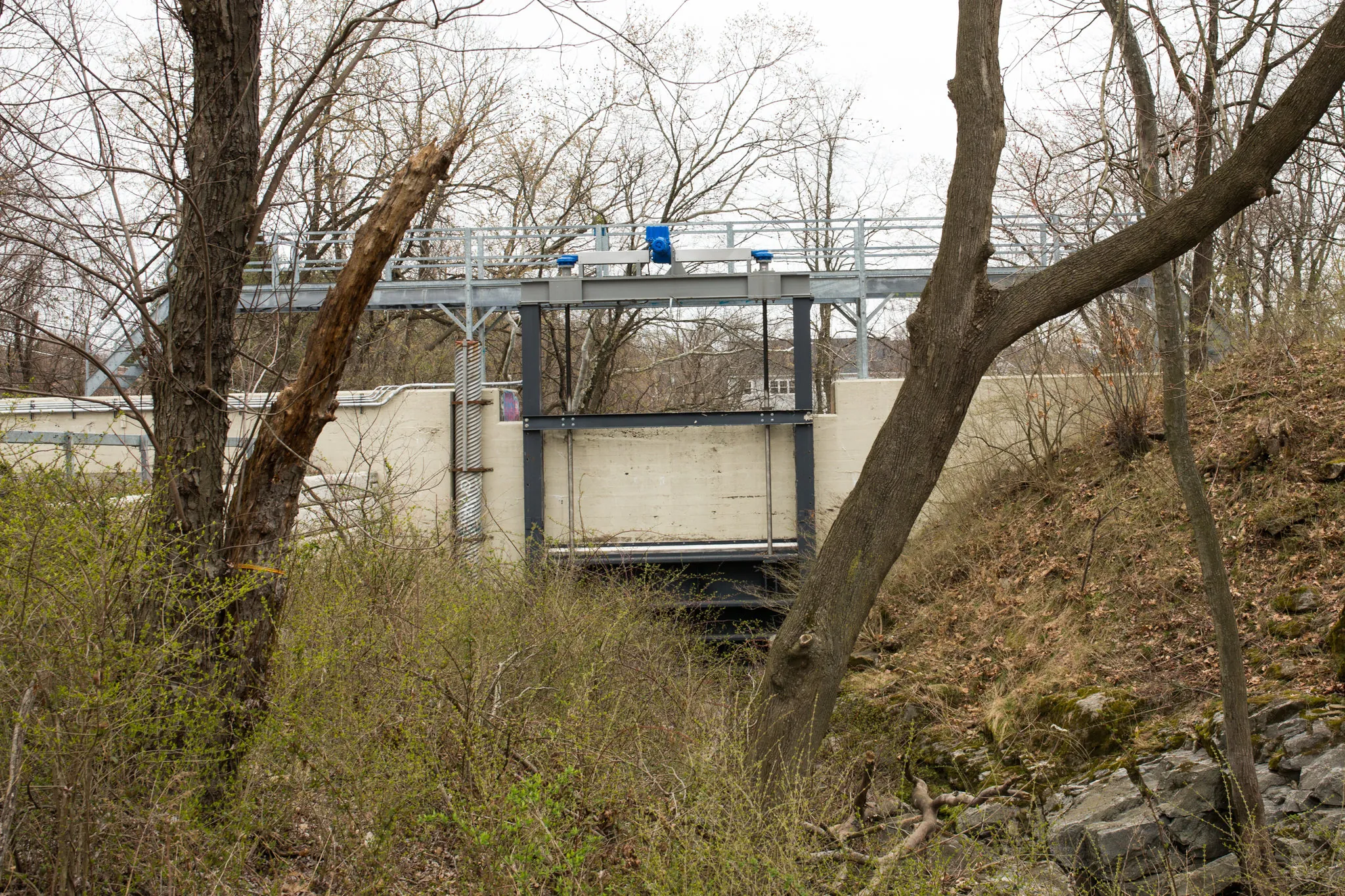
That case proves willingness, not identity. It shows that DOJ will name Iranian state-linked defendants, charge them in absentia, and include access to a control system in a federal cyber case when the evidence supports it.[8] It does not prove that the 2026 Minnesota activity was Iranian, CyberAv3ngers, IRGC-linked, or state-directed.
The precedent still matters for charging architecture. A Minnesota indictment, if it ever comes, would not require DOJ to invent a new legal category for water-sector PLC manipulation. Prosecutors already have a template for naming foreign defendants outside U.S. custody, explaining domestic critical-infrastructure harm, and accepting that extradition may be remote. The harder problem is not whether the conduct is recognizable under federal cyber law. It is whether investigators can present attribution in a way that survives the leap from intelligence assessment to criminal pleading.
Why pressure tools may come before an indictment
Foreign cyber cases often move through pressure tools before anyone is arrested. WIRED and Tenable both discussed prior U.S. responses tied to the CyberAv3ngers campaign, including Treasury sanctions against six IRGC Cyber-Electronic Command officials and the State Department’s Rewards for Justice offer of up to $10 million for information.[4][7] Those tools do not require the same public posture as a trial-ready indictment, and they can be useful when defendants are overseas, infrastructure is scattered, or some attribution evidence cannot be exposed without burning sources.
Seizures can also matter if investigators identify domains, servers, wallets, accounts, or command infrastructure that sit within reach of U.S. process or cooperative foreign authorities. A seizure warrant does not need to tell the whole story of a state-linked campaign. It needs probable cause as to the property and the offense. That makes it a more flexible disruption tool than an indictment against named foreign operators who may never appear in a U.S. courtroom.
For municipal counsel, the practical order may feel unsatisfying but familiar: preserve logs, document safety impacts, rebuild access, rotate credentials, review PLC exposure, and wait while federal investigators sort attribution. The legal exposure to the attacker may be severe; the utility’s immediate burden is operational proof. Who changed the password. Which device went unreachable. Which alarms failed. Which manual procedures were used. Which costs were incurred. Those facts are what convert a public incident into a usable record.
As of Aug. 5, 2026, the clean legal posture is conditional. The alleged Minnesota water conduct is charge-shaped under existing federal cyber law. An Iran-linked prosecution theory has precedent. But attribution remains the controlling unresolved fact, and the reported false-flag inquiry is still open. Until that changes publicly, the defensible present-tense conclusion is enforcement pressure without indictment.
References
- 18 U.S. Code § 1030 - Fraud and related activity in connection with computers — Cornell Legal Information Institute.
- Malicious Cyber Actors Targeting Water and Wastewater Sector Internet-Facing Programmable Logic Controllers Causing Operational Disruptions — FBI, July 30, 2026.
- AA26-097A — CISA, April 7, 2026; updated July 22, 2026.
- A Leaked Memo Ties Cyberattacks on Minnesota Water Utilities to Iran — WIRED.
- Minnesota Water Cyberattack Is Likely the Work of Iran, U.S. Officials Say — The New York Times, July 30, 2026.
- Iranian cyberattacks timeline: U.S. companies, water systems in Minnesota hacked — CBS News.
- Coordinated Cyberattack on Minnesota Water Utilities: What You Need to Know — Tenable.
- Seven Iranians Working for Islamic Revolutionary Guard Corps-Affiliated Entities Charged for Conducting Coordinated Campaign of Cyber Attacks Against U.S. Financial Sector — U.S. Department of Justice, March 24, 2016.
Related records
Tool profile
Browse tool evaluations →Governing regulation
Browse the obligations tracker →Preventive workflow
Browse verification workflows →
Report a correction or tip
Spotted an outdated figure, a misstated fact, or a ruling this case record should reflect? Public comments are disabled for this content given the professional cost of a misreported case outcome, penalty amount, or rule text — use the structured correction channel instead.
Report a correction or tip for this record →