
Why Nadella's Denial of the Scout Memo May Strengthen AI Liability Cases
The leaked Scout memo and Satya Nadella's public denial create a corporate knowledge record that parallels the internal documents leading to liability in the KGM social media addiction verdict. This analysis explains why the denial may actually strengthen a future plaintiff's case.
- Jurisdiction
- US federal
- Court
- Microsoft internal
- AI tool named
- Microsoft Scout
- Ruling date
- Jun 2, 2026
- Source document
- View primary court order ↗
- Last verified
- Jul 27, 2026
Lex Machina Review is an independent risk-tracking and reference resource. Nothing on this site is legal advice, and using it does not create an attorney-client relationship. Every record is reviewed against primary sources but may not reflect the most current status of a matter — always verify directly against the cited court order, rule text, or a licensed attorney before relying on it.
Companion explanation — secondary to the source document above
Satya Nadella’s denial was meant to cut Microsoft away from the phrase that made the Scout memo combustible. For legal risk purposes, it may do something less helpful: preserve a second record about who inside Microsoft knew what, when they knew it, and whether the company had reliable oversight of addictive-AI design strategy.
That is the narrow legal issue in the Satya Nadella AI addiction controversy. The issue is not whether a leaked phrase, standing alone, proves liability. It does not. The issue is that a reported internal product-strategy document used addiction language, identified specific authors, and was followed by a CEO-level repudiation that may be harder to reconcile with the company’s own product structure than with the public-relations problem it was trying to solve.
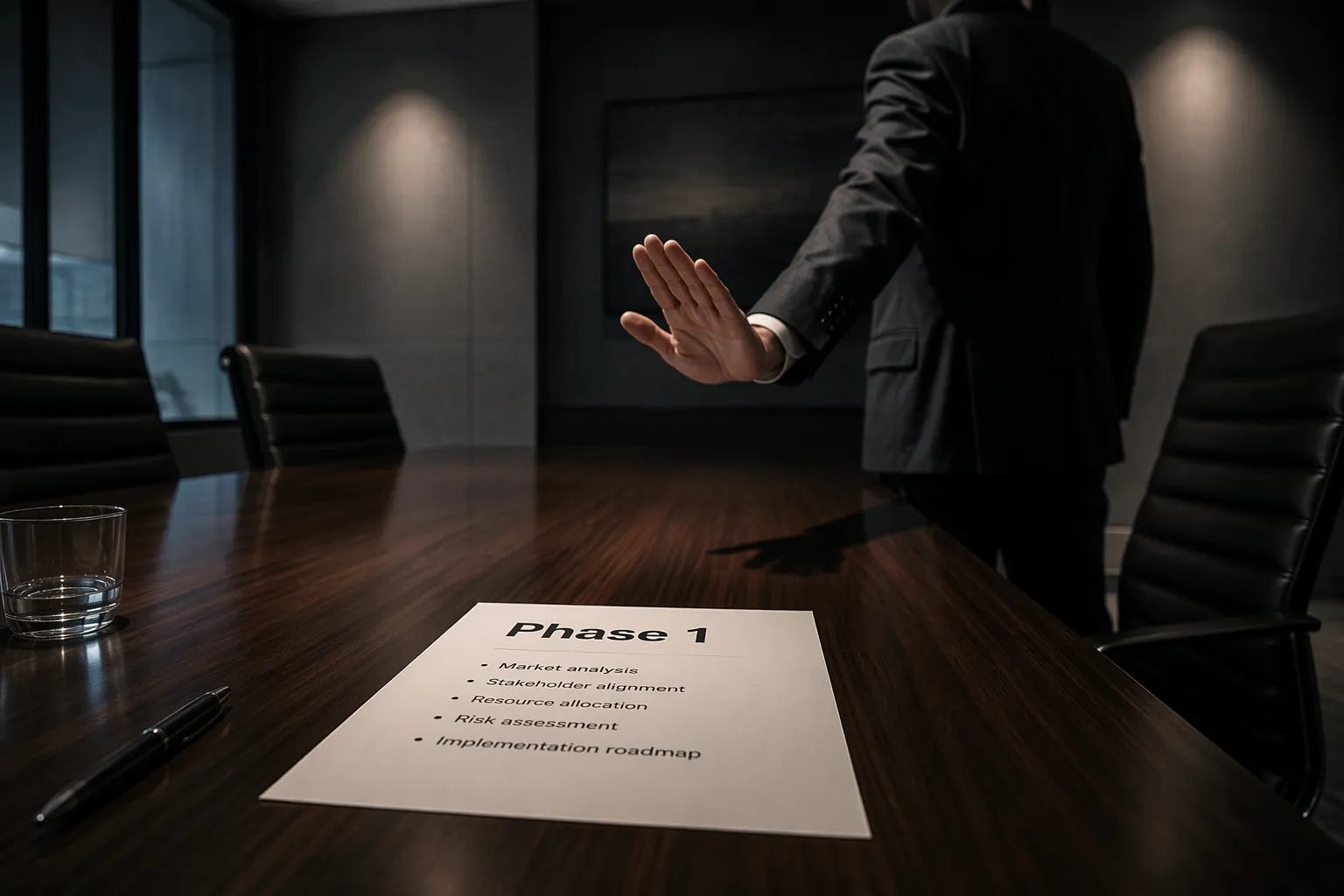
The Information reported that Nadella sent an internal message to roughly 50 senior engineers after the leak, saying he was “not sure what this document is” and that addiction was “absolutely a non goal.” 404 Media had reported the underlying Scout document, including a three-phase plan whose first phase was labeled “Make people addicted.” [1][2]
The record Microsoft will have to explain
The useful way to read the Scout episode is not as a culture-war artifact about whether technology companies say reckless things in private. It is as a record-management problem. A future complaint would not need to prove that every Microsoft executive wanted users addicted to AI. It would try to show that addiction-aware design was placed into a product strategy, that the strategy was associated with identifiable product leaders, and that Microsoft’s response revealed either distancing or inadequate visibility.
| Record item | Why it matters legally |
|---|---|
| The reported Scout memo described a three-phase strategy and labeled phase one “Make people addicted.” [2] | The phrase supplies unusually direct language for design intent, notice, and foreseeability arguments. |
| 404 Media reported that the document was authored by Corporate VP Omar Shahine and Jakob Werner, with AI co-creation; Shahine was publicly listed as Scout’s product lead at Build 2026. [2] | Named authors make the document harder to dismiss as anonymous noise and easier to target in discovery. |
| Nadella reportedly told roughly 50 top engineers that he was not sure what the document was and that addiction was “absolutely a non goal.” [1] | The denial may help a corrective-action narrative, but it also creates a governance question: why was the CEO unsure about a strategy document tied to a flagship AI assistant? |
| Microsoft spokesperson Frank Shaw said Scout is designed to help people accomplish tasks more effectively, “not encouraging dependency,” and that the goal is “more time back.” [2] | The public position gives plaintiffs a clean contrast between external assurances and internal wording. |
None of this makes the memo self-authenticating in court. Microsoft would be entitled to contest context, authorship scope, draft status, AI-generated wording, privilege boundaries, and whether the language reflected approved product design rather than bad brainstorming. But those are litigation arguments about weight, admissibility, and meaning. They are not the same as erasure.
The avoidable feature is the gap between the memo’s apparent specificity and the denial’s uncertainty. If the document had been anonymous, unsourced, and unconnected to a product leader, a CEO saying he did not know what it was would fit comfortably. A reported memo tied to named authors, one of them publicly associated with Scout leadership, is a different exhibit.
KGM turned internal addiction knowledge into a product-liability template
The reason the Scout memo matters is that plaintiffs have already seen a jury respond to internal addiction-aware design records. In March 2026, a California jury found Meta and YouTube liable in KGM under a design-defect theory involving social-media addiction allegations. The reported proof included internal documents and employee messages used to argue that the companies knew features such as infinite scroll, autoplay, and algorithmic recommendations were addictive and proceeded anyway. The verdict is under appeal, and its reach outside that case remains unsettled. But as a pleading and discovery template, it is already important. [3][4]
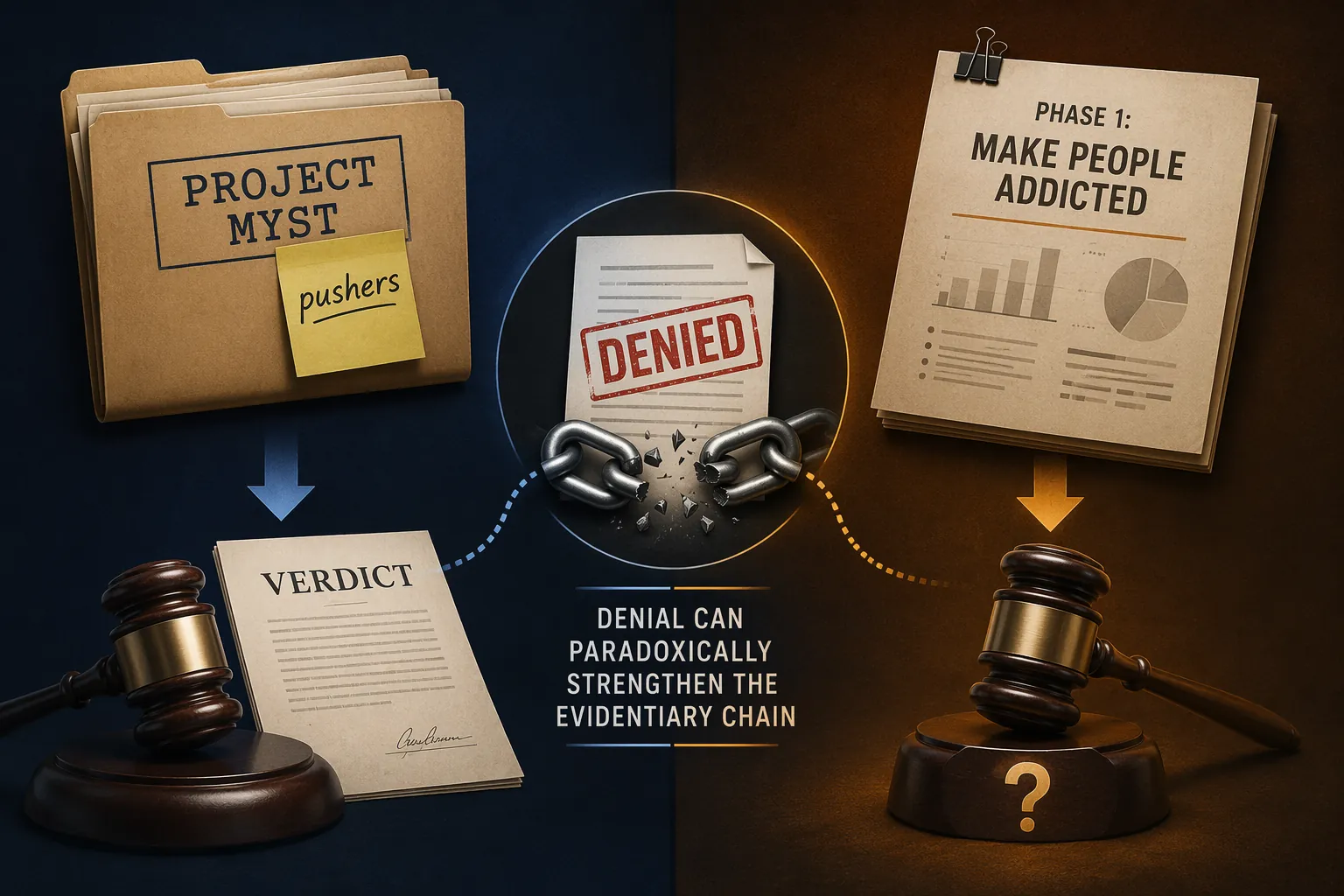
KGM’s reported evidentiary force did not come from a single executive saying a single embarrassing thing. It came from the way internal materials could be assembled into a coherent liability story: the companies allegedly understood that engagement-maximizing features could be addictive, kept deploying those features, and exposed minors to foreseeable harms. Internal references such as Project Myst and employee messages describing themselves as “pushers” mattered because they helped translate abstract product choices into knowledge and intent. [3]
That is the parallel plaintiffs would try to draw against Microsoft. The claim would not be that Scout is identical to Instagram, YouTube, or any social-media feed. AI assistants present different use patterns, different user expectations, and different causation problems. A chatbot or assistant is not infinite scroll. But the evidentiary question is familiar: did the company have internal records showing awareness of dependency or compulsive use, and did it continue designing toward that risk?
A phrase like “Make people addicted” is unusually convenient for a plaintiff because it compresses several disputed points into one document heading. It speaks to design intent. It can support notice. It gives experts a vocabulary hook. It helps a jury understand why later external statements about “more time back” may deserve scrutiny. A plaintiff still has to prove defect, causation, injury, and legally cognizable damages. The memo does not do that work by itself. It does, however, make the first-pass narrative easier to plead.
This is also why the usual corporate explanation—draft language, poor wording, misunderstood internal jargon—would not end the inquiry. Those explanations may matter. They may even be true. But after KGM, the litigation value of internal addiction language lies less in whether the wording was polished and more in whether it shows the company was designing with awareness of addictive engagement as a product objective or foreseeable risk.
The denial creates three separate questions
Ordinary commentary tends to collapse the Scout memo and Nadella’s denial into a single optics problem. A plaintiff would separate them.
First: what is the memo worth?
The memo’s value depends on what discovery confirms. Was it a draft or a final strategy? Who reviewed it? Was it circulated beyond its authors? Did anyone object to the addiction phrasing before the leak? Did product requirements, metrics, experiments, or roadmaps reflect the same objective in less inflammatory language? Did AI co-creation generate the phrase, or did human reviewers adopt it? The leaked excerpt starts the inquiry; it does not complete it.
That distinction matters because Microsoft’s strongest defense may not be “the memo does not exist.” It may be “the memo did not represent approved design.” If the company can show that the document was rejected, corrected, quarantined, or never operationalized, Nadella’s repudiation could support a prompt corrective-action story. The harder version is explaining why a document framed that way existed around a prominent AI assistant at all.
Second: what did Nadella personally know?
Nadella’s message was not sworn testimony. It was a contemporaneous internal response to a leak. That limits what should be made of it. A CEO’s uncertainty in a message to engineers is not an admission that the company lacked controls, and it is not proof that he had prior knowledge of the memo.
Still, the wording creates deposition questions. Who briefed him before he sent the message? Did he or his staff know that Shahine was associated with Scout? Did anyone check the document management trail? Was the statement “not sure what this document is” a literal statement of unfamiliarity, a rejection of the document’s legitimacy, or a way to distance leadership from a phrase that had become indefensible? Each answer points to a different risk profile.
Third: what does Microsoft’s governance story become?
This is where the denial becomes most useful to a future plaintiff. If the CEO was distancing himself from a real product-strategy document, plaintiffs will ask why the public repudiation should be credited over the internal record. If he genuinely lacked reliable visibility into strategy documents generated around a flagship AI assistant, plaintiffs will ask whether Microsoft had reasonable controls around addictive-AI design. Neither theory requires a conspiracy. Both are ordinary corporate-knowledge theories.
The governance problem would become sharper if discovery found risk review, trust-and-safety, child-safety, health, or responsible-AI teams discussing dependency concerns around Scout or similar assistants. It would become weaker if Microsoft can show that the addiction phrase was promptly rejected, that dependency was treated as a risk to reduce, and that product teams were required to design away from compulsive engagement. The denial is not fatal either way. It is a door.
The public statement gives plaintiffs a clean contrast
Frank Shaw’s response is the kind of statement companies have to make and later have to live with. “Scout is for helping people accomplish tasks more effectively — not encouraging dependency. Our goal isn’t more screen time. It’s more time back,” he told 404 Media. [2]
That sentence is not legally reckless on its face. It is clear, humane, and probably accurate as to Microsoft’s preferred public account of the product. But in a product-liability record, it creates a contrast that plaintiffs can use without much ornamentation: externally, Scout was about time back; internally, the reported first phase was “Make people addicted.”
The strongest defense would be to connect the public statement to actual controls: design reviews, dependency-risk criteria, escalation channels, rejected engagement metrics, age-sensitive safeguards, and documented changes. The weakest defense would be to treat the problem as only a vocabulary error. After KGM, vocabulary is not the whole issue, but it is often where discovery starts.
AI addiction does not need a settled doctrine before experts use the memo
There is not yet a Microsoft AI-addiction verdict. There is also no need to pretend the doctrine is fully built. Product-liability claims involving AI systems are already appearing in other contexts, including health-advice theories discussed in Winters v. OpenAI. Addiction claims would raise different proof problems, especially around causation, user vulnerability, comparative fault, warnings, and the difference between high engagement and actionable dependency.
The academic support is narrower but still useful. Research discussed by The Conversation identifies addictive properties in generative AI, including emotional dependency, compulsive engagement, and loss of real-world connections, and maps those concerns onto established addiction criteria. That does not prove Scout harmed anyone. It does make expert testimony on AI dependency more plausible than a defense narrative that treats the entire theory as speculative science fiction. [7]
For a plaintiff, the memo would be the bridge between general expert literature and product-specific design. Experts can discuss why conversational AI may create dependency risks. Internal documents can show whether a particular company recognized, pursued, ignored, or mitigated those risks. The second category is usually the more damaging one.
The AI LEAD Act would make intent evidence even more valuable, if enacted
The federal legislative backdrop should be kept in its proper place. The AI LEAD Act, introduced in September 2025 by Senators Dick Durbin and Josh Hawley, had not been enacted as of July 2026. It is not governing law. It should not be cited as though it already creates a Microsoft cause of action. [5]
If enacted in a form resembling the introduced bill, however, it would make records like the Scout memo more important. The bill would create a federal product-liability cause of action for AI systems, remove the Section 230 safe harbor for covered claims, and apply retroactively to harms predating enactment. [5][6]
That framework would not eliminate traditional proof burdens. Plaintiffs would still have to connect an AI system to an injury. But design intent would move closer to the center of the case. A document that says “Make people addicted” would not merely be embarrassing; it would be a discovery target, a complaint exhibit, and a roadmap for depositions about metrics, safeguards, and approvals.
The complaint practically writes its first discovery requests
A future plaintiff does not need the Scout memo to be the whole case. It only needs the memo to justify asking for the records that might become the case.
- All drafts, comments, AI inputs, and AI-generated versions of the Scout strategy document.
- Distribution lists, Slack or Teams discussions, email threads, and meeting notes concerning the “Make people addicted” phase.
- Product metrics used to evaluate Scout engagement, retention, session length, reactivation, emotional reliance, or repeated daily use.
- Responsible-AI, trust-and-safety, child-safety, health, or legal reviews concerning dependency, compulsive use, or vulnerable users.
- Documents reflecting Nadella’s briefing, the drafting of his internal message, and any corrective action after the leak.
- Materials supporting Microsoft’s public statement that Scout is about “more time back” rather than dependency.
That is the practical litigation significance. The leaked memo supports questions about whether addiction language was isolated or operational. Nadella’s denial supports questions about how the C-suite learned about, evaluated, and controlled that language. The public statement supports a comparison between internal design goals and external assurances.
Microsoft may have answers to all of this. It may show that Scout was not designed to encourage dependency, that the phrase was rejected, that no addiction-oriented metrics governed the product, and that Nadella’s message reflected immediate leadership correction. Those answers would matter. They would also have to be proved through the same kind of internal record plaintiffs would seek.
The risk is not the phrase alone
The Scout memo is not a liability finding. Nadella’s denial is not an admission. KGM is under appeal. The AI LEAD Act is only proposed legislation. The reported memo is not reproduced in full in the public materials, and the available record does not establish that Scout injured any user.
The risk is more concrete than bad optics and less dramatic than automatic liability. Plaintiffs’ lawyers now have a recognizable sequence: internal addiction-aware language, named product leadership, public denial, external reassurance, and an existing social-media addiction verdict showing that juries may care deeply about what companies knew before users were harmed.
That is why Nadella’s repudiation may not help as much as it first appears. It does not make the memo disappear. It may instead force Microsoft to explain whether the CEO was disavowing a real product-strategy document or lacked reliable visibility into one. In a future AI-addiction product-liability case, either explanation gives plaintiffs something they know how to plead, request, and compare to KGM.
References
- Exclusive: Nadella Rebukes Microsoft Executive’s Plan to Make Users Addicted to AI Agents, The Information
- Microsoft Wants to Make People Addicted to Scout, Its New AI Assistant, Internal Documents Reveal, 404 Media, June 2, 2026
- Meta and Google just lost a landmark social media addiction case. A tech law expert explains the fallout, The Conversation
- Lawsuits for Social Media Addiction and Mental Harm, Nolo
- Durbin, Hawley Introduce Bill Allowing Victims To Sue AI Companies, U.S. Senator Dick Durbin, September 2025
- New Federal Legislation Proposes Product Liability Standards for AI Systems, Barnes & Thornburg, 2025
- If AI is addictive, where does the responsibility lie – with Big Tech or its users?, The Conversation
Related records
Tool profile
Browse tool evaluations →Governing regulation
Browse the obligations tracker →Preventive workflow
Browse verification workflows →
Report a correction or tip
Spotted an outdated figure, a misstated fact, or a ruling this case record should reflect? Public comments are disabled for this content given the professional cost of a misreported case outcome, penalty amount, or rule text — use the structured correction channel instead.
Report a correction or tip for this record →