
NC Attorney General's Ticketmaster Probe: A Compliance Risk Signal
The North Carolina Attorney General's June 2026 demand letter to Ticketmaster, following Carolina Hurricanes ticket complaints, illustrates how state consumer protection laws create enforcement risk with a low evidentiary bar. Counsel should understand this independent leverage vector.
- Jurisdiction
- US-North Carolina
- Court
- North Carolina Department of Justice
- AI tool named
- General automated purchasing tools
- Ruling date
- Jun 4, 2026
- Source document
- View primary court order ↗
- Last verified
- Jul 29, 2026
Lex Machina Review is an independent risk-tracking and reference resource. Nothing on this site is legal advice, and using it does not create an attorney-client relationship. Every record is reviewed against primary sources but may not reflect the most current status of a matter — always verify directly against the cited court order, rule text, or a licensed attorney before relying on it.
Companion explanation — secondary to the source document above
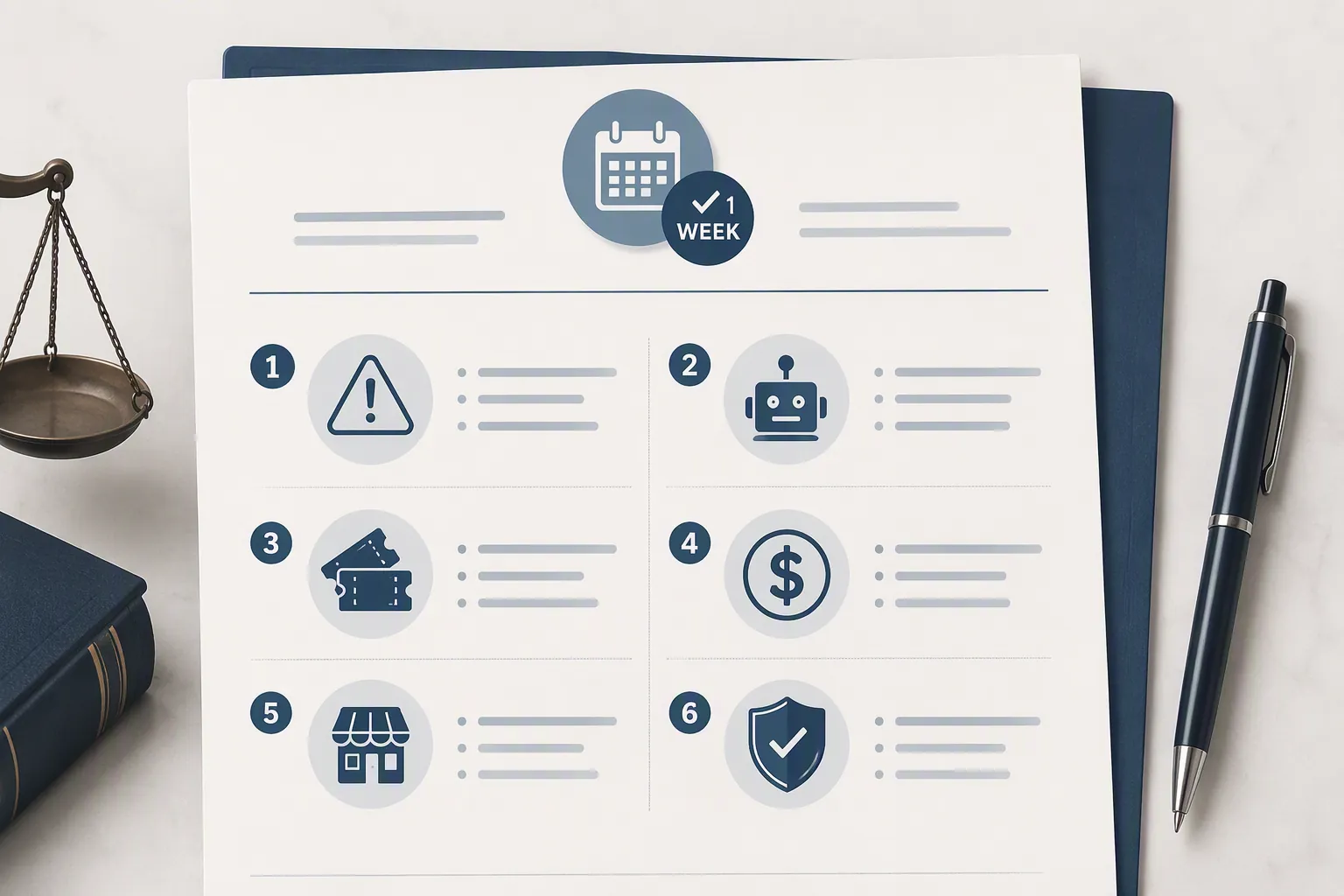
The useful starting point for counsel watching the North Carolina attorney general's Ticketmaster investigation over Carolina Hurricanes ticket complaints is not fan anger, and not a final finding that Ticketmaster did anything unlawful. It is the June 4, 2026 demand letter from North Carolina Attorney General Jeff Jackson to Ticketmaster: six questions, a one-week response window, and a public request for answers after Hurricanes season-ticket holders reported that they were blocked from buying Stanley Cup Final tickets during a May 2026 presale.[1]
That posture matters. A demand letter is not a complaint. It does not establish a technical failure, bot attack, allocation defect, deception, or unlawful pricing. But it does something companies often underestimate: it converts a disputed operational event into a public compliance exercise before litigation has begun.
What the demand letter forced Ticketmaster to answer
The six questions were practical, not theatrical. They asked Ticketmaster to account for the parts of the transaction chain that would matter whether the eventual explanation was scarcity, system performance, automated purchasing, inventory allocation, resale activity, or customer remediation.[1]
| Demand letter topic | Compliance burden created |
|---|---|
| Reports of technical failures | Reconstruct platform performance, error logs, access paths, customer reports, and internal incident assessments. |
| Bot and automated-tool monitoring | Show what detection systems were in place, what activity was flagged, and how any suspected automated purchasing was handled. |
| Season-ticket-holder allocation numbers | Identify how many tickets were available to the affected group and how access was implemented. |
| Compensation offered | Explain whether affected customers received refunds, replacement access, credits, or other relief. |
| Relationship with the resale marketplace | Separate primary ticketing conduct from resale-marketplace activity, or explain where the two functions interact. |
| Prevention steps | Describe what changes, if any, will prevent a recurrence. |
Those questions are why the letter is more than a request for public reassurance. Each category points to records someone has to preserve, collect, review, and synthesize quickly. A company can deny wrongdoing and still face a substantial internal investigation: engineering has to pull logs; customer operations has to identify complaint patterns; legal has to review statements before they become admissions; business teams have to explain allocation decisions; communications staff has to keep the public response consistent with the record.
The complaints triggered scrutiny; they do not prove the answer
The public trigger was narrow but sufficient for an inquiry. The North Carolina Department of Justice said Hurricanes season-ticket holders reported being unable to buy seats during the presale and then seeing resale prices marked up by two to ten times the original price.[1] WRAL later reported that the office had received more than 20 complaints within days of the presale, rising to 37 by June 10, 2026.[2]
That record supports an investigation, not a conclusion. A blocked purchase screen can reflect a system malfunction, a user-flow failure, inventory exhaustion, authentication trouble, bot activity, or a design choice that worked poorly under pressure. A high resale price can reflect opportunism, scarcity, automated buying, weak controls, or lawful secondary-market behavior. The public materials do not resolve which explanation fits the Hurricanes presale.
Ticketmaster’s public position sharpened the factual dispute. The company attributed the situation to “unprecedented demand,” denied technical issues, and said its resale marketplace is separate from its primary ticketing operation.[3] Those statements may be true, incomplete, or contested by later evidence. At the demand-letter stage, counsel has to treat all three possibilities as live.
Why this was not simply a price-gouging case
The resale markups are the easiest fact to quote and the easiest fact to overread. North Carolina’s price-gouging statute is tied to a gubernatorial state of emergency declaration; the state’s own consumer guidance describes the prohibition as applying when a state of emergency has been declared.[4] The Stanley Cup Final presale was not such an emergency. On the public record, that left the attorney general without the familiar price-gouging tool.
That gap did not end the matter. The more important legal signal is that the attorney general could still proceed through consumer protection authority under North Carolina’s Unfair or Deceptive Trade Practices Act framework. The question then becomes less dramatic and more operational: were consumers misled, treated unfairly, denied promised access, routed through a process that did not function as represented, or left without adequate remediation after a known problem?
That is a different kind of leverage from price-gouging enforcement. It does not require the state to prove that a hockey ticket became an emergency necessity. It does not require the attorney general to start with market power. It allows the inquiry to press on representations, access, process integrity, remediation, and prevention.
The antitrust backdrop makes the letter louder, not legally identical
The Ticketmaster name arrived with heavy antitrust baggage in 2026. Jackson had already positioned himself as a visible enforcer against Live Nation/Ticketmaster; the North Carolina Department of Justice announced on April 15, 2026 that he led a multistate team that won a jury verdict on all claims in the Southern District of New York.[5] Client alerts following the verdict described a broader litigation landscape in which the Department of Justice settled mid-trial for $280 million, with a 15% fee cap and no breakup, while the states continued to a unanimous verdict.[6][7]
That context matters because it explains why a short state demand letter received attention. It does not convert the Hurricanes presale inquiry into a Sherman Act case. The public demand letter did not need to plead monopoly power, define a market, prove exclusionary conduct, or wait for structural antitrust remedies. It asked for answers about a consumer-facing transaction failure alleged by North Carolina residents.
For counsel, that distinction is not academic. A federal settlement, even a significant one, does not neutralize state-level consumer protection inquiries arising from later or separate consumer events. Nor does the absence of a price-gouging statute leave the company with no state attorney general risk. The legal hooks are different, and the response work is different.
The cost begins before fault is proven
A one-week deadline changes the company’s internal tempo. The first task is not to win a merits argument. It is to know what can be said responsibly within days, what must be preserved, what remains uncertain, and which public statements could create avoidable exposure if later records complicate them.
On the technical side, counsel would want the incident record before accepting a business-side assurance that nothing malfunctioned. That means preserving logs, queue data, authentication records, error reports, traffic spikes, bot-detection outputs, internal incident tickets, customer service transcripts, and any communications with the team or venue about ticket allocation. If the system functioned properly, those records are the defense. If it did not, they define the problem.
On the consumer side, the hard questions are usually less polished than the public statement. Which season-ticket holders were promised access? Was access guaranteed or merely prioritized? How many tickets were actually available to that group? Were consumers told why they could not complete purchases? Did similarly situated customers receive different treatment? Was any compensation offered, and on what criteria?
The resale-marketplace question is especially sensitive because it sits at the intersection of public suspicion and corporate structure. Ticketmaster’s statement that its resale marketplace is separate from primary ticketing addresses one theory, but it does not end the inquiry. The attorney general can still ask how tickets moved from primary availability to resale listings, what controls existed against automated acquisition, what fees were collected, and whether consumer-facing disclosures made the separation clear.
The response has to preserve defenses without pretending the letter is harmless
The safest response posture is usually neither capitulation nor reflexive denial. At this stage, Ticketmaster had a legitimate reason to say the public complaint record did not prove a technical failure. It also had reason to avoid treating “unprecedented demand” as a complete answer. High demand explains scarcity. It does not, by itself, answer questions about access rules, queue function, bot controls, consumer messaging, allocation, or remediation.
A serious response to this kind of letter typically has several workstreams running at once: legal hold notices, custodian identification, technical review, customer complaint analysis, executive messaging, regulator communications, and privilege discipline. The company also has to decide whether to offer voluntary relief before the facts are fully settled. That decision may reduce consumer pressure, but it can also be read as an implicit acknowledgment that something went wrong.
Public narrative control is part of the compliance problem, not a separate communications exercise. If the company says there were no technical issues, it needs to know what it means by “technical issues.” If it says the resale marketplace is separate, it needs to know whether that statement will remain accurate when applied to data flows, user accounts, fees, inventory movement, and affiliate relationships. If it promises prevention steps, it needs to know whether those steps imply a preventable defect.
The risk signal for other platforms
The Hurricanes presale inquiry is not important because it proves Ticketmaster violated consumer protection law. The public record does not do that. It is important because it shows how little a state attorney general may need to begin imposing real cost: a cluster of consumer complaints, a plausible account of blocked access, visible resale markups, and a transaction process complex enough that the company must reconstruct it under pressure.
That lesson travels beyond live events. Any national platform that controls access to scarce goods, paid reservations, account privileges, digital queues, marketplace listings, or algorithmic allocation can face the same sequence. Consumers complain; the attorney general asks what happened; the company has days, not months, to explain systems that were built across product, engineering, compliance, and vendor teams.
The practical point is narrower than the public debate and more useful. Counsel cannot wait for a filed complaint, a price-gouging emergency, an antitrust theory, or a federal settlement to decide whether the risk is real. A state attorney general demand letter can create immediate disclosure pressure, preservation duties, business disruption, reputational exposure, and negotiating leverage while the central facts are still unresolved.
References
- Take Warning: Attorney General Jeff Jackson Demands Answers from Ticketmaster After Hurricanes Fans Report Issues Preventing Ticket Purchases, North Carolina Department of Justice, June 4, 2026
- Canes Ticketmaster Bots Scam June 2026, WRAL, June 10, 2026
- Ticketmaster Responds as NC Attorney General Investigates Stanley Cup Final Ticket Complaints, ABC11, June 8, 2026
- Price Gouging, North Carolina Department of Justice
- Attorney General Jeff Jackson Wins Live Nation/Ticketmaster Case on All Claims, North Carolina Department of Justice, April 15, 2026
- Live Nation/Ticketmaster Antitrust Verdict: Key Takeaways from the States' Jury Trial Win, Paul Weiss, April 20, 2026
- After the Verdict: Navigating the Live Nation/Ticketmaster Antitrust Fallout, Crowell & Moring, May 6, 2026
Related records
Tool profile
Browse tool evaluations →Governing regulation
Browse the obligations tracker →Preventive workflow
Browse verification workflows →
Report a correction or tip
Spotted an outdated figure, a misstated fact, or a ruling this case record should reflect? Public comments are disabled for this content given the professional cost of a misreported case outcome, penalty amount, or rule text — use the structured correction channel instead.
Report a correction or tip for this record →