
The NCIS vs CSI Naming Fight Is a Trademark Law Lesson
The 2003 internal dispute between CBS's CSI and NCIS teams illustrates how trademark confusion risk forced a redundant show title — and why the post-Jack Daniel's landscape makes that risk materially higher for studios today.
- Jurisdiction
- United States
- Court
- CBS internal dispute
- AI tool named
- NCIS
- Ruling date
- Jan 1, 2003
- Source document
- View primary court order ↗
- Last verified
- Jul 25, 2026
Lex Machina Review is an independent risk-tracking and reference resource. Nothing on this site is legal advice, and using it does not create an attorney-client relationship. Every record is reviewed against primary sources but may not reflect the most current status of a matter — always verify directly against the cited court order, rule text, or a licensed attorney before relying on it.
Companion explanation — secondary to the source document above
“Navy NCIS” is the kind of title that makes a clearance lawyer look both annoying and right. Read literally, it says “Navy Naval Criminal Investigative Service.” That redundancy was not a stylistic flourish, and it was not the product of a court order. It was, according to a later account from co-creator Don McGill reported by CinemaBlend/Yahoo, the compromise CBS adopted after the CSI side objected that the new show could not simply be called “NCIS.” McGill described an executive from CSI calling CBS and saying, “You can’t call that show NCIS,” because the acronym sat too close to CSI.[1]
That is the useful beginning for any serious look at the CBS NCIS title dispute, even though “case” needs immediate discipline. There was no reported opinion, no docketed Lanham Act complaint, and no judicial finding that NCIS infringed CSI. The factual hook is a 2025 entertainment-press report of McGill’s podcast recollection, not a primary legal record.[1] But as studio evidence goes, the ugly compromise is unusually legible. Before anyone tested anything in court, CBS behaved as though three letters could create enough confusion risk to justify damaging the title.
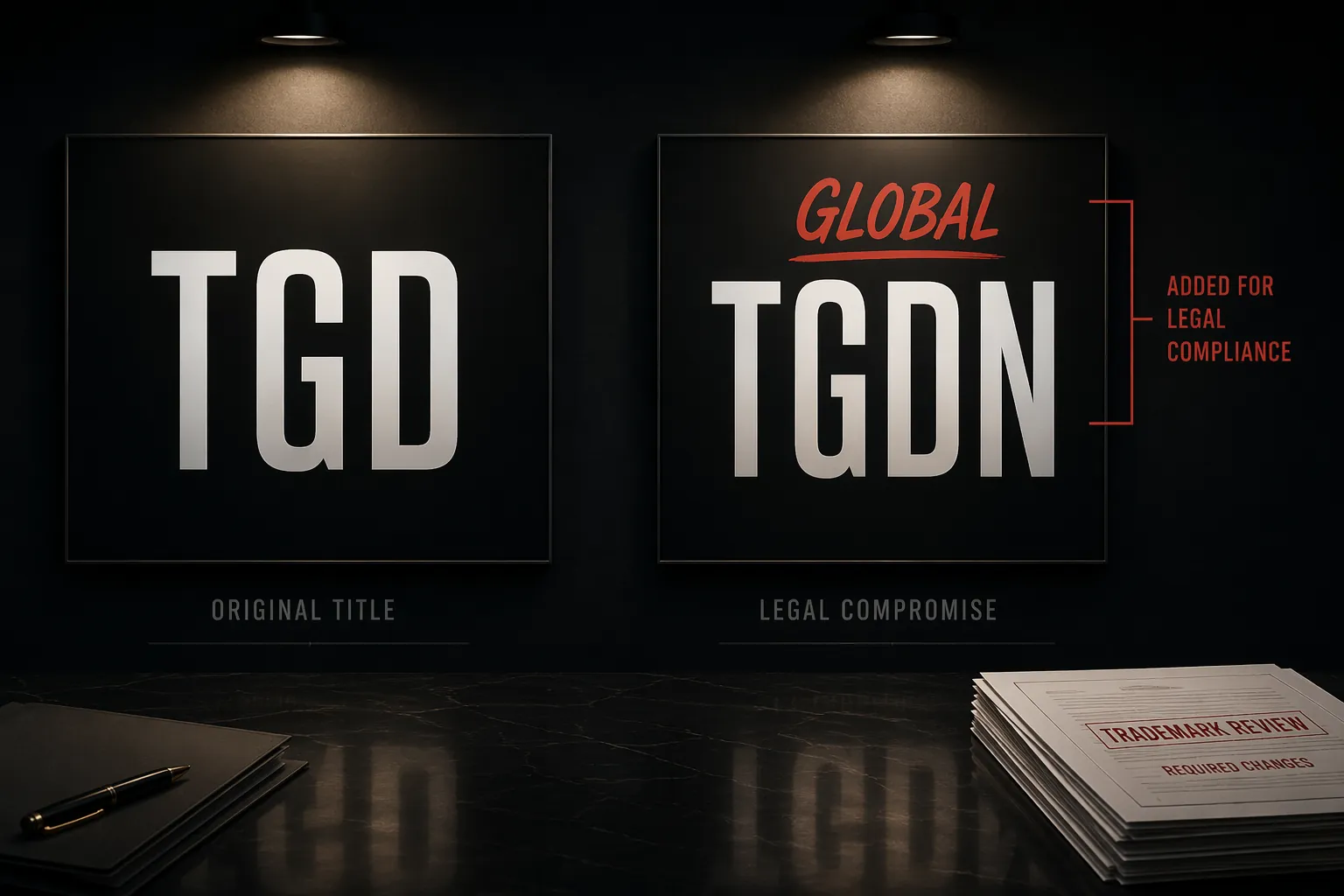
The point is not that CBS admitted liability. Companies settle, rename, qualify, and over-label for reasons that never equal legal concession. The narrower and more defensible inference is that sophisticated entertainment parties inside one network saw a real title-clearance problem: CSI was already a source-facing television mark, NCIS was the proposed title of a related crime-procedural series, and viewers might reasonably read the newcomer as connected to the established property rather than merely adjacent programming.
The Legal Question Hidden In The Bad Title
Trademark law does not give a television producer ownership over every short, punchy acronym. It does, however, ask whether one designation is likely to confuse consumers about source, sponsorship, affiliation, or approval. In entertainment, that question can be especially awkward because a title is both expressive packaging and commercial routing. It tells the audience what the work is called, but it may also tell the audience whose franchise, studio, network, or series universe they are entering.
CSI and NCIS were not the same word. They did not describe the same agency. But the risk was not hard to articulate. Both were clipped law-enforcement acronyms used as titles for hour-long CBS crime dramas. One was already shorthand for a successful procedural brand. The other placed an “N” in front of the same final three-letter sequence and moved into a closely related programming lane. In ordinary Lanham Act terms, the dispute would have invited a likelihood-of-confusion analysis focused on similarity of the marks, proximity of the services, strength of the existing mark, marketing context, and evidence bearing on actual or likely audience confusion.
The internal nature of the fight matters. If CSI and NCIS had belonged to different companies, the objection might have arrived as a cease-and-desist letter, an insurer’s reservation, or a complaint seeking injunctive relief. Inside CBS, it arrived as a business-affairs problem. That does not make it legally trivial. Internal disputes often reveal the risk calculation earlier and more cleanly than litigation does, because the parties are still deciding whether the avoidable problem is worth buying.
It is also worth keeping the trademark issue separate from later NCIS-related contract litigation. Bellisario v. CBS, which sometimes surfaces in searches around NCIS disputes, concerned spin-off rights and contract obligations, not whether the title NCIS infringed CSI. The naming fight is a trademark-clearance lesson; the Bellisario dispute is a different kind of entertainment-law weather.
Why CSI Had A Plausible Confusion Argument
A plaintiff pressing the CSI position would not need to prove that every viewer thought NCIS was CSI. The better argument would be more modest: a meaningful number of viewers could believe the new title identified a CSI-related source, extension, or companion property. For a network procedural, that is not a fanciful theory. Television titles are marketed across promos, listings, press coverage, streaming menus, and franchise blocks. The title does commercial work before the episode does expressive work.
Similarity would carry more weight than usual because the relevant marks are short. With a three-letter acronym, one added letter can be either enough differentiation or not much differentiation at all, depending on context. Here, the shared CSI sequence was not buried in a long phrase; it remained visually and aurally prominent. The “N” changed the government agency being referenced, but it did not eliminate the family resemblance that apparently bothered the CSI side.
Relatedness would also be easy for the objector. Both titles sat in scripted television entertainment services, not in unrelated product markets. The stronger the CSI brand was understood to be, the more a near-match in the same programming neighborhood could look like affiliation rather than coincidence. That is why the “Navy” patch is so revealing. It did not make the title elegant. It created distance. Clearance compromises rarely improve the art; they improve the file.
There is a counterargument, and it is not weak. NCIS is the acronym for a real investigative service, so the title had descriptive and referential force. A show about that service has an obvious reason to use the agency’s initials. Viewers of crime procedurals are also accustomed to acronyms, agencies, and forensic alphabet soup. Those facts would matter. They would not, by themselves, end the analysis.
Rogers Made Expressive Titles Hard To Attack
For decades, the most important defense for a television title was not that confusion was impossible. It was that expressive titles received special First Amendment breathing room under Rogers v. Grimaldi. In the Second Circuit’s formulation, a trademark claim against an expressive-work title fails unless the title has no artistic relevance to the work or is explicitly misleading as to source or content.[2]
That is a demanding test. “NCIS” plainly has artistic relevance to a series about the Naval Criminal Investigative Service. The harder question would be whether using NCIS, without “Navy,” explicitly misled viewers into believing the series came from CSI or belonged to the CSI brand. Rogers usually does not treat mere similarity, association, or the possibility of confusion as enough. It asks for something more pointed.
The Ninth Circuit’s Empire decision showed the force of that shield in a television context. Twentieth Century Fox used “Empire” as the title of a scripted television series, while Empire Distribution was a real music company. The court applied Rogers, found the title artistically relevant, and held that it was not explicitly misleading, even though the entertainment markets were not hermetically sealed from one another.[3]
A pre-2023 lawyer defending NCIS would have liked that terrain. The proposed title described the subject of the show. It did not say “from the makers of CSI,” did not use the CSI logo, and did not expressly claim franchise status. Under a strong Rogers approach, the CSI side might still complain loudly, but the legal route to an injunction would be harder than the visual similarity alone suggests.
Jack Daniel’s Changed The Threshold Fight
The post-Jack Daniel’s problem is not that Rogers disappeared. It did not. The problem is that Rogers now has a more dangerous front door. In Jack Daniel’s v. VIP Products, a unanimous Supreme Court held that Rogers does not apply when the alleged infringer uses a trademark as a designation of source for its own goods.[4] The case involved a dog toy parodying a whiskey bottle, not a television title, but the threshold principle now travels into entertainment disputes: before arguing artistic relevance, the parties may have to fight over whether the challenged use is source-identifying.
That is exactly where a modern CSI-versus-NCIS dispute becomes more expensive. A studio defending the cleaner title would say NCIS is the name of the expressive work and is artistically relevant to a show about NCIS. The objector would answer that television titles, especially short franchise-style acronyms, are not merely expressive labels; they also operate as brand identifiers for entertainment services. If the court accepts that source-identifier characterization, the dispute may bypass Rogers and proceed to the ordinary likelihood-of-confusion test.
The lower-court picture after Jack Daniel’s is uneven enough to be useful to risk managers and irritating to everyone else. In Punchbowl v. AJ Press, the Ninth Circuit declined to apply Rogers to a news publication title. In HomeVestors v. Warner Bros. Discovery, a Delaware federal court refused Rogers treatment for “Ugliest House in America.” In JTH Tax v. AMC Networks, a Southern District of New York court continued applying Rogers to “Sweet Liberty Tax Services” as used within Better Call Saul.[5] Those outcomes do not announce one neat entertainment-title rule. They show that the source-identification question can now decide whether the defendant gets the expressive-work filter at all.
That distinction matters more for a title like NCIS than for an incidental fictional business name buried inside an episode. A series title is the asset that appears in advertising, search results, platform menus, international distribution materials, merchandise discussions, and franchise negotiations. CBS Studios later registered “NCIS” for entertainment services, namely a continuing television series, which is exactly the kind of later source-identifying use a modern objector would try to make legally consequential.
The Clearance File Explains The Compromise
The economics are small compared with a network launch, which is why the naming compromise is so believable. Title reports commonly cost between $300 and $2,000 and are typically required for errors-and-omissions insurance.[6] That report does not decide infringement. It tells the producer, insurer, and counsel what conflicts may need to be cleared, qualified, renamed, insured around, or escalated.
A clearance lawyer looking at CSI and NCIS in 2003 would not need a crystal ball. The report would flag the existing acronym title. Business affairs would ask whether the new title could be defended, whether it could be insured, whether the same corporate family made the issue more politically delicate, and whether changing the title now was cheaper than defending the elegant version later. The answer CBS chose was awkward and commercially survivable: add “Navy,” take the redundancy, and reduce the visual collision.
That choice also shows why many title disputes never become reported trademark opinions. A litigated record is expensive, public, and slow. A title adjustment can be cheap, private, and finished before launch. Lawyers sometimes get mocked for these changes because the final wording looks foolish. But the foolishness is often the point. It leaves a mark on the title where the risk used to be.
What Would Be Different In 2026
A similar dispute today would not automatically produce infringement liability. The NCIS side would still have substantial arguments: real-world referential meaning, artistic relevance, no explicit franchise claim, and the continuing vitality of Rogers in expressive-work cases. Jack Daniel’s did not turn every title into an ordinary product label, and courts have not adopted a single rule that all entertainment titles are source identifiers whenever they are commercially promoted.
The risk posture is still materially worse than the easiest Rogers summary would suggest. A plaintiff today would spend less energy trying to prove that the title lacks artistic relevance and more energy proving that both marks function as source identifiers for entertainment services. In a franchise-heavy television market, that is a more credible argument than it would have been when the discussion stayed mostly inside “artistic relevance” and “explicitly misleading.”
That is the enduring lesson of “Navy NCIS.” The title was bad branding, but it was not irrational lawyering. It recorded a judgment that similarity among short television acronyms can create confusion risk serious enough to affect launch materials before litigation exists. In 2026, the studio choosing the cleaner near-match would still have defenses. It would also have a harder threshold fight, a less certain Rogers off-ramp, and a more expensive explanation to give its insurer, executives, and opposing counsel.
References
- “‘You Can’t Call That Show NCIS.’ A True ‘Fight’ Happened Between CBS And CSI” — Yahoo/CinemaBlend.
- “Trade Mark Infringement Test for TV Show Titles” — Katten Muchin Rosenman LLP.
- “Twentieth Century Fox Television Wins Trademark Case, ‘Empire’ Does Not Infringe” — IPWatchdog.
- “Supreme Court Sharply Limits Applicability of Rogers v. Grimaldi Test for Trademark Infringement” — Skadden.
- “The Trademark and First Amendment Dance Continues” — Finnegan.
- “What To Know Before Selecting a Title For Your TV Series” — Romano Law.
Related records
Tool profile
Browse tool evaluations →Governing regulation
Browse the obligations tracker →Preventive workflow
Browse verification workflows →
Report a correction or tip
Spotted an outdated figure, a misstated fact, or a ruling this case record should reflect? Public comments are disabled for this content given the professional cost of a misreported case outcome, penalty amount, or rule text — use the structured correction channel instead.
Report a correction or tip for this record →