
How Nikki Hiltz Exposes a Legal Patchwork in Sports
Nikki Hiltz, the first openly nonbinary athlete in an individual Olympic track final, illustrates a structural gap in every major US sports eligibility framework: state bans, NCAA rules, and IOC policy all operate on a male/female binary, leaving nonbinary athletes without clear legal protection and subject to conflicting rules by jurisdiction and competition level.
- Jurisdiction
- US Federal
- Court
- Supreme Court of the United States
- AI tool named
- Not applicable
- Ruling date
- Jun 30, 2026
- Source document
- View primary court order ↗
- Last verified
- Jul 26, 2026
Lex Machina Review is an independent risk-tracking and reference resource. Nothing on this site is legal advice, and using it does not create an attorney-client relationship. Every record is reviewed against primary sources but may not reflect the most current status of a matter — always verify directly against the cited court order, rule text, or a licensed attorney before relying on it.
Companion explanation — secondary to the source document above
Nikki Hiltz is the sort of athlete current sports eligibility rules struggle to describe without changing the subject. Hiltz came out as trans and nonbinary in 2021, then reached the Paris 2024 women’s 1,500m final, finishing seventh and becoming the first openly trans and nonbinary athlete in an individual Olympic track final.[1] That sentence is legally awkward in the right way: Hiltz is not a transgender woman, did compete in the women’s category, and is now watching eligibility systems harden around a male/female dispute that does not quite name them.
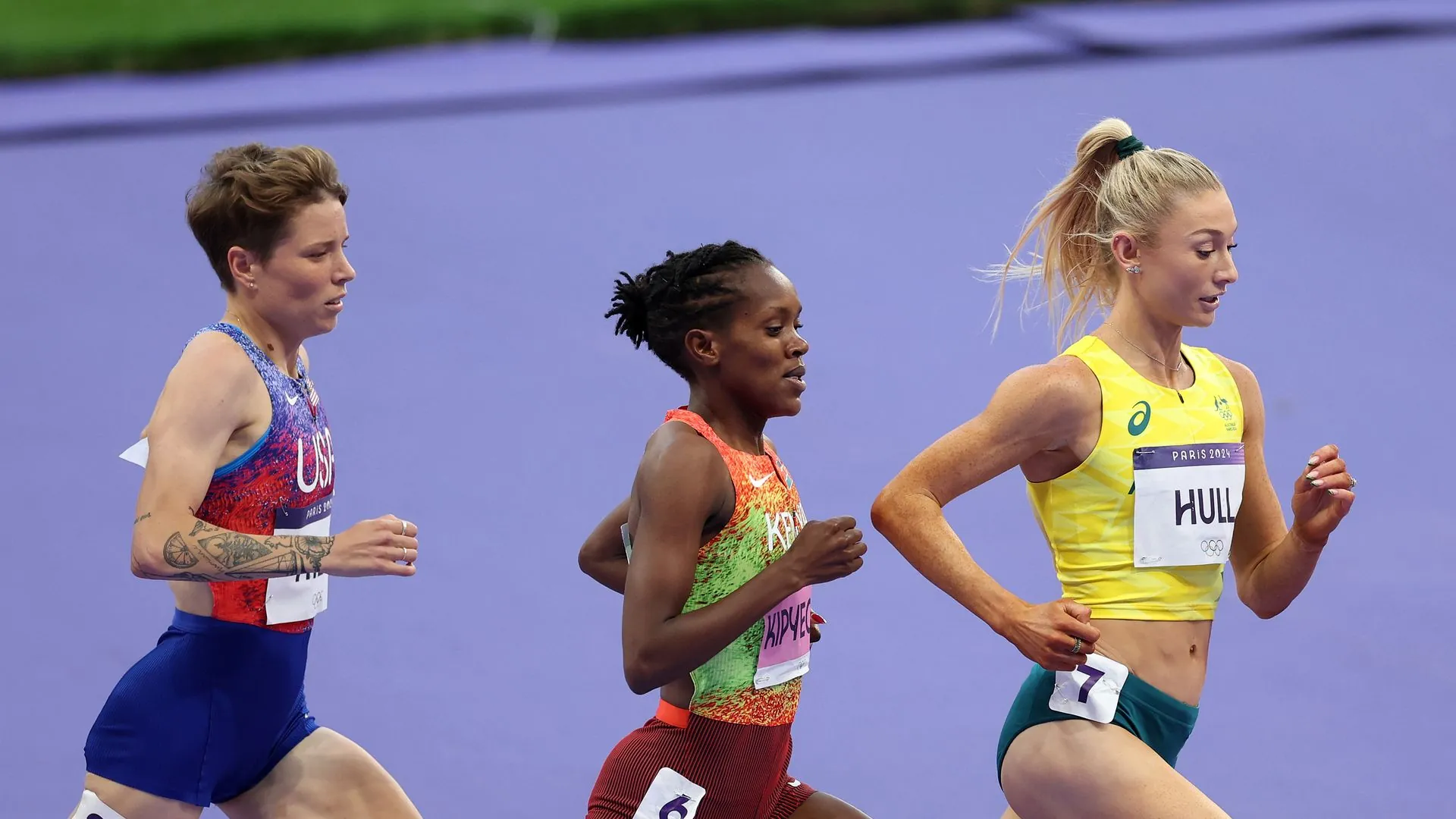
Their case is not hard because the governing bodies lack categories. It is hard because the categories are too confident. State bans, NCAA rules, and Olympic screening policies mostly ask whether a person is male or female, or whether a transgender woman may enter a women’s or girls’ event. Hiltz asks a different administrative question: when an athlete is nonbinary but competes in the female category, which part of the rule decides eligibility — sex assigned at birth, current hormone profile, legal identity, chromosomes, competition level, or the location of the meet?
That question has already had bodily consequences before any court or federation formally excludes Hiltz. Hiltz has said that pursuing the Olympics forced them to defer testosterone therapy and top surgery: “Going to the Olympics is such a dream of mine, but it’s also such a dream of mine to take testosterone or grow facial hair or have top surgery, and so I think sometimes I can really resent this sport.”[1] Eligibility law often presents itself as a rule about entry. For some athletes, it operates earlier, as a condition placed on medical timing, presentation, and the tolerable pace of living in one’s own body.
The Supreme Court Changed the Risk, Not the Whole Map
The first legal layer now surrounding athletes like Hiltz is the Supreme Court’s June 30, 2026 decision in the paired transgender athlete cases from West Virginia and Idaho. The Court ruled 6-3 on Equal Protection grounds that states may exclude transgender athletes from girls’ and women’s sports teams, while ruling 9-0 on Title IX.[2] The majority applied intermediate scrutiny but accepted state legislative line-drawing in this context; the dissent, joined by Justices Elena Kagan and Ketanji Brown Jackson, objected to that deference.[2][3]
The distinction between “may” and “must” matters. The decision did not require every state, school district, athletic association, or college conference to ban transgender girls or women from female categories. It allowed states to enforce such bans without violating the federal theories before the Court. In a ban state, that changes the compliance posture of schools and school-linked sports programs. In a non-ban state, it does not erase local discretion to maintain inclusive policies, unless another governing rule in the stack says otherwise.
As of the ruling’s aftermath, 27 states had statutory sports bans, while Alaska and Virginia had restrictions through regulatory or agency-policy routes.[4] That count is useful less as a scoreboard than as a jurisdictional warning. A student’s eligibility may turn on whether the relevant competition is governed by state law, a school association, a college athletic body, a national federation, or an international federation. The same runner can be legible in one forum and legally stranded in another.
Hiltz’s reaction to the Supreme Court ruling was plain: “I wasn’t surprised, but I was obviously still disappointed.”[5] The sentence sits in a particular legal environment. It is not only disappointment with a cultural signal from the Court; it is disappointment with a permissions structure that lets restrictive states bind schools, coaches, and athletes more tightly while leaving institutions elsewhere to navigate a different set of risks.
What the Bans Name, and What They Leave Unnamed
Most bans and rule changes are drafted around transgender girls and transgender women entering girls’ and women’s categories. That is the political and legal dispute the statutes are built to answer. But a nonbinary athlete may not fit the premise. Hiltz is trans and nonbinary, not a transgender woman. They competed in a women’s final because that is the available competition category. The law’s shorthand can flatten that distinction so quickly that the real eligibility question disappears.
A binary rule can reach a nonbinary athlete in several different ways. It may classify the athlete by sex assigned at birth. It may classify by a birth certificate. It may classify by testosterone use. It may classify by genetic markers. It may classify by the category the athlete seeks to enter. Those are not interchangeable tests. They may point to the same result in many cases, but the administrative path still matters because each test gives discretion to a different actor and creates a different record.
For a school administrator, that means the practical question is not simply whether a student is trans. It is whether the student is covered by the state ban’s definitions, whether the sport is varsity or non-varsity, whether the relevant body treats club teams as school athletics, whether the school’s own nondiscrimination policy conflicts with state law, and whether federal funding obligations under Title IX create a separate dispute. The Supreme Court decision made state bans more secure against the claims at issue; it did not answer every eligibility question that schools actually receive at a desk.

The NCAA Is a Different Layer, Not a Larger Version of State Law
The NCAA’s policy belongs in a separate column. It governs a national college sports system, not every school sport. Its 2025 policy change bars biological males from women’s sports, and the NCAA universe includes more than 510,000 athletes; in the Supreme Court materials, fewer than 10 were identified as transgender.[2] That contrast shows the scale mismatch that often defines this area: a vast compliance system turns on a very small number of known athletes, yet the consequences for those athletes are total.
For a college athlete, NCAA rules can become controlling even where state law is silent or permissive. For a college located in a ban state, state law and NCAA policy may point in the same restrictive direction. For a college in a non-ban state, the institution may still be bound by NCAA eligibility conditions if it wants its athletes to compete in NCAA women’s championships. The important point is not which rule is morally preferable. It is that the athlete is not governed by one rule.
A nonbinary runner exposes a further ambiguity in the phrase “biological males.” If the policy turns on birth sex alone, nonbinary identity may be administratively irrelevant. If it turns on a sex-classification file maintained by the school or governing body, the relevant record becomes decisive. If the athlete has delayed testosterone therapy to remain eligible, the rule may treat that delay as compliance rather than as a cost. The policy can appear stable only because it avoids asking whether its categories match the athlete’s identity or merely override it.
The IOC’s Screening Policy Moves the Gate to Genetics
The Olympic layer is narrower in population and broader in symbolic force. On March 26, 2026, the International Olympic Committee adopted a policy requiring one-time SRY gene screening for all athletes in the female category, effective for the 2028 Olympics.[6] More than 90 human rights organizations warned that the policy would “set women’s sports back 30 years.”[6] Unlike a school ban that sorts students by legal or birth-sex categories, the IOC policy shifts the eligibility gate toward a genetic marker associated with testicular development.
Hiltz’s response to the IOC policy was sharper than their response to the Court: “This policy is so fucking stupid and is not solving a problem that exists.”[7] That anger is legally informative because the policy does not merely regulate known transgender women. It subjects every female-category athlete to a screening requirement. A rule drafted to protect a category can end up making all entrants prove their place inside it.
The problem the IOC says it is solving also has to be described carefully. No openly transgender woman has ever won an Olympic medal, and since 2004 only one openly transgender woman, Laurel Hubbard at Tokyo 2021, has competed at the Olympics — described by GLAAD as 0.002% of Olympians over that period.[8] Those figures do not resolve every scientific or fairness dispute. They do show that the Olympic rule is not responding to a large observed participation pattern among openly transgender women.
Genetic screening also has a history of catching people whom the public debate was not talking about. The European Court of Human Rights ruled in 2023 that World Athletics discriminated against Caster Semenya, a cisgender woman with differences in sex development.[8] Semenya’s case is not Hiltz’s case. It does, however, show why policies aimed at protecting women’s categories can end up policing women whose biology does not align with the tidy version of sex assumed by the rule.
A Nonbinary Athlete Can Be Eligible and Constrained at the Same Time
Hiltz’s Olympic run is sometimes invoked as proof that inclusion is possible under existing systems. In one sense, it is. Hiltz reached the women’s 1,500m final under the rules then in force. But eligibility at a past event is not a general legal status. It does not settle what would happen under an NCAA policy, a state ban, a future Olympic screening mandate, or a school rule written for younger athletes.
The more precise lesson is that eligibility can be conditional, forum-specific, and personally expensive. An athlete may be allowed to compete because they have not taken testosterone. They may be classified into a women’s category because no nonbinary category exists. They may be described in public as a trans athlete while the rule that governs them treats identity as irrelevant. They may be celebrated by one institution and barred by another.
This is where careless language does legal damage. Collapsing nonbinary athletes into transgender women makes it easier to talk about the politics, but harder to administer the rule. A transgender woman seeking entry into a women’s category, a nonbinary athlete assigned female at birth who has not medically transitioned, and a nonbinary athlete using testosterone may face entirely different eligibility outcomes under the same general “trans sports” label. If the policy does not say which facts matter, the decision shifts to whoever is holding the form.
The Unresolved Spaces Are Not Marginal
The Supreme Court ruling did not answer every sports-participation setting. Analysis after the decision noted open questions about how far bans reach into elementary-level sports, club sports, recreational leagues, and non-varsity programming.[4] Sportico also flagged that the opinion did not resolve the Title IX three-part test for equitable athletic participation, leaving another issue for future litigation.[9]
Those omissions matter because many athletes encounter sports before they encounter formal championship structures. A child joins an elementary track club. A middle schooler plays a recreational league connected loosely to a public school. A college student runs a club sport outside NCAA competition. A local meet uses a national federation’s registration categories but takes place in a state with its own ban. None of those examples needs a dramatic fact pattern to create a compliance problem. The question is simply which rule attaches.
| Forum | Likely Controlling Layer | Why the Nonbinary Question Remains Hard |
|---|---|---|
| Public school varsity team in a ban state | State statute or agency rule, plus school athletic rules | The rule may classify by sex or transgender status without naming nonbinary identity. |
| Public school team in a non-ban state | Local policy, state nondiscrimination law, and federal funding obligations | The Supreme Court permits bans but does not require them, so discretion remains uneven. |
| NCAA women’s competition | NCAA eligibility policy, with possible state-law overlay | A national biological-sex rule may override a school’s more inclusive identity policy. |
| Olympic female category beginning in 2028 | IOC SRY screening policy and sport-specific implementation | A genetic screen may decide eligibility without asking how the athlete identifies. |
| Club, recreational, or non-varsity sports | Often uncertain or mixed | The Supreme Court ruling left several lower-level participation settings unresolved. |
The table is necessarily incomplete because the legal answer is not portable. A school lawyer, athletic director, coach, or federation official has to ask the same questions in sequence: what is the sport, what is the competition level, where is it held, who sanctions it, what category is entered, what records are required, and which rule is most restrictive. Identity alone does not answer the eligibility question; neither does geography alone.
Why Institutional Intent Does Not Cure the Patchwork
It is tempting to sort institutions into inclusive and restrictive camps. That misses how eligibility actually operates. A school may want to support a nonbinary athlete but be located in a state whose law controls scholastic competition. A college may have inclusive campus policies but be bound by NCAA championship rules. A national Olympic committee may have its own procedures but still face IOC category requirements. The athlete experiences these as one system, but legally they are stacked authorities.
Risk concerns are also not imaginary for institutions. If a school ignores a state ban, it may face state enforcement. If it excludes an athlete in a setting not clearly covered by the ban, it may face discrimination claims. If it lets an athlete compete under a local policy but the next level of competition applies a different eligibility rule, it may have promised more than it can deliver. The compliance problem is not solved by choosing better wording for one handbook.
Hiltz’s situation makes the patchwork visible because their identity is not the one most rules were drafted to address. A binary trans-athlete ban can still affect a nonbinary athlete, but often indirectly: through birth-sex definitions, hormone rules, genetic screening, or category-entry requirements. That indirectness is not a small drafting flaw. It is the mechanism by which the system avoids confronting athletes who live outside the categories the system insists on using.
The Controlling Rule May Be the Narrowest One
For athletes, the practical rule is often the most restrictive applicable rule in the stack. A permissive school policy does not help much if state law bars participation. A permissive state environment does not help much if NCAA championship eligibility bars the athlete. A national federation’s approach does not control the Olympic female category if the IOC requires screening. Every layer can say it is only governing its own forum. For the athlete, those forums are the path of a career.
That is why Hiltz is a poor fit for the usual shorthand and a useful guide to the law. Their case does not let the discussion stay inside the phrase “trans athletes in women’s sports.” It forces the more exact question: under which rule, in which forum, at which level, and according to which classification of the body would this athlete be judged eligible?
There is no single clean fix inside one institution because no single institution owns the whole eligibility field. The Supreme Court’s decision permits state exclusions without mandating them nationwide. NCAA policy governs a vast college system. The IOC’s screening rule governs the Olympic female category. State and local rules still determine many school and youth-sports settings. Nonbinary athletes are left moving through a system designed for someone else’s category dispute, where eligibility turns on identity classification, forum, geography, and competition level at the same time.
References
- Fact Sheet for Reporters: Middle-Distance Runner Nikki Hiltz and Transgender & Nonbinary Athletes’ Participation in the 2024 Paris Olympics, GLAAD
- Court rules that states can exclude transgender athletes from girls’ and women’s sports teams, SCOTUSblog, June 2026
- The troubling implications of the Supreme Court’s transgender athlete decision, Daily Journal
- Supreme Court Allows State Bans on Transgender Students in Women’s and Girls’ Sports, Ogletree Deakins
- Trans and non-binary Olympian Nikki Hiltz criticises US Supreme Court ruling on trans athletes, Scene Magazine
- Transgender women banned from Olympics under new IOC policy, NBC News / Associated Press
- Aptos Olympian Nikki Hiltz criticizes Olympic transgender ban, KSBW
- Fact Sheet for Reporters: Supreme Court Cases on Transgender Participation in Sports, GLAAD
- SCOTUS Title IX Trans Athlete Ruling Implications, Sportico, 2026
Related records
Tool profile
Browse tool evaluations →Governing regulation
Browse the obligations tracker →Preventive workflow
Browse verification workflows →
Report a correction or tip
Spotted an outdated figure, a misstated fact, or a ruling this case record should reflect? Public comments are disabled for this content given the professional cost of a misreported case outcome, penalty amount, or rule text — use the structured correction channel instead.
Report a correction or tip for this record →