
Ocean Casino collapse: AI hallucination risk for premises liability
The July 27 Ocean Casino ceiling collapse is the exact type of vivid fact pattern that triggers AI hallucinated case citations. This article examines why premises liability is among the highest-risk practice areas for AI-generated fake citations and what steps litigators must take to avoid sanctions.
- Jurisdiction
- New Jersey
- Court
- New Jersey Superior Court
- AI tool named
- ChatGPT
- Ruling date
- Jul 27, 2026
- Source document
- View primary court order ↗
- Last verified
- Jul 30, 2026
Lex Machina Review is an independent risk-tracking and reference resource. Nothing on this site is legal advice, and using it does not create an attorney-client relationship. Every record is reviewed against primary sources but may not reflect the most current status of a matter — always verify directly against the cited court order, rule text, or a licensed attorney before relying on it.
Companion explanation — secondary to the source document above
The Ocean Casino Resort ceiling collapse began with facts any premises lawyer would recognize before the legal theories arrive: a fire-suppression pipe burst, water spread through the lobby, ceiling material came down, and emergency responders moved through a casino floor where surveillance, maintenance records, incident reports, and witness statements would all matter if a claim follows. NBC10 Philadelphia reported the July 27, 2026 incident as a lobby flood and ceiling collapse tied to the burst pipe at the Atlantic City property.[1]
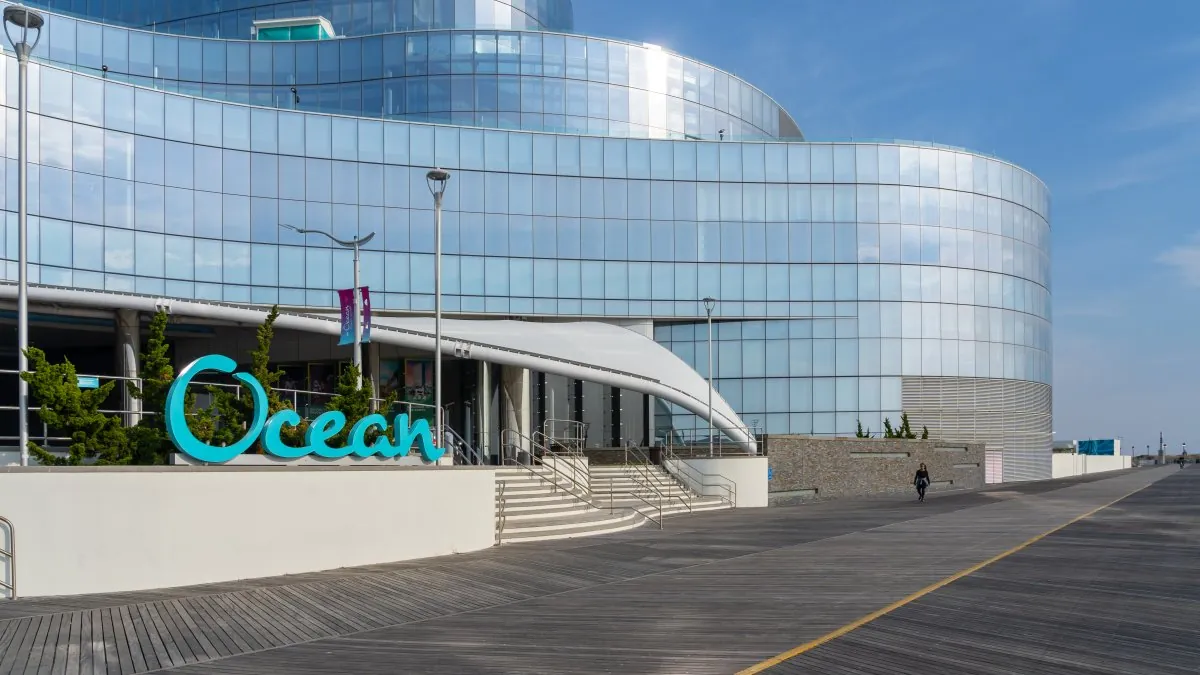
That description is enough to make the phrase ocean casino resort ceiling collapse sprinkler flood negligence sound like a ready-made research query. It is also enough to make the query dangerous. As of July 30, this article is not reporting that any lawyer has filed an AI-generated brief about Ocean Casino, and it is not reporting that a lawsuit has already matured around the event. The point is narrower: this is the kind of vivid, fact-heavy premises scenario where a generative model can sound most useful while quietly inventing the very authority a lawyer is supposed to verify.
Casino.org separately estimated a $1.4 million revenue-loss figure by extrapolating from Q1 2026 daily gross gaming revenue. That number may be useful as a media estimate of business interruption scale, but it is not a confirmed damages figure from Ocean Casino, not a plaintiff's loss calculation, and not proof of negligence.[2]
Why This Fact Pattern Is So Easy to Overtrust
A broad legal-standard request usually leaves visible gaps. Ask for the elements of negligence, notice, causation, or premises liability, and the answer may be generic, but its generic quality is obvious. Ask instead for cases involving a burst sprinkler pipe, standing water, fallen ceiling material, casino staff, lobby traffic, and a possible failure to inspect or maintain a fire-suppression system, and the model has a rich set of concrete ingredients to recombine.
That is where the first draft starts to feel like research. A model can describe a plaintiff slipping through pooled water, a maintenance supervisor ignoring prior ceiling stains, a hotel security officer preserving video, or a court distinguishing transient water from a structural defect. Those may be useful brainstorming leads if everyone in the room understands they are possibilities. They become professional risk when the same fluent paragraph assigns those facts to a caption, reporter citation, pinpoint quote, and holding.
The difference is not cosmetic. A hypothetical analogy can help a lawyer decide what to look for: inspection logs, sprinkler maintenance contracts, prior leak complaints, engineering reports, closed-circuit footage, evacuation timing, and photographs before cleanup. A case citation claims that a court already decided something. Once that claim enters a complaint, motion, demand letter, or mediation brief, the lawyer has moved from imagination to representation.
Tort Is Already Prominent in the Hallucination Record
The documented record does not allow a clean claim that premises liability is the single most hallucinated practice area. It does support something more disciplined: tort appears prominently in known legal hallucination incidents, and premises liability sits inside the kind of tort work where factual analogy often drives research.
Damien Charlotin's hallucination database listed Tort as the fifth most common legal field, with 158 tort cases, 1,626 case-law subcategory entries, and 1,252 U.S. cases as of July 29, 2026.[3] Those tort entries are not all casino cases and not all premises-liability cases. They may include other tort categories. But they are enough to defeat the comfortable assumption that hallucinated citations are mostly an immigration, pro se, or novelty-brief problem.
The casino angle is not merely atmospheric. Law Library Journal Vol. 117, No. 1 documented an example in which ChatGPT fabricated casino-related case citations.[4] That does not mean the Ocean Casino incident has already produced fabricated authority. It means the legal literature has already seen a model generate false case law in the neighborhood of casino facts, where business premises, patron injuries, surveillance, house security, and operational control can all sound case-specific even when the citation is not real.
The Bad Draft Usually Looks Helpful Before It Looks False
A premises-liability research request built around Ocean Casino-like facts invites a model to match on texture. The terms are familiar: water intrusion, ceiling collapse, constructive notice, negligent maintenance, fire-suppression system, hotel or casino operator, invitee, duty to inspect, and failure to warn. A bad answer may not look absurd. It may look like the missing middle between the incident report and the pleading.
That is the trap. The lawyer may ask for New Jersey or Atlantic City premises cases involving ceiling leaks or sprinkler failures. The model may return a plausible appellate caption, a credible procedural posture, and a holding that seems to divide recurring leak from sudden failure. The holding may even track the right legal instinct: notice matters; mode of operation may or may not apply; expert testimony may be needed for a building-system defect; a warning cone does not repair a ceiling. None of that proves the case exists.
For litigation work, the useful AI task is lower in the chain. It can turn the incident facts into research questions. It can build a checklist of records to subpoena. It can identify doctrinal buckets that a lawyer should investigate in Westlaw, Lexis, Bloomberg Law, court archives, or primary court databases. It can compare a lawyer's own verified cases for themes. It cannot be allowed to promote an unverified factual analogy into filing-ready authority.
| AI Output | Useful Use | Filing Risk |
|---|---|---|
| Issue list for a sprinkler-pipe flood and ceiling collapse | Helps structure investigation and discovery | Low, if treated as brainstorming |
| Search terms and doctrinal buckets | Helps a lawyer search primary and paid legal sources | Moderate, if the lawyer treats the list as complete |
| Case summaries without verified citations | May suggest directions for independent research | High, if copied into a draft |
| Quoted holdings, pinpoint citations, or fact-matched cases | Only useful after primary-source confirmation | Severe, if filed before verification |
Courts Are No Longer Treating Fake Citations as a Novelty
The sanction environment has changed quickly enough that a lawyer cannot safely rely on the old apology script. EDRM's Q1 2026 tracking put U.S. court sanctions tied to AI-generated legal errors at least $145,000 for the quarter.[5] That aggregate is not a prediction about any Ocean Casino filing. It is evidence that courts have moved from warning lawyers about a new tool to attaching money, disqualification, referral, and reputational consequences to failed supervision.
The penalty structure in Oregon makes the point bluntly: $500 for each fabricated citation and $1,000 for each fabricated quotation, as described in NYSBA's June 2026 account.[6] That kind of schedule matters in a premises case because a hallucinated research memo rarely fabricates just one thing. A model can produce a cluster of false cases, then add quotations, parentheticals, and supposed factual distinctions. The sanctions arithmetic can grow faster than the lawyer's realization that the authorities do not exist.
The larger cases show that courts are looking past whether counsel eventually admitted the problem. In Whiting v. City of Athens, the Sixth Circuit imposed a $30,000 fine.[5] In Billups v. Louisville Municipal School District, the sanction included disqualification and a requirement that the attorneys file the sanction order in every pending matter.[7] Those remedies are not just fee-shifting. They interfere with client representation, pending caseloads, and the lawyer's standing before other courts.
Candor still matters, but it is not a shield that appears after the filing deadline. Norton Rose Fulbright's 2026 six-case analysis emphasized that courts are moving beyond light admonitions, and its discussion of Farris in the Sixth Circuit is especially hard on the idea that a clean record solves the problem: full candor and a 40-year disciplinary history without prior trouble still ended with removal from the case and multiple disciplinary referrals.[7]
Supervision Happens Before the Citation Enters the Draft
ABA Formal Opinion 512 classified generative AI tools as nonlawyer assistance for purposes of Rule 5.3 supervision.[8] For a premises lawyer, that framing is more practical than most abstract AI ethics talk. If a junior assistant handed over a memo with three cases about casino ceiling collapses, no filing lawyer could say, "The memo sounded right" and stop there. The same answer should not work because the assistant is software.
The verification step is not just checking whether a case name appears somewhere on the internet. The lawyer has to confirm the reporter citation, court, date, procedural posture, quoted language, and whether the facts actually support the proposition being used. A real case can still be misdescribed. A real quote can be lifted from a dissent. A real premises decision can turn on a statute, lease, notice rule, expert issue, or local procedural posture that makes it useless for the point a draft wants it to carry.
This is where Ocean Casino-like facts create a specific supervision problem. The more detailed the incident, the more tempting it is to search for a factual twin. But legal research rarely needs a twin before it needs reliable authority. A lawyer can start with broader New Jersey premises-liability law, then move to water accumulation, structural defects, maintenance notice, fire-suppression systems, casino or hotel invitee cases, and evidentiary issues. If an AI tool suggests a perfect sprinkler-flood casino case, the perfection is a reason to verify faster, not to trust faster.
Benchmarks Help, But They Do Not Verify a Brief
The broader accuracy literature supports caution without doing the lawyer's job. NYSBA's account of Cassata v. Macrina referenced the Magesh et al. study reporting hallucination rates in the 17% to 35% range.[6] That range is useful background, much like a legal research benchmark is useful background. It does not tell a lawyer whether the case in paragraph eight of a draft exists, whether the quotation is accurate, or whether the cited opinion actually involved a premises condition resembling a sprinkler-pipe flood.
Tool comparisons can also give a false sense of procedural safety. A platform may perform better on one benchmark and still fail on a narrow, fact-matched tort request. A model may correctly summarize the general duty owed to invitees and still invent the case that supposedly applies that duty to wet casino tile under a collapsed ceiling. The filing lawyer's verification burden does not rise or fall with the model's marketing category.
A Safer Way to Use AI on a Premises File
AI can still be useful at the front end of a premises case. The safe uses are the ones that keep the tool away from unverified authority. On a file resembling the Ocean Casino incident, a lawyer might use AI to organize the factual record, draft a discovery map, separate maintenance issues from warning issues, or turn photographs and witness notes into a chronology for human review. Those tasks can make the lawyer more systematic without pretending that the model has found law.
- Use AI-generated case names only as leads until the opinion is opened in a primary or trusted legal database.
- Verify every quotation against the opinion text, not against the model's summary or another AI answer.
- Check whether the factual analogy is real: water source, notice evidence, property type, injured party status, procedural stage, and jurisdiction.
- Keep a research trail showing who verified each authority before it entered the filing draft.
- Treat an unusually perfect fact match as a verification priority, not as a drafting shortcut.
That last point is the litigation judgment. A casino lobby flood, ceiling collapse, burst sprinkler pipe, possible notice evidence, and possible negligence theory are exactly the facts that make a fabricated case feel real. The model does not have to sound sloppy to create a sanction problem. It only has to sound plausible long enough for a lawyer to stop checking.
References
- NBC10 Philadelphia report on the Ocean Casino ceiling collapse, NBC10 Philadelphia, July 27, 2026.
- Casino.org revenue extrapolation from Q1 2026 daily GGR figures, Casino.org, 2026.
- Hallucination Database, Damien Charlotin.
- Law Library Journal Vol. 117, No. 1, Law Library Journal, 2025.
- The AI Sanction Wave, EDRM, April 2026.
- Beyond the Mirage, NYSBA, June 26, 2026.
- AI in Litigation: Update on Gen AI Sanctions in 2026, Norton Rose Fulbright, 2026.
- Formal Opinion 512, American Bar Association, July 29, 2024.
Related records
Tool profile
How to Read Legal AI Benchmarks Ahead of the OpenAI IPOGoverning regulation
Browse the obligations tracker →Preventive workflow
Browse verification workflows →
Report a correction or tip
Spotted an outdated figure, a misstated fact, or a ruling this case record should reflect? Public comments are disabled for this content given the professional cost of a misreported case outcome, penalty amount, or rule text — use the structured correction channel instead.
Report a correction or tip for this record →